
LaunchChair
Validate, plan, and build your MVP with AI
LaunchChair helps founders go from messy idea to build-ready MVP without writing prompts from scratch.
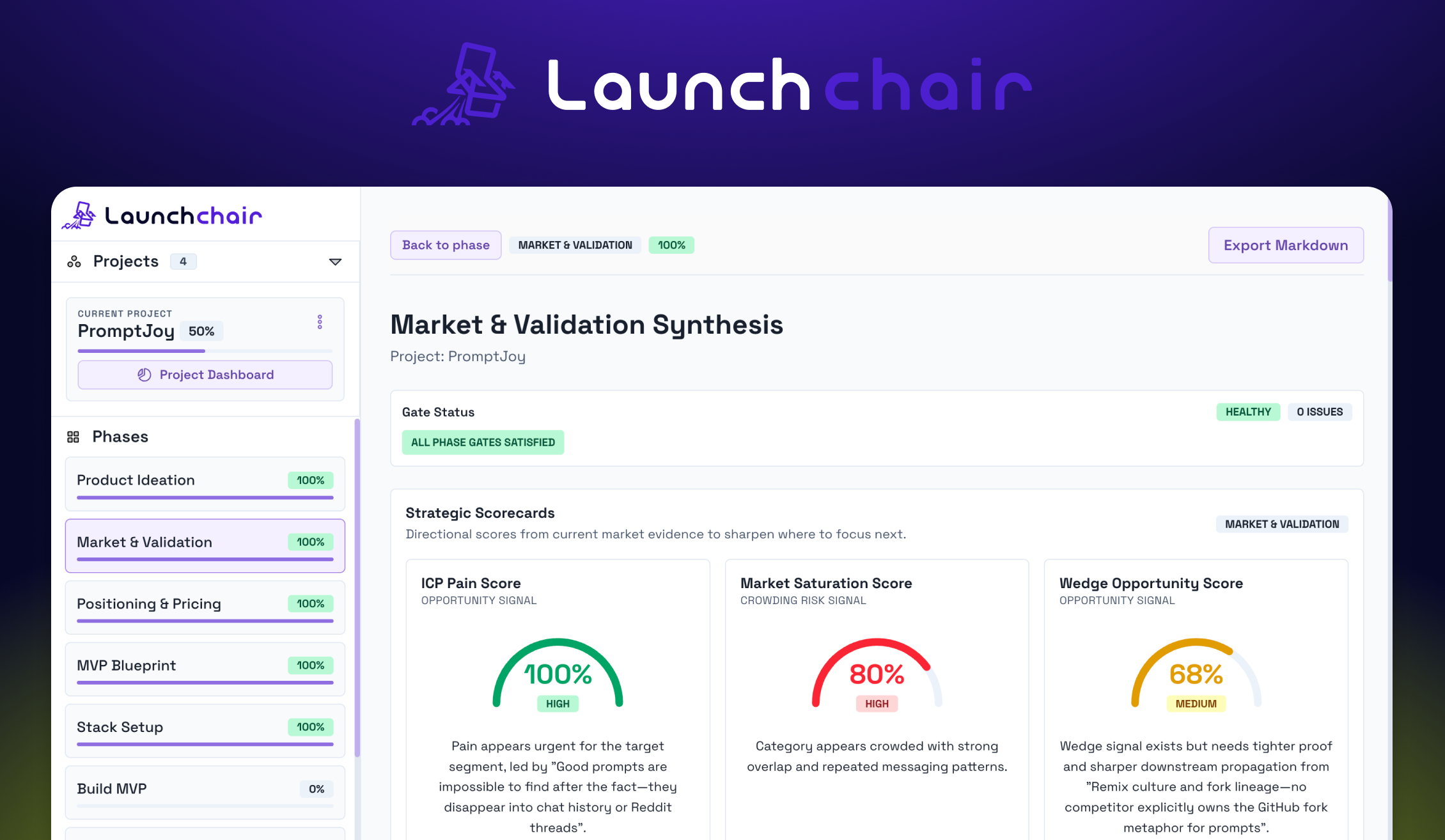
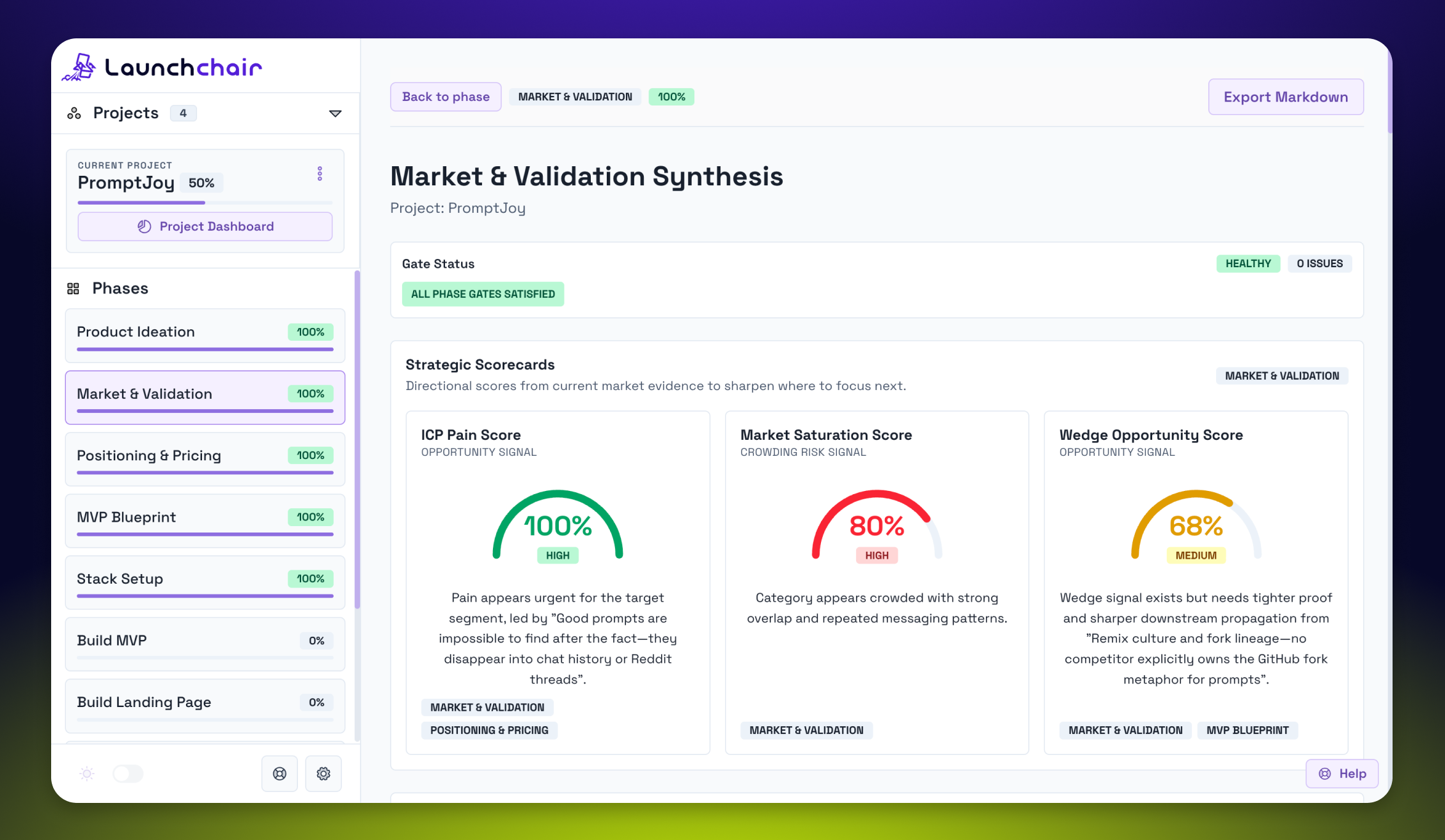
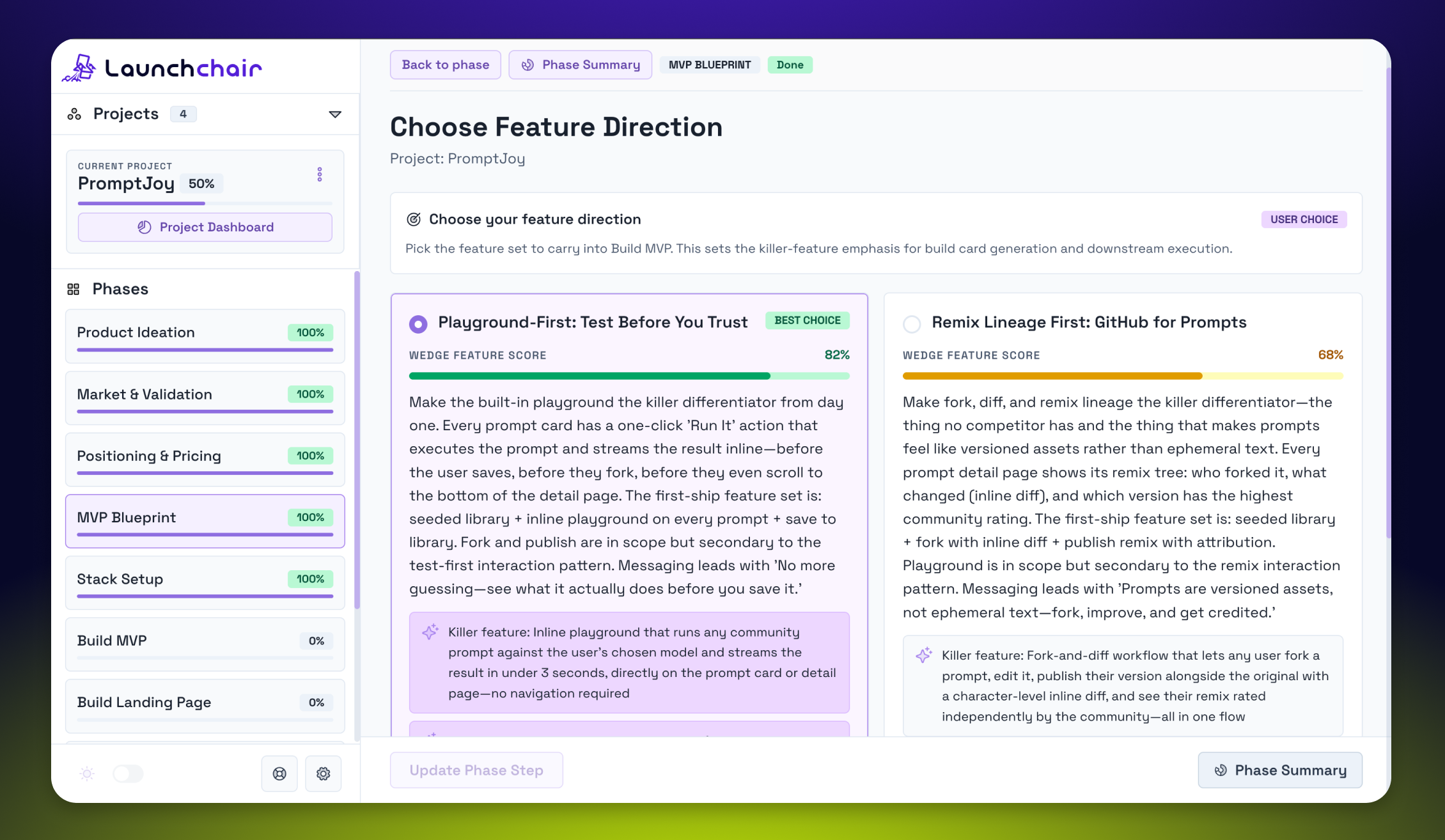
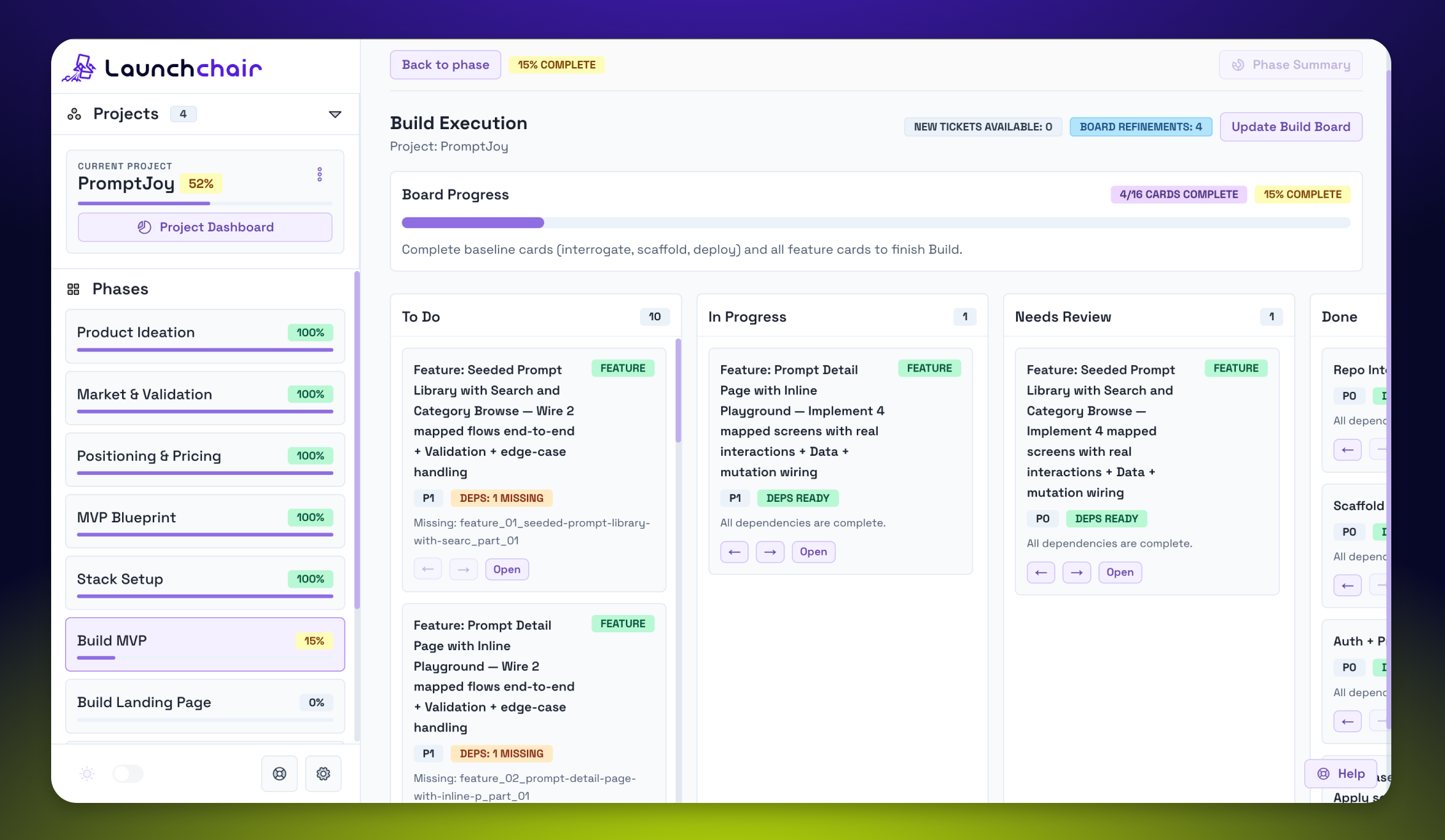
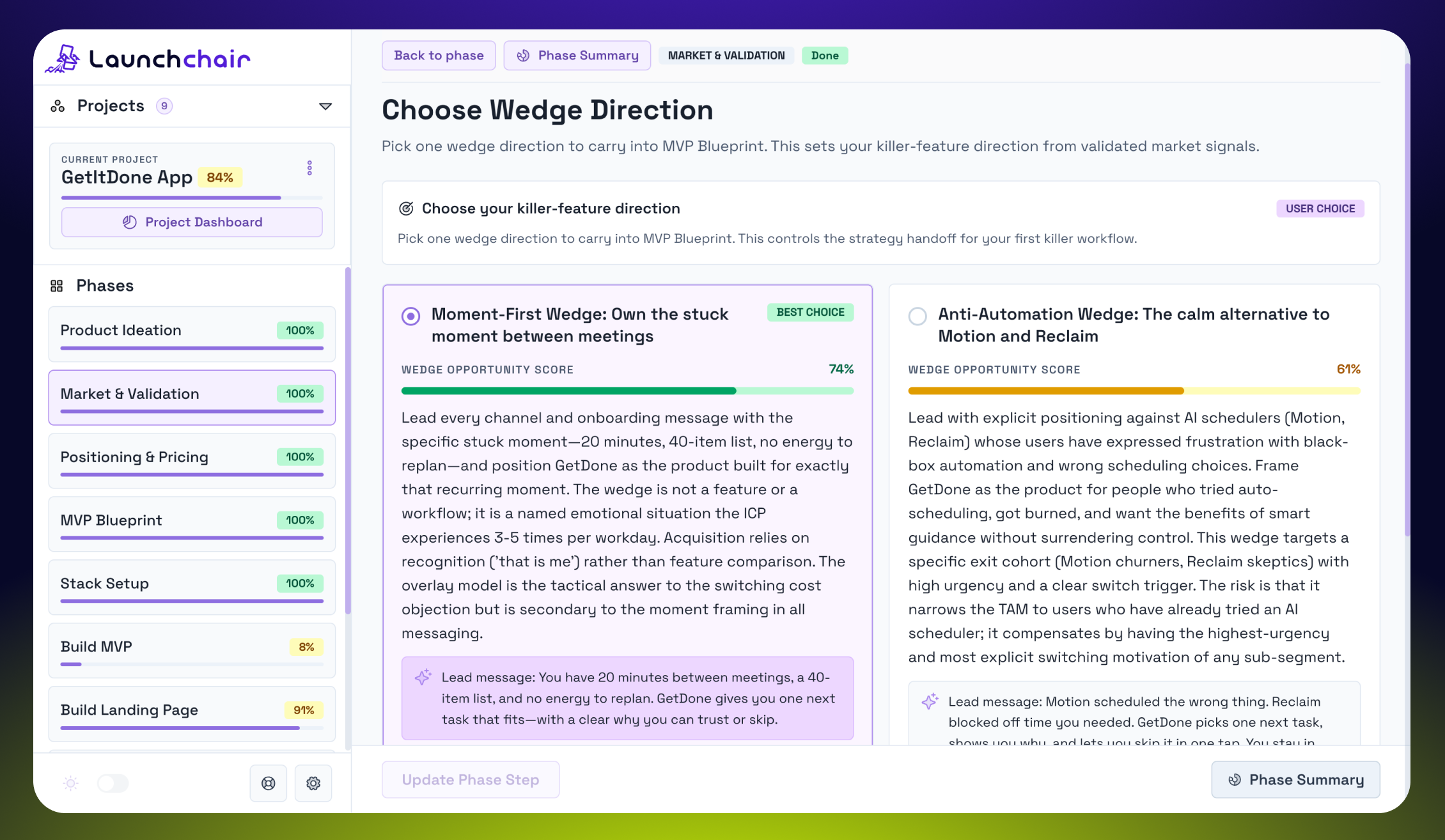
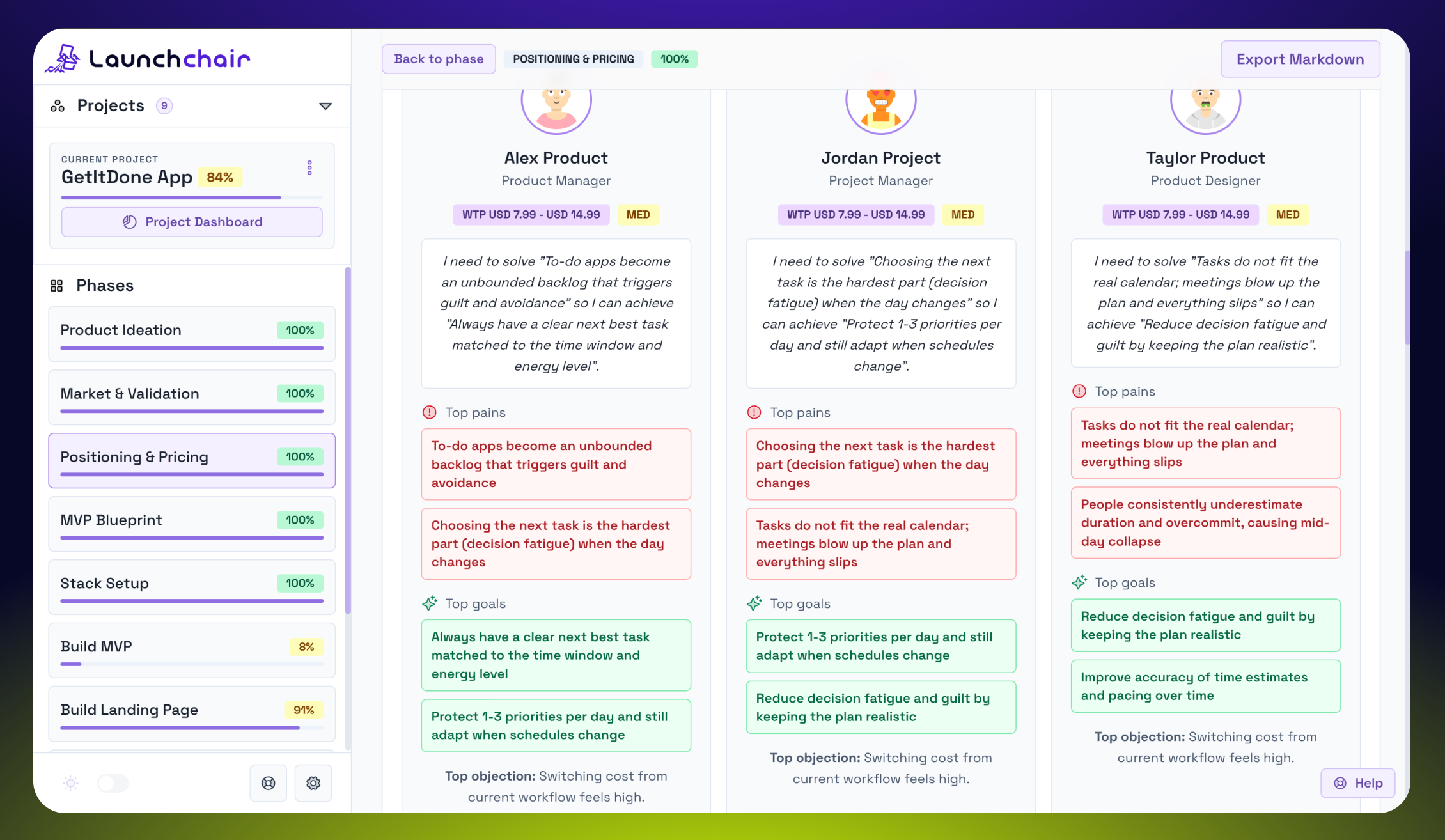
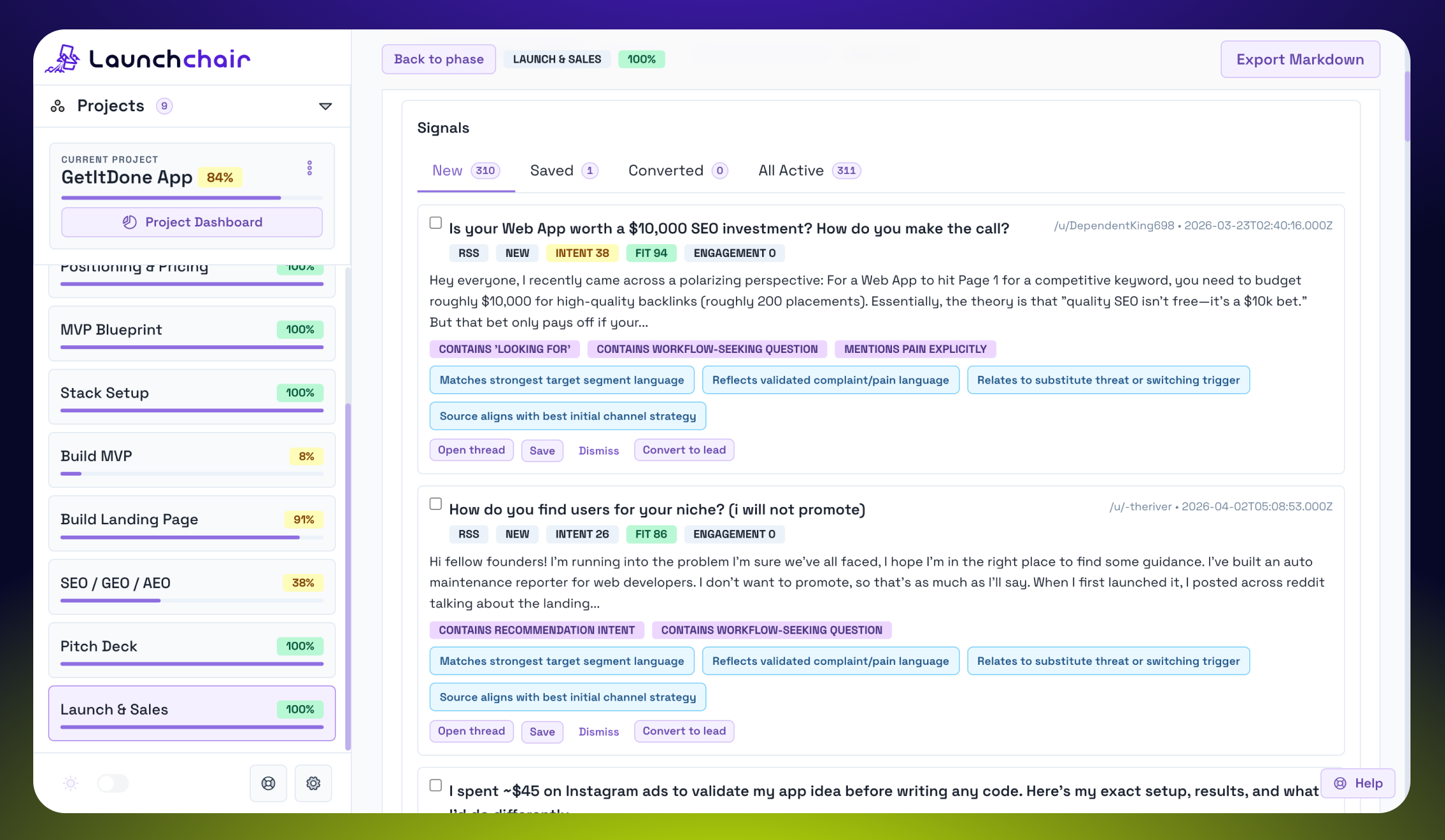
It validates your market wedge, identifies real customer pain, and turns your strategy into a living product spec that becomes the source of truth for the build. From there, LaunchChair generates dynamic, feature-by-feature prompts for your preferred AI builder, including scoped context, acceptance criteria, implementation guidance, and QA guardrails.
Instead of vibe-coding from blank chats or constantly rewriting prompts, founders get a guided workflow that keeps product strategy, MVP scope, landing page direction, SEO, and launch execution connected from idea to first users.
Features
- Market wedge validation
- Customer pain discovery
- Living product spec
- Dynamic build prompts
- Model-agnostic workflow
- Feature-by-feature build guidance
- Scoped AI context
- Acceptance criteria
- QA guardrails
- MVP scope control
- Landing page direction
- SEO guidance
- Launch execution support
- Distribution planning
Use Cases
- Validate a startup idea before building
- Find a sharper market wedge
- Identify real customer pain
- Turn a messy idea into an MVP
- Create a build-ready product spec
- Generate prompts for an AI builder
- Keep AI-assisted builds aligned with the spec
- Reduce prompt writing and rewriting
- Scope features before development
- Guide vibe-coded builds
- Create landing page direction
- Plan SEO from the product strategy
- Prepare for launch
- Organize distribution after the MVP is built
- Stress-test ideas before investing time or money

Comments

The idea of turning early-stage thinking into a “living product spec” that continuously feeds build prompts is compelling, especially for founders using AI builders where scope drift is a common issue. The structured bridge between validation → spec → execution could reduce a lot of rework cycles. That said, there’s an interesting tension between guided structure and founder intuition—some of the strongest products often evolve through iterative ambiguity rather than fully defined specs upfront. How flexible is the system when founders intentionally pivot mid-build or when user feedback contradicts the initial validated wedge?




This is actually useful for founders who get stuck between “having an idea” and “knowing what to build first.” Most people waste time rewriting prompts or adding random features without validating the real problem. I like that this focuses on market validation, MVP scope, and structured build guidance instead of just generating code blindly.

We built LaunchChair because AI made it easier than ever to build software, but not easier to know what’s actually worth building. A lot of founders can now move from idea to MVP incredibly fast, but the hard part is still figuring out the wedge, the customer pain, the scope, the positioning, and how to keep the build from drifting once you open a blank AI chat. LaunchChair turns that early strategy into a living product spec, then generates dynamic, feature-by-feature prompts for your preferred AI builder. The goal is to help founders validate smarter, build with more direction, and get from idea to first users without constantly rewriting prompts from scratch. We’d love feedback from other builders, especially anyone using AI to build but still feeling the chaos goblin show up between idea and launch.
The "living product spec" concept is the right call — most AI-assisted builds fall apart because the spec lives in someone's head and the AI context drifts after 10 prompts. Keeping strategy and build prompts connected solves the real problem. Does the spec update automatically when you change scope mid-build, or is it a manual sync?
Premium Products































Sponsors
Buy

Awards
View all
Awards
View allMakers
Makers
Comments
The idea of turning early-stage thinking into a “living product spec” that continuously feeds build prompts is compelling, especially for founders using AI builders where scope drift is a common issue. The structured bridge between validation → spec → execution could reduce a lot of rework cycles. That said, there’s an interesting tension between guided structure and founder intuition—some of the strongest products often evolve through iterative ambiguity rather than fully defined specs upfront. How flexible is the system when founders intentionally pivot mid-build or when user feedback contradicts the initial validated wedge?
This is actually useful for founders who get stuck between “having an idea” and “knowing what to build first.” Most people waste time rewriting prompts or adding random features without validating the real problem. I like that this focuses on market validation, MVP scope, and structured build guidance instead of just generating code blindly.
We built LaunchChair because AI made it easier than ever to build software, but not easier to know what’s actually worth building. A lot of founders can now move from idea to MVP incredibly fast, but the hard part is still figuring out the wedge, the customer pain, the scope, the positioning, and how to keep the build from drifting once you open a blank AI chat. LaunchChair turns that early strategy into a living product spec, then generates dynamic, feature-by-feature prompts for your preferred AI builder. The goal is to help founders validate smarter, build with more direction, and get from idea to first users without constantly rewriting prompts from scratch. We’d love feedback from other builders, especially anyone using AI to build but still feeling the chaos goblin show up between idea and launch.
The "living product spec" concept is the right call — most AI-assisted builds fall apart because the spec lives in someone's head and the AI context drifts after 10 prompts. Keeping strategy and build prompts connected solves the real problem. Does the spec update automatically when you change scope mid-build, or is it a manual sync?
Premium Products
New to Fazier?

Find your next favorite product or submit your own. Made by @FalakDigital.
Copyright ©2026. All Rights Reserved