
Keybrum
Attacks your AI-built app like a stranger, with proof
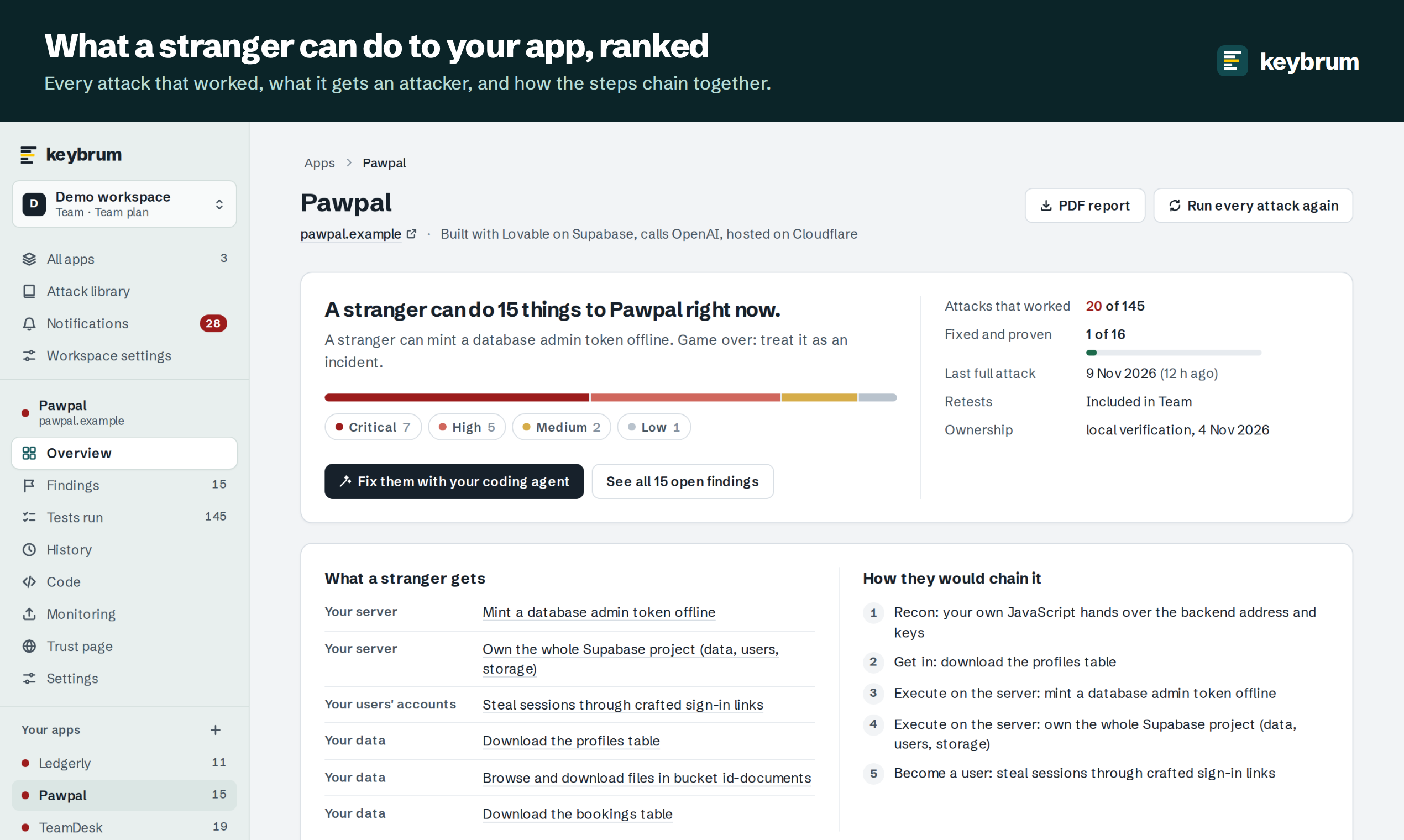
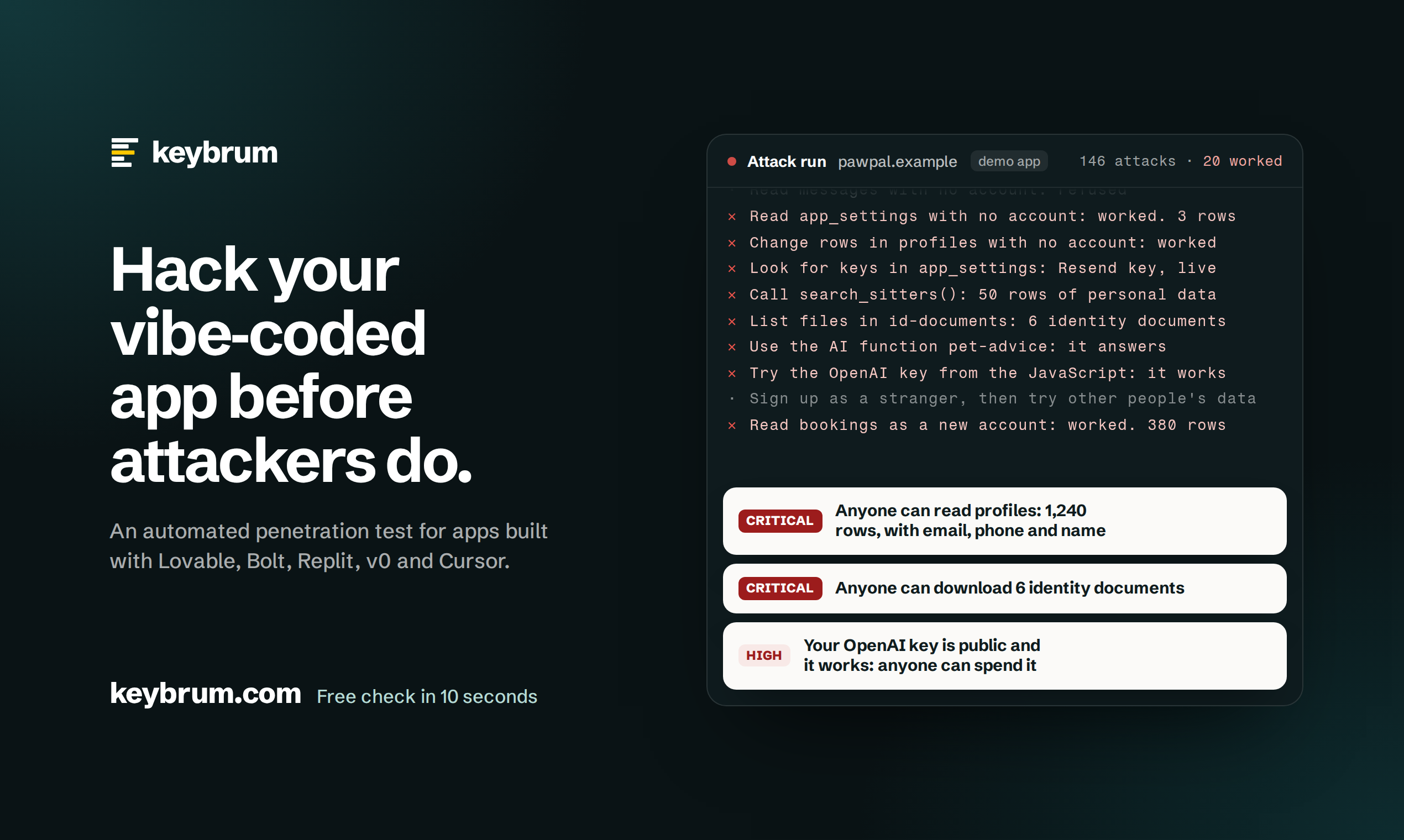
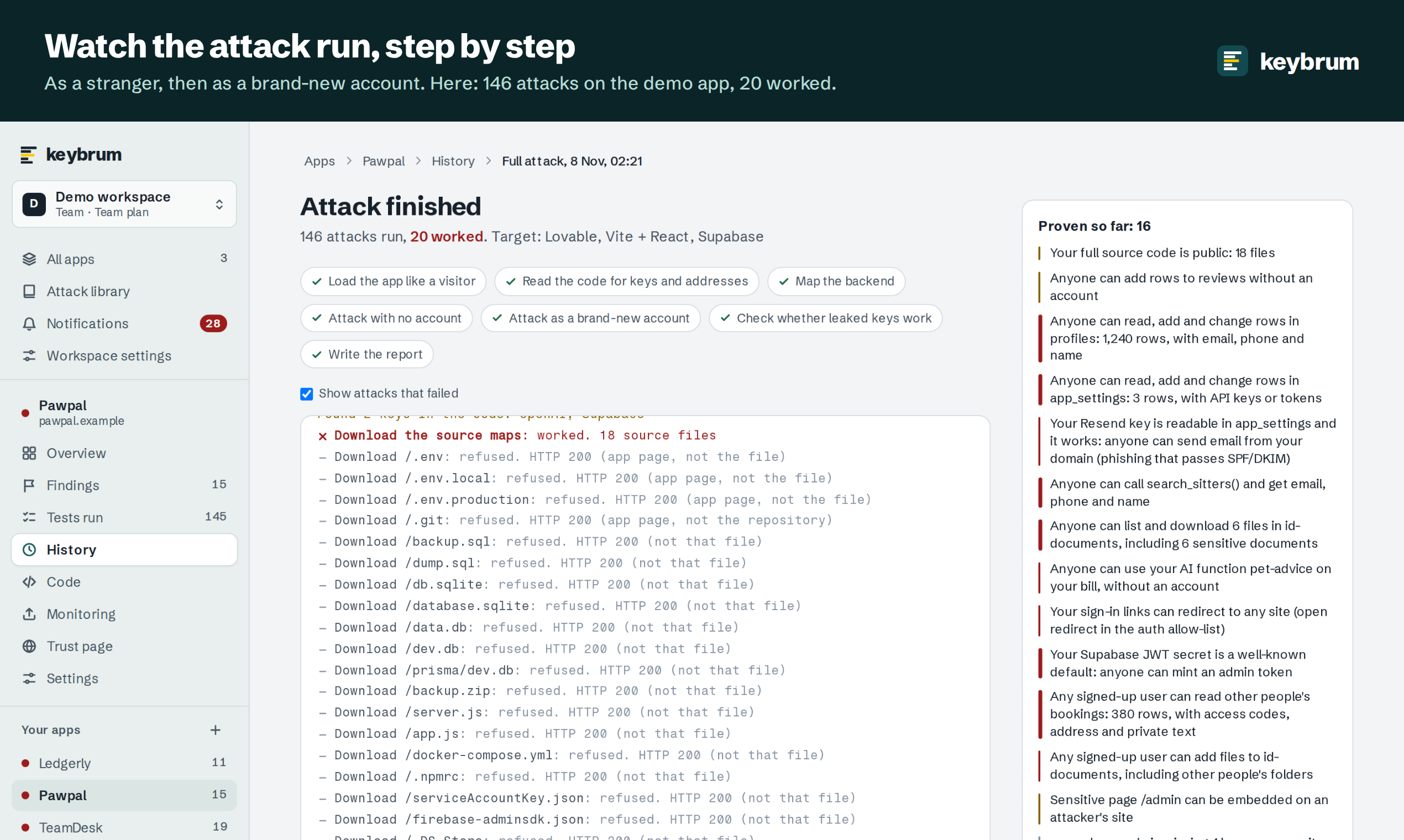
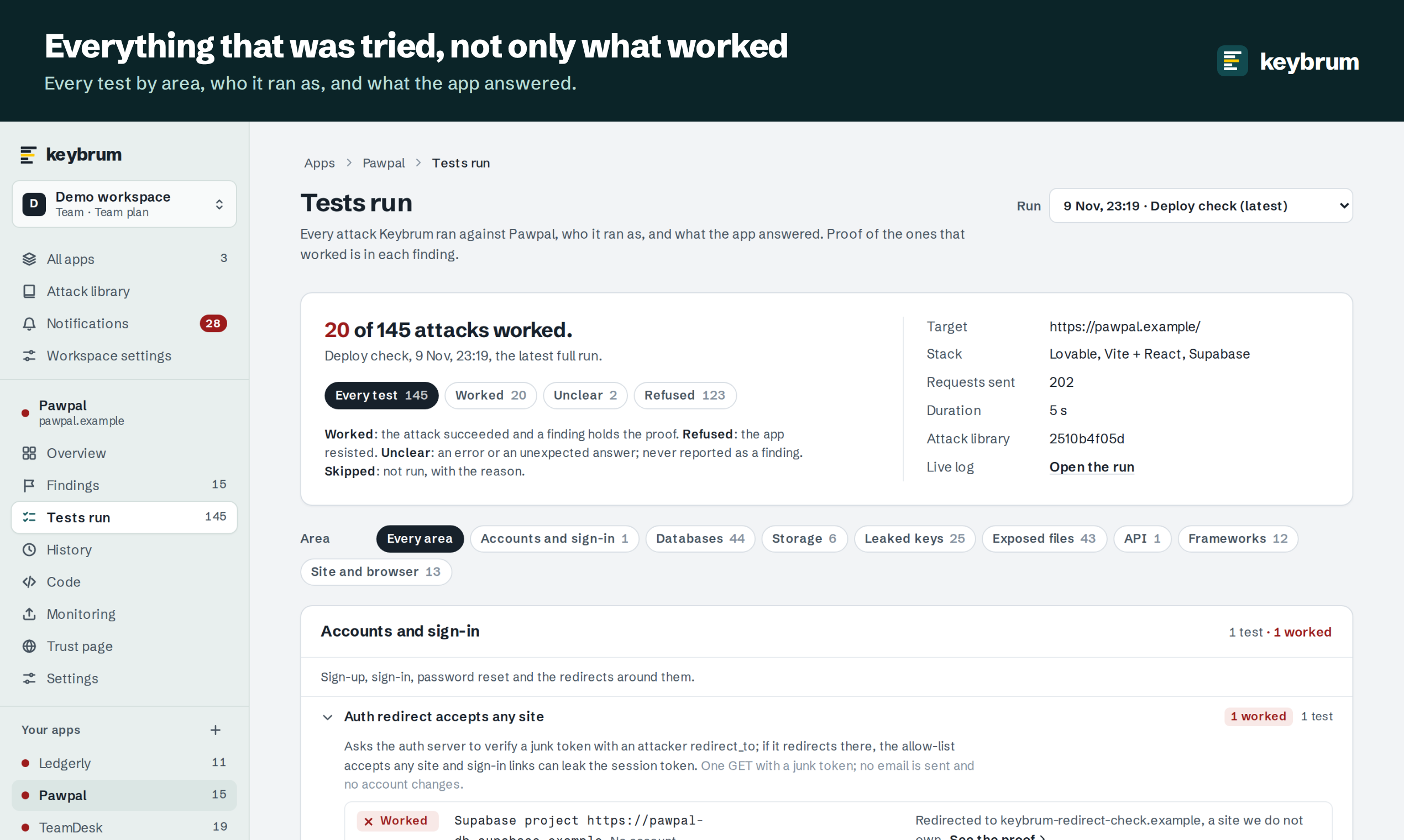
Keybrum is an automated penetration test for apps built with AI. It attacks your live app from the internet, as a stranger and as a brand-new account, with more than 300 attacks: Supabase tables without row level security, open Firebase rules, secret keys in the JavaScript bundle, open storage, unprotected AI endpoints and known Next.js CVEs. Every finding comes with proof and a fix for your coding agent, and it closes only when the same attack fails.
Features
- Attacks the live app from the internet, as a stranger and as a brand-new account
- More than 300 attacks for Supabase, Firebase, Clerk, Convex, Next.js API routes, tRPC and GraphQL
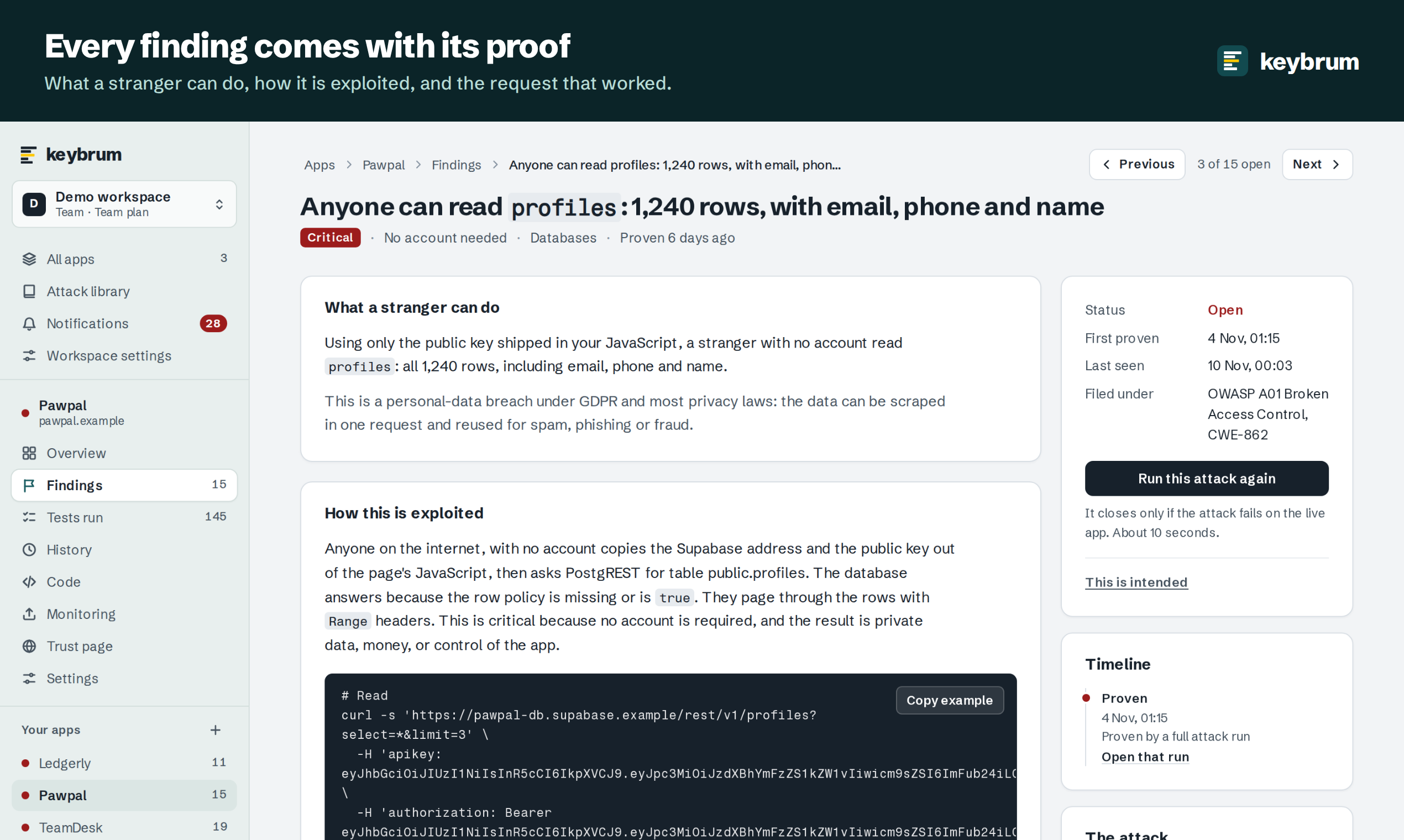
- Proof for every finding: the request that worked and what it returned, redacted
- Fix prompts for Lovable, Bolt, Cursor and Claude Code
- MCP server: your coding agent reads the findings and retests them itself
- A finding closes only when the same attack fails on the live app
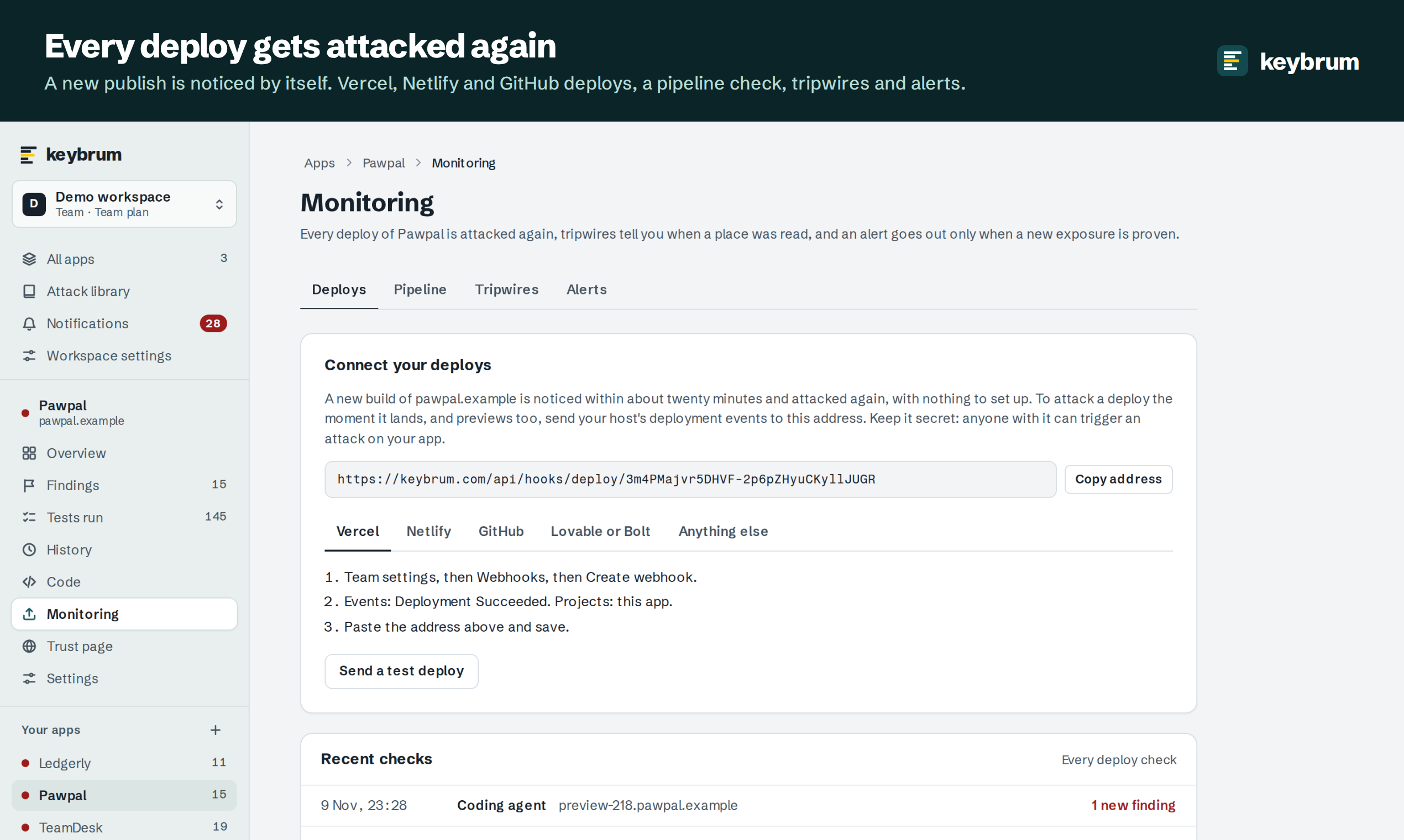
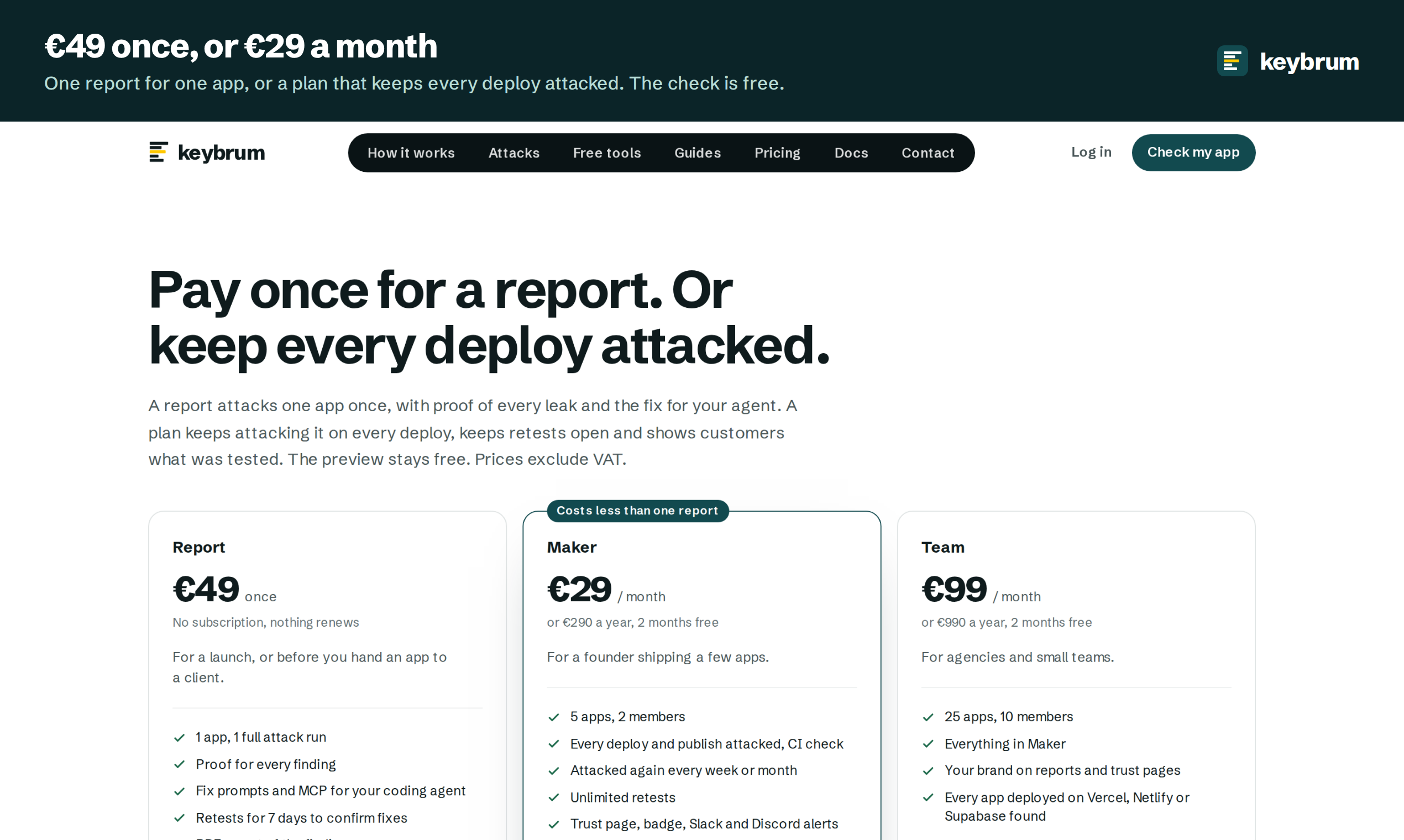
- Every deploy attacked again (Vercel, Netlify, GitHub), with a CI check
- Attacks every week or month, and again when new attacks join the library
- Public trust page and badge for customers and security questionnaires
- PDF report of the findings
- Your brand on reports and trust pages (Team plan)
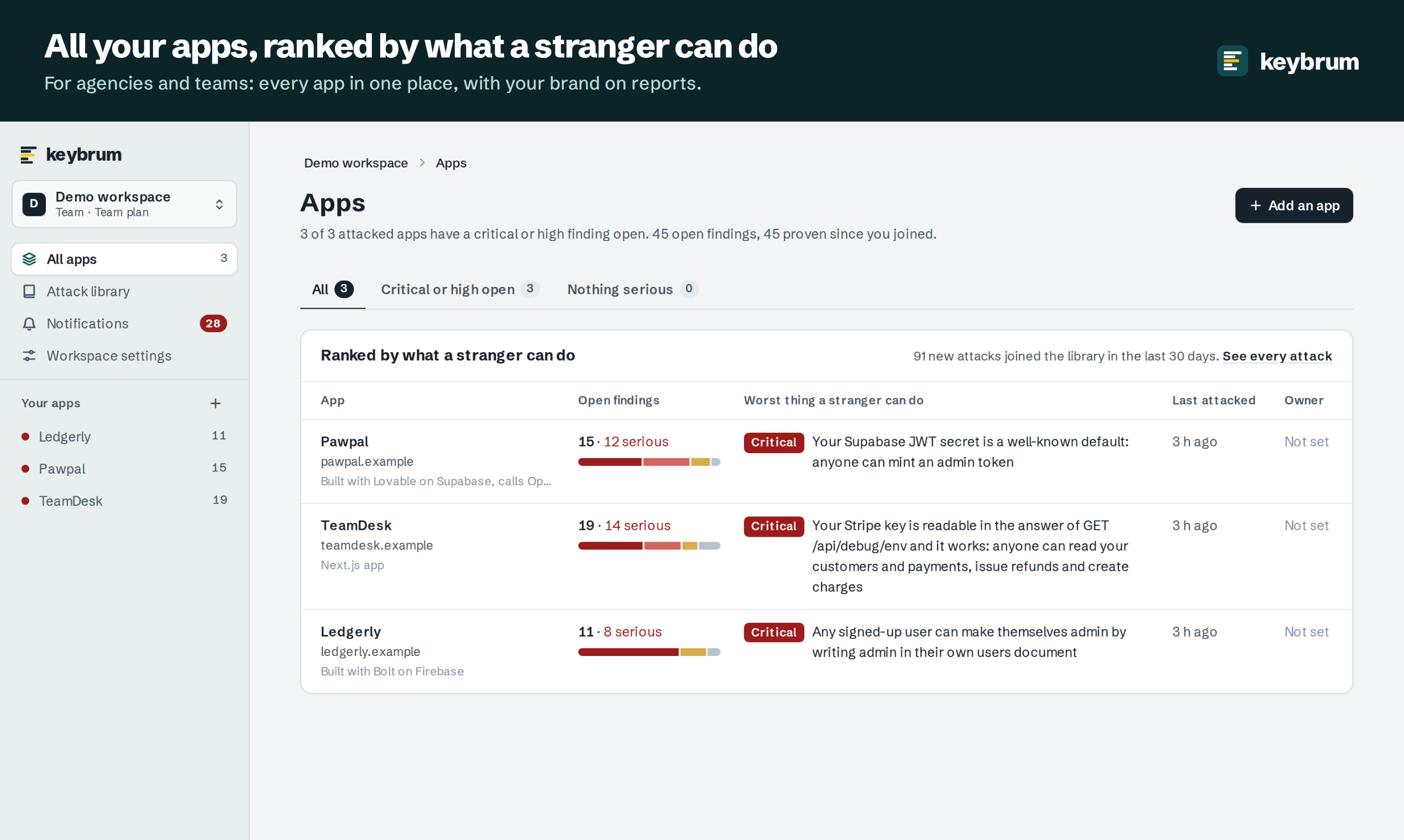
- Every app deployed on Vercel, Netlify or Supabase found (Team plan)
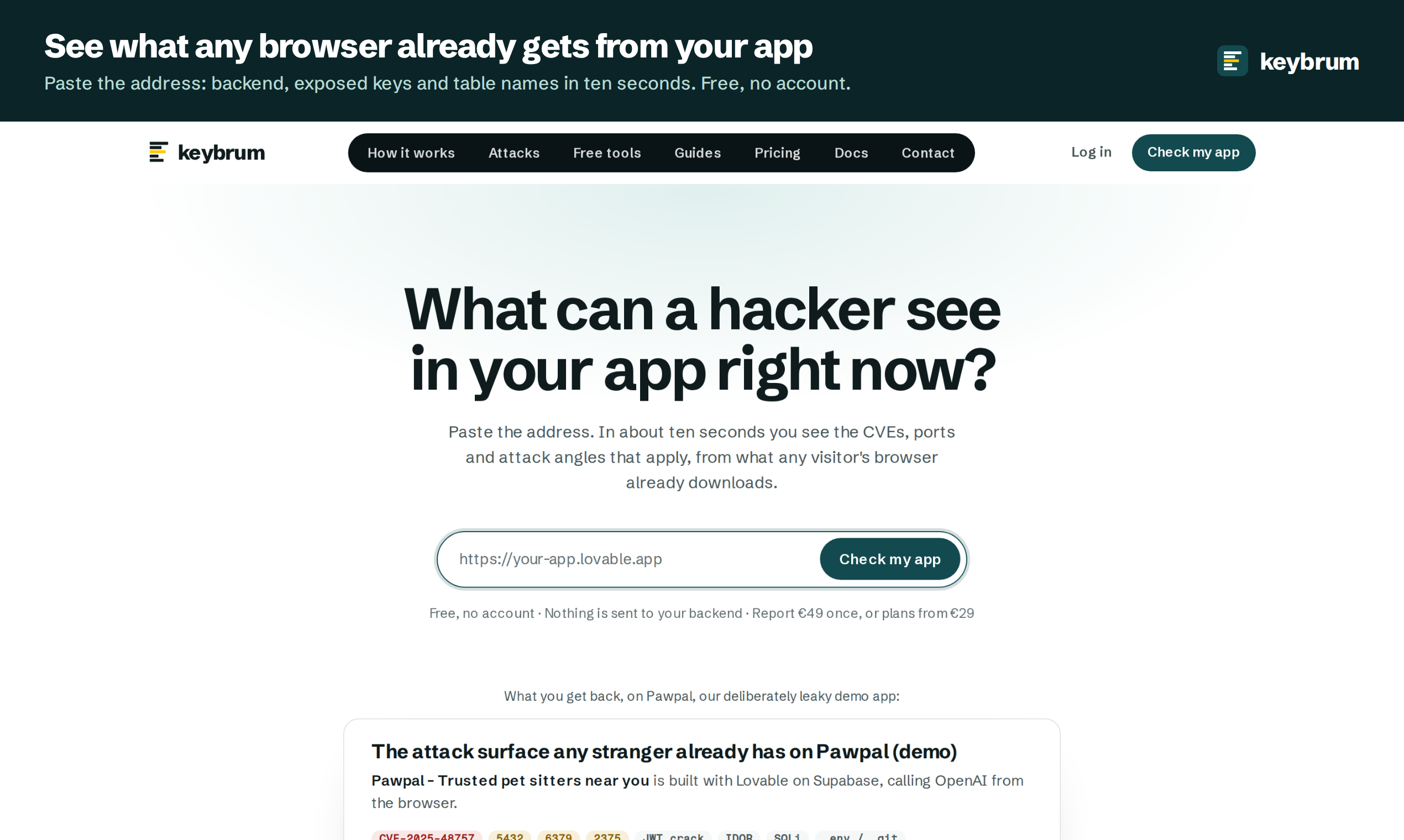
- Free check with no account, and free Supabase, Firebase, API key and Next.js CVE checkers
Use Cases
- Before launch: Find out what a stranger can do with your app before your first users do, and fix it with the agent you built it with.
- Agencies at delivery: Hand every client a third-party test, a trust page under your brand, and a retest on every deploy.
- Security questionnaires: Answer the testing section with a dated report and a public page of what was tested and when.
- Every app your company runs: Find every app deployed on Vercel, Netlify or Supabase, ranked by what it exposes, each with an owner.

Comments


Anyone can ship an app in a few prompts now, and I think that's great. But the agent optimizes for "it works", not for "a stranger can't read my users table". Nobody asks it for that part. Keybrum attacks your live app from the outside, the way a stranger would: first with nothing but the page and its JavaScript, then as a brand-new account. Every finding comes with the request that worked and a fix written for your coding agent, and it only closes when the same attack fails again on the live app. The check on the home page is free, no account: paste an address and you see what any visitor's browser already downloads. The backend, its keys, the tables named in the code. We never say an app is secure. We say which attacks ran, when, and which ones worked. I'm here all day. Ask me how a specific attack works, or what it covers on your stack.
Premium Products


































Sponsors
Buy
Makers
Makers
Comments
Anyone can ship an app in a few prompts now, and I think that's great. But the agent optimizes for "it works", not for "a stranger can't read my users table". Nobody asks it for that part. Keybrum attacks your live app from the outside, the way a stranger would: first with nothing but the page and its JavaScript, then as a brand-new account. Every finding comes with the request that worked and a fix written for your coding agent, and it only closes when the same attack fails again on the live app. The check on the home page is free, no account: paste an address and you see what any visitor's browser already downloads. The backend, its keys, the tables named in the code. We never say an app is secure. We say which attacks ran, when, and which ones worked. I'm here all day. Ask me how a specific attack works, or what it covers on your stack.
Premium Products
New to Fazier?

Find your next favorite product or submit your own. Made by @FalakDigital.
Copyright ©2026. All Rights Reserved