
Kabit Habit Tracker
Kabit: Free habit tracker app for iOS with streak counters
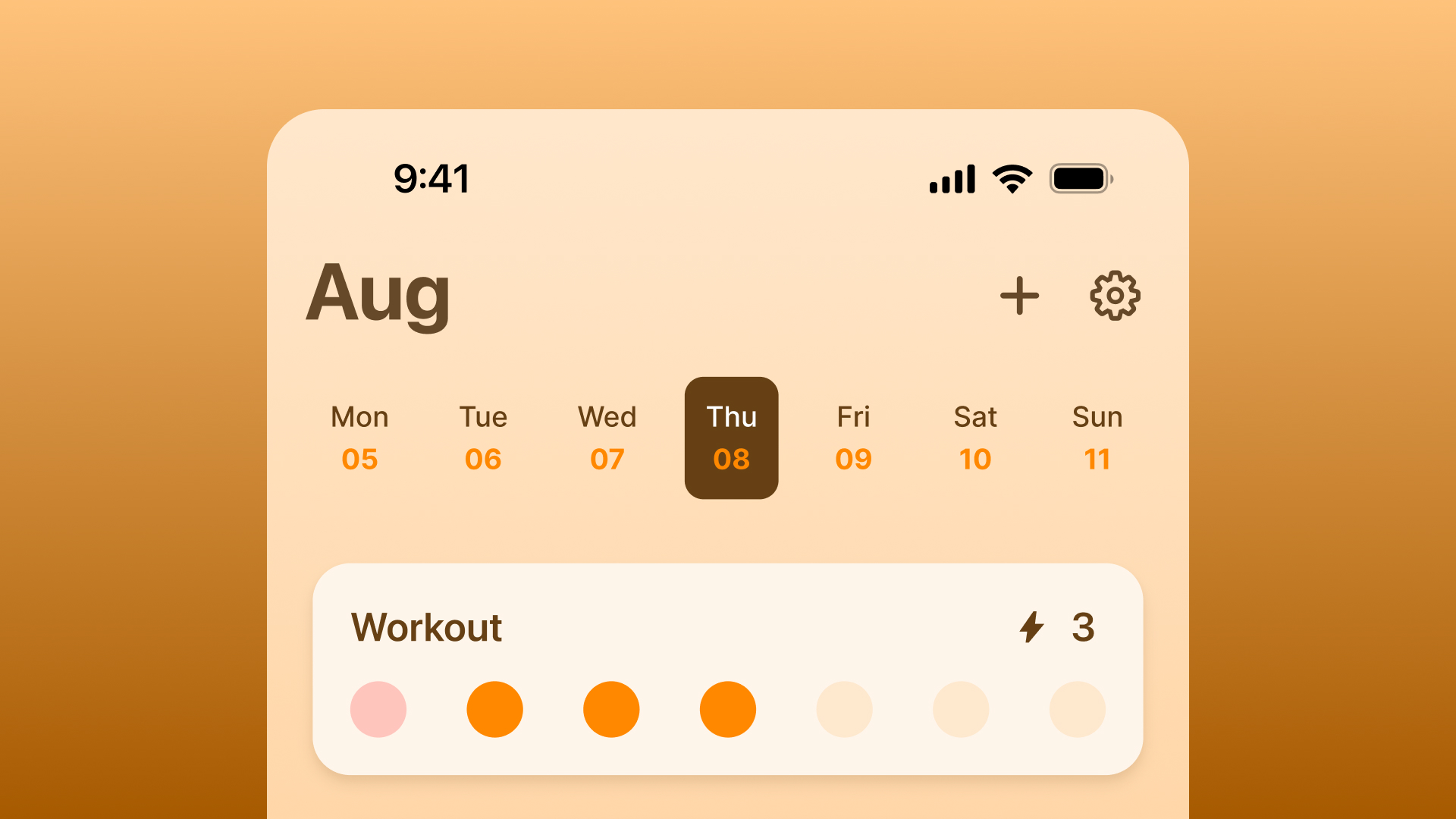
Building lasting habits is hard. Most people fail not because of laziness, but because they lack the right system. Kabit is a beautifully simple habit tracker app for iPhone that helps you track any habit, build powerful streaks, and stay consistent — even on your busiest days.
Trusted by 50,000+ users worldwide, Kabit combines visual streak tracking, performance analytics, and smart reminders into one clean, distraction-free experience. Whether you want to build a morning workout routine, meditate daily, read more books, or drink more water — Kabit keeps you accountable every single day.
Key Features:
- Daily habit tracking with visual streak counters
- Performance analytics and habit calendars
- Smart, customizable reminders that adapt to your schedule
- Home screen widgets for quick check-ins without opening the app
- Multiple themes and language support
- Works fully offline
Unlike overcomplicated productivity apps, Kabit stays out of your way and keeps your focus where it belongs — on showing up consistently. With a 4.7-star average rating and 1,000+ five-star reviews, Kabit is one of the highest-rated habit tracker apps on the App Store.

Comments


I analyzed 440,000 cafes and 5,200 roasters across 10 countries to answer the coffee questions Google can't. This started as a spreadsheet. I wanted to know which city actually has the best coffee - not "best coffee cities" listicles written by someone who visited one Starbucks in Rome. Real data. Consistent scoring. Every cafe rated on the same four pillars: coffee quality, atmosphere, value, service. That spreadsheet became CoffeeTrove. The dataset today: 440,449 cafes. 5,258 roasters. 10+ cities. Every entry scored. Here's what 18 months of data collection taught me: "What's the best coffee city in the world?" Depends what you mean. Melbourne has the highest median quality scores across the board. But Tokyo has more specialty cafes per square kilometer than anywhere else on Earth. Berlin is where roasters are doing the most experimental work right now. Lisbon is the fastest-growing specialty scene in Europe. There's no single answer, which is exactly why I built a scoring system instead of writing another opinion piece. "Do independent cafes actually make better coffee?" Yes. And it's not close. Across every city in the dataset, single-location cafes score 15-20% higher on coffee quality than chains. Chains win on consistency and price. That's it. I published the methodology so you can check it yourself. "Why does my espresso taste different at home?" This question comes up constantly. So I built an Espresso Dial-In Helper - you describe what's wrong (sour, bitter, watery, too intense) and it tells you exactly what to adjust. Dose, grind, time, temperature. No guessing. But the tool that gets the most traffic surprised me: the Grind Size Translator. Turns out a "medium" grind on a Comandante C40 is nothing like a "medium" on a Baratza Encore or a Timemore C2. People switch grinders and suddenly their coffee tastes terrible. The translator converts settings between 6+ grinder brands instantly. Simple problem, nobody had solved it. "How much am I actually saving brewing at home?" Built a Cost Per Cup Calculator for this. Plug in your setup - beans, equipment, how many cups per day - and it shows your real cost per cup vs your local cafe. Spoiler: a $300 grinder pays for itself in about 4 months if you were buying $5 lattes. The full tool list (14 free tools, no sign-up): - Grind Size Translator (convert between Comandante, Baratza, Fellow, Timemore, and more) - Espresso Dial-In Helper (fix your shot in 3 clicks) - Brew Timer with pour schedules (V60, AeroPress, Chemex, French Press, Cold Brew, Moka Pot) - Cost Per Cup Calculator (home vs cafe with annual savings projection) - Interactive Coffee Flavor Wheel (95 SCA tasting notes across 3 levels) - Harvest Calendar (18+ coffee-producing countries, seasonality mapped) - Brew Ratio Calculator (water-to-coffee ratios for every method) - Brew Quiz (5 questions to find your ideal brewing method) - Bean Freshness Calculator (peak windows by roast date and brew style) - Caffeine Calculator (by drink type and serving size) - Extraction Calculator (TDS, dose, yield) - Grind Size Guide (visual reference by brewing method) - Grind Size Comparator (interactive particle size slider) - Brew Strength Slider (adjust coffee-to-water live) The knowledge hub covers origin profiles for Ethiopia, Colombia, Kenya, Panama, Brazil and 13 other producing countries - terroir, altitude, processing methods, what to expect in the cup. Plus 15+ brewing method deep-dives and a reference base of 1,000+ aromatic compounds. All cross-linked so you can go from "I like fruity coffee" to "here's the exact origin, roast level, and brew method to get that" in three clicks. Why I built this Every time I Googled a coffee question I got one of three things: an affiliate blog disguised as a review, a 2,000-word article that never answers the question, or a Reddit thread from 2019 with conflicting opinions. None of them had data behind the answer. CoffeeTrove is the reference I wanted to exist. Transparent methodology. Real numbers. Tools that actually solve problems instead of selling you a grinder. 440K cafes scored. 14 tools. All free. What's the coffee question you keep searching for and never getting a real answer to? https://coffeetrove.com


The offline-first approach is a smart differentiator — most habit trackers require accounts and cloud sync, which adds friction for users who just want to track a few daily habits. The widget for quick check-ins without opening the app is particularly well-thought-out for reducing the barrier to logging. How do you handle data backup for users who switch devices?

This is a refreshing take on habit tracking — not by adding more features, but by removing friction. Most apps overestimate motivation and underestimate consistency; Kabit seems to do the opposite. The focus on streaks, simplicity, and offline usability suggests a clear understanding that habits are built in small, repeatable moments, not complex systems. What stands out is the restraint. In a category crowded with “all-in-one productivity” tools, choosing to stay lightweight is actually a strategic advantage. The real question long-term isn’t feature expansion, but whether Kabit can deepen user attachment — becoming something people don’t just use, but rely on daily without thinking.

Premium Products











































Sponsors
Buy

Makers

Makers
Comments
I analyzed 440,000 cafes and 5,200 roasters across 10 countries to answer the coffee questions Google can't. This started as a spreadsheet. I wanted to know which city actually has the best coffee - not "best coffee cities" listicles written by someone who visited one Starbucks in Rome. Real data. Consistent scoring. Every cafe rated on the same four pillars: coffee quality, atmosphere, value, service. That spreadsheet became CoffeeTrove. The dataset today: 440,449 cafes. 5,258 roasters. 10+ cities. Every entry scored. Here's what 18 months of data collection taught me: "What's the best coffee city in the world?" Depends what you mean. Melbourne has the highest median quality scores across the board. But Tokyo has more specialty cafes per square kilometer than anywhere else on Earth. Berlin is where roasters are doing the most experimental work right now. Lisbon is the fastest-growing specialty scene in Europe. There's no single answer, which is exactly why I built a scoring system instead of writing another opinion piece. "Do independent cafes actually make better coffee?" Yes. And it's not close. Across every city in the dataset, single-location cafes score 15-20% higher on coffee quality than chains. Chains win on consistency and price. That's it. I published the methodology so you can check it yourself. "Why does my espresso taste different at home?" This question comes up constantly. So I built an Espresso Dial-In Helper - you describe what's wrong (sour, bitter, watery, too intense) and it tells you exactly what to adjust. Dose, grind, time, temperature. No guessing. But the tool that gets the most traffic surprised me: the Grind Size Translator. Turns out a "medium" grind on a Comandante C40 is nothing like a "medium" on a Baratza Encore or a Timemore C2. People switch grinders and suddenly their coffee tastes terrible. The translator converts settings between 6+ grinder brands instantly. Simple problem, nobody had solved it. "How much am I actually saving brewing at home?" Built a Cost Per Cup Calculator for this. Plug in your setup - beans, equipment, how many cups per day - and it shows your real cost per cup vs your local cafe. Spoiler: a $300 grinder pays for itself in about 4 months if you were buying $5 lattes. The full tool list (14 free tools, no sign-up): - Grind Size Translator (convert between Comandante, Baratza, Fellow, Timemore, and more) - Espresso Dial-In Helper (fix your shot in 3 clicks) - Brew Timer with pour schedules (V60, AeroPress, Chemex, French Press, Cold Brew, Moka Pot) - Cost Per Cup Calculator (home vs cafe with annual savings projection) - Interactive Coffee Flavor Wheel (95 SCA tasting notes across 3 levels) - Harvest Calendar (18+ coffee-producing countries, seasonality mapped) - Brew Ratio Calculator (water-to-coffee ratios for every method) - Brew Quiz (5 questions to find your ideal brewing method) - Bean Freshness Calculator (peak windows by roast date and brew style) - Caffeine Calculator (by drink type and serving size) - Extraction Calculator (TDS, dose, yield) - Grind Size Guide (visual reference by brewing method) - Grind Size Comparator (interactive particle size slider) - Brew Strength Slider (adjust coffee-to-water live) The knowledge hub covers origin profiles for Ethiopia, Colombia, Kenya, Panama, Brazil and 13 other producing countries - terroir, altitude, processing methods, what to expect in the cup. Plus 15+ brewing method deep-dives and a reference base of 1,000+ aromatic compounds. All cross-linked so you can go from "I like fruity coffee" to "here's the exact origin, roast level, and brew method to get that" in three clicks. Why I built this Every time I Googled a coffee question I got one of three things: an affiliate blog disguised as a review, a 2,000-word article that never answers the question, or a Reddit thread from 2019 with conflicting opinions. None of them had data behind the answer. CoffeeTrove is the reference I wanted to exist. Transparent methodology. Real numbers. Tools that actually solve problems instead of selling you a grinder. 440K cafes scored. 14 tools. All free. What's the coffee question you keep searching for and never getting a real answer to? https://coffeetrove.com
The offline-first approach is a smart differentiator — most habit trackers require accounts and cloud sync, which adds friction for users who just want to track a few daily habits. The widget for quick check-ins without opening the app is particularly well-thought-out for reducing the barrier to logging. How do you handle data backup for users who switch devices?
This is a refreshing take on habit tracking — not by adding more features, but by removing friction. Most apps overestimate motivation and underestimate consistency; Kabit seems to do the opposite. The focus on streaks, simplicity, and offline usability suggests a clear understanding that habits are built in small, repeatable moments, not complex systems. What stands out is the restraint. In a category crowded with “all-in-one productivity” tools, choosing to stay lightweight is actually a strategic advantage. The real question long-term isn’t feature expansion, but whether Kabit can deepen user attachment — becoming something people don’t just use, but rely on daily without thinking.
Premium Products
New to Fazier?

Find your next favorite product or submit your own. Made by @FalakDigital.
Copyright ©2026. All Rights Reserved