
Isoline
A one-minute altitude sickness check on your Apple Watch


Comments

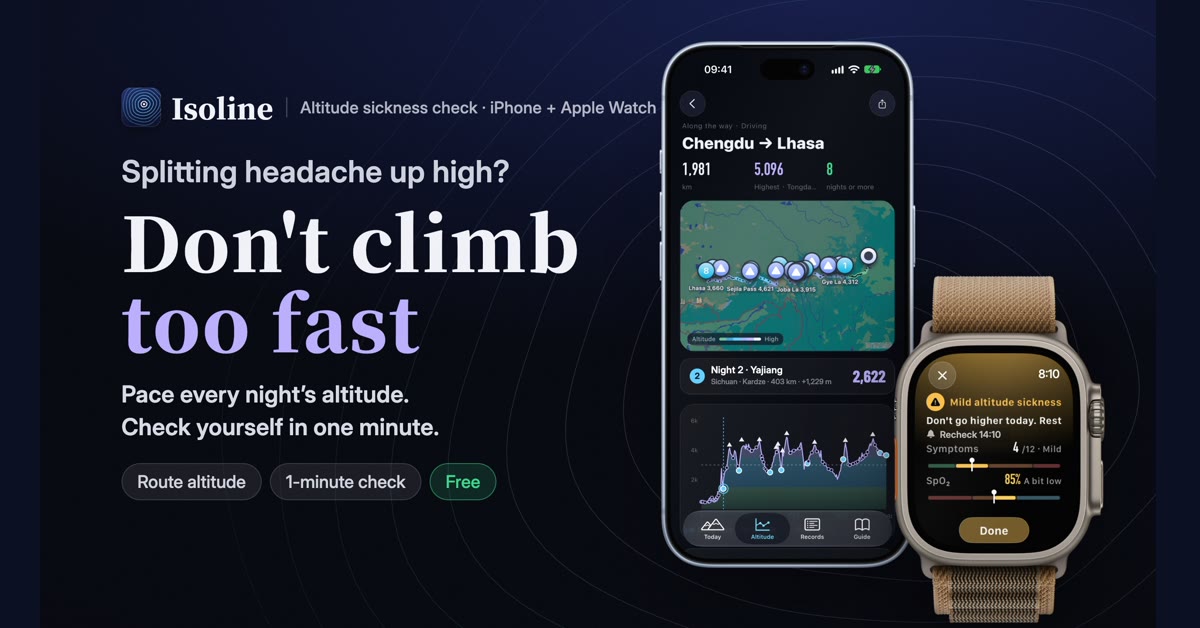
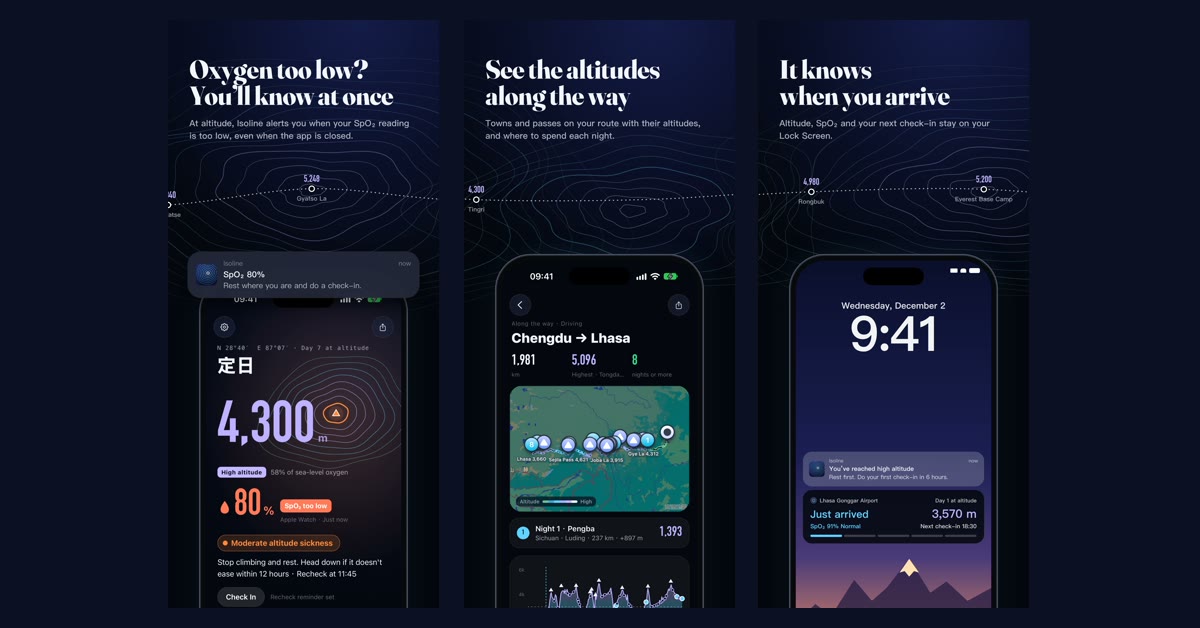
Hi, I made Isoline. A lot of altitude sickness comes from climbing too fast, not from being unfit. Many travelers fly from Lima, at sea level, to Cusco at about 3,400 m in just over an hour, spend the first afternoon walking around, and wake up the next morning with a splitting headache. Once you're up there and feeling off, it's hard to tell whether to keep going, rest, or go down. What Isoline does: - Before you go: look up the altitude of any place, or enter a driving route to see the towns and passes along the way, with suggested places to sleep so you don't climb too fast. Built-in routes include the Everest Base Camp trek and Kilimanjaro's Machame route. - At altitude: it notices when you pass 2,500 m. The check is four symptom questions from the Lake Louise score, four warning signs, and a recent blood oxygen reading from your Apple Watch. You get one answer: keep going, rest, or descend now, with the next check-in reminder already set. - If it's serious: clear steps to head down, a button to call the local emergency number, and a text with your location and altitude to your emergency contact. There's no account, and your health data never leaves your iPhone and Apple Watch. It's free. Some limits, up front: the check needs an Apple Watch that measures blood oxygen, route planning only works for driving routes for now, and it's not a medical device. If you've been to high altitude, I'd like to hear what you wish you'd known before going.
Premium Products








































Sponsors
Buy
Makers
Makers
Comments
Hi, I made Isoline. A lot of altitude sickness comes from climbing too fast, not from being unfit. Many travelers fly from Lima, at sea level, to Cusco at about 3,400 m in just over an hour, spend the first afternoon walking around, and wake up the next morning with a splitting headache. Once you're up there and feeling off, it's hard to tell whether to keep going, rest, or go down. What Isoline does: - Before you go: look up the altitude of any place, or enter a driving route to see the towns and passes along the way, with suggested places to sleep so you don't climb too fast. Built-in routes include the Everest Base Camp trek and Kilimanjaro's Machame route. - At altitude: it notices when you pass 2,500 m. The check is four symptom questions from the Lake Louise score, four warning signs, and a recent blood oxygen reading from your Apple Watch. You get one answer: keep going, rest, or descend now, with the next check-in reminder already set. - If it's serious: clear steps to head down, a button to call the local emergency number, and a text with your location and altitude to your emergency contact. There's no account, and your health data never leaves your iPhone and Apple Watch. It's free. Some limits, up front: the check needs an Apple Watch that measures blood oxygen, route planning only works for driving routes for now, and it's not a medical device. If you've been to high altitude, I'd like to hear what you wish you'd known before going.
Premium Products
New to Fazier?

Find your next favorite product or submit your own. Made by @FalakDigital.
Copyright ©2026. All Rights Reserved