
Hi Fazier 👋 I'm Ganesh.
Every wellness app I've tried optimises for my engagement — streaks, push-nudges, a little guilt when I skip a day. I wanted the opposite. So we built it.
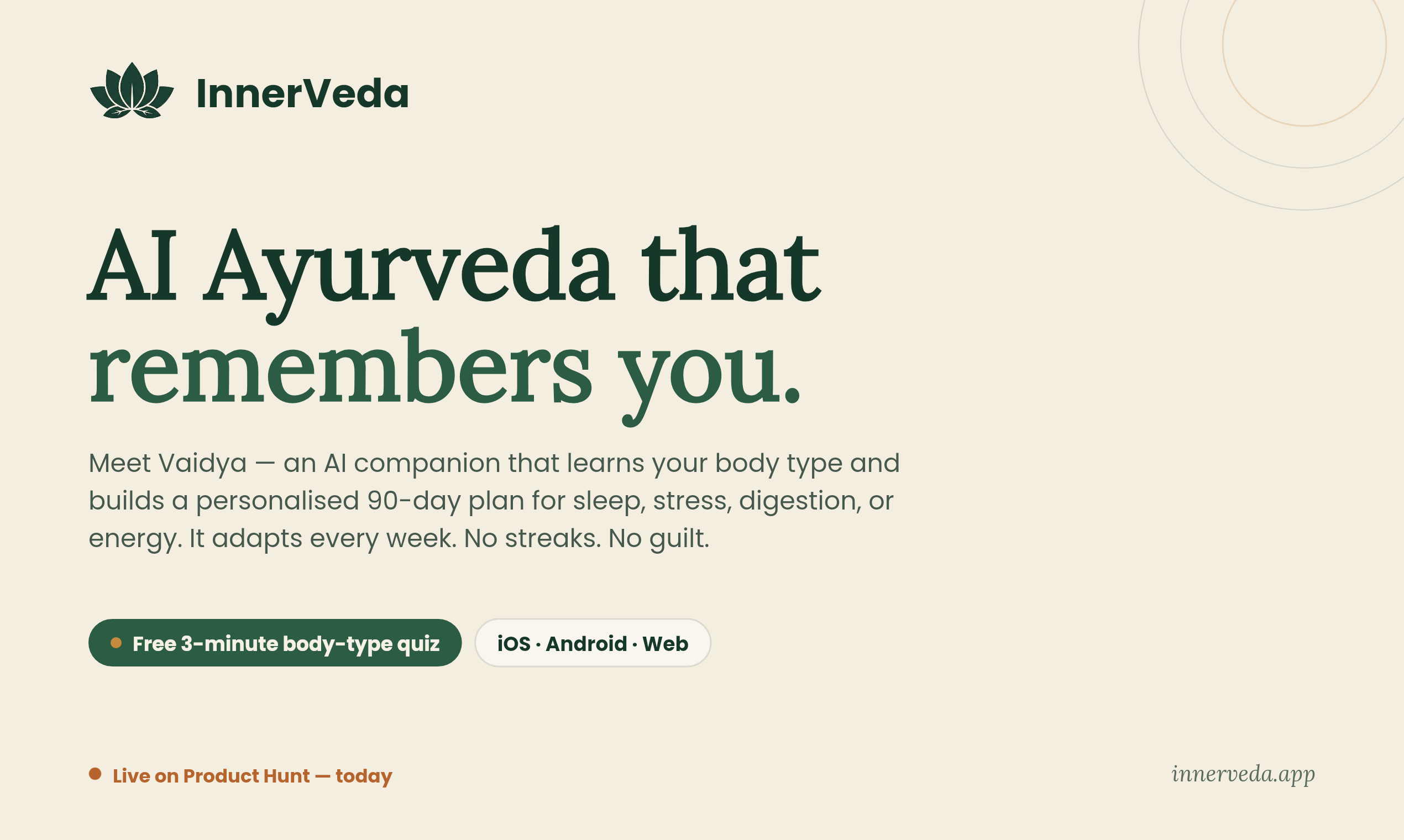
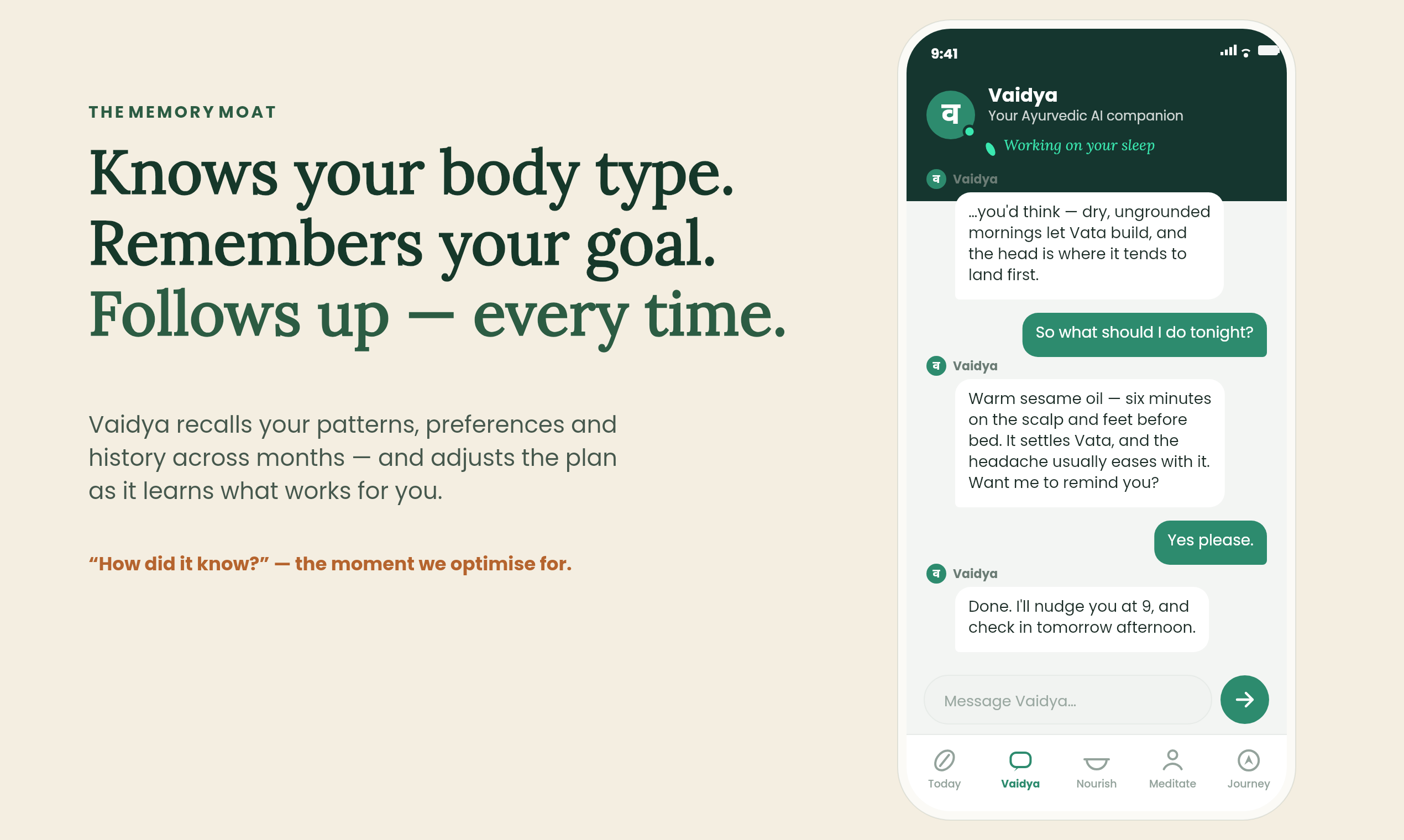
InnerVeda is Vaidya, an AI Ayurvedic companion that learns your body type and actually remembers you — that you sleep badly when you eat late, that you dislike milk, that Yoga Nidra at 10pm works for you. It builds a personalised 90-day plan for one thing you care about (sleep, stress, digestion, or energy) and adapts it every week.
Three deliberate choices:
• It remembers — the plan gets more personal over time, not more generic. ("How did it know?" is the moment we optimise for, not screen time.)
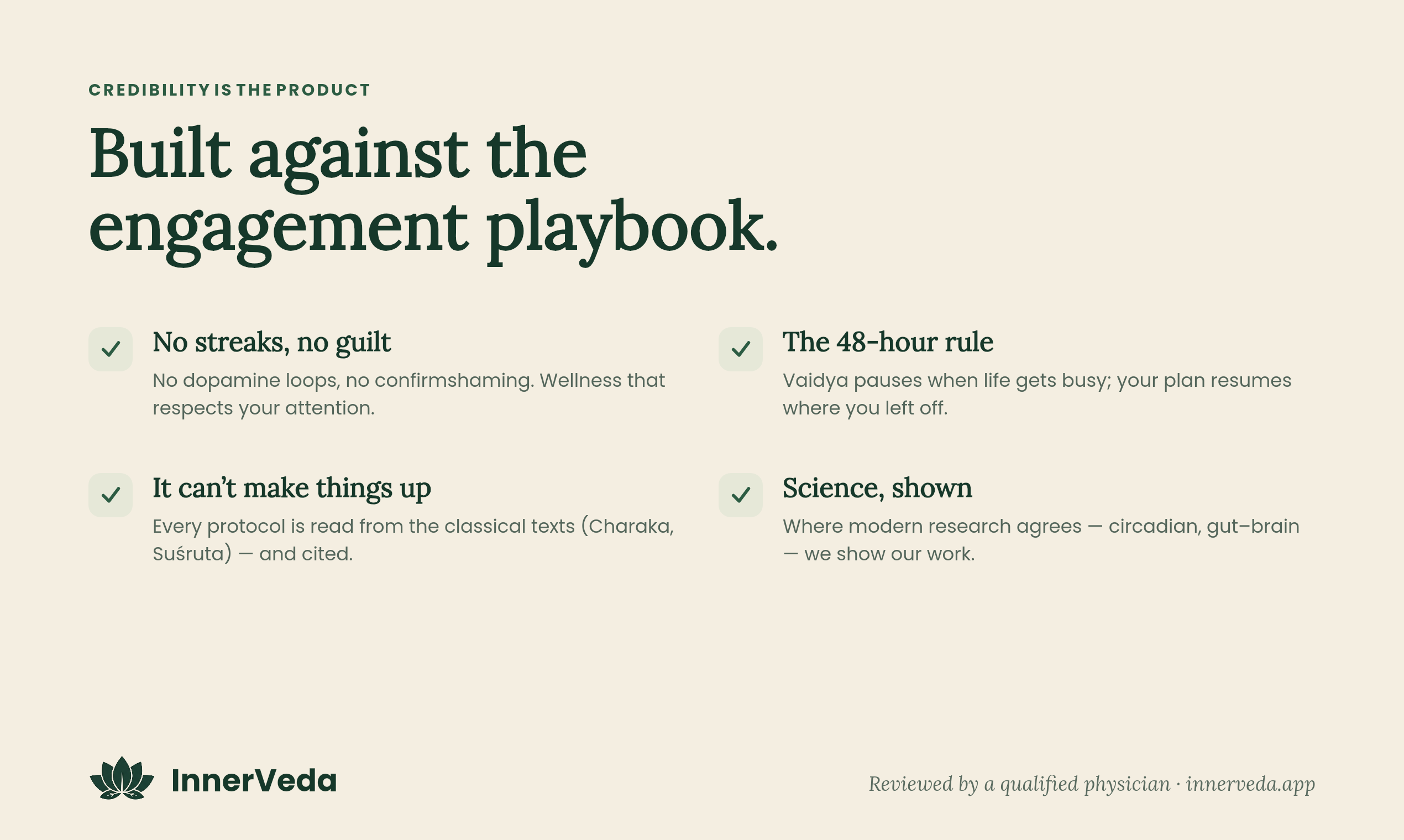
• No dark patterns — no streaks, no guilt. A 48-hour rule pauses Vaidya when life gets busy; your plan resumes where you left off.
• It can't make things up — every protocol is read from the classical texts (Charaka, Suśruta) and cited; where modern science agrees, we show it.
Start with the free 3-minute body-type quiz — no signup, instant result: 👉 https://innerveda.app/body-type-identification?utm_source=producthunt&utm_medium=referral&utm_campaign=launch_jun2026
Live on iOS, Android & web. Already #1 of the day on Fazier and PeerPush. I'd love your honest take — what did the quiz get right, or wrong? AMA.
Features
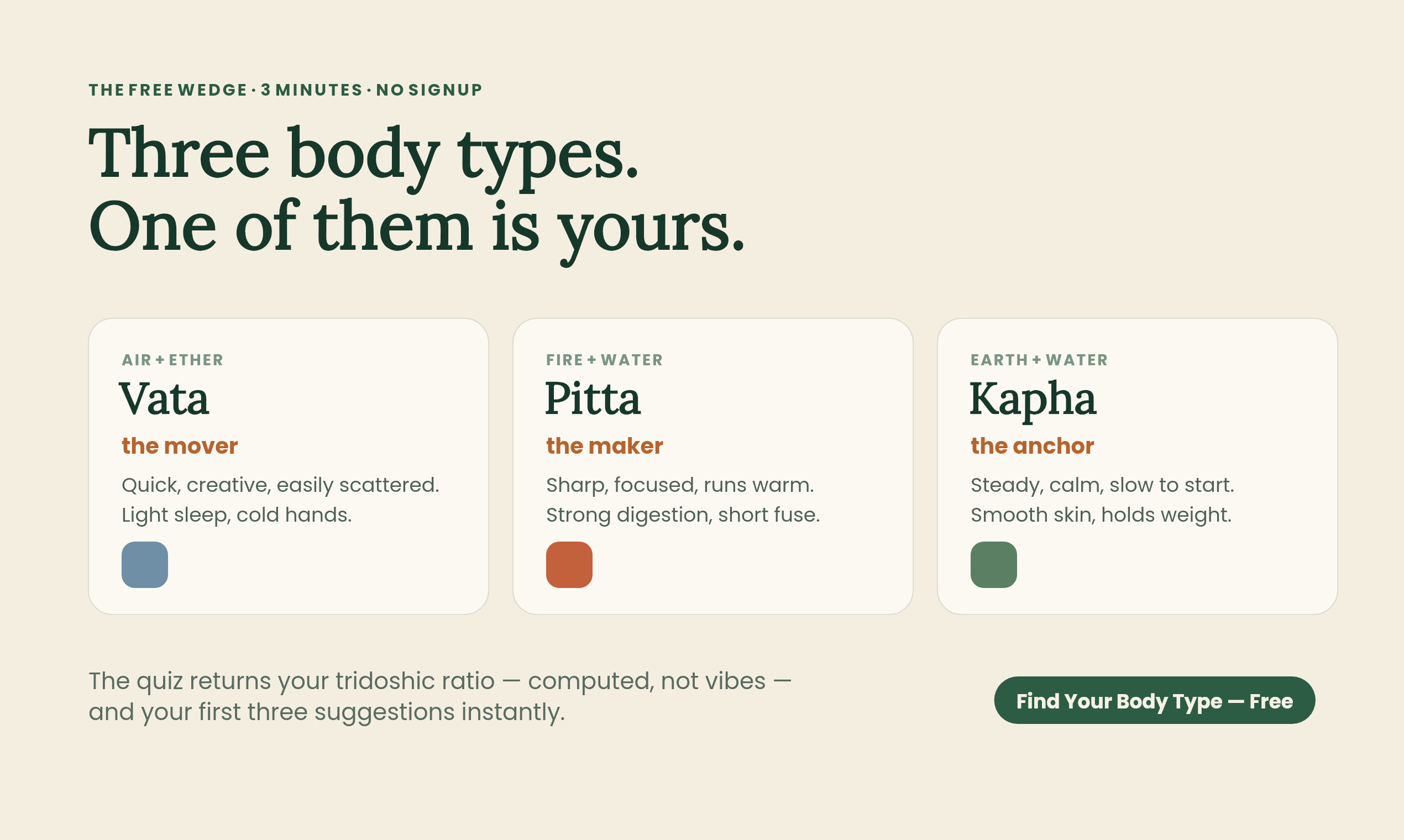
- Free 3-minute body-type quiz — no signup; returns your tridoshic ratio (Vata/Pitta/Kapha) from a deterministic, physician-signable scorer, not a vibe check
- Vaidya, your AI Ayurvedic companion — a chat that learns your body type and remembers your patterns, preferences and history across months; the more you use it, the more personal it gets
- A personalised 90-day plan, one focus at a time — sleep, stress, digestion, energy or eating better — that adapts every week
- Personalised meal plans (Nourish) — built from 300+ foods mapped to your body type, with recipes, single-meal swaps and shareable recipe cards
- Guided meditation & breathwork (Meditate) — 100+ sessions matched to your body type and goal
- Daily home & check-ins (Today) — a cause-aware dashboard with today's routine and a quick daily check-in
- Your journey, visualised — the 90-day arc with phases, a progress ring, and a real graduation (owned, not endless)
- Built honestly — grounded in the classical texts (Charaka, Suśruta), reviewed by a qualified physician, cites modern science where it agrees
- No dark patterns — no streaks, no guilt; a 48-hour rule pauses Vaidya when life gets busy and resumes where you left off
- Everywhere — iOS, Android and web, with your quiz result syncing across them
- Free to start — free quiz + library; 7-day trial, then membership
Use Cases
- "I keep waking at 3am" — a body-type sleep plan (food timing, wind-down breath, routine) with gentle nightly nudges
- "I'm wired and reactive" — a stress plan with cooling routines and breathwork tuned to your type
- "My digestion's off / I'm bloated" — eating and daily rhythm matched to how your body digests
- "I crash every afternoon" — an energy plan without the caffeine spiral
- "I never know what to eat for my body" — personalised meal plans and clear food guidance
- "I already do yoga or meditate" — personalise the practice you have to your constitution
- "I grew up around Ayurveda" — the wisdom you know, made daily, personal and modern
- "I've tried everything and nothing sticks" — a companion that adapts to you, not another generic programme
- "I want practitioner-grade guidance without $500 consults" — personalised, daily, affordable

Comments



I want to share the behind-the-scenes — the two problems we lost the most sleep over. 🔬 Making an AI you'd actually trust with your health. "AI + Ayurveda" sets off an obvious alarm: a chatbot confidently inventing remedies. So we built the opposite of a free-text oracle. Your body-type result comes from a deterministic scorer — plain, auditable code, not the model — that a qualified Ayurvedic physician can sign off on. Vaidya is then grounded only on the classical texts (Charaka, Suśruta) and your own data, and constrained to *apply* documented guidance with sources, never improvise it. When it doesn't have a grounded answer, it says so. Teaching the model to be humble was harder than making it smart. 🌱 Building it to graduate you, not keep you. Most apps are designed so you never put them down. InnerVeda's plan ends — on purpose. The 90-day arc has a real finish line, and a 48-hour rule quietly pauses things the moment life gets busy: no guilt, no streaks to "break." It almost certainly costs us the engagement numbers investors like. But the moment a wellness app optimises for screen time over the person, it's lost the only thing that matters. That's our bet: that calm, honest and personal beats sticky. Two things I'd genuinely love from you: - Take the free quiz — does Vaidya's first reading actually feel like it *gets* you? Tell me where it's right or wrong. - If you build AI products: how do you handle trust and hallucination in a high-stakes domain? I'd love to compare notes. Thank you for being here 🙏


The deterministic, physician-signable body-type scorer is the detail that makes the rest credible: pulling the classification out of the model and into auditable code is exactly how you keep trust in a high-stakes domain. We made a similar call in a different field. For anything that has to be defensible we generate by constrained substitution from vetted source material instead of letting a model free-write, so there is simply nothing to hallucinate. And designing the 90-day plan to actually end, with a 48-hour pause instead of streaks, takes real conviction. Took the quiz and the first reading felt specific rather than generic. Congrats on the launch.


Premium Products































Sponsors
Buy

Awards
View all
Awards
View allMakers
Makers
Comments
I want to share the behind-the-scenes — the two problems we lost the most sleep over. 🔬 Making an AI you'd actually trust with your health. "AI + Ayurveda" sets off an obvious alarm: a chatbot confidently inventing remedies. So we built the opposite of a free-text oracle. Your body-type result comes from a deterministic scorer — plain, auditable code, not the model — that a qualified Ayurvedic physician can sign off on. Vaidya is then grounded only on the classical texts (Charaka, Suśruta) and your own data, and constrained to *apply* documented guidance with sources, never improvise it. When it doesn't have a grounded answer, it says so. Teaching the model to be humble was harder than making it smart. 🌱 Building it to graduate you, not keep you. Most apps are designed so you never put them down. InnerVeda's plan ends — on purpose. The 90-day arc has a real finish line, and a 48-hour rule quietly pauses things the moment life gets busy: no guilt, no streaks to "break." It almost certainly costs us the engagement numbers investors like. But the moment a wellness app optimises for screen time over the person, it's lost the only thing that matters. That's our bet: that calm, honest and personal beats sticky. Two things I'd genuinely love from you: - Take the free quiz — does Vaidya's first reading actually feel like it *gets* you? Tell me where it's right or wrong. - If you build AI products: how do you handle trust and hallucination in a high-stakes domain? I'd love to compare notes. Thank you for being here 🙏
The deterministic, physician-signable body-type scorer is the detail that makes the rest credible: pulling the classification out of the model and into auditable code is exactly how you keep trust in a high-stakes domain. We made a similar call in a different field. For anything that has to be defensible we generate by constrained substitution from vetted source material instead of letting a model free-write, so there is simply nothing to hallucinate. And designing the 90-day plan to actually end, with a 48-hour pause instead of streaks, takes real conviction. Took the quiz and the first reading felt specific rather than generic. Congrats on the launch.
Premium Products
New to Fazier?

Find your next favorite product or submit your own. Made by @FalakDigital.
Copyright ©2026. All Rights Reserved