
inetGeek
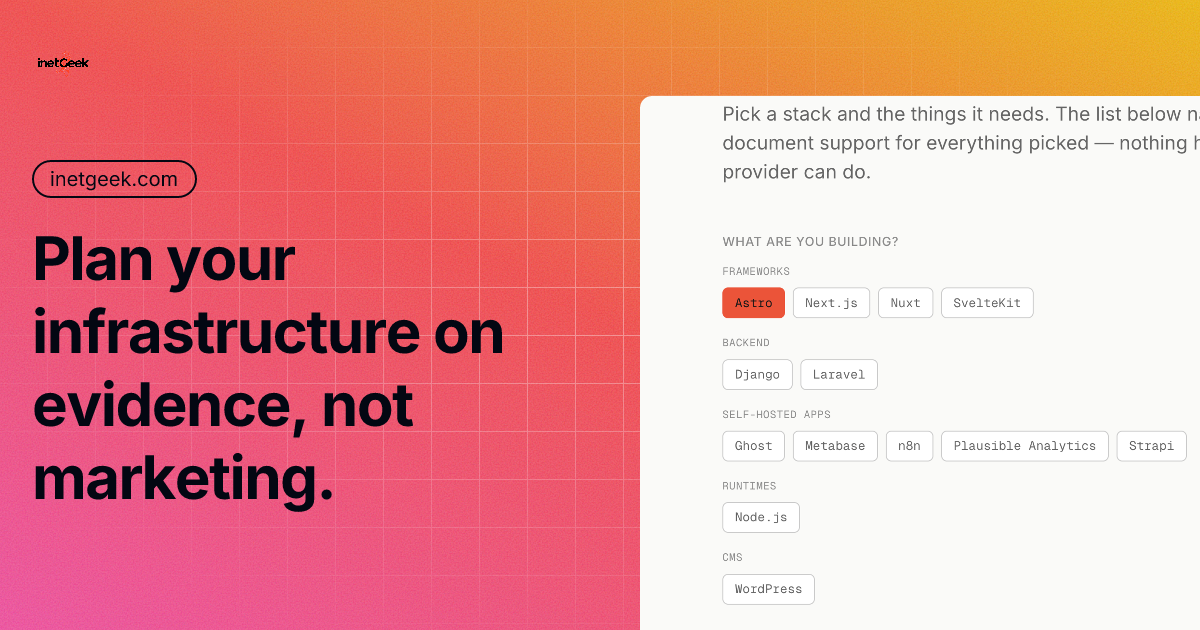
Plan your infrastructure on evidence, not marketing
inetGeek is an independent infrastructure planning resource that helps teams compare hosting, database, and object storage providers using dated, sourced information from what providers actually publish. It covers 211 providers with 488 published comparisons and carries no affiliate links or sponsored placements. Users can plan a full stack by stage and requirements, from idea through enterprise, and see a starting-cost floor for each layer.
Add the inetGeek MCP to your coding agent, to plan your infrastructure in details at every stage of your project.

Use Cases
Add the inetGeek MCP to your coding agent, to plan your infrastructure in details at every stage of your project.

Comments


Dated, sourced comparisons with no affiliate links is the right call; most "best hosting" lists are affiliate pages in disguise. One question about the starting-cost floor: does it include egress and free tiers (AWS, GCP and Azure each handle them very differently), or only list prices for compute and storage? For an early-stage project, those two are usually what make the real bill differ from the estimate.
The no-affiliate, dated-source comparisons are the part I'd trust when picking a stack. One gap for early teams: the starting-cost floor should sit next to egress and backup pricing, not only the published compute price, because those are what usually blow the first invoice. The MCP hook is a practical way to pull the same numbers into a coding agent while planning a stage, instead of bouncing between vendor pricing pages.
Premium Products






















































Sponsors
Buy

Makers
Makers
Comments
Dated, sourced comparisons with no affiliate links is the right call; most "best hosting" lists are affiliate pages in disguise. One question about the starting-cost floor: does it include egress and free tiers (AWS, GCP and Azure each handle them very differently), or only list prices for compute and storage? For an early-stage project, those two are usually what make the real bill differ from the estimate.
The no-affiliate, dated-source comparisons are the part I'd trust when picking a stack. One gap for early teams: the starting-cost floor should sit next to egress and backup pricing, not only the published compute price, because those are what usually blow the first invoice. The MCP hook is a practical way to pull the same numbers into a coding agent while planning a stage, instead of bouncing between vendor pricing pages.
Premium Products
New to Fazier?

Find your next favorite product or submit your own. Made by @FalakDigital.
Copyright ©2026. All Rights Reserved