
How Makers Build
See what makers actually build with — every claim sourced
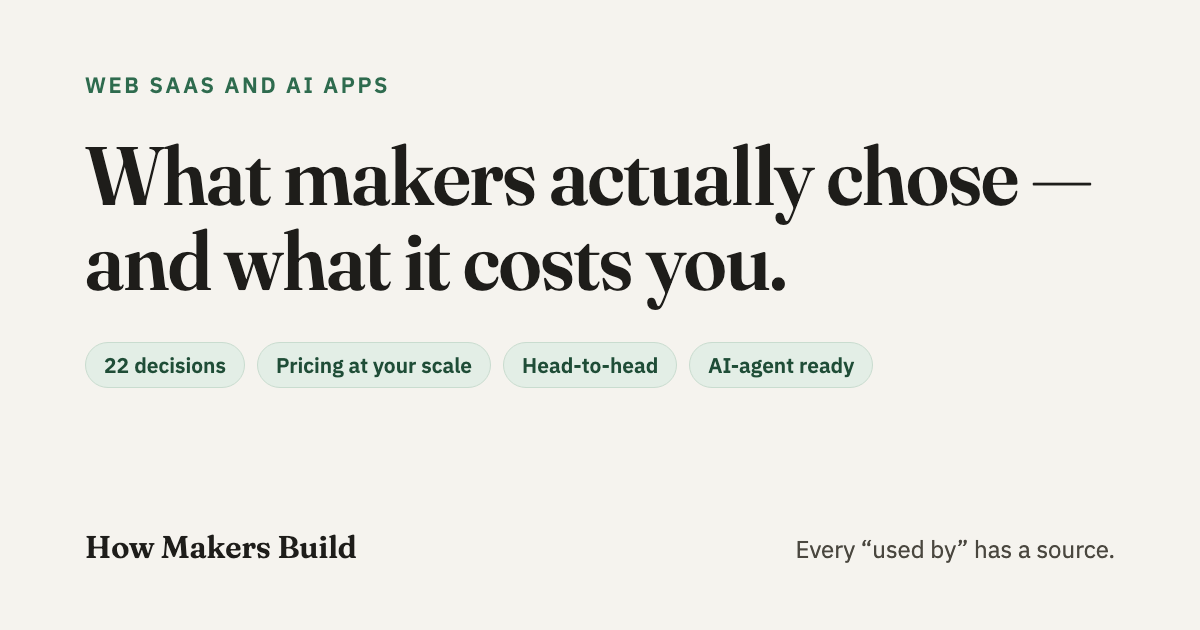
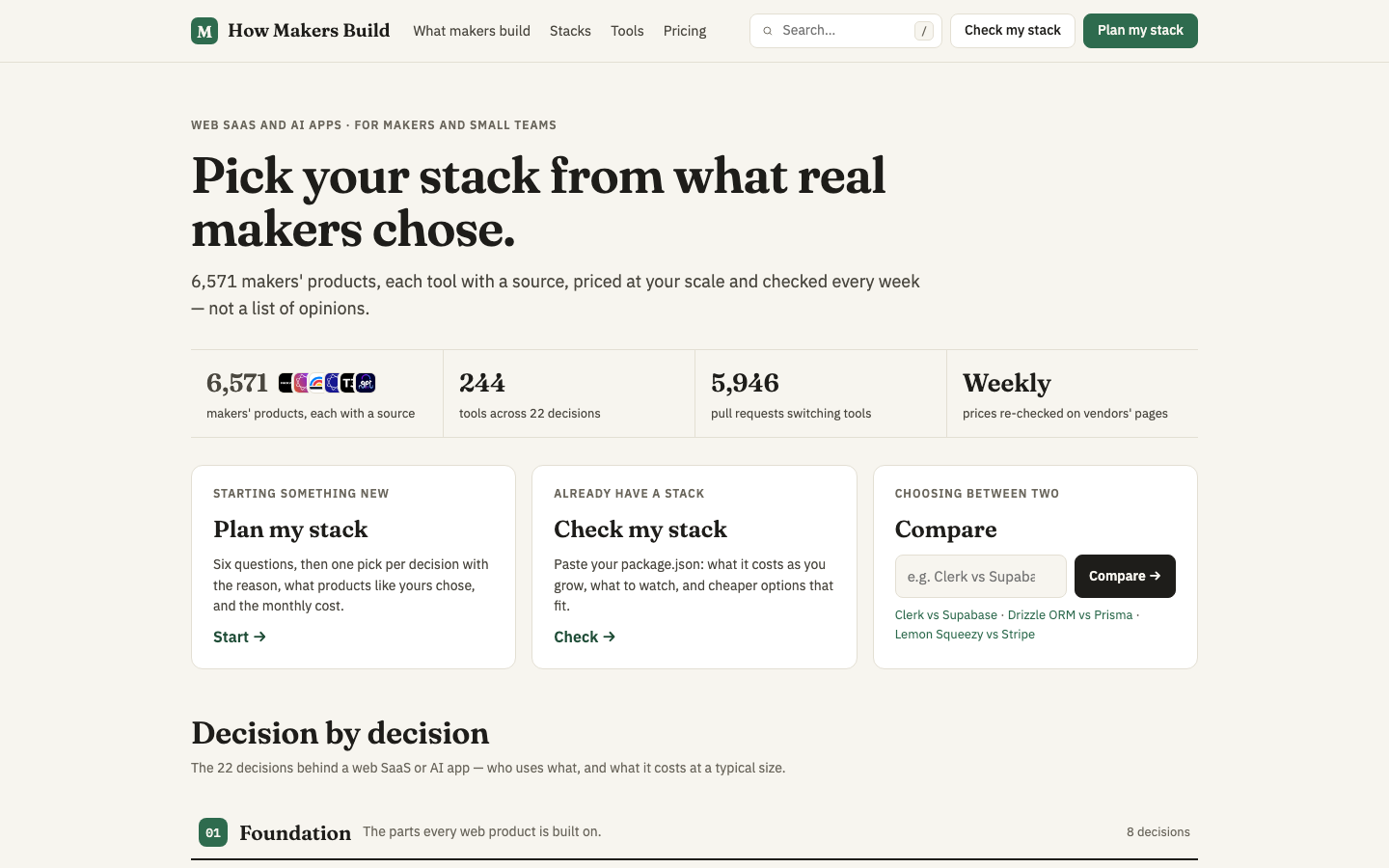
How Makers Build helps indie makers and small teams pick the tools behind a web SaaS or AI app — database, auth, hosting, payments, email, LLM APIs and more. For each decision it shows which tools real products use, with a source you can open: the maker's own words, the product's code, its website, its subprocessor list or its job postings. Compare two tools side by side, price a stack at your usage, or paste your current stack to see what peers chose instead. Free, no sign-up.
Features
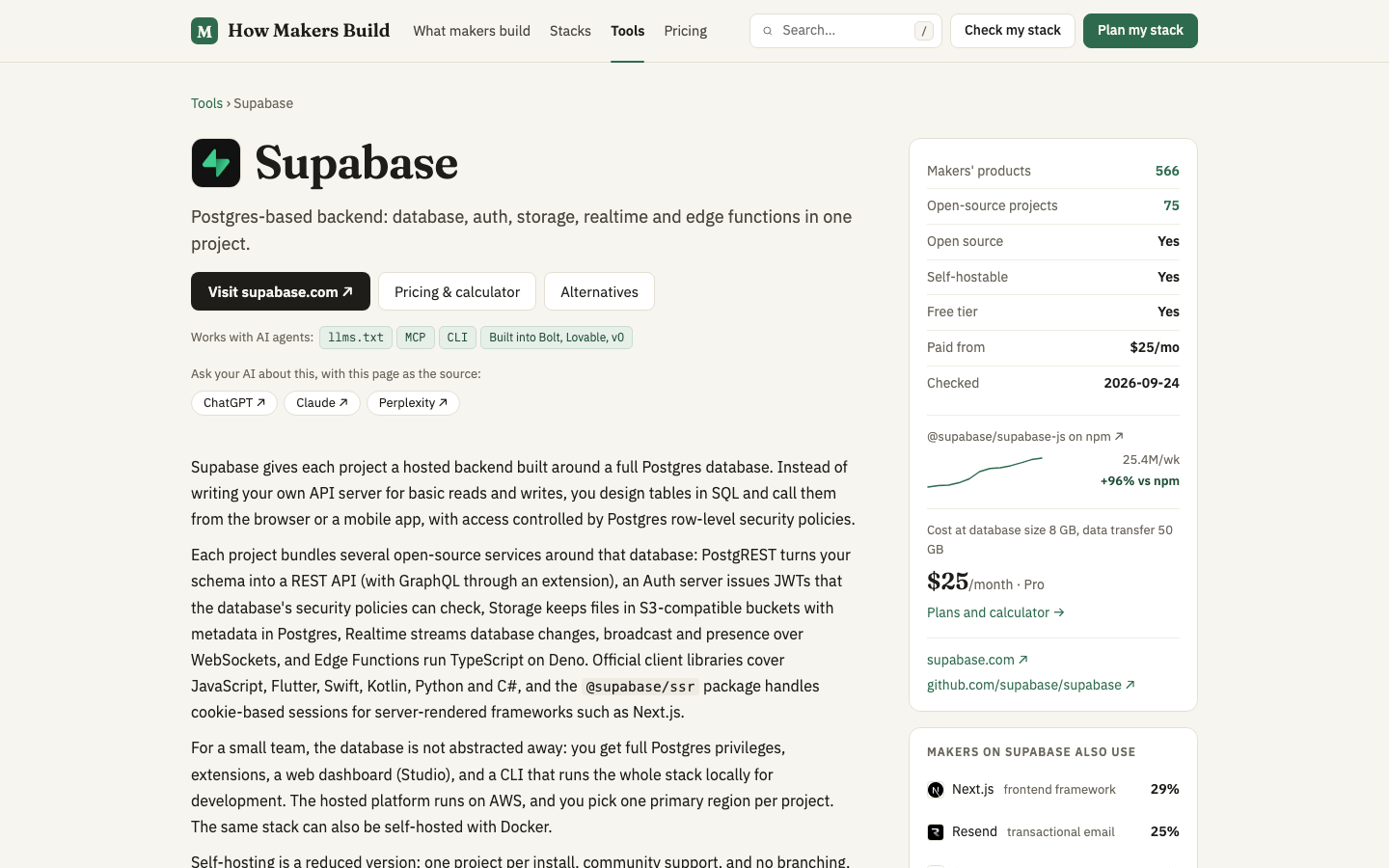
- Who uses each tool — 6,600+ makers' products, every usage with a source link
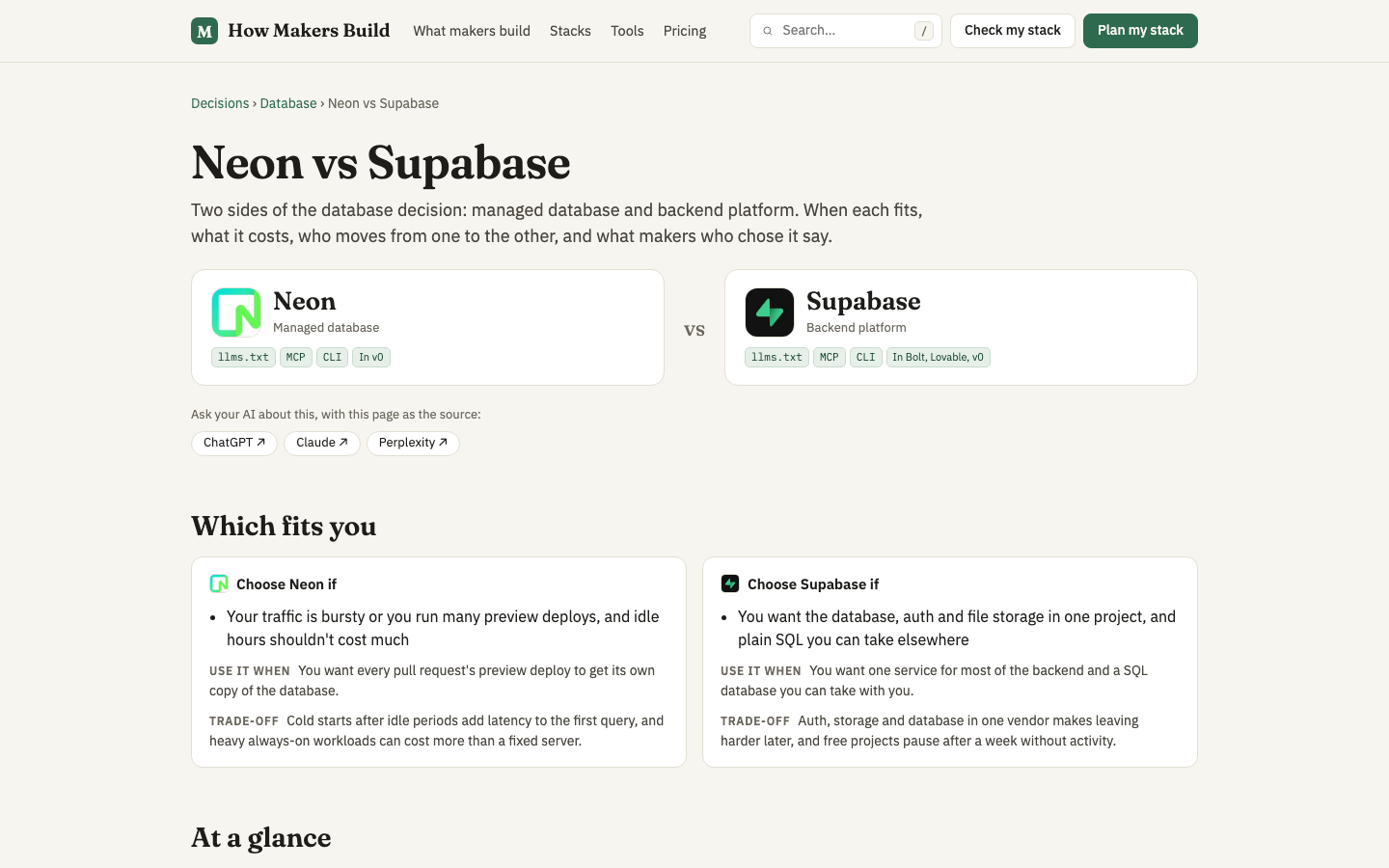
- Side-by-side comparisons, with migration trends from real pull requests
- Pricing calculators: what a stack costs at launch, traction and scale
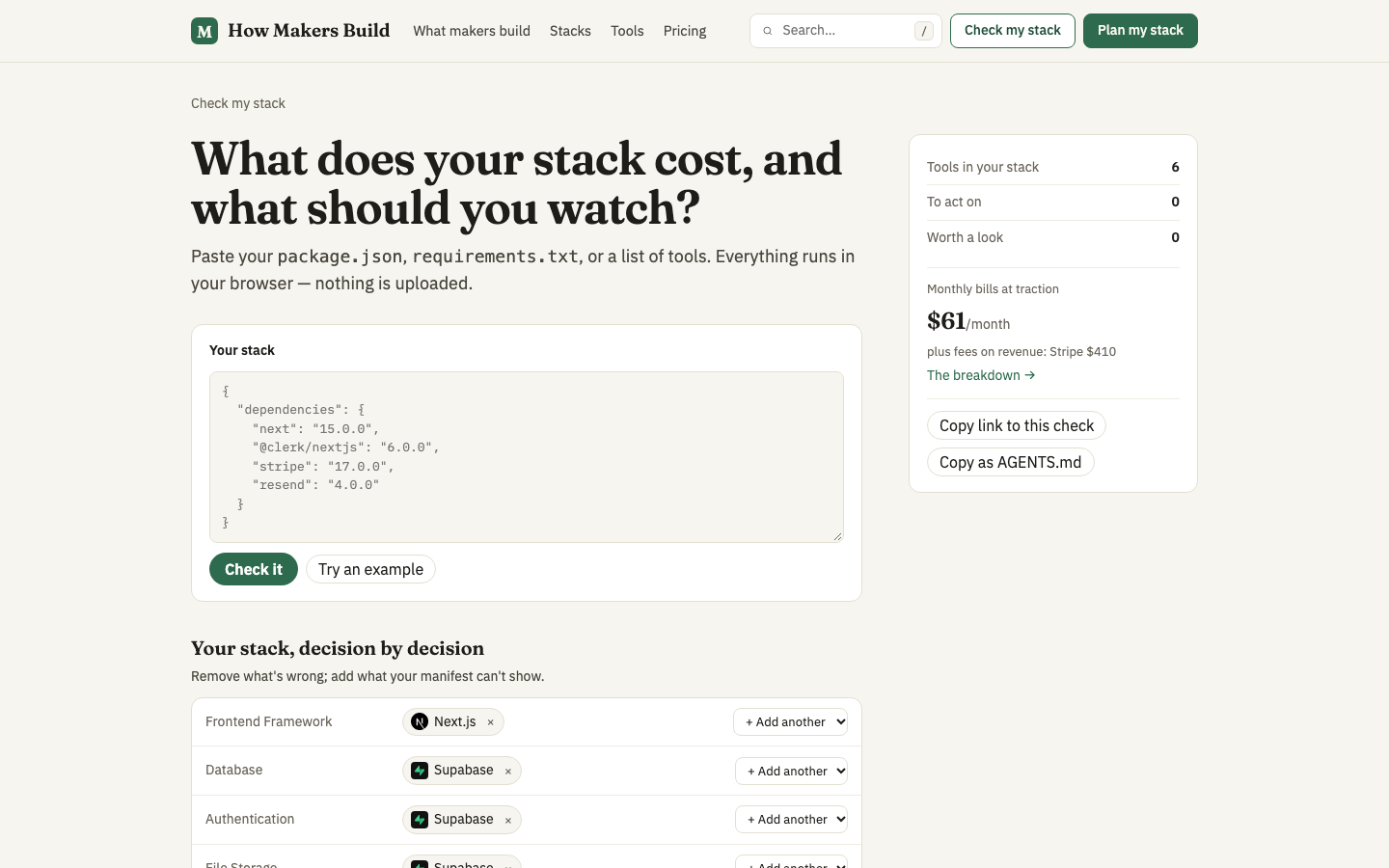
- Check my stack: paste your stack, see gaps, cheaper same-kind options and an AGENTS.md
- Agent readiness: which tools give AI coding agents docs, an MCP server or a CLI
Use Cases
- Starting a new SaaS or AI app: see which database, auth, hosting or payments tool products like yours chose
- Re-checking the stack you have: paste it, see what peers use instead and what each costs at your scale
- Deciding between two tools: compare them side by side, with sourced usage and pricing
- Setting up an AI coding agent: generate an AGENTS.md for your stack

Comments





Hi Fazier 👋 I built How Makers Build because every "what stack should I use" thread ends in opinions. So I collected evidence instead: for each decision behind a web SaaS or AI app (database, auth, hosting, payments, email, LLM APIs…), which tools 6,600+ makers' products actually use — each claim linked to a source you can open, like the maker's own words, public code, DNS records or subprocessor lists. It's free, no sign-up. I'd love to hear which decision you'd want covered next, or any tool you think I've got wrong.
Love that every usage has a source link, most stack lists are guesswork. I just moved my site off Netlify because their credit plan charges for every deploy, which none of the comparisons I read mentioned. Does the pricing calculator cover usage-based gotchas like per-deploy or bandwidth charges? That's where my real costs surprised me.


Sourced usage data is a refreshing take on stack research — opinions are cheap, but pull requests and source links are hard evidence. The 'check my stack' idea especially stands out; most teams never revisit their tool choices after the first commit. Curious how often the migration trends get updated.

Sourcing the claims is a differentiator - most galleries in this space just list what builders say about themselves. Curious how you decide what counts as verifiable: a live URL, a screenshot, or something the builder submits? That rule will shape trust more than the design does. Also worth showing when a link was last checked, since project pages tend to rot quietly.


Sourcing every claim is what makes this useful. Most "stack" lists are guesses or affiliate links. "Check my stack" is a smart touch. One request: could you show how recent each source is? A job posting from 2023 says less about what a product runs on today than a pull request from last month. Filtering by product size (solo maker vs 20-person team) would help too, since the right choice changes a lot with scale.



Love the idea of making real product decisions and their costs transparent. As a product designer and AI product builder, I know how much time goes into choosing the right tools and stack. Seeing what others actually use, why they chose it, and what they pay could save makers a lot of time and money. Great concept!
Love the idea of making real product decisions and their costs transparent. As a product designer and AI product builder, I know how much time goes into choosing the right tools and stack. Seeing what others actually use, why they chose it, and what they pay could save makers a lot of time and money. Great concept!




Sourcing every claim is what makes this useful. Most stack lists are just affiliate links. The pricing calculator at launch vs traction vs scale is the part I wish I'd had earlier, since the cheap choice at 10 users is often the expensive one at 10,000. Do you plan to cover media heavy stacks too, like video storage, transcoding and streaming? That's where the costs surprised me most.

Really like the "every claim sourced" approach — stack advice online is mostly opinions, so being able to open the maker's own words or subprocessor list to verify a tool choice is genuinely useful. The migration trends from real pull requests are the standout feature for me: they show what's actually being adopted versus abandoned, which is data you can't get from a blog post. Would love to see this extended beyond web SaaS to mobile or data engineering stacks down the line.

Showing the source next to each usage is what makes this trustworthy. What happens when sources disagree, say a maker wrote about one database while their subprocessor list or recent code shows another? Showing that conflict openly instead of picking a winner would be valuable, since it often means a migration is under way. Do you rank evidence types, for example code above a job posting?
Premium Products

















































Sponsors
Buy
Awards
View all
Awards
View allMakers
Makers
Comments
Hi Fazier 👋 I built How Makers Build because every "what stack should I use" thread ends in opinions. So I collected evidence instead: for each decision behind a web SaaS or AI app (database, auth, hosting, payments, email, LLM APIs…), which tools 6,600+ makers' products actually use — each claim linked to a source you can open, like the maker's own words, public code, DNS records or subprocessor lists. It's free, no sign-up. I'd love to hear which decision you'd want covered next, or any tool you think I've got wrong.
Love that every usage has a source link, most stack lists are guesswork. I just moved my site off Netlify because their credit plan charges for every deploy, which none of the comparisons I read mentioned. Does the pricing calculator cover usage-based gotchas like per-deploy or bandwidth charges? That's where my real costs surprised me.
Sourced usage data is a refreshing take on stack research — opinions are cheap, but pull requests and source links are hard evidence. The 'check my stack' idea especially stands out; most teams never revisit their tool choices after the first commit. Curious how often the migration trends get updated.
Sourcing the claims is a differentiator - most galleries in this space just list what builders say about themselves. Curious how you decide what counts as verifiable: a live URL, a screenshot, or something the builder submits? That rule will shape trust more than the design does. Also worth showing when a link was last checked, since project pages tend to rot quietly.
Sourcing every claim is what makes this useful. Most "stack" lists are guesses or affiliate links. "Check my stack" is a smart touch. One request: could you show how recent each source is? A job posting from 2023 says less about what a product runs on today than a pull request from last month. Filtering by product size (solo maker vs 20-person team) would help too, since the right choice changes a lot with scale.
Love the idea of making real product decisions and their costs transparent. As a product designer and AI product builder, I know how much time goes into choosing the right tools and stack. Seeing what others actually use, why they chose it, and what they pay could save makers a lot of time and money. Great concept!
Love the idea of making real product decisions and their costs transparent. As a product designer and AI product builder, I know how much time goes into choosing the right tools and stack. Seeing what others actually use, why they chose it, and what they pay could save makers a lot of time and money. Great concept!
Sourcing every claim is what makes this useful. Most stack lists are just affiliate links. The pricing calculator at launch vs traction vs scale is the part I wish I'd had earlier, since the cheap choice at 10 users is often the expensive one at 10,000. Do you plan to cover media heavy stacks too, like video storage, transcoding and streaming? That's where the costs surprised me most.
Really like the "every claim sourced" approach — stack advice online is mostly opinions, so being able to open the maker's own words or subprocessor list to verify a tool choice is genuinely useful. The migration trends from real pull requests are the standout feature for me: they show what's actually being adopted versus abandoned, which is data you can't get from a blog post. Would love to see this extended beyond web SaaS to mobile or data engineering stacks down the line.
Showing the source next to each usage is what makes this trustworthy. What happens when sources disagree, say a maker wrote about one database while their subprocessor list or recent code shows another? Showing that conflict openly instead of picking a winner would be valuable, since it often means a migration is under way. Do you rank evidence types, for example code above a job posting?
Premium Products
New to Fazier?

Find your next favorite product or submit your own. Made by @FalakDigital.
Copyright ©2026. All Rights Reserved