
GrowSpot
Reads the Spot, Not the Room
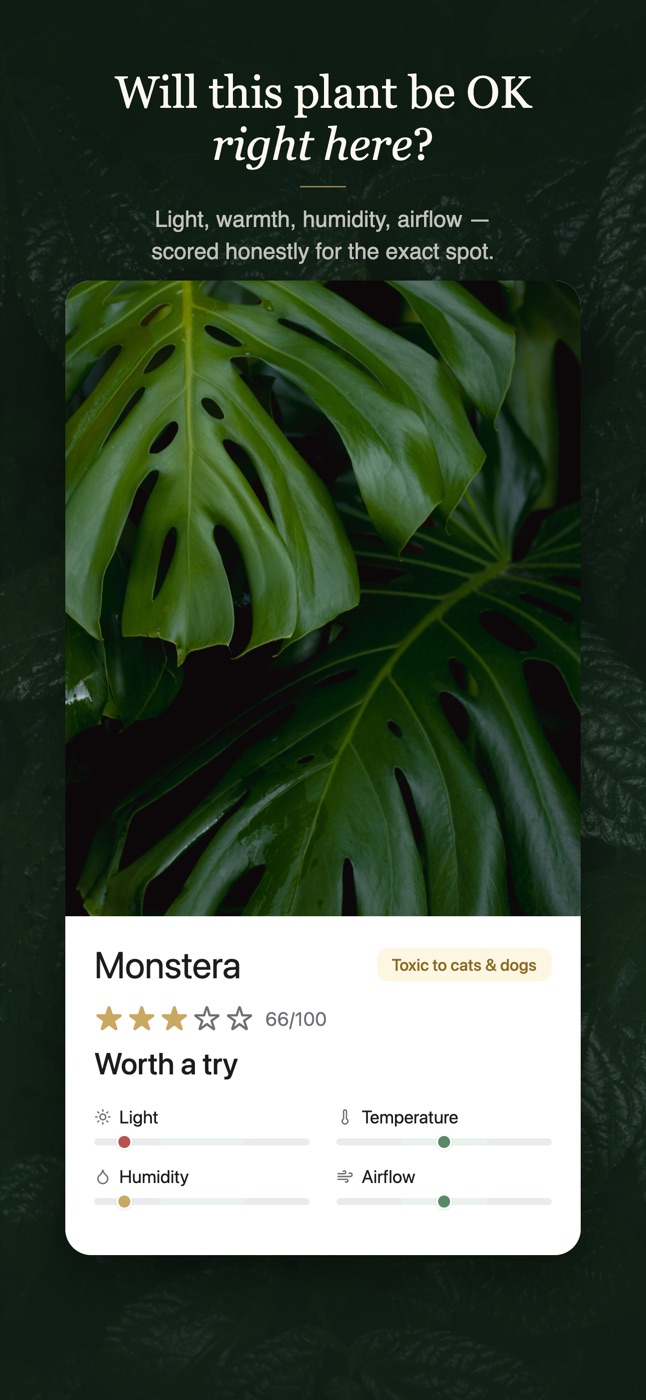
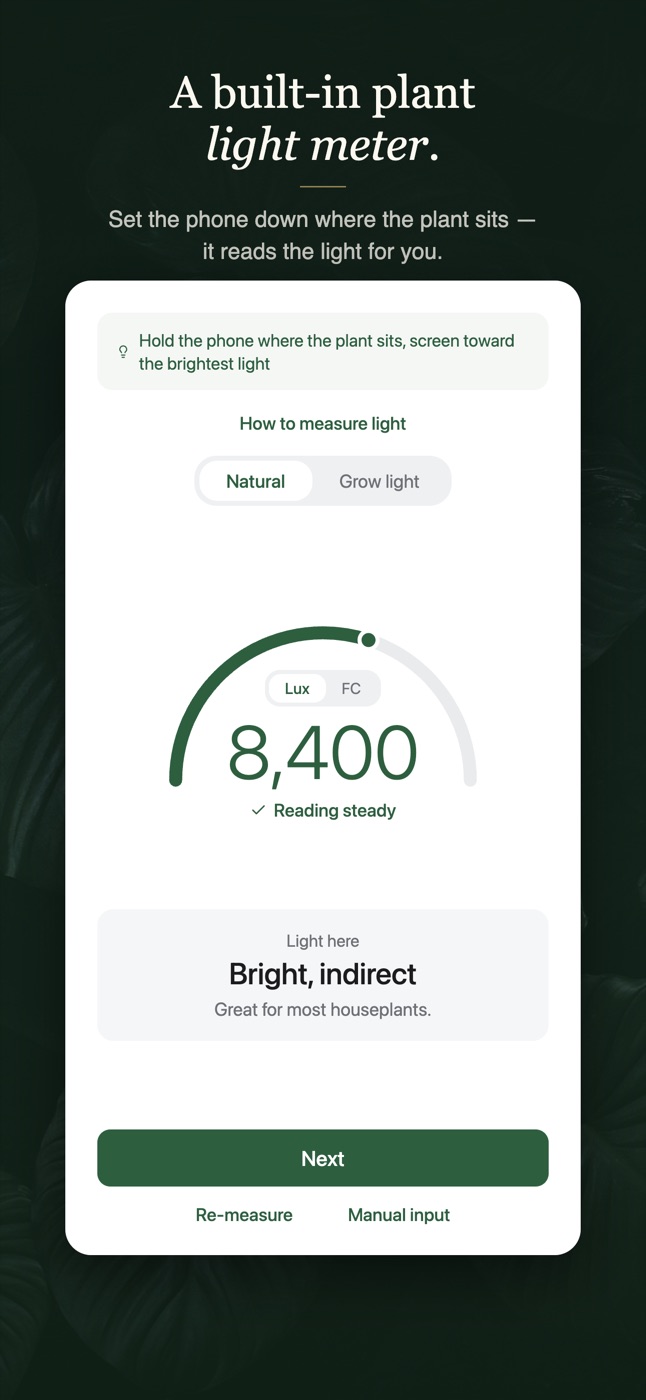
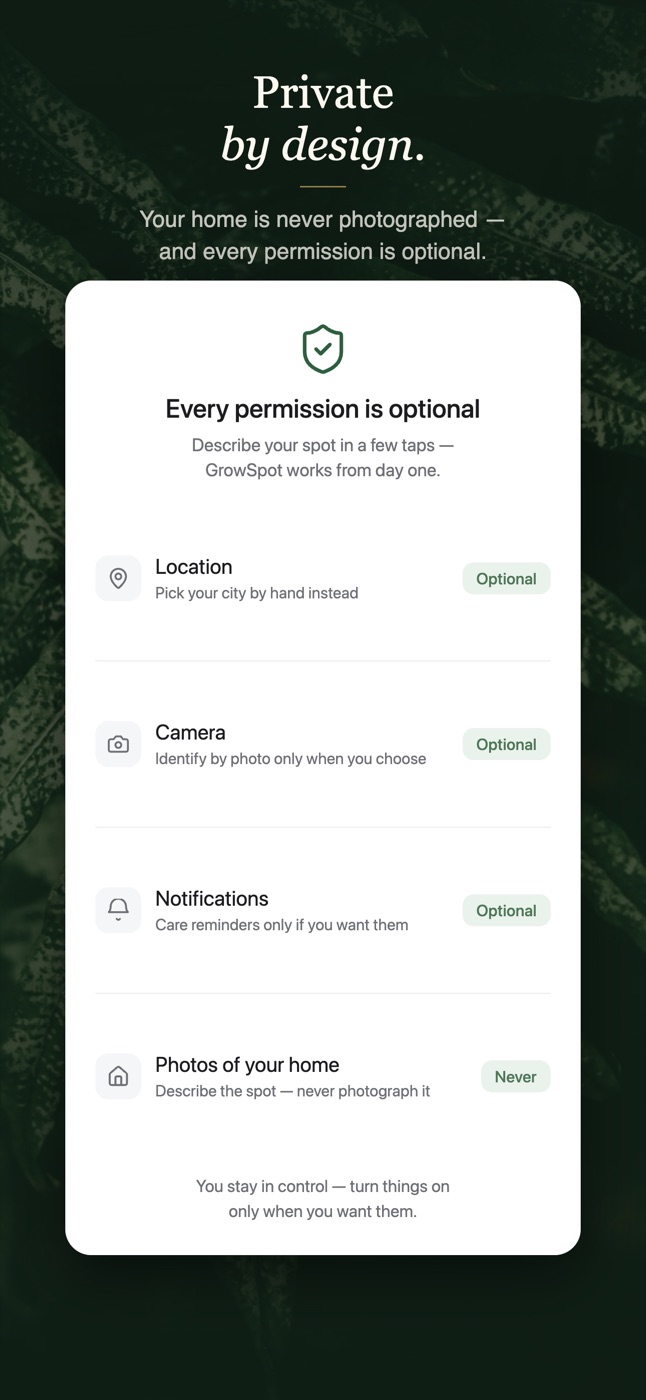
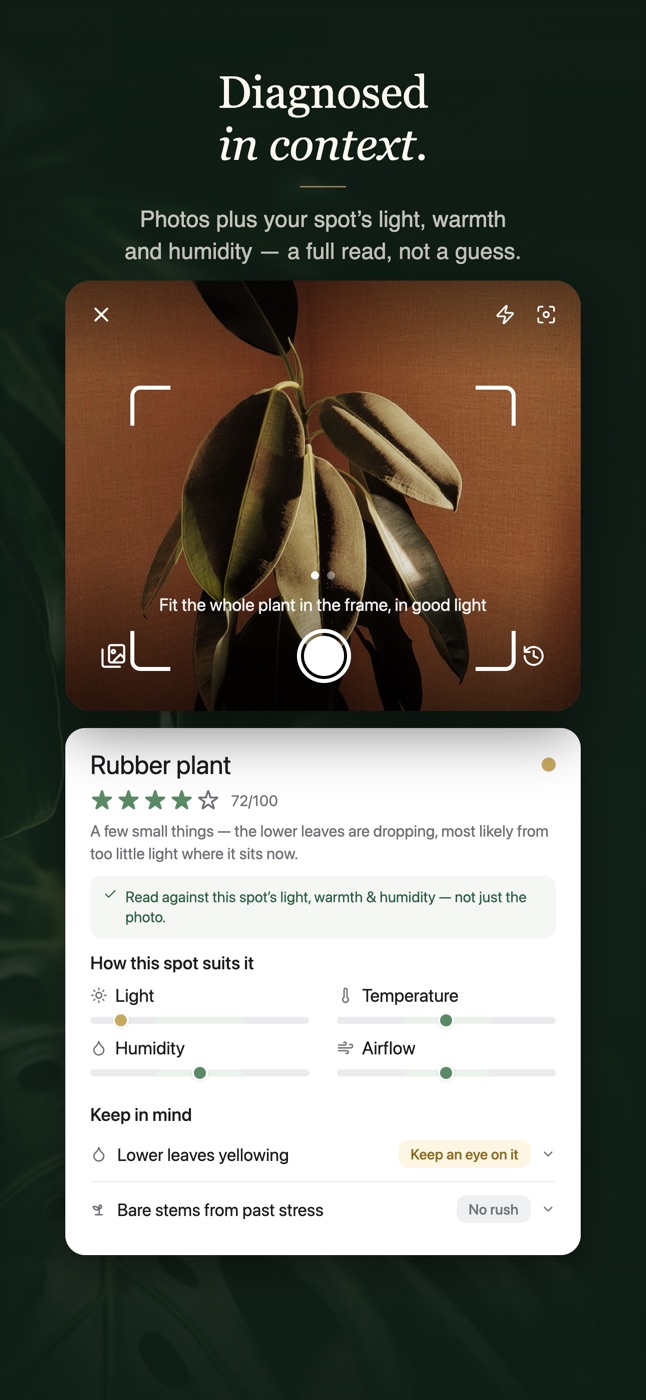
Every plant app scores the plant. GrowSpot scores the spot. Lay your phone down at the exact place you're considering - a windowsill, a shelf, the corner by the AC - and it takes a real light reading right there, then folds in temperature, humidity and airflow to judge whether that specific plant can live in that specific spot. It re-scores as seasons change and compares two spots head to head. No fake precision: estimates are labeled as estimates. Free tier: 2 spots, 2 plants, full features, 20 photo IDs a month. On iPhone and Android; free web spot checker at growspotapp.com.
Features
- A real light reading taken at the spot with your phone, not a guess about the room
- One verdict from four things at once: light, temperature, humidity and airflow
- Estimates are labelled as estimates, with no invented precision
- Re-scores a spot as the seasons change
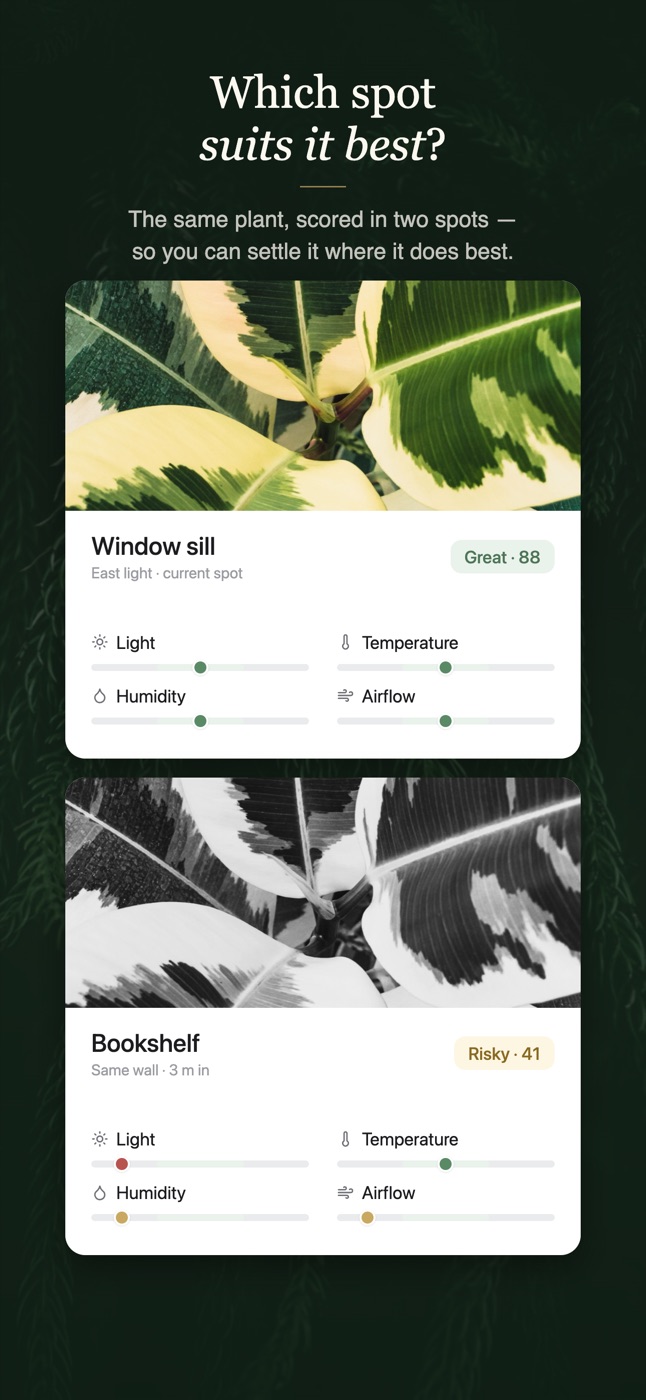
- Compares two spots head to head
- Free tier: 2 spots, 2 plants, full features, 20 photo IDs a month
- Free browser spot checker at growspotapp.com, nothing to install
Use Cases
- Deciding whether a plant you already own can live on that particular shelf
- Choosing between two spots in the same room
- Checking a spot again when the light changes with the season
- Working out whether a struggling plant is in the wrong place
- Checking a spot before buying the plant, from the browser, without installing anything

Comments


Plant advice is written about plants, but the decision is always about a place - this shelf, that windowsill, the corner by the AC. So GrowSpot scores the spot instead: you lay the phone down where the pot would actually sit, it takes a light reading right there, and folds in temperature, humidity and airflow before saying whether that particular plant can live there. The part I care most about is that estimates are labelled as estimates. A phone sensor is good enough to tell one spot from another and not good enough to quote to three digits, and pretending otherwise is how people end up trusting a number instead of their plant. There is a free spot checker on the web if you want to try it without installing anything, and the free tier of the app covers 2 spots, 2 plants and 20 photo IDs a month. Happy to answer anything here.

Love the "score the spot, not the plant" framing — that's the actual decision people are trying to make and most plant apps skip right past it. Taking a real light reading at the exact location instead of guessing from room type is the kind of grounded approach that builds trust, and labeling estimates as estimates instead of faking precision is a nice touch of honesty most apps wouldn't bother with. The re-scoring across seasons is a smart detail too — light conditions shift a lot more than people expect. Great launch!



GrowSpot Your product has strong potential, but I found a few key improvements that could make it even better. I'd love to share my feedback and suggestions—please contact me at [email protected].



The observation-based meeting feedback angle is genuinely useful - most people leave meetings with a sense of "how did that go?" but nothing concrete to improve on next time. Capturing room dynamics, tone, and engagement patterns that weren't on the agenda helps fix the gap between intention and reality. Most founders miss this because they're either too close to watch themselves or trying to juggle hosting + observation at the same time. A tool that gives you the "read" after the fact could save a lot of unproductive follow-ups.

Premium Products







































Sponsors
Buy

Awards
View all
Awards
View allMakers
Makers
Comments
Plant advice is written about plants, but the decision is always about a place - this shelf, that windowsill, the corner by the AC. So GrowSpot scores the spot instead: you lay the phone down where the pot would actually sit, it takes a light reading right there, and folds in temperature, humidity and airflow before saying whether that particular plant can live there. The part I care most about is that estimates are labelled as estimates. A phone sensor is good enough to tell one spot from another and not good enough to quote to three digits, and pretending otherwise is how people end up trusting a number instead of their plant. There is a free spot checker on the web if you want to try it without installing anything, and the free tier of the app covers 2 spots, 2 plants and 20 photo IDs a month. Happy to answer anything here.
Love the "score the spot, not the plant" framing — that's the actual decision people are trying to make and most plant apps skip right past it. Taking a real light reading at the exact location instead of guessing from room type is the kind of grounded approach that builds trust, and labeling estimates as estimates instead of faking precision is a nice touch of honesty most apps wouldn't bother with. The re-scoring across seasons is a smart detail too — light conditions shift a lot more than people expect. Great launch!
GrowSpot Your product has strong potential, but I found a few key improvements that could make it even better. I'd love to share my feedback and suggestions—please contact me at [email protected].
The observation-based meeting feedback angle is genuinely useful - most people leave meetings with a sense of "how did that go?" but nothing concrete to improve on next time. Capturing room dynamics, tone, and engagement patterns that weren't on the agenda helps fix the gap between intention and reality. Most founders miss this because they're either too close to watch themselves or trying to juggle hosting + observation at the same time. A tool that gives you the "read" after the fact could save a lot of unproductive follow-ups.
Premium Products
New to Fazier?

Find your next favorite product or submit your own. Made by @FalakDigital.
Copyright ©2026. All Rights Reserved