
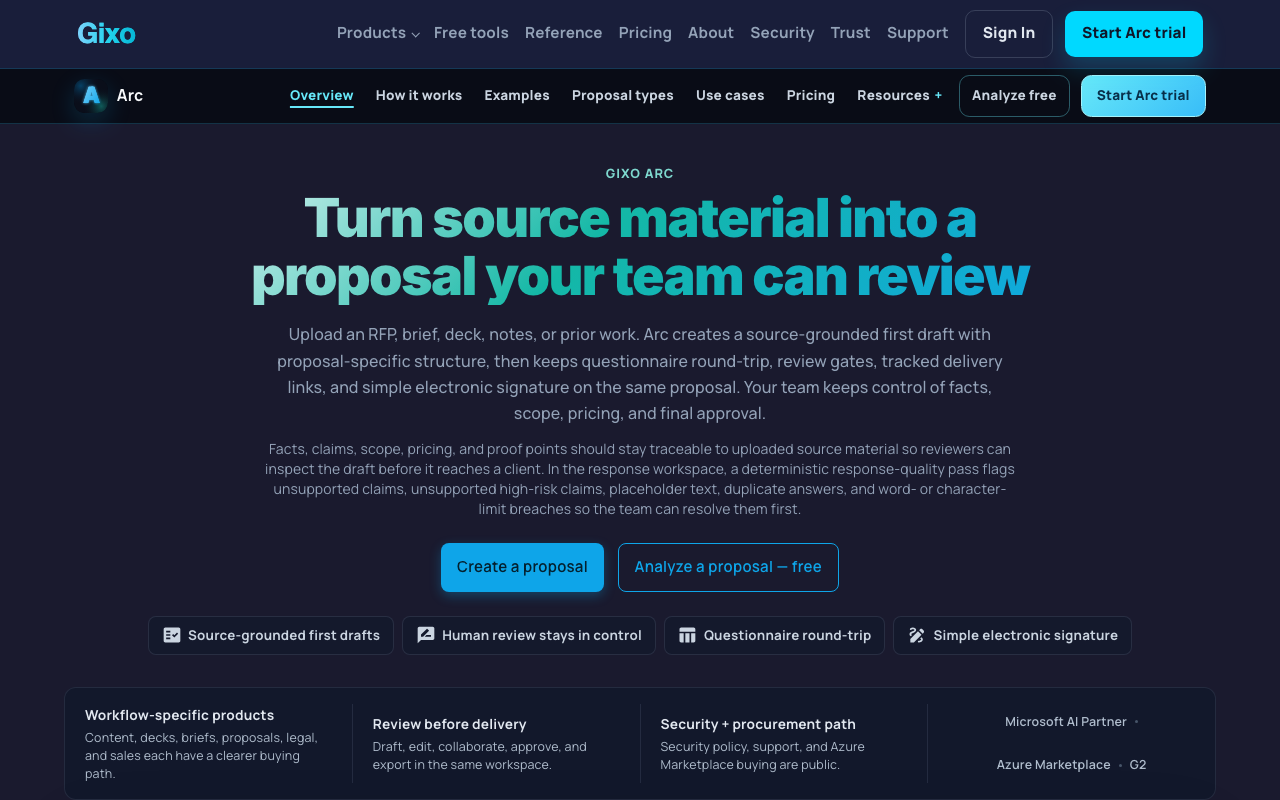
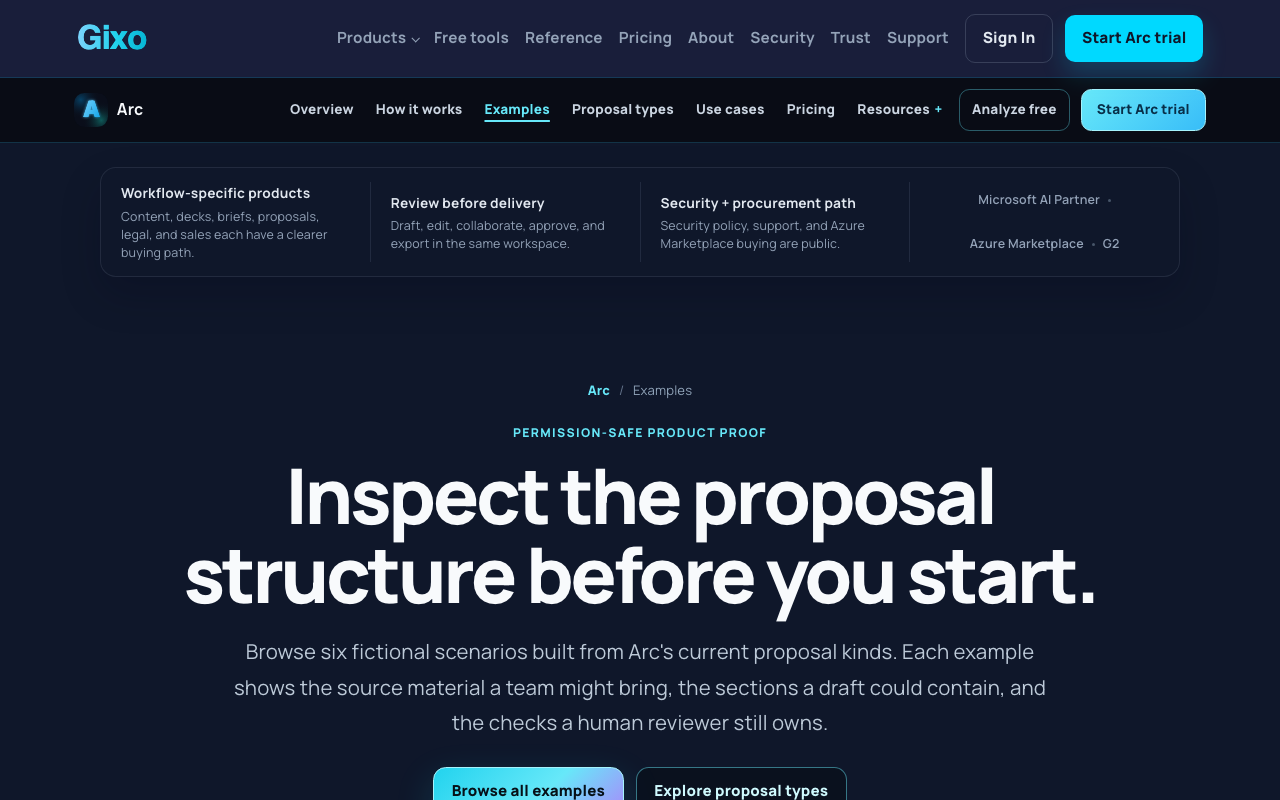
Gixo Arc is an AI proposal and RFP response workspace built for consulting, agency, and enterprise revenue teams. Upload RFP packets, discovery notes, SOWs, and reference docs to generate structured, source-backed client proposals ready for review and export.
Features
Requirement-to-evidence mapping across multi-file RFP packets; Automated proposal health and compliance check before submission; Structured section drafting with executive summary, scope, timeline, and pricing tables; Clean DOCX and PDF export.
Use Cases
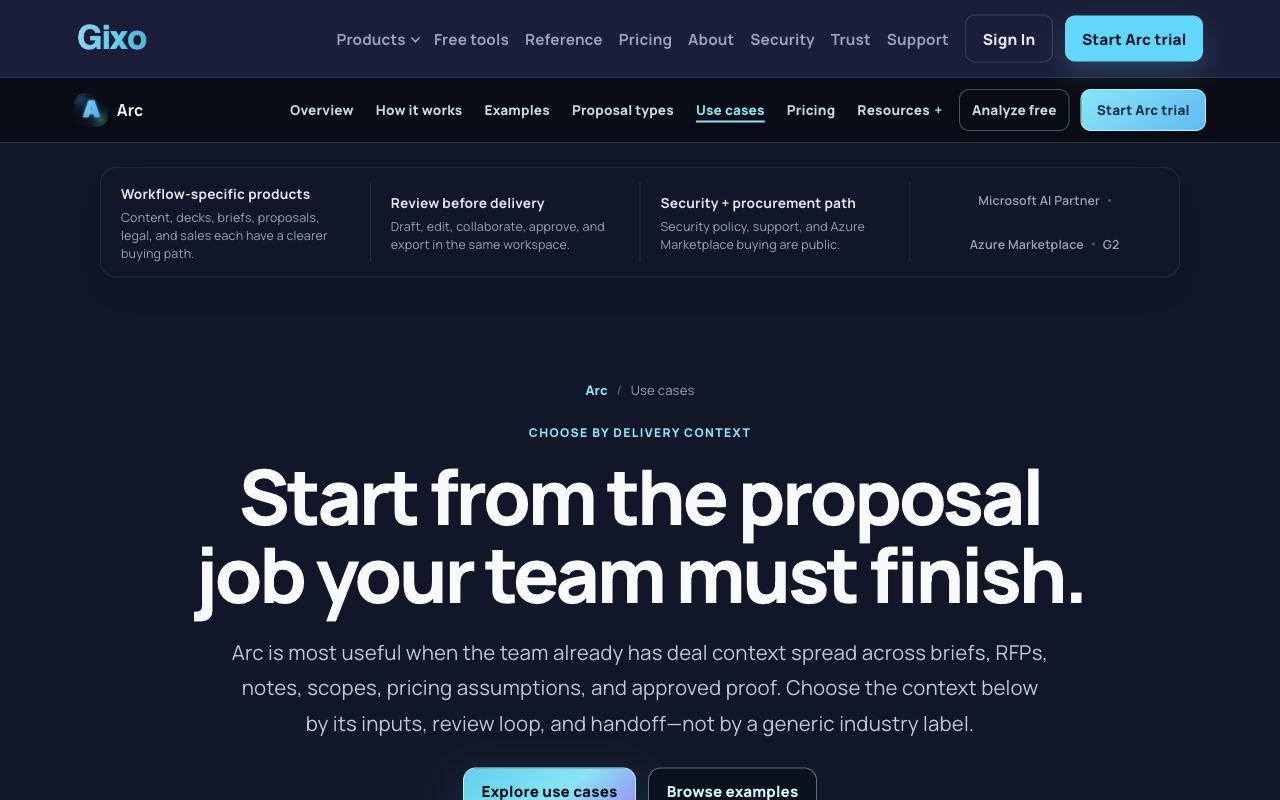
Enterprise RFP and security questionnaire responses; Consulting and agency statements of work (SOWs) and client pitch proposals; Repeatable B2B sales proposals grounded in approved case studies.

Comments


The proposal gap usually lives between research and client sync - you have source material scattered across documents, slack threads, and emails. Getting it into a single shareable format where the whole team can comment before pitching is the bottleneck. Automation here means less time assembling and more time refining the actual strategy.
A lot of RFP packets also include the buyer's draft MSA or terms, with things like a liability cap, IP ownership or payment terms. Does the compliance check catch a proposal that commits to something those terms contradict (say, fixed-price scope against a T&M clause), or does it only check against the requirements list?

The requirement-to-evidence mapping is the feature I would test first. In agency proposals the painful part is not writing the executive summary, it is proving later that a line in the scope was answered by a specific page of the RFP packet when the client disputes it. Does the export keep those source references (file and section) next to each requirement in the DOCX, or do they stay inside the workspace? Also, when the client changes scope after the proposal is accepted, can a revision be generated from the same sources so the delta is visible, rather than regenerating the whole document?
Premium Products


































Sponsors
Buy

Makers

Makers
Comments
The proposal gap usually lives between research and client sync - you have source material scattered across documents, slack threads, and emails. Getting it into a single shareable format where the whole team can comment before pitching is the bottleneck. Automation here means less time assembling and more time refining the actual strategy.
A lot of RFP packets also include the buyer's draft MSA or terms, with things like a liability cap, IP ownership or payment terms. Does the compliance check catch a proposal that commits to something those terms contradict (say, fixed-price scope against a T&M clause), or does it only check against the requirements list?
The requirement-to-evidence mapping is the feature I would test first. In agency proposals the painful part is not writing the executive summary, it is proving later that a line in the scope was answered by a specific page of the RFP packet when the client disputes it. Does the export keep those source references (file and section) next to each requirement in the DOCX, or do they stay inside the workspace? Also, when the client changes scope after the proposal is accepted, can a revision be generated from the same sources so the delta is visible, rather than regenerating the whole document?
Premium Products
New to Fazier?

Find your next favorite product or submit your own. Made by @FalakDigital.
Copyright ©2026. All Rights Reserved