
GEO Checker
Six-dimension GEO audit for AI readability
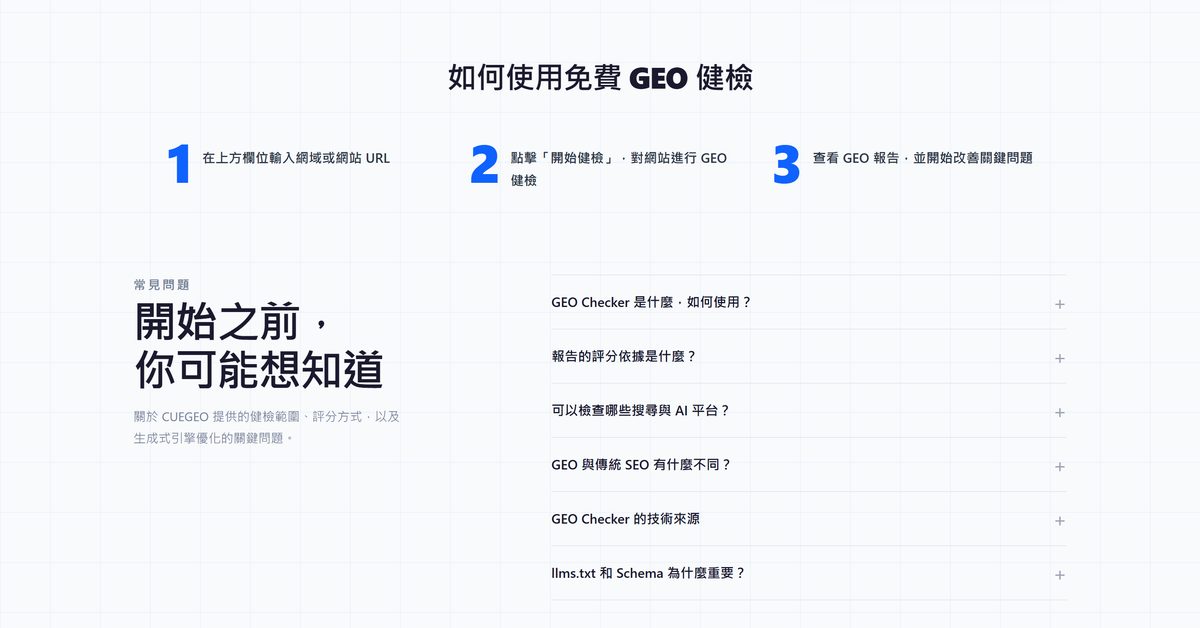
GEO Checker is a free technical GEO (Generative Engine Optimization) audit tool. Enter a URL and it scores a site across six dimensions - AI comprehension, content freshness, citation authority, competitive positioning, answer-first content and technical optimization - and reports whether the 14 major AI crawlers (GPTBot, ClaudeBot, PerplexityBot and more) are allowed. Scores are produced by a reproducible rules-based template, not an LLM, so every result can be verified.


Features
• Six-dimension score (0-100) with letter grade
• AI crawler access check across 14 bots including GPTBot and PerplexityBot
• Reads public HTML and robots.txt only - no signup required
• Actionable recommendations for answer-engine visibility
• Reproducible rules-based scoring, no black-box LLM output
Use Cases
• SEO and GEO consultants auditing client sites before AI-search optimization
• Content teams checking whether AI crawlers can access their articles
• SaaS founders benchmarking their visibility in AI answer engines
• Agencies preparing GEO reports for e-commerce and B2B clients

Comments


The rules-based score is the right call if a consultant has to defend the result, but the crawler check seems to stop at robots.txt allow or disallow. A bot can be allowed there and still get a WAF block, a noindex, or a login wall, and the grade would still look fine. Splitting 'declared allowed' from 'actually fetchable' (status code and content type on the HTML you already download) would make the 14-bot list honest. Answer-first content and AI comprehension also sound like they move together, so the 0-100 grade may double-count one signal. Showing the six raw subscores and the rule that fired would make the letter grade usable in a client report.


Rules based scoring instead of an LLM verdict is a good choice, since you can rerun it after a fix and see exactly what moved. One suggestion from looking at our own server logs: it helps to split training crawlers (GPTBot, CCBot) from user fetchers (ChatGPT-User, Perplexity-User) in the robots.txt check. Plenty of sites want to block the first group but keep the second, because a real person asked a question there.
The six-dimension framing is a clear way to make GEO concrete — most checkers I have seen only report crawler access. I like that the scoring is rules-based and reproducible instead of an LLM verdict, so a fix should show up as a real score change. Two questions: which dimensions carry the most weight in the 0–100 score, and do the recommendations point at specific pages or only site-wide fixes? Going to run my own site through it.
Premium Products





















































Sponsors
Buy

Comments
The rules-based score is the right call if a consultant has to defend the result, but the crawler check seems to stop at robots.txt allow or disallow. A bot can be allowed there and still get a WAF block, a noindex, or a login wall, and the grade would still look fine. Splitting 'declared allowed' from 'actually fetchable' (status code and content type on the HTML you already download) would make the 14-bot list honest. Answer-first content and AI comprehension also sound like they move together, so the 0-100 grade may double-count one signal. Showing the six raw subscores and the rule that fired would make the letter grade usable in a client report.
Rules based scoring instead of an LLM verdict is a good choice, since you can rerun it after a fix and see exactly what moved. One suggestion from looking at our own server logs: it helps to split training crawlers (GPTBot, CCBot) from user fetchers (ChatGPT-User, Perplexity-User) in the robots.txt check. Plenty of sites want to block the first group but keep the second, because a real person asked a question there.
The six-dimension framing is a clear way to make GEO concrete — most checkers I have seen only report crawler access. I like that the scoring is rules-based and reproducible instead of an LLM verdict, so a fix should show up as a real score change. Two questions: which dimensions carry the most weight in the 0–100 score, and do the recommendations point at specific pages or only site-wide fixes? Going to run my own site through it.
Premium Products
New to Fazier?

Find your next favorite product or submit your own. Made by @FalakDigital.
Copyright ©2026. All Rights Reserved