
GameEngineHub
Find your perfect game engine with ease.
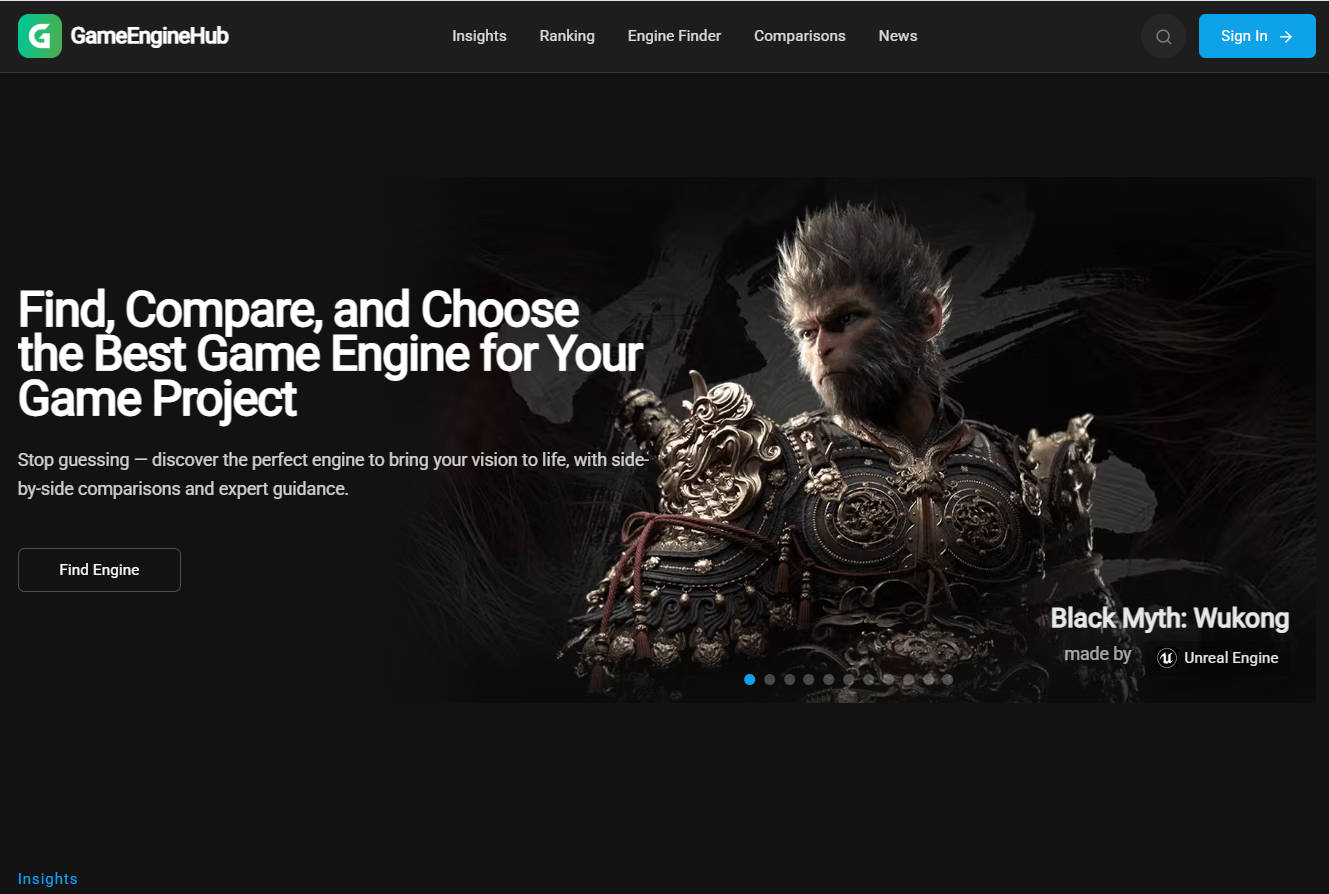
GameEngineHub is a centralized platform that helps developers discover, evaluate, and compare game engines in one place.
Instead of searching across scattered documentation, forums, and outdated lists, GameEngineHub provides structured data, side-by-side comparisons, and practical insights to simplify the engine selection process.
Whether you're building a 2D indie game, a 3D experience, or exploring new technologies, GameEngineHub helps you quickly identify the engine that fits your workflow, technical needs, and project goals.
Features
- Comprehensive game engine database with structured information
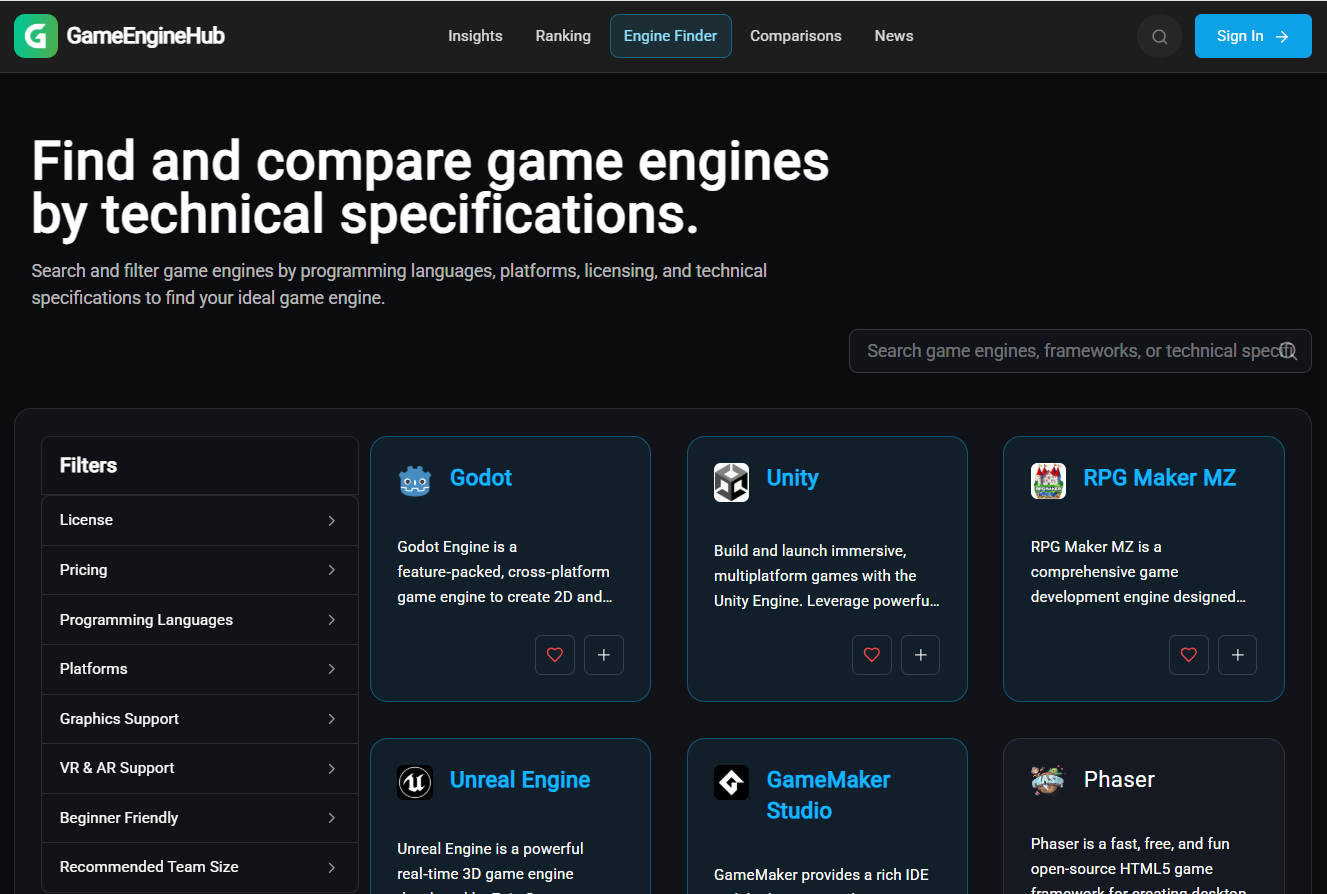
- Side-by-side comparison tools for multiple engines
- Detailed breakdowns of features, platforms, and capabilities
- Engine selection guides based on use cases
- Coverage of both popular and open-source engines
- Regular updates on engine ecosystem and trends
Use Cases
- Compare engines like Unity, Unreal, and Godot before starting a project
- Find the best engine for 2D, 3D, mobile, or web development
- Evaluate trade-offs between performance, flexibility, and ease of use
- Discover alternative or emerging game engines
- Support decision-making for indie developers and small teams

Comments


GameEngineHub is one of those tools that looks simple but actually solves a real early-stage problem. If you’ve ever tried picking a game engine, you know how messy it gets. You jump between docs, Reddit threads, random blogs, and still feel unsure. This basically cleans that up. The side-by-side comparison is the most useful part. Instead of reading 10 tabs, you can quickly see differences between Unity, Unreal, Godot, etc. in one place. That alone saves time. The structured breakdowns are also helpful. It’s not just specs, it actually helps you understand where each engine fits based on use case.


I find it fascinating how game engines have democratized development, allowing anyone with a good idea and some coding skills to bring their vision to life. While reading about this launch, I thought about how Bangladeshi players can access a different kind of platform by visiting https://megapariappbd.com/ for the Megapari app, providing full access to sports betting, casino games, deposits, and withdrawals on Android and iOS. In conclusion, just as game engines power great games, the Megapari app powers great online betting and casino experiences, including a 100% bonus up to 200,000 BDT plus 150 free spins.


Congratulations on the launch, Dean! 👋 GameEngineHub is tackling a very real pain point. The 'research overload' phase of any new project is notoriously messy, and moving away from scattered Reddit threads to a structured, side-by-side comparison matrix is a massive time-saver. From an architectural standpoint, centralizing this technical data is a brilliant move. It essentially turns subjective debates into a highly scalable, structured database. I'm particularly impressed by the focus on bringing in 'real-world signals' rather than just listing static technical specs. A clean, high-end UI/UX to present these dense data points will definitely make the evaluation process much smoother for developers. To answer your question about what kind of insights would be helpful: It would be fascinating to see integrations of live trends—perhaps tracking how often certain engines are mentioned in new GitHub repos, or pulling data on successful games mapped to their respective engines. A quick technical question for you: How are you managing the data freshness? Given how fast engines like Godot iterate, are you planning to automate parameter updates by parsing changelogs, or will it rely more on a community-contribution model? Excellent work building such a focused and practical tool for the community!

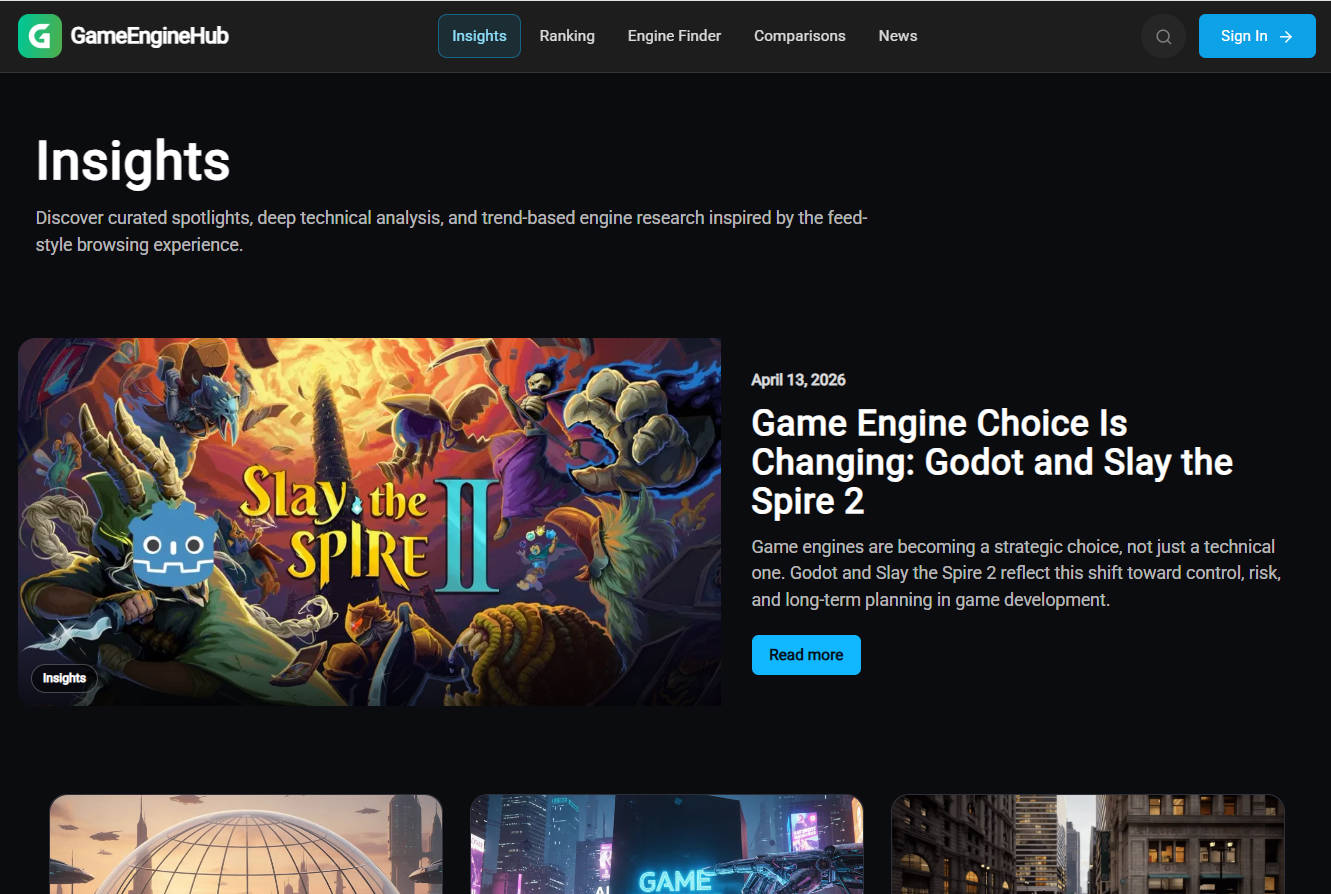
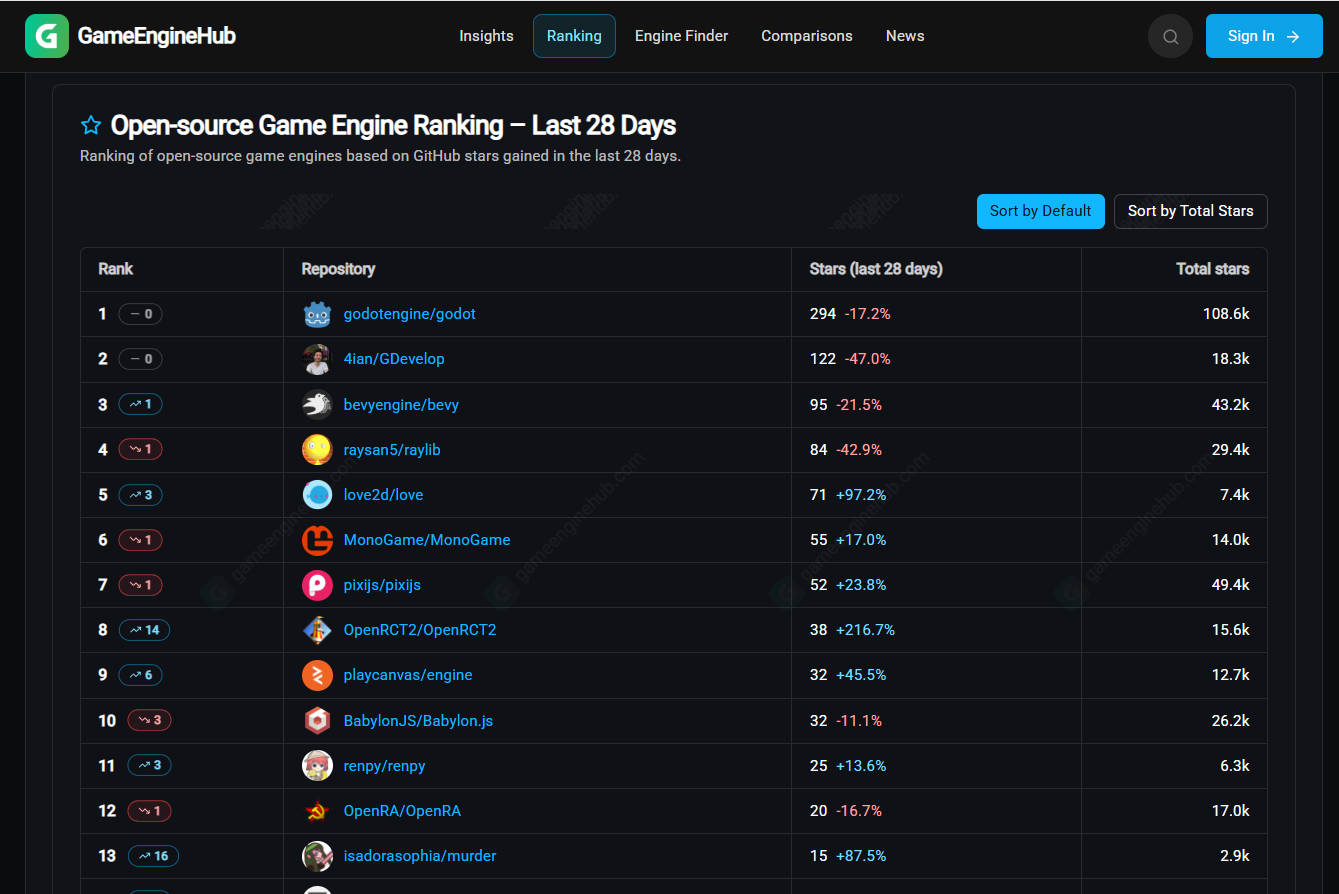
Hey everyone 👋 We built GameEngineHub after struggling (way too many times) to choose the right game engine for different projects. Every time we started something new, we found ourselves jumping between documentation, Reddit threads, YouTube videos, and outdated comparison articles. It was messy, time-consuming, and honestly frustrating. So we decided to build a place where all of that information could live in a more structured and practical way. GameEngineHub is our attempt to centralize game engine data, make comparisons easier, and help developers make decisions faster—without the usual research overload. Right now, the platform focuses on: - A growing database of game engines - Side-by-side comparisons - Clear breakdowns of features and use cases - Industry insights and curated articles to better understand trends and real-world usage - Data-driven rankings and curated news to reflect what’s actually happening in the ecosystem Beyond just listing engines, we also want GameEngineHub to provide real context—why certain engines are gaining traction, how they’re used in production, and what developers should pay attention to when making decisions. Our goal is to combine structured data with real-world signals, so developers can rely on more than just opinions. This is still an early version, and we’re actively improving it based on feedback. We’d really love to know: 👉 What do you usually struggle with when choosing a game engine? 👉 What kind of insights, rankings, or comparisons would actually help you? Appreciate you checking it out — and happy to hear any thoughts, feedback, or ideas 🙏

GameEngineHub helps developers create games. For players who enjoy betting, the right mobile app is key. For Bangladesh users, https://bagh-live.net/app/ offers a licensed sportsbook and casino on Android and iOS. Payments work with bKash, Nagad, and USDT. New users get a 277% bonus up to 20,000 BDT. In conclusion, whether you develop games or place bets, always choose quality. Set deposit limits, never chase losses, and treat betting as entertainment. Play responsibly.
Premium Products


































Sponsors
Buy

Awards
View all
Awards
View allMakers
Makers
Comments
GameEngineHub is one of those tools that looks simple but actually solves a real early-stage problem. If you’ve ever tried picking a game engine, you know how messy it gets. You jump between docs, Reddit threads, random blogs, and still feel unsure. This basically cleans that up. The side-by-side comparison is the most useful part. Instead of reading 10 tabs, you can quickly see differences between Unity, Unreal, Godot, etc. in one place. That alone saves time. The structured breakdowns are also helpful. It’s not just specs, it actually helps you understand where each engine fits based on use case.
I find it fascinating how game engines have democratized development, allowing anyone with a good idea and some coding skills to bring their vision to life. While reading about this launch, I thought about how Bangladeshi players can access a different kind of platform by visiting https://megapariappbd.com/ for the Megapari app, providing full access to sports betting, casino games, deposits, and withdrawals on Android and iOS. In conclusion, just as game engines power great games, the Megapari app powers great online betting and casino experiences, including a 100% bonus up to 200,000 BDT plus 150 free spins.
Congratulations on the launch, Dean! 👋 GameEngineHub is tackling a very real pain point. The 'research overload' phase of any new project is notoriously messy, and moving away from scattered Reddit threads to a structured, side-by-side comparison matrix is a massive time-saver. From an architectural standpoint, centralizing this technical data is a brilliant move. It essentially turns subjective debates into a highly scalable, structured database. I'm particularly impressed by the focus on bringing in 'real-world signals' rather than just listing static technical specs. A clean, high-end UI/UX to present these dense data points will definitely make the evaluation process much smoother for developers. To answer your question about what kind of insights would be helpful: It would be fascinating to see integrations of live trends—perhaps tracking how often certain engines are mentioned in new GitHub repos, or pulling data on successful games mapped to their respective engines. A quick technical question for you: How are you managing the data freshness? Given how fast engines like Godot iterate, are you planning to automate parameter updates by parsing changelogs, or will it rely more on a community-contribution model? Excellent work building such a focused and practical tool for the community!
Hey everyone 👋 We built GameEngineHub after struggling (way too many times) to choose the right game engine for different projects. Every time we started something new, we found ourselves jumping between documentation, Reddit threads, YouTube videos, and outdated comparison articles. It was messy, time-consuming, and honestly frustrating. So we decided to build a place where all of that information could live in a more structured and practical way. GameEngineHub is our attempt to centralize game engine data, make comparisons easier, and help developers make decisions faster—without the usual research overload. Right now, the platform focuses on: - A growing database of game engines - Side-by-side comparisons - Clear breakdowns of features and use cases - Industry insights and curated articles to better understand trends and real-world usage - Data-driven rankings and curated news to reflect what’s actually happening in the ecosystem Beyond just listing engines, we also want GameEngineHub to provide real context—why certain engines are gaining traction, how they’re used in production, and what developers should pay attention to when making decisions. Our goal is to combine structured data with real-world signals, so developers can rely on more than just opinions. This is still an early version, and we’re actively improving it based on feedback. We’d really love to know: 👉 What do you usually struggle with when choosing a game engine? 👉 What kind of insights, rankings, or comparisons would actually help you? Appreciate you checking it out — and happy to hear any thoughts, feedback, or ideas 🙏
GameEngineHub helps developers create games. For players who enjoy betting, the right mobile app is key. For Bangladesh users, https://bagh-live.net/app/ offers a licensed sportsbook and casino on Android and iOS. Payments work with bKash, Nagad, and USDT. New users get a 277% bonus up to 20,000 BDT. In conclusion, whether you develop games or place bets, always choose quality. Set deposit limits, never chase losses, and treat betting as entertainment. Play responsibly.
Premium Products
New to Fazier?

Find your next favorite product or submit your own. Made by @FalakDigital.
Copyright ©2026. All Rights Reserved