
Full-Stack App Starter Kits
Not a boilerplate: one architecture, Go/Node, MUI/Tailwind
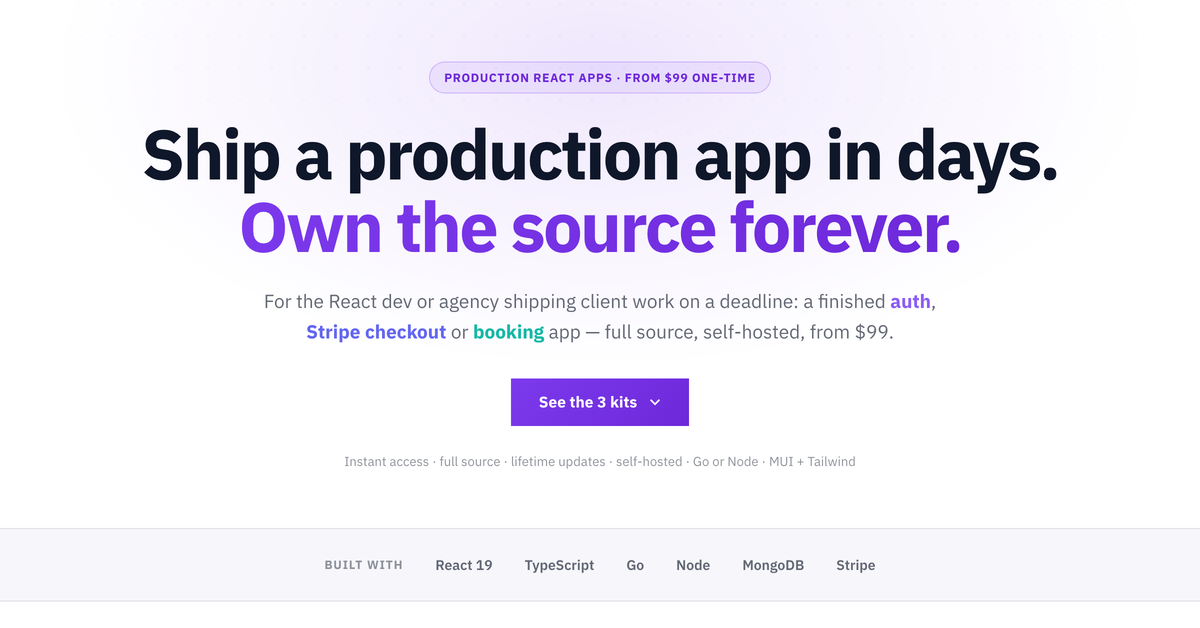
DashForge-UI starter kits are complete, production-ready React applications - UI, REST API, database and auth included - that you buy once and own forever. Three kits available today: Booking (from $99), Registration (from $149) and Checkout (from $299).
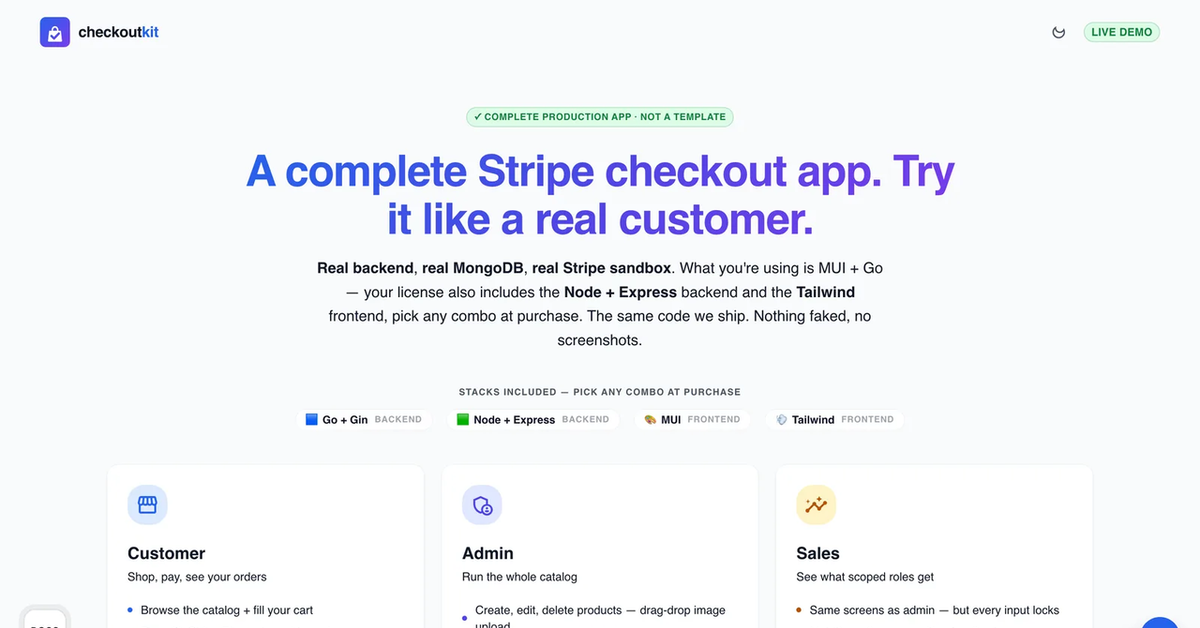
Every kit is built on the same architecture and ships in two interchangeable backend editions (Node/Express or Go) and two styling tracks (MUI or Tailwind), so you pick your stack instead of adapting to someone else's. You get the full source code delivered through a private GitHub repo invite plus a zip: self-host it anywhere, no SaaS in your audit scope, no vendor lock-in, one-time price and no subscription. Each kit has a live interactive demo on its own subdomain.
Features
- Three complete applications, not UI templates: Booking, Registration, Checkout
- Backend included: Node/Express or Go, MongoDB, REST API, JWT sessions
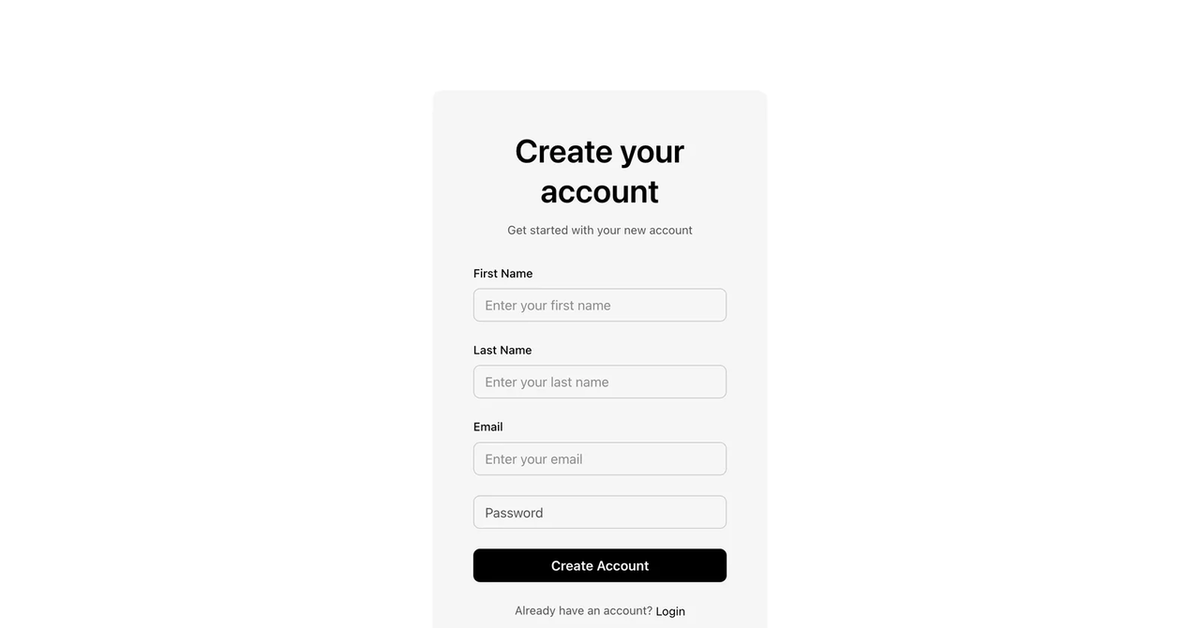
- Auth built in: OTP signup, TOTP 2FA, password reset, role-based access control
- Stripe wired end to end: pay-on-booking, SCA checkout, orders, admin dashboard
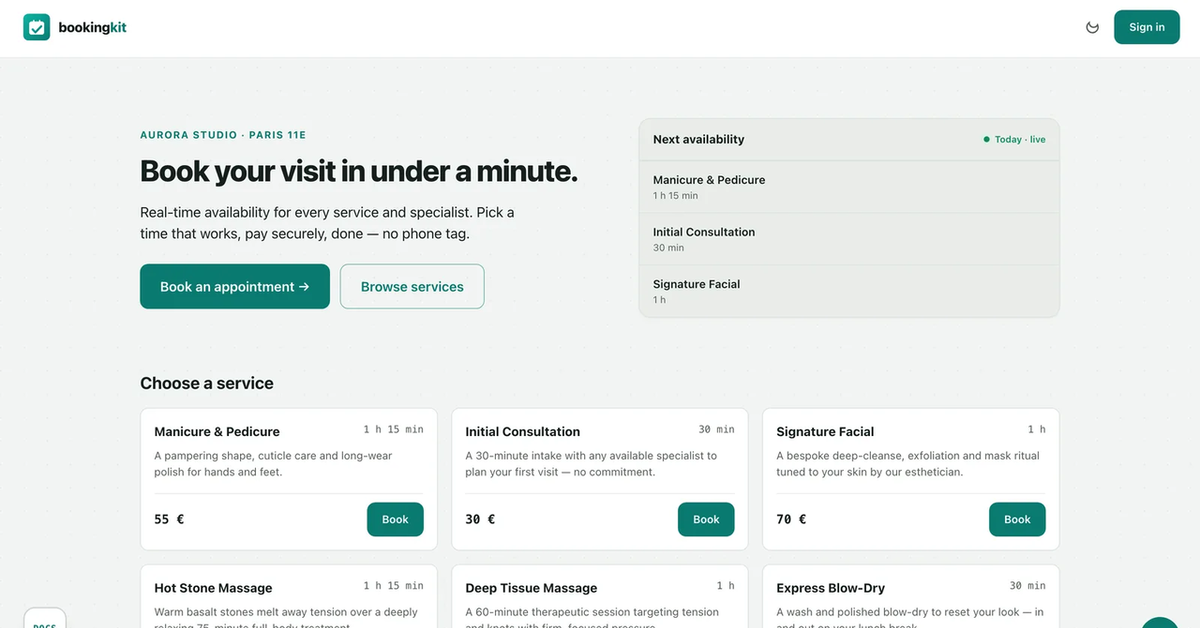
- Timezone-correct, DST-safe availability engine with specialist picker (Booking Kit)
- One architecture across every kit and stack: Go or Node, MUI or Tailwind
- Live interactive demo for each kit on its own subdomain
- Full source delivered via private GitHub repo invite plus zip, self-host anywhere
- One-time price, Developer / Team / Extended license tiers, guaranteed bug fixes
Use Cases
- Freelancers and agencies shipping a client MVP in days instead of weeks
- Indie founders validating a SaaS without rebuilding auth, payments and RBAC
- Teams that need self-hosted, auditable source instead of one more SaaS dependency
- Booking-driven businesses: clinics, studios, consultants, coaches
- Developers who want a real production React + Node/Go codebase to learn from and extend

Comments



The two interchangeable backend editions (Node/Express or Go) on one shared architecture is more valuable than it looks. Most starter kits quietly lock you into the author's stack, so 'buy once, own forever' often means inheriting someone else's framework decisions. The timezone-correct, DST-safe availability engine in the Booking kit is the detail I would weigh most - that is the part teams routinely underestimate and end up rebuilding. Real question though: when the base architecture ships an update, how do buyers who have already customised a kit pull it in? That handoff is where one-time-purchase kits usually get painful.

Hi Fazier, I'm Ken. For the past year and a half I've been building React frontends for a European fintech, and every new project started the same way: rebuild auth, rebuild payments, rebuild roles, and only then start on the actual product. I turned that work into kits. They are not boilerplates. Each kit is a finished application - UI, REST API, MongoDB, auth - and every kit sits on the same architecture, so you choose your stack instead of inheriting mine: Node/Express or Go on the backend, MUI or Tailwind on the frontend. The source comes in a private GitHub repo, you self-host it and you keep it forever. One-time price, no subscription. Three kits so far - Booking, Registration and Checkout - each with a live demo you can click through before buying. This is my first launch and I would rather have hard feedback than upvotes: tell me what is missing, what you would never pay for, and which kit you would want next.
Premium Products



























Sponsors
Buy

Makers
Makers
Comments
The two interchangeable backend editions (Node/Express or Go) on one shared architecture is more valuable than it looks. Most starter kits quietly lock you into the author's stack, so 'buy once, own forever' often means inheriting someone else's framework decisions. The timezone-correct, DST-safe availability engine in the Booking kit is the detail I would weigh most - that is the part teams routinely underestimate and end up rebuilding. Real question though: when the base architecture ships an update, how do buyers who have already customised a kit pull it in? That handoff is where one-time-purchase kits usually get painful.
Hi Fazier, I'm Ken. For the past year and a half I've been building React frontends for a European fintech, and every new project started the same way: rebuild auth, rebuild payments, rebuild roles, and only then start on the actual product. I turned that work into kits. They are not boilerplates. Each kit is a finished application - UI, REST API, MongoDB, auth - and every kit sits on the same architecture, so you choose your stack instead of inheriting mine: Node/Express or Go on the backend, MUI or Tailwind on the frontend. The source comes in a private GitHub repo, you self-host it and you keep it forever. One-time price, no subscription. Three kits so far - Booking, Registration and Checkout - each with a live demo you can click through before buying. This is my first launch and I would rather have hard feedback than upvotes: tell me what is missing, what you would never pay for, and which kit you would want next.
Premium Products
New to Fazier?

Find your next favorite product or submit your own. Made by @FalakDigital.
Copyright ©2026. All Rights Reserved