
Fokus
Your day, planned before you wake up.
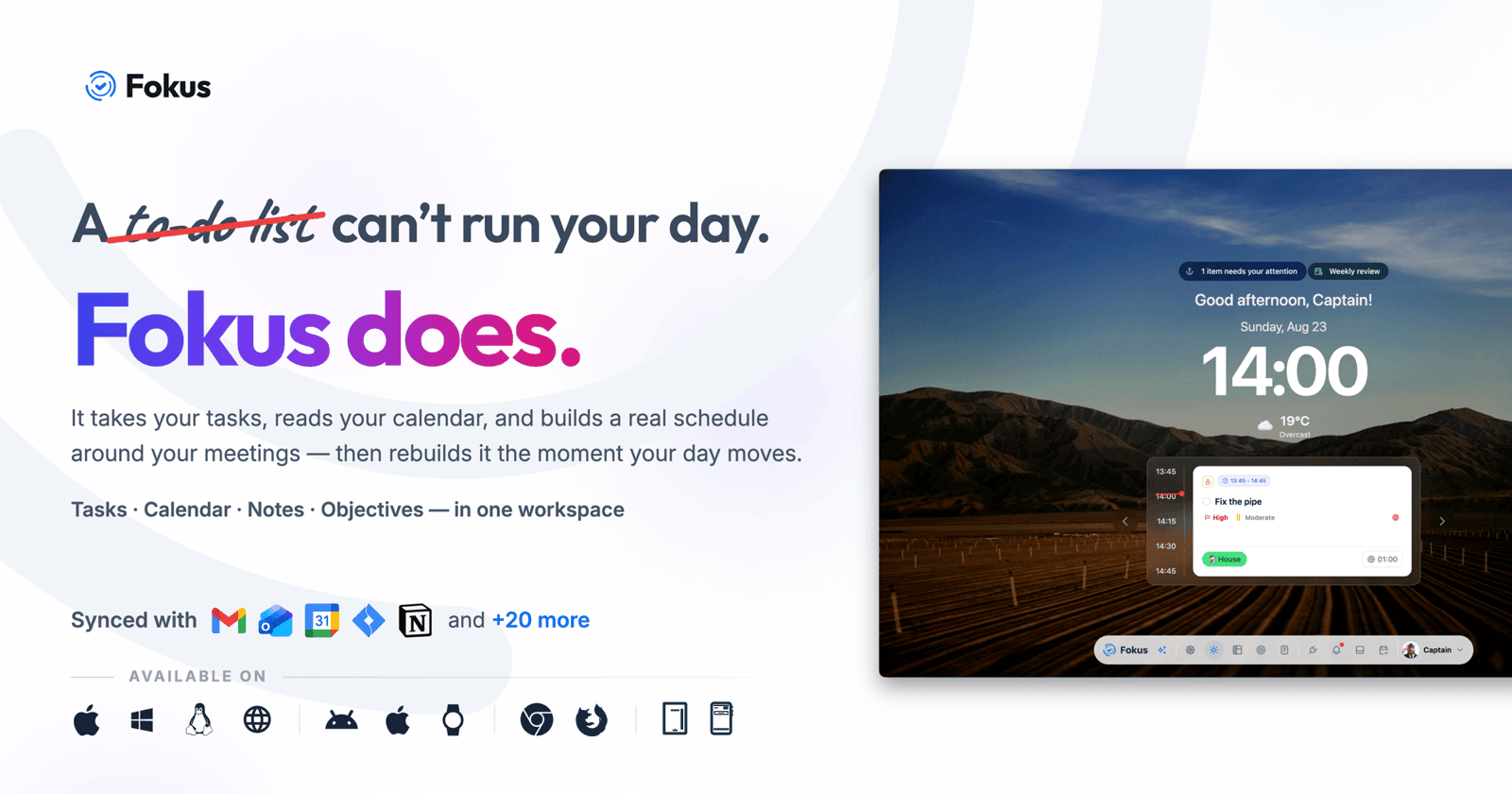
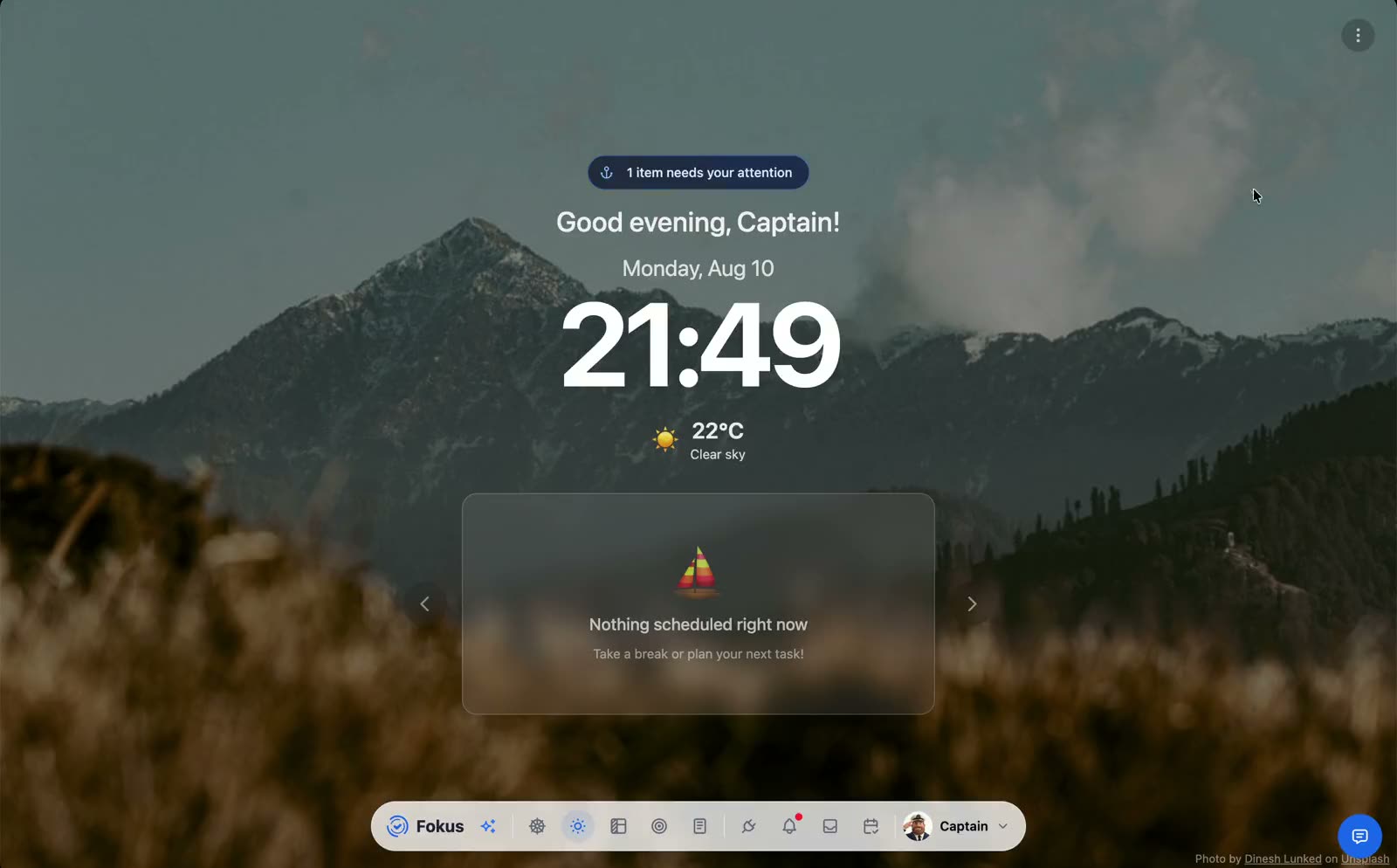
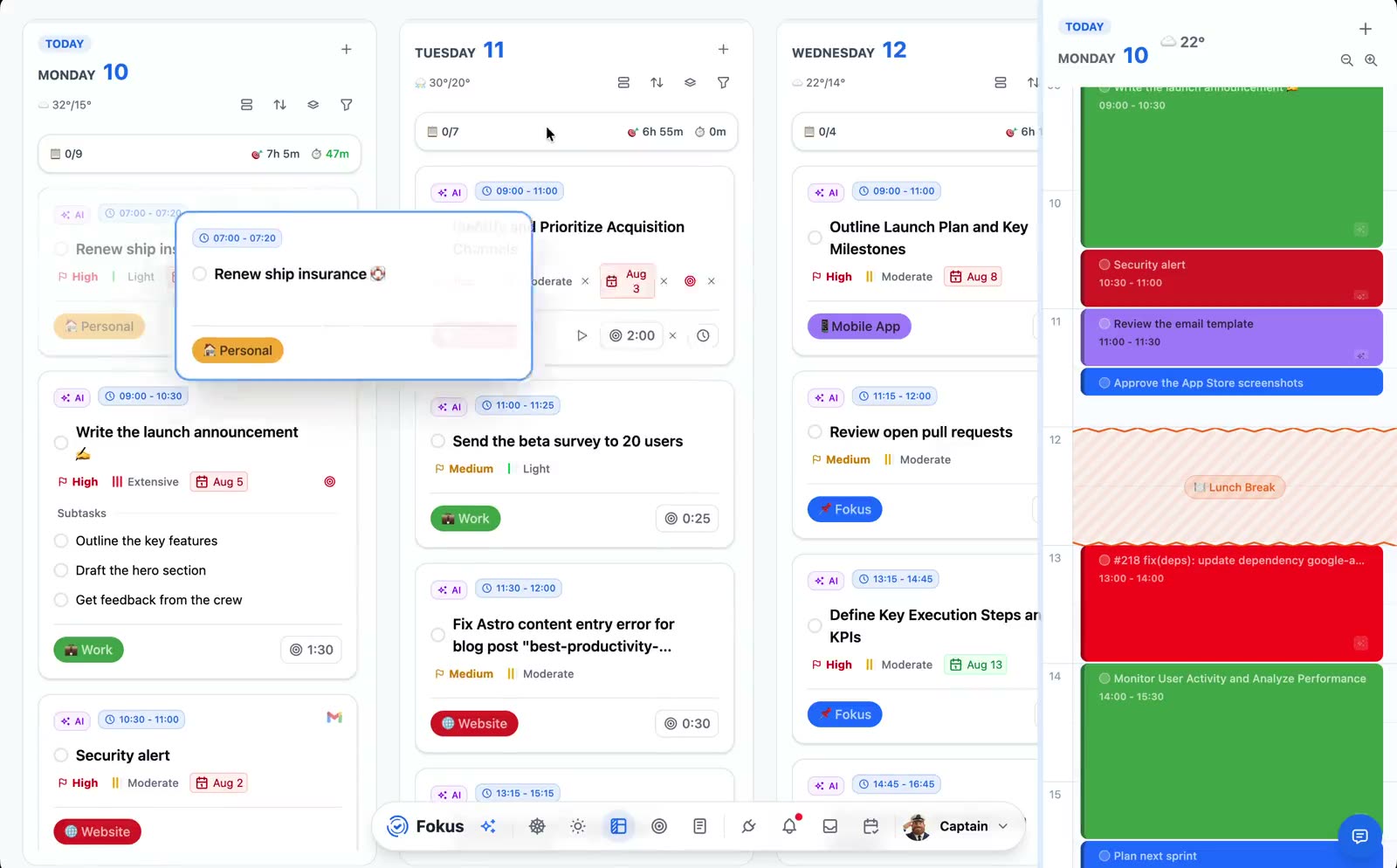
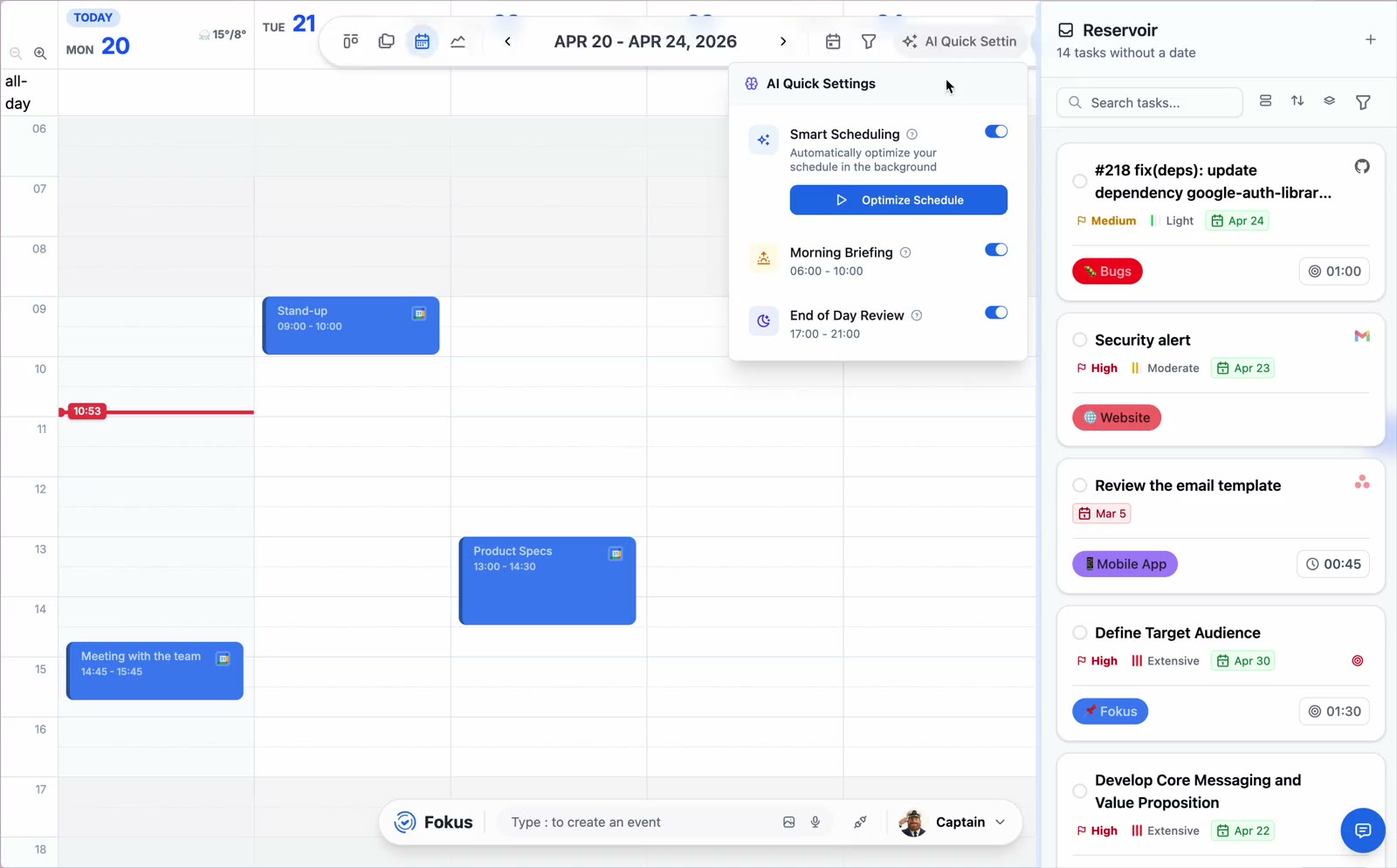
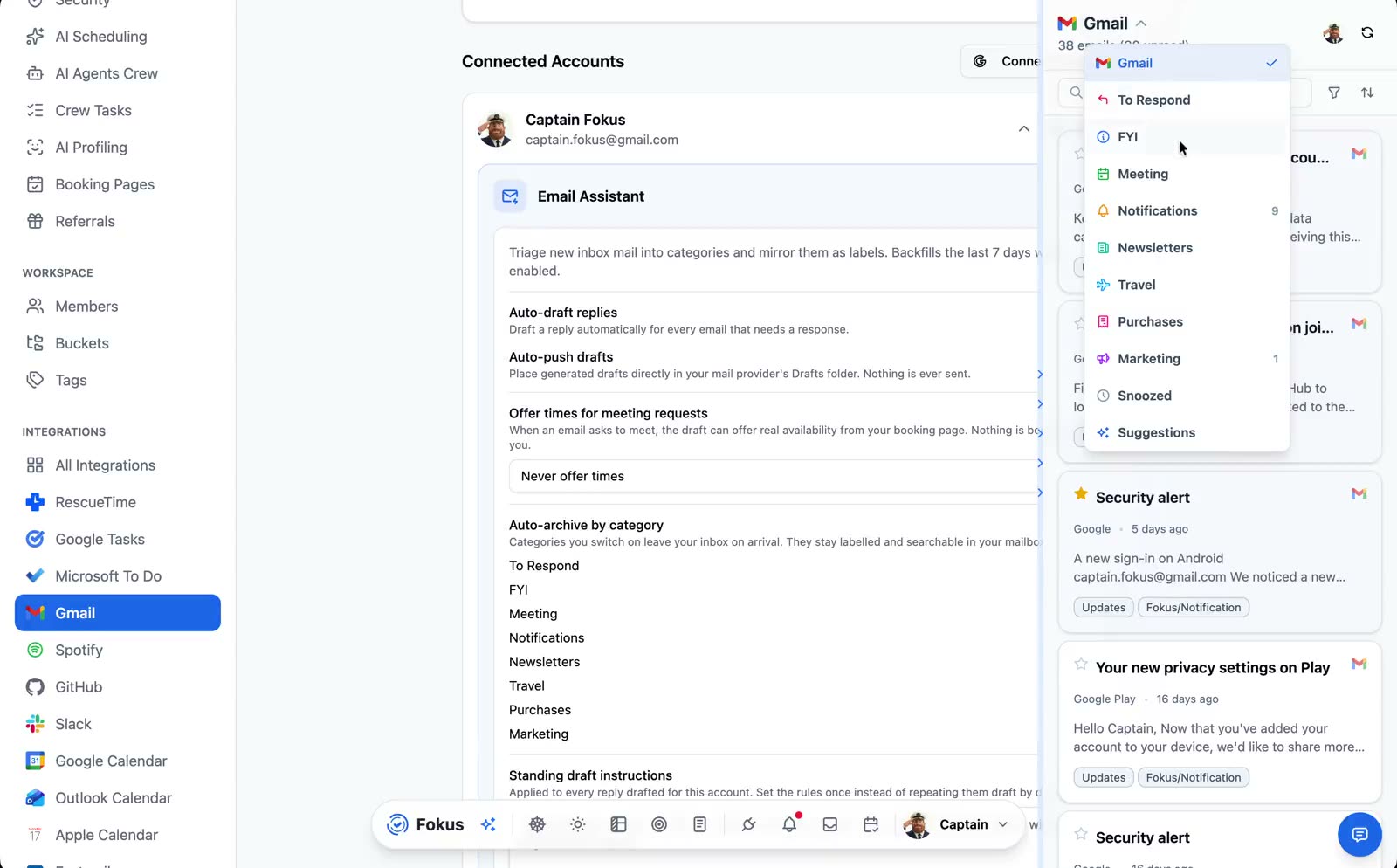
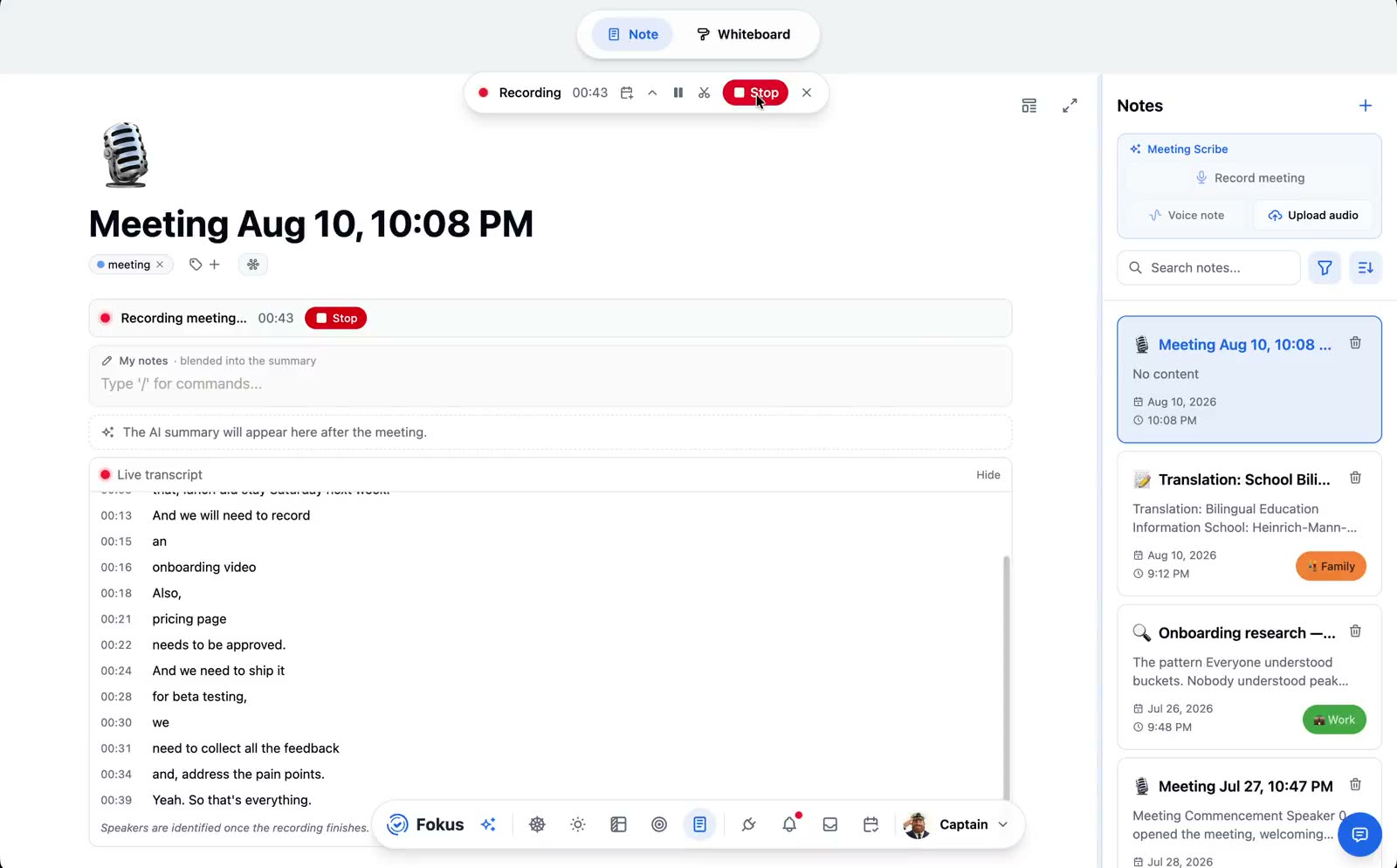
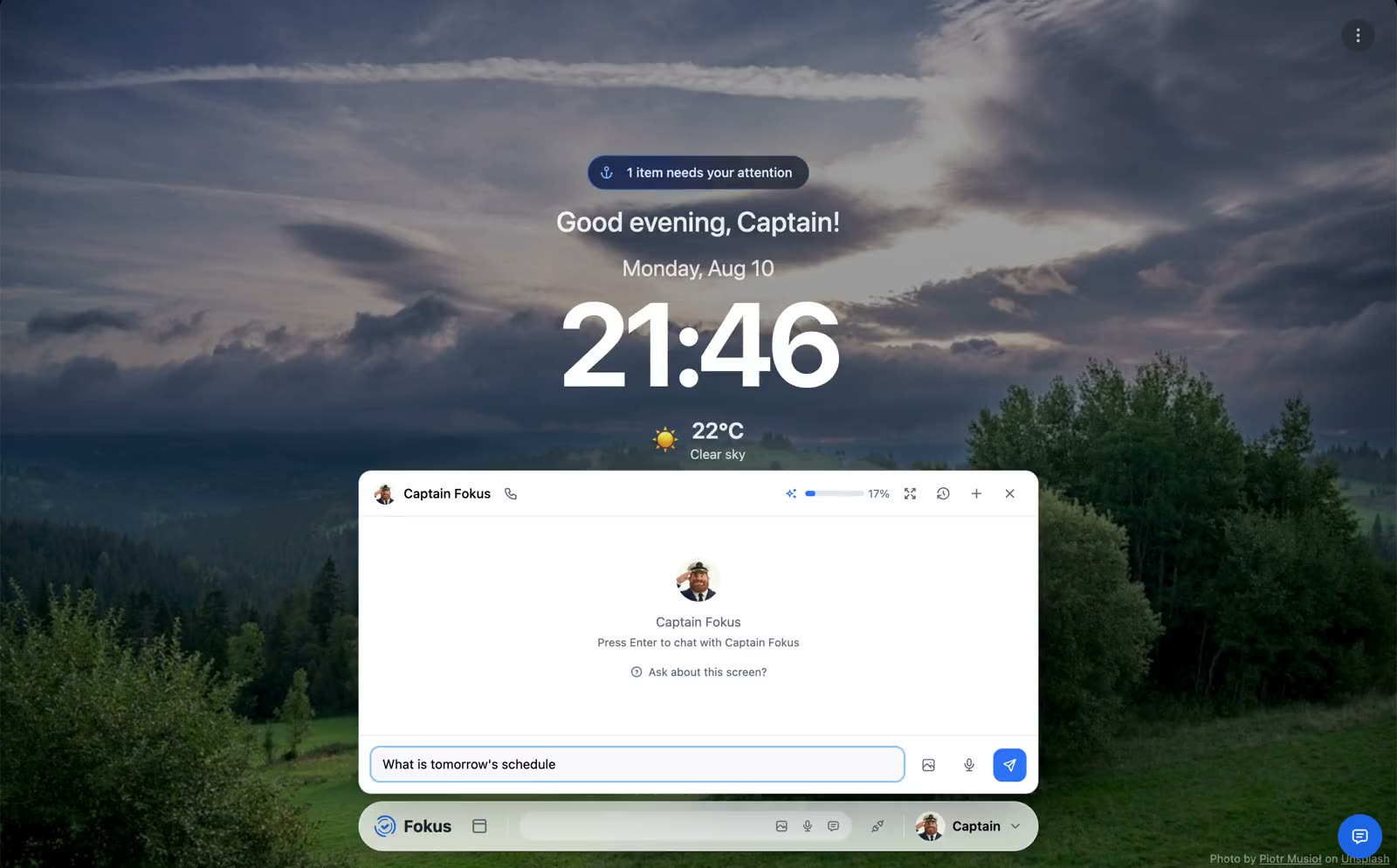
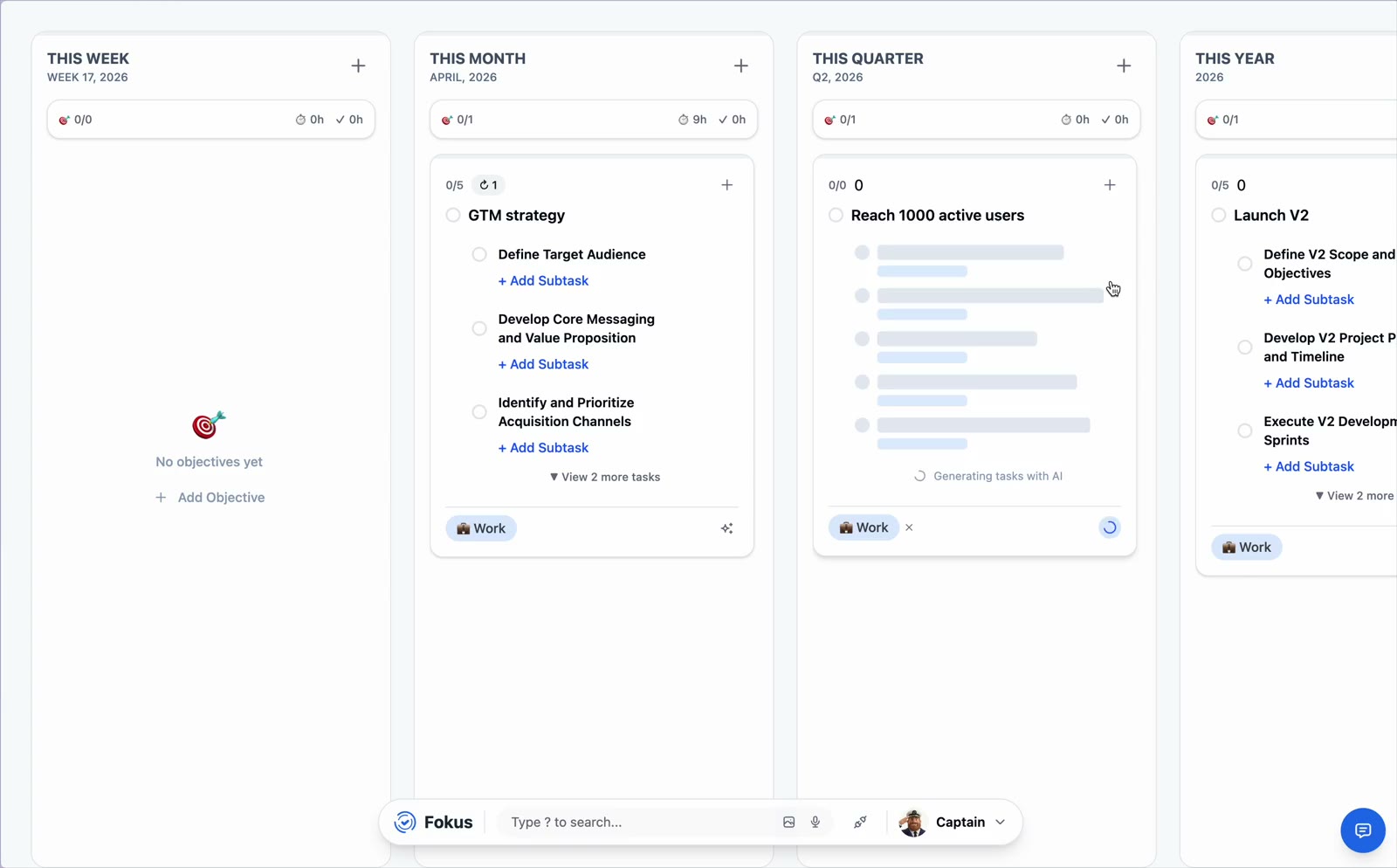
Fokus is an AI daily planner that brings tasks, calendar, notes, and goals into one workspace. It reads your calendar, turns tasks into a realistic schedule, and updates the plan when your day changes. The app helps you stay on track with smart rollover, priority-based planning, and time blocking that respects meetings, deadlines, and your energy. It also includes AI agents for things like morning briefings, task enrichment, objective breakdowns, meeting notes, inbox triage, voice commands, and booking pages. You can connect it with popular tools like Google Calendar, Gmail, Slack, Notion, Jira, Linear, Todoist, and more. It is available on desktop, mobile, web, and even Chrome extension and watch, with privacy-focused hosting and security built in.
Features
- Builds a real schedule from tasks and calendar events.
- Automatically rolls unfinished tasks into tomorrow with priority.
- Uses AI agents for briefs, reviews, and task enrichment.
- Captures notes, objectives, tasks, and meetings in one workspace.
- Connects with calendars, email, chat, todos, and project management tools.
- Offers smart time blocking, focus blocks, and analytics.
Use Cases
- Busy professionals who receive work from different channels and struggle with tracking the workload.
- Founders who needs clear priorities to commit to every day.

Comments


Hi everyone 👋 I'm Islam, the founder of Fokus. I started Fokus because a to-do list can't run your day. It tells you what to do, but not when — and it has no idea you have six meetings today. I wanted a planner that does the scheduling part for me. So Fokus takes your tasks (from Todoist, Notion, Asana, Gmail, Outlook and 20+ more), reads your calendar, and builds a real schedule around your meetings, then rebuilds it the moment your day moves. Overnight, anything you didn't finish rolls forward and gets re-planned, so you wake up to a plan you just approve. Behind the scenes: the scheduler is a constraint solver weighing deadlines, priorities and your energy levels in slots, and Captain Fokus, the built-in AI assistant, can plan, reschedule and take notes straight from chat. It runs on web, desktop, iOS, Android, Apple Watch and Chrome, and even on an e-paper desk display. It's free during the public beta with trail period and paid plan after. I'd love to know: how do you plan your day right now, and where does it usually fall apart?

Rolling unfinished tasks into tomorrow by priority while time blocking around meetings addresses a real pain for people juggling work from many channels. I like that the plan re-adjusts when the day changes instead of staying a static to-do list. The calendar and Slack/Notion integrations should make it easy for busy founders to adopt without changing their whole workflow.

Building a real schedule around meetings, rather than just listing tasks, is the right distinction — a to-do list alone never accounts for the hours already taken. I am interested in how the priority rollover works when a deadline and an energy level conflict: if an unfinished high-priority task lands on an already full day, does Fokus push a lower-priority item, split the task, or ask you to choose? Also, how does it learn your energy patterns over time — from calendar history, manual input, or both?

The smart rollover plus calendar-aware time blocking is the useful part for a founder day that keeps moving. A static morning plan dies after the first unexpected call. When a meeting lands on top of a focus block, does Fokus shrink the remaining tasks or push the lowest-priority block to the next open slot?


The smart rollover that carries unfinished tasks into tomorrow by priority is the part I'd lean on most, because manual re-planning is where most planners fall apart. How does the time blocking decide when to protect focus blocks versus fit in a meeting request from the booking pages? A setting to cap total meeting hours per day would be a helpful guardrail.

Premium Products















































Sponsors
Buy

Makers
Makers
Comments
Hi everyone 👋 I'm Islam, the founder of Fokus. I started Fokus because a to-do list can't run your day. It tells you what to do, but not when — and it has no idea you have six meetings today. I wanted a planner that does the scheduling part for me. So Fokus takes your tasks (from Todoist, Notion, Asana, Gmail, Outlook and 20+ more), reads your calendar, and builds a real schedule around your meetings, then rebuilds it the moment your day moves. Overnight, anything you didn't finish rolls forward and gets re-planned, so you wake up to a plan you just approve. Behind the scenes: the scheduler is a constraint solver weighing deadlines, priorities and your energy levels in slots, and Captain Fokus, the built-in AI assistant, can plan, reschedule and take notes straight from chat. It runs on web, desktop, iOS, Android, Apple Watch and Chrome, and even on an e-paper desk display. It's free during the public beta with trail period and paid plan after. I'd love to know: how do you plan your day right now, and where does it usually fall apart?
Rolling unfinished tasks into tomorrow by priority while time blocking around meetings addresses a real pain for people juggling work from many channels. I like that the plan re-adjusts when the day changes instead of staying a static to-do list. The calendar and Slack/Notion integrations should make it easy for busy founders to adopt without changing their whole workflow.
Building a real schedule around meetings, rather than just listing tasks, is the right distinction — a to-do list alone never accounts for the hours already taken. I am interested in how the priority rollover works when a deadline and an energy level conflict: if an unfinished high-priority task lands on an already full day, does Fokus push a lower-priority item, split the task, or ask you to choose? Also, how does it learn your energy patterns over time — from calendar history, manual input, or both?
The smart rollover plus calendar-aware time blocking is the useful part for a founder day that keeps moving. A static morning plan dies after the first unexpected call. When a meeting lands on top of a focus block, does Fokus shrink the remaining tasks or push the lowest-priority block to the next open slot?
The smart rollover that carries unfinished tasks into tomorrow by priority is the part I'd lean on most, because manual re-planning is where most planners fall apart. How does the time blocking decide when to protect focus blocks versus fit in a meeting request from the booking pages? A setting to cap total meeting hours per day would be a helpful guardrail.
Premium Products
New to Fazier?

Find your next favorite product or submit your own. Made by @FalakDigital.
Copyright ©2026. All Rights Reserved