
Fluenvo
Drop in your own material, get exercises built from it
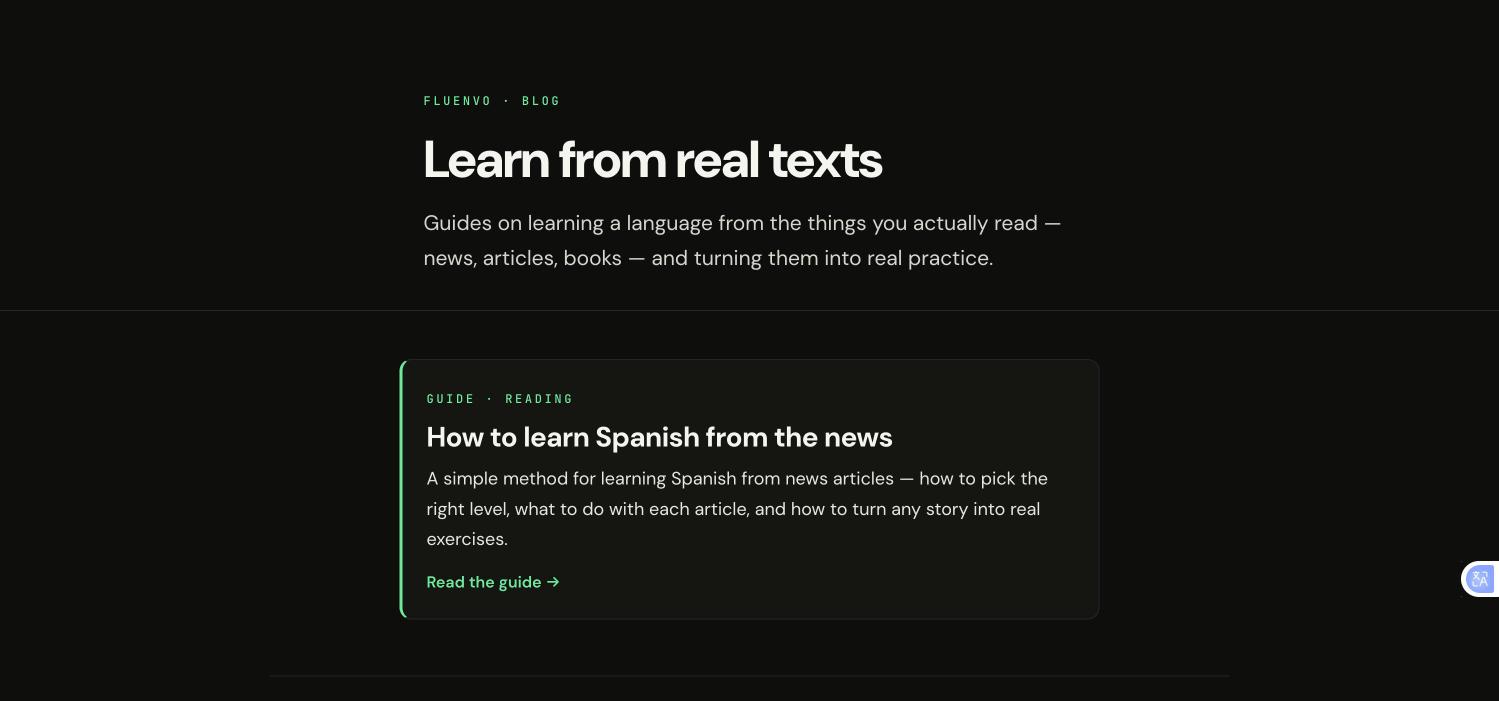
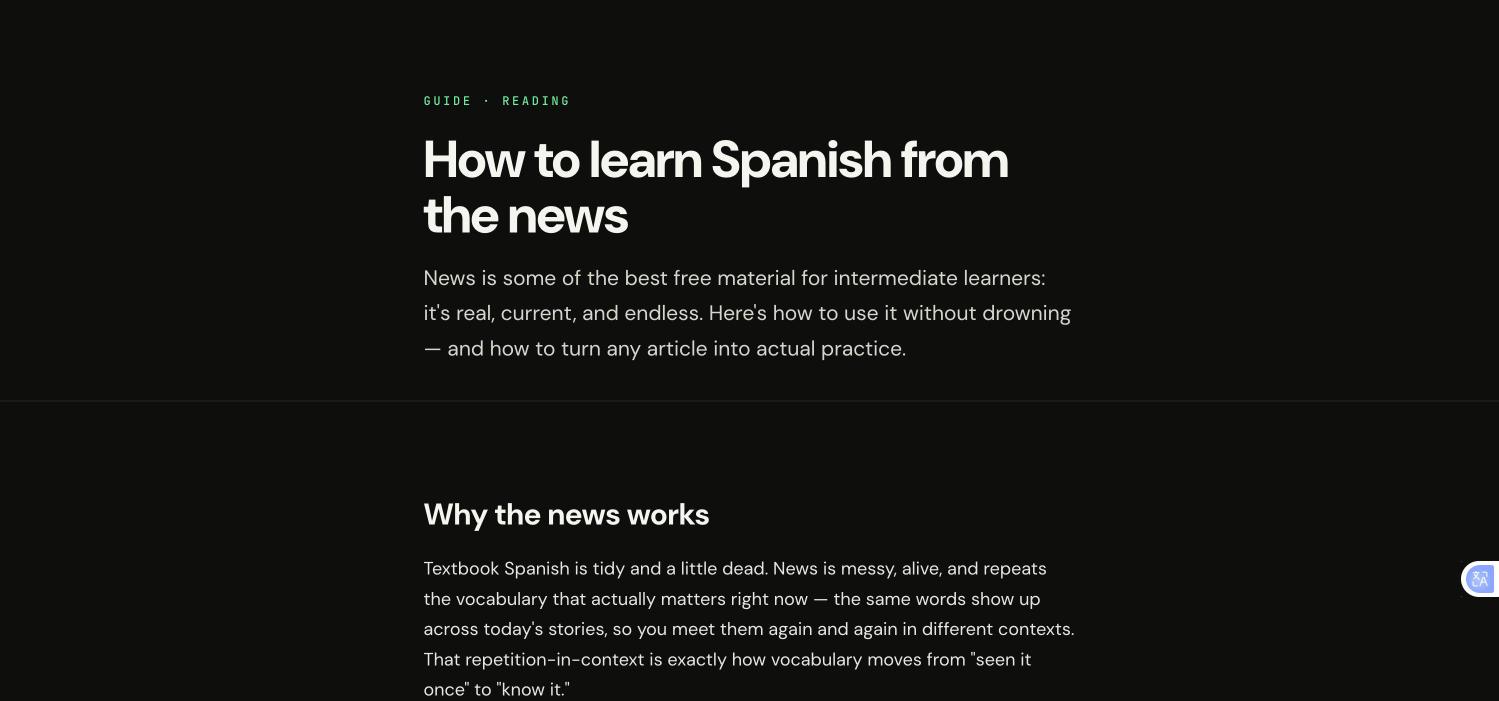
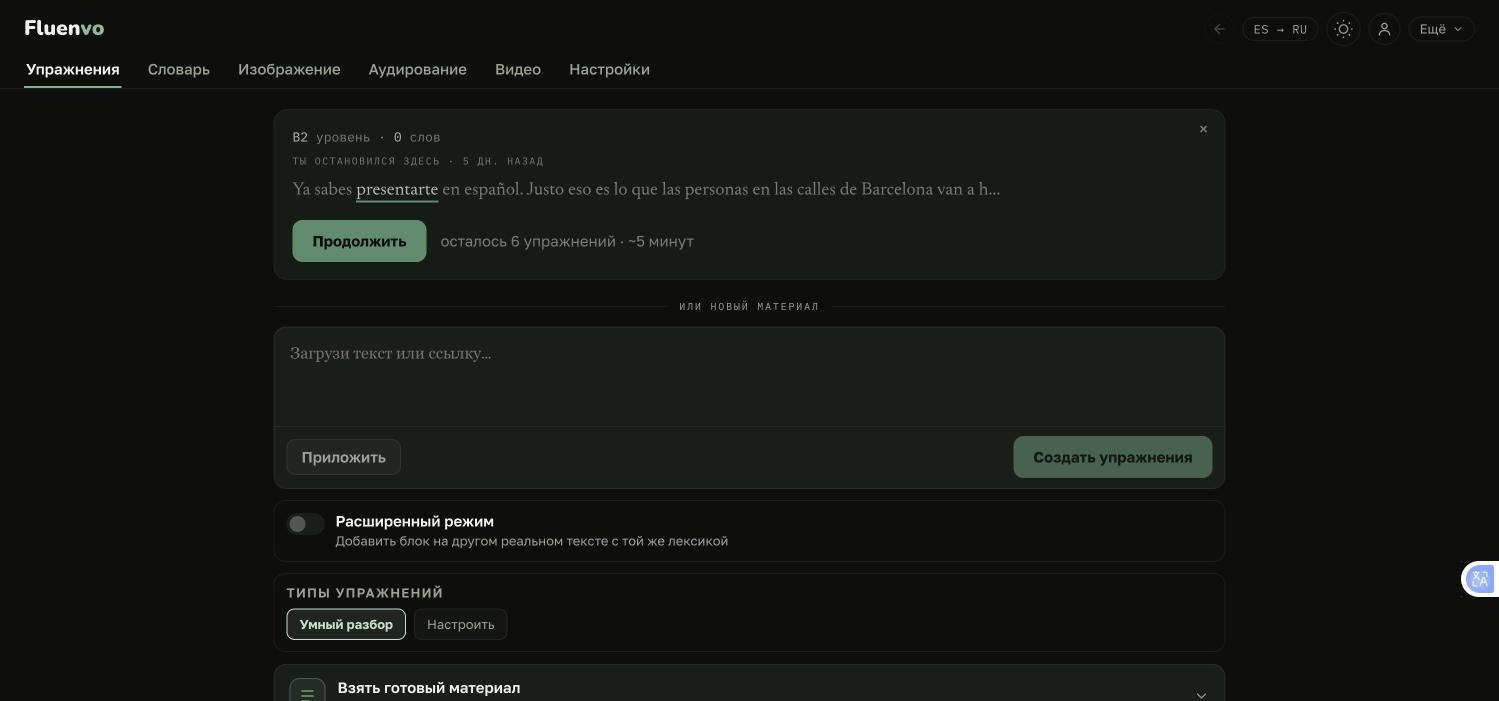
Fluenvo is an AI language-learning app that turns material you actually care about into personalized exercises. Instead of generic lessons, you practice on content you chose, with vocabulary, grammar and comprehension work built around it. Built for intermediate and advanced learners studying English or Spanish.
Features
- Drop in your own material — articles, text, anything you're reading
- AI builds personalized exercises from that material automatically
- Vocabulary, grammar and comprehension practice built around real content
- Supports English and Spanish learning
Use Cases
- Practicing a language by reading news, blogs or books you'd read anyway
- Intermediate/advanced learners who find generic textbook lessons boring

Comments





Turning your own reading material into exercises is a strong angle, since learners stay more motivated when the content matters to them. The split between vocabulary, grammar and comprehension work built around one text is a good way to reuse the same material. I would be curious how it handles longer articles, and whether the exercises adapt when a learner keeps missing the same grammar point.



Using your own material instead of a generic course is the right default — a textbook chapter or a work handout usually teaches me more than a polished demo lesson. One question: when I drop in something long, does it split into exercises automatically or do I pick the focus (vocab, grammar, comprehension)? Also handy would be a way to keep a small library of past uploads so I can revisit a set of exercises a week later instead of re-uploading.

Practicing on material you actually chose is a much better hook than generic lessons, especially at the intermediate level where textbooks get boring fast. Song lyrics would be a great source for this: learners already know the tune, which helps vocabulary stick. Can you paste a link (an article or a video transcript), or does it need the text copied in?


Building exercises from material the learner picked is a smart idea, because motivation is the hard part of language study. One question: do the exercises bring back words a learner got wrong in earlier texts? That repetition is where retention usually comes from. I'd also like to know about PDF or URL import, since someone asked.

Building exercises from text the learner chose is the right call. One risk I've seen when generating material from user-supplied text: comprehension questions drift toward what the model already knows about the topic rather than what this passage says. Do you check that every answer can be found in the uploaded text? And when a text is well above the learner's level, do you gloss the hard sentences or drill only some of them?
Premium Products














































Sponsors
Buy

Awards
View all
Awards
View allMakers

Makers
Comments
Turning your own reading material into exercises is a strong angle, since learners stay more motivated when the content matters to them. The split between vocabulary, grammar and comprehension work built around one text is a good way to reuse the same material. I would be curious how it handles longer articles, and whether the exercises adapt when a learner keeps missing the same grammar point.
Using your own material instead of a generic course is the right default — a textbook chapter or a work handout usually teaches me more than a polished demo lesson. One question: when I drop in something long, does it split into exercises automatically or do I pick the focus (vocab, grammar, comprehension)? Also handy would be a way to keep a small library of past uploads so I can revisit a set of exercises a week later instead of re-uploading.
Practicing on material you actually chose is a much better hook than generic lessons, especially at the intermediate level where textbooks get boring fast. Song lyrics would be a great source for this: learners already know the tune, which helps vocabulary stick. Can you paste a link (an article or a video transcript), or does it need the text copied in?
Building exercises from material the learner picked is a smart idea, because motivation is the hard part of language study. One question: do the exercises bring back words a learner got wrong in earlier texts? That repetition is where retention usually comes from. I'd also like to know about PDF or URL import, since someone asked.
Building exercises from text the learner chose is the right call. One risk I've seen when generating material from user-supplied text: comprehension questions drift toward what the model already knows about the topic rather than what this passage says. Do you check that every answer can be found in the uploaded text? And when a text is well above the learner's level, do you gloss the hard sentences or drill only some of them?
Premium Products
New to Fazier?

Find your next favorite product or submit your own. Made by @FalakDigital.
Copyright ©2026. All Rights Reserved