Fixing AI Visibility
Monitor brand mentions and gaps with AI-driven insights.
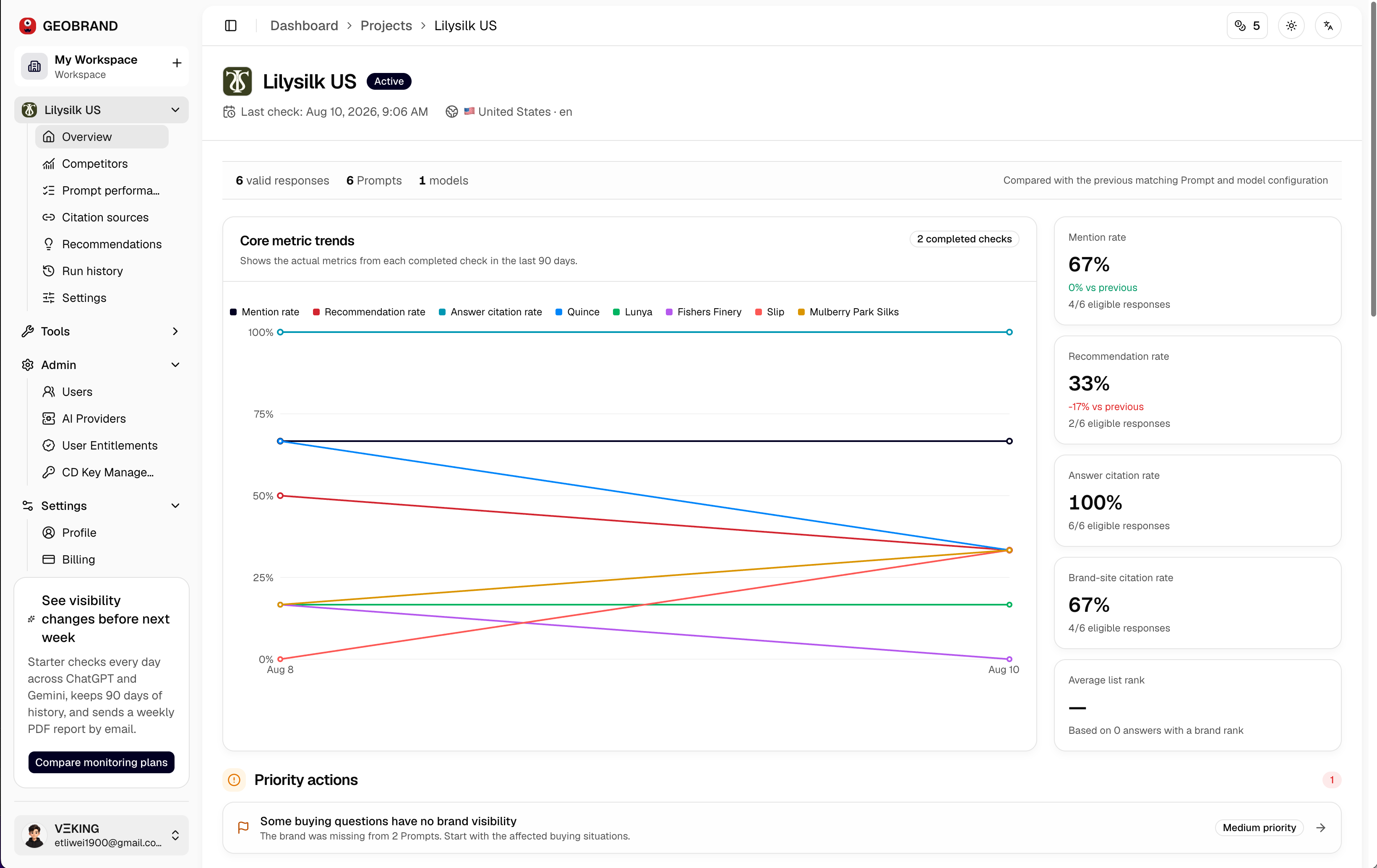
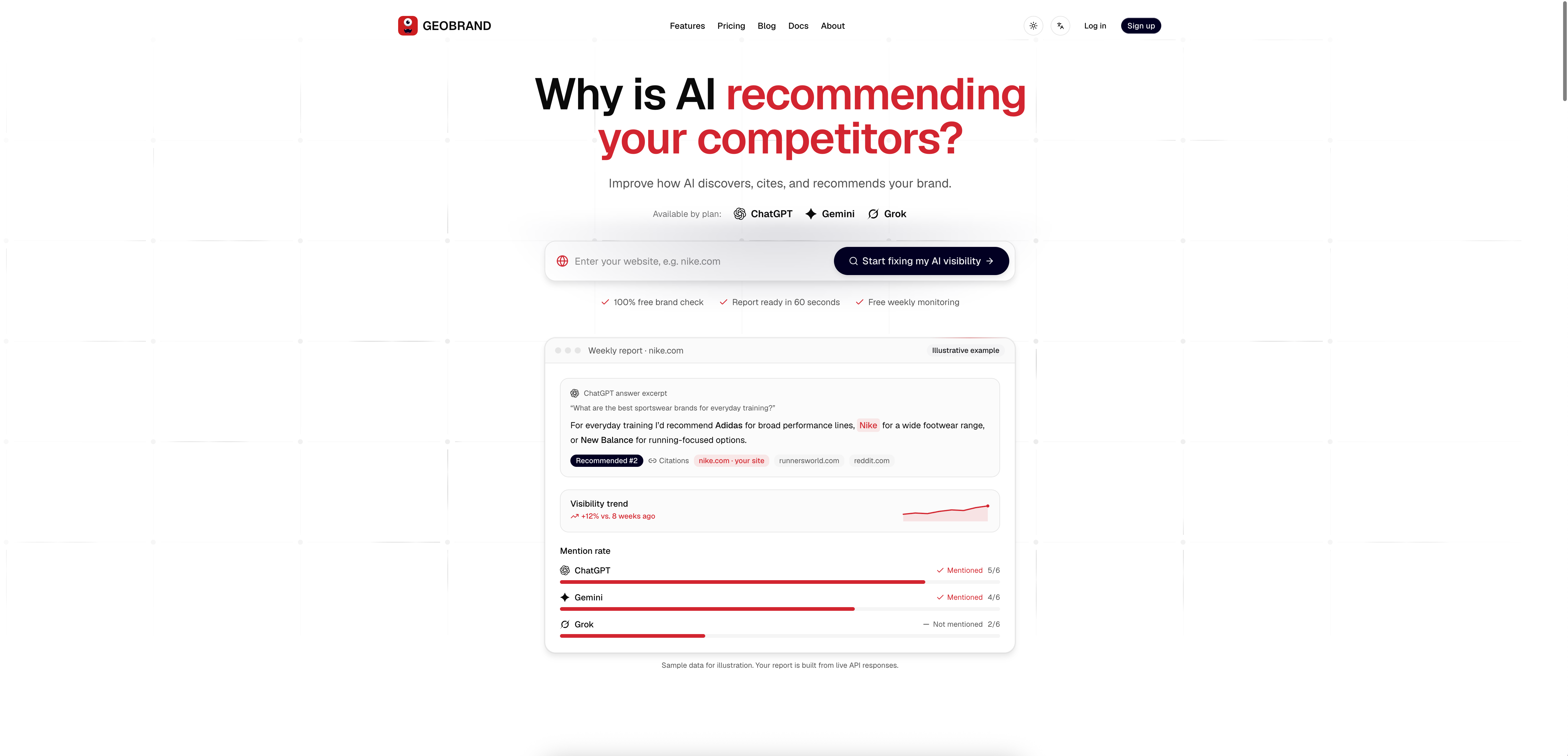
GeoBrand is a cutting-edge platform designed to help businesses understand their brand's visibility and reputation in the market. By leveraging advanced artificial intelligence, GeoBrand provides insights into how your brand is perceived by consumers, allowing you to make informed decisions to enhance your marketing strategies. With a user-friendly interface, GeoBrand simplifies the process of brand monitoring and analysis, making it accessible for businesses of all sizes.
Features
- AI-Powered Insights: Utilize artificial intelligence to gain deep insights into consumer perceptions of your brand.
- Brand Monitoring: Track mentions of your brand across various platforms and media.
- Evidence Review: Access a comprehensive review of evidence related to your brand's mentions and recommendations.
- Gap Analysis: Identify gaps in your brand's presence and strategize on how to fill them effectively.
- User-Friendly Dashboard: Navigate through an intuitive dashboard that displays all relevant data in an organized manner.
Use Cases
For Marketing Teams
Marketing teams can leverage GeoBrand to enhance their strategies by understanding how their brand is perceived in real-time. By analyzing consumer feedback and brand mentions, teams can adjust their campaigns to better resonate with their target audience. This proactive approach ensures that marketing efforts are aligned with consumer expectations and preferences.
For Brand Managers
Brand managers can utilize GeoBrand to monitor their brand's reputation continuously. By receiving alerts on brand mentions, they can respond promptly to any negative feedback or capitalize on positive discussions. This real-time monitoring helps maintain a positive brand image and fosters trust with consumers.
For Executives
Executives can use the insights provided by GeoBrand to make strategic decisions regarding brand positioning and market entry. By understanding consumer perceptions and identifying potential gaps in the market, executives can allocate resources more effectively and drive business growth.

Comments





The real value here is showing the actual evidence instead of just another visibility score. Most brand tools bury you in metrics but never show you what AI assistants actually say about you. Getting the raw mentions, citations, and which competitors show up is game-changing for strategy. Alexandra clearly understood that solo builders need to see the gap before they can fix it. Love the simplicity.




The 'evidence over score' framing really resonates - most AI-visibility tools just hand you a number with no way to act on it. Since you're running consistent buyer-style prompts across models, how do you handle drift when a model update shifts answers for reasons unrelated to the brand's actual visibility? Seems like the hard part of making the trend line trustworthy over time.

Interesting angle. I measure how ChatGPT and Google AI Overview cite brands for category queries, and the gap analysis part is where most tools fall short - knowing you were not cited matters less than knowing which sources the AI leaned on instead. Does GeoBrand surface the underlying citation sources, or is it mention-level tracking? Either way, brand visibility in AI answers is going to matter more than classic SEO rankings soon. Good launch.


Hey makers 👋 Three months ago, I found myself out of work. The first few weeks were uncertain, but I also realized I finally had something I rarely had before: uninterrupted time to build. I kept thinking about one problem—brands spend a lot of time on SEO, but most have no idea what AI assistants actually say about them. Are they mentioned? Recommended? Cited? Which competitors appear instead? So I built GEOBRAND. It runs consistent buyer-style questions across AI models and keeps the actual answers, citations, competing brands, and changes over time. The goal isn’t to produce another mysterious score. It’s to show the evidence behind where a brand appears—or disappears—in AI answers. I built it solo, using AI as a coding partner throughout the process. Getting the first version on screen was the easy part. Turning it into a real SaaS—improving reliability, handling edge cases, simplifying onboarding, and deciding what not to build—was much harder. I’m still at the beginning. There’s no “$10K MRR in 30 days” story here. Just one out-of-work indie developer who decided to stop waiting and ship something useful. For those who have built a SaaS solo: what helped your first users trust a brand-new product—a better demo, more features, or simply talking to them?


Premium Products


















Sponsors
Buy


Makers
Makers
Comments
The real value here is showing the actual evidence instead of just another visibility score. Most brand tools bury you in metrics but never show you what AI assistants actually say about you. Getting the raw mentions, citations, and which competitors show up is game-changing for strategy. Alexandra clearly understood that solo builders need to see the gap before they can fix it. Love the simplicity.
The 'evidence over score' framing really resonates - most AI-visibility tools just hand you a number with no way to act on it. Since you're running consistent buyer-style prompts across models, how do you handle drift when a model update shifts answers for reasons unrelated to the brand's actual visibility? Seems like the hard part of making the trend line trustworthy over time.
Interesting angle. I measure how ChatGPT and Google AI Overview cite brands for category queries, and the gap analysis part is where most tools fall short - knowing you were not cited matters less than knowing which sources the AI leaned on instead. Does GeoBrand surface the underlying citation sources, or is it mention-level tracking? Either way, brand visibility in AI answers is going to matter more than classic SEO rankings soon. Good launch.
Hey makers 👋 Three months ago, I found myself out of work. The first few weeks were uncertain, but I also realized I finally had something I rarely had before: uninterrupted time to build. I kept thinking about one problem—brands spend a lot of time on SEO, but most have no idea what AI assistants actually say about them. Are they mentioned? Recommended? Cited? Which competitors appear instead? So I built GEOBRAND. It runs consistent buyer-style questions across AI models and keeps the actual answers, citations, competing brands, and changes over time. The goal isn’t to produce another mysterious score. It’s to show the evidence behind where a brand appears—or disappears—in AI answers. I built it solo, using AI as a coding partner throughout the process. Getting the first version on screen was the easy part. Turning it into a real SaaS—improving reliability, handling edge cases, simplifying onboarding, and deciding what not to build—was much harder. I’m still at the beginning. There’s no “$10K MRR in 30 days” story here. Just one out-of-work indie developer who decided to stop waiting and ship something useful. For those who have built a SaaS solo: what helped your first users trust a brand-new product—a better demo, more features, or simply talking to them?
Premium Products
New to Fazier?
Find your next favorite product or submit your own. Made by @FalakDigital.
Copyright ©2026. All Rights Reserved