
Feedback Synthesiser
Turn customer feedback into a decision, not a report.
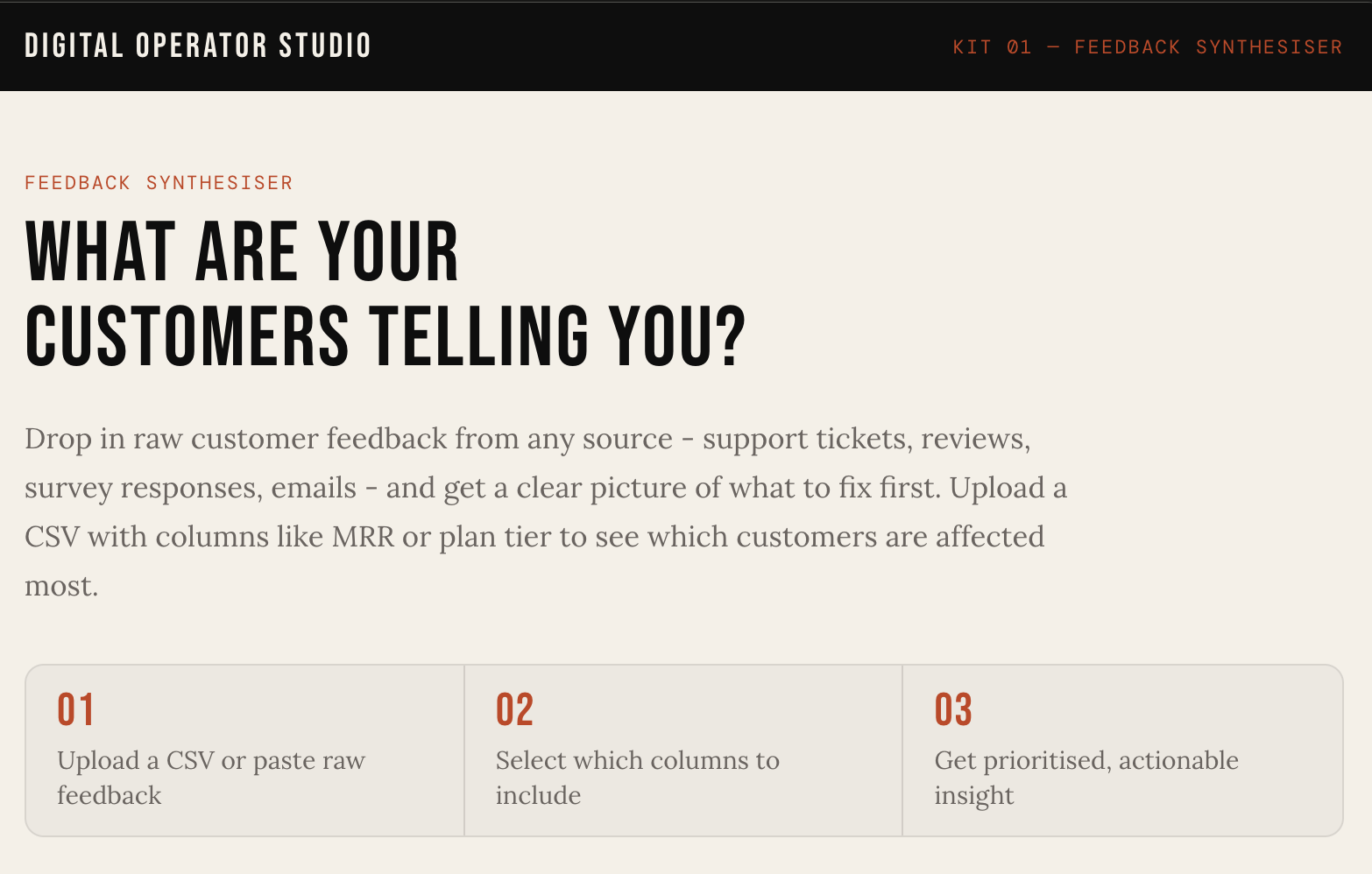
The Feedback Synthesiser takes raw customer feedback from any source - support tickets, surveys, reviews, emails - and returns a prioritised, actionable analysis in under 30 seconds.
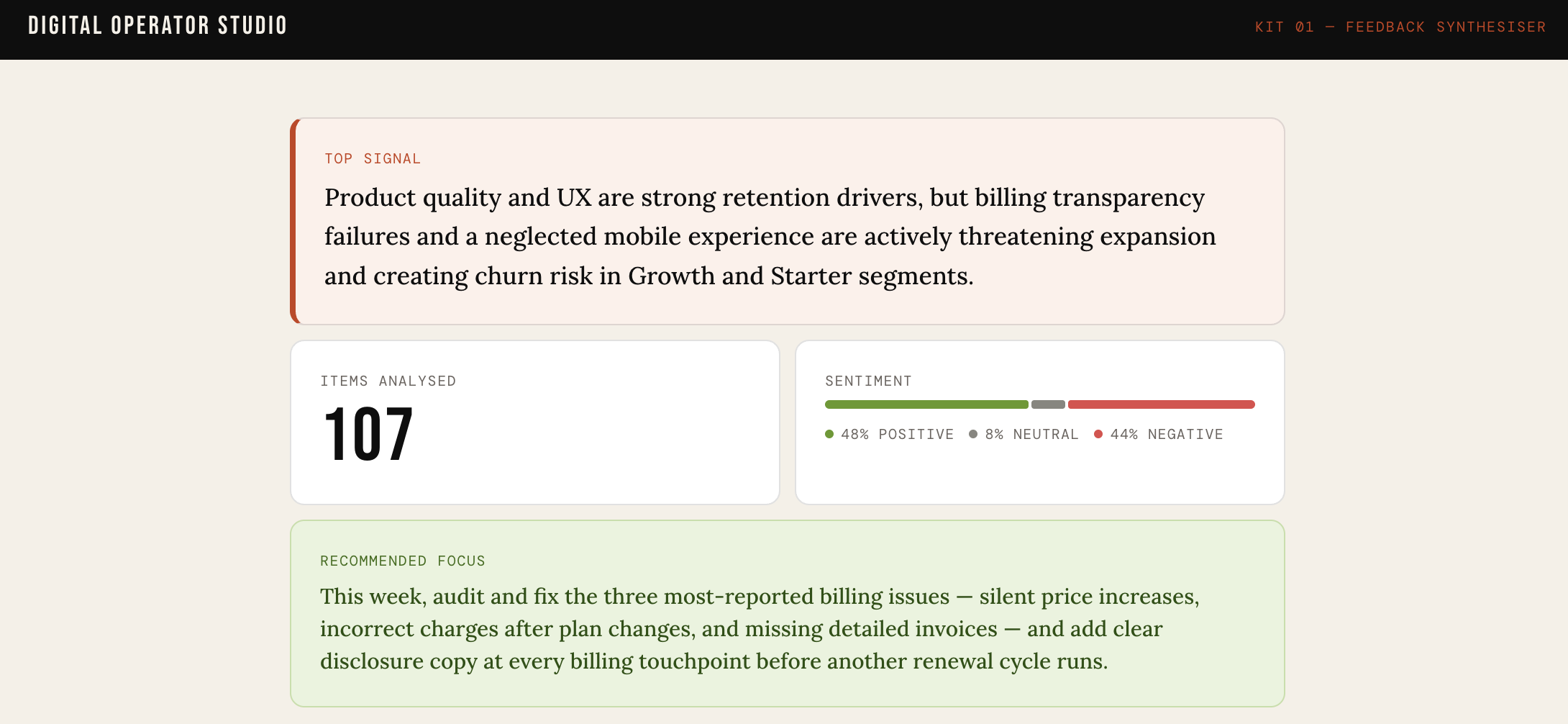
It identifies themes, ranks them by frequency and business impact, and gives you a specific recommendation for each one - not just what the data says, but what to do about it.
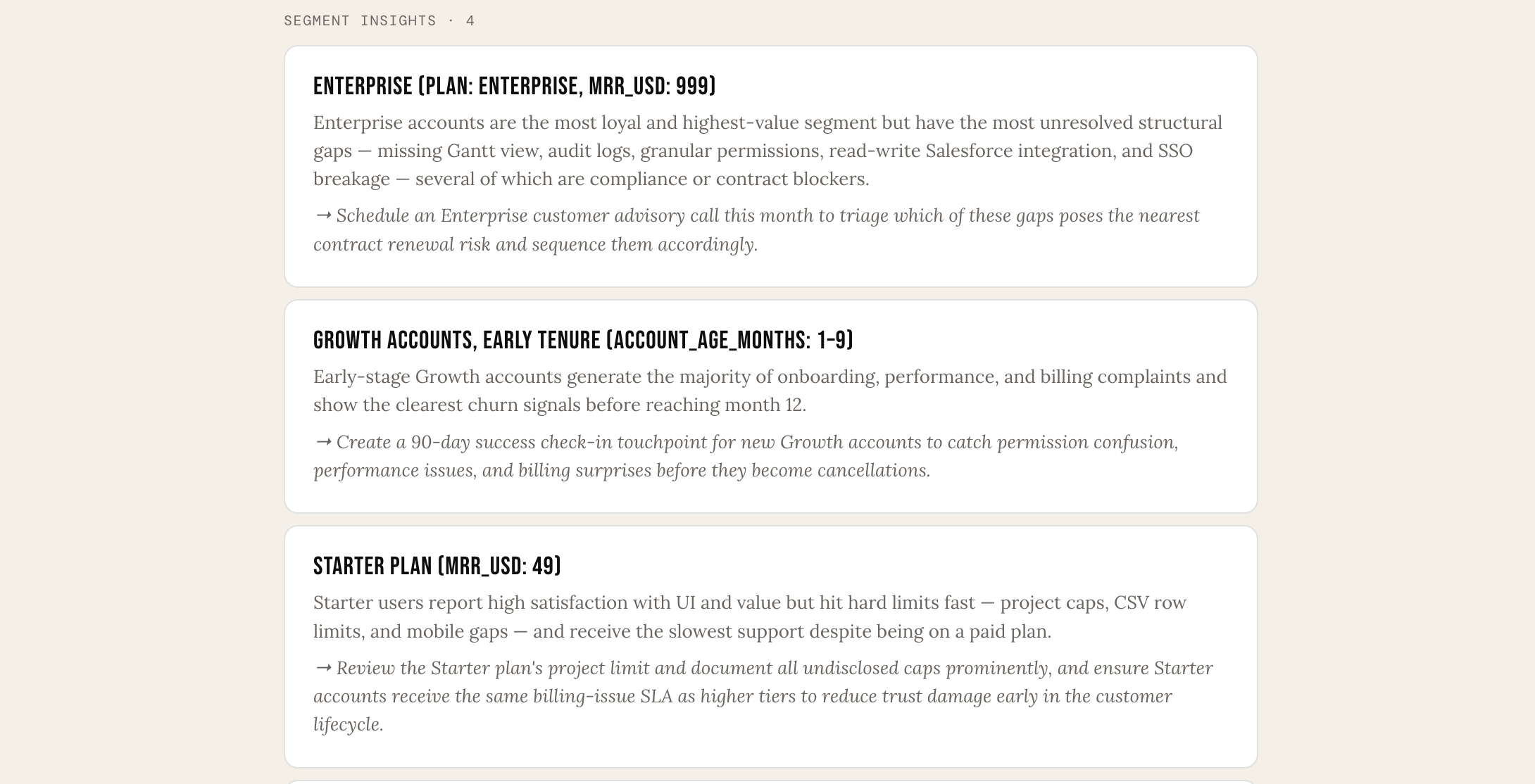
Upload a CSV with context columns like MRR or plan tier and it'll also surface segment-level patterns.
Free to use with a Claude account.
Features
- Upload a CSV or paste feedback directly
- Auto-detects feedback and context columns (MRR, plan tier, account age)
- Prioritised theme cards with problem, evidence, and recommendation
- Sentiment split analysis
- Segment signals - patterns by customer tier, tenure, or revenue
- Standalone segment insights section
- Copy output as markdown
- Session history - last 3 analyses saved
Use Cases
- Making sense of a backlog of support tickets
- Turning survey responses into a prioritised action list
- Understanding why customers are churning by segment
- Preparing for a product planning session with real customer signal
- Replacing hours of manual feedback tagging and sorting
- Getting a "what should I fix first" answer from raw NPS responses

Comments


Built this out of frustration with feedback tools that tell you what the data says but never what to do about it. As a solo founder you don't have time to read through clusters and figure out the next step yourself - you need the decision, not the summary. This is early stage and I'm genuinely trying to understand if the output format works for real workflows. If you try it, I'd love to know: does the recommendation feel specific enough to act on, and is the Claude account requirement a dealbreaker for your setup?

The framing of 'a decision, not a report' is spot on - that's exactly where most feedback tools fall short. They give you data but leave the so-what to you. The segment-level patterns via MRR or plan tier is particularly powerful for SaaS teams trying to understand if churn signals differ between free and paid users. Really useful tool at the right stage of a product journey.



The "what to do about it" step is the part most feedback tools skip, they cluster themes and then stop. Weighting by MRR/plan tier instead of raw count is the smart call too. One genuine question: when a theme is loud from a few high-MRR accounts but rare overall, which way does the ranking lean? That tension is usually exactly where the hard roadmap calls get made.
Premium Products




































Sponsors
Buy

Makers
Makers
Comments
Built this out of frustration with feedback tools that tell you what the data says but never what to do about it. As a solo founder you don't have time to read through clusters and figure out the next step yourself - you need the decision, not the summary. This is early stage and I'm genuinely trying to understand if the output format works for real workflows. If you try it, I'd love to know: does the recommendation feel specific enough to act on, and is the Claude account requirement a dealbreaker for your setup?
The framing of 'a decision, not a report' is spot on - that's exactly where most feedback tools fall short. They give you data but leave the so-what to you. The segment-level patterns via MRR or plan tier is particularly powerful for SaaS teams trying to understand if churn signals differ between free and paid users. Really useful tool at the right stage of a product journey.
The "what to do about it" step is the part most feedback tools skip, they cluster themes and then stop. Weighting by MRR/plan tier instead of raw count is the smart call too. One genuine question: when a theme is loud from a few high-MRR accounts but rare overall, which way does the ranking lean? That tension is usually exactly where the hard roadmap calls get made.
Premium Products
New to Fazier?

Find your next favorite product or submit your own. Made by @FalakDigital.
Copyright ©2026. All Rights Reserved