
EidosStack AI Gateway
One OpenAI-compatible API for 48+ AI models
EidosStack AI Gateway is an OpenAI-compatible API gateway that provides access to 48+ AI models from DeepSeek, Anthropic (Claude), OpenAI (GPT), Google (Gemini), Alibaba (Qwen), Moonshot (Kimi), and Zhipu (GLM).
Features
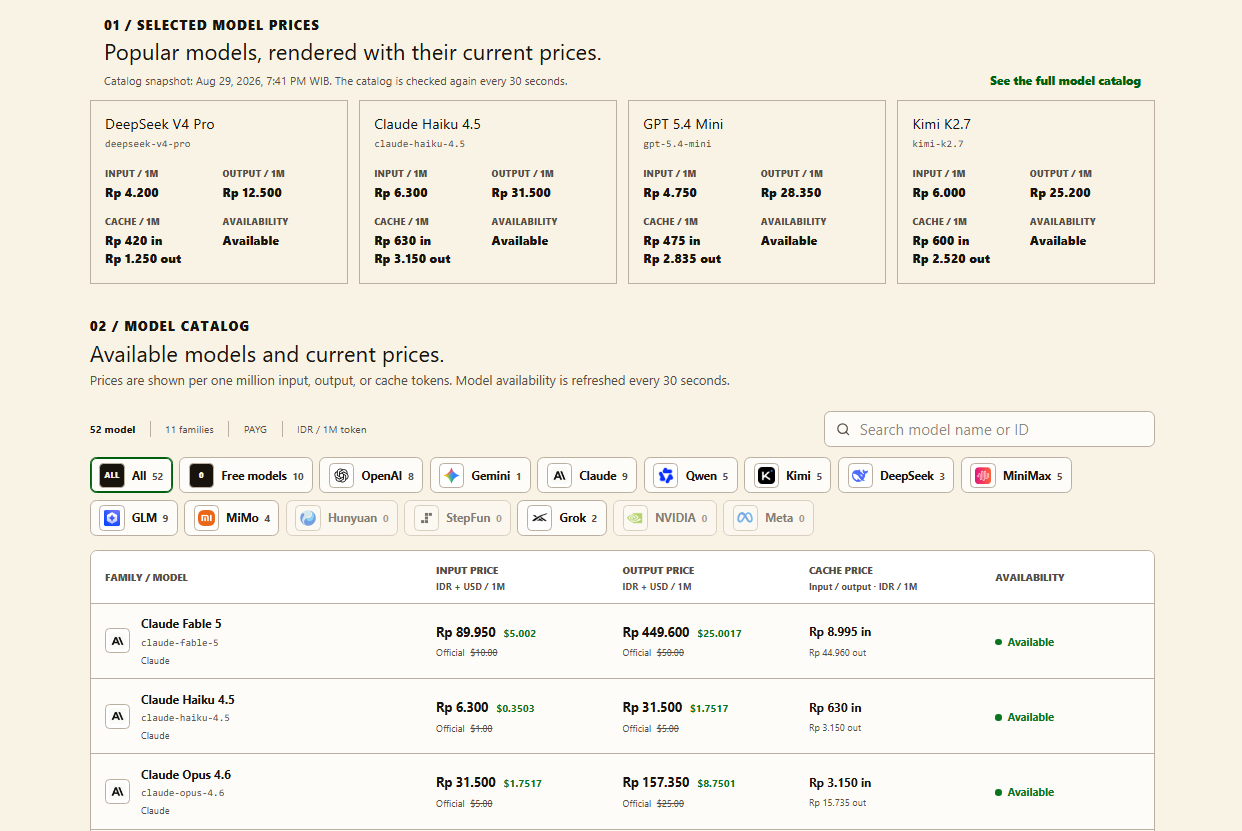
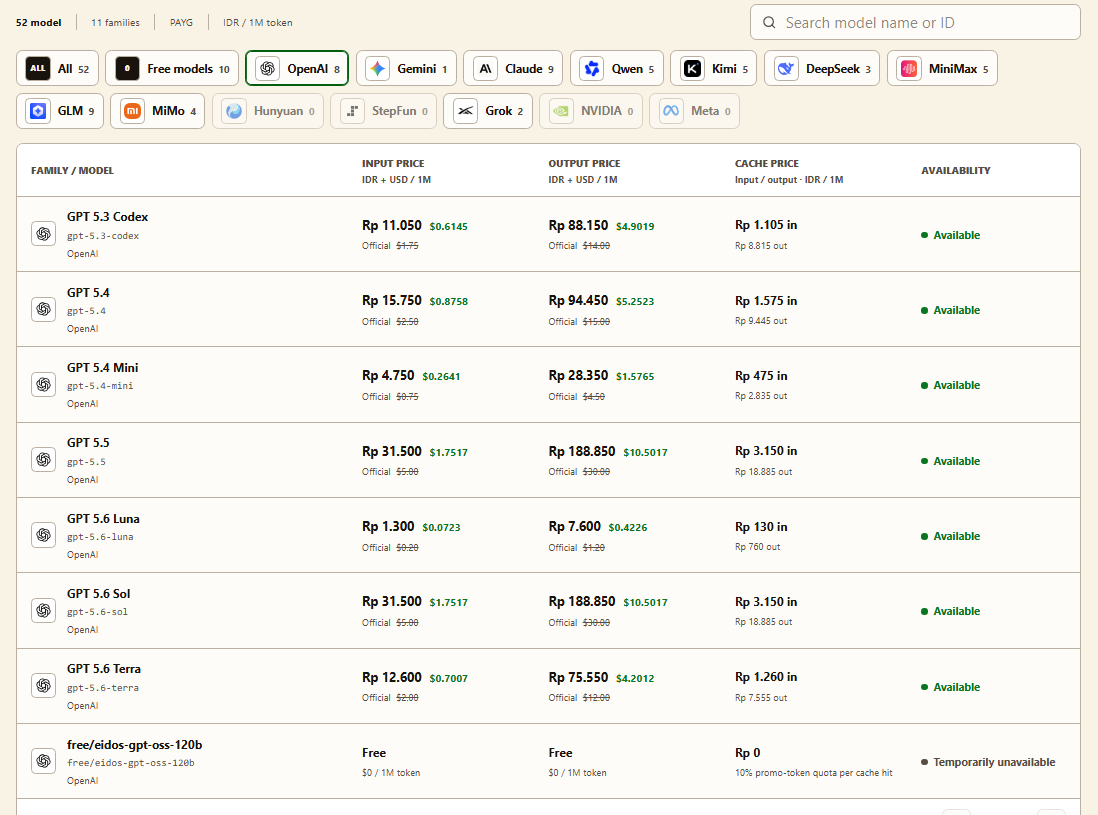
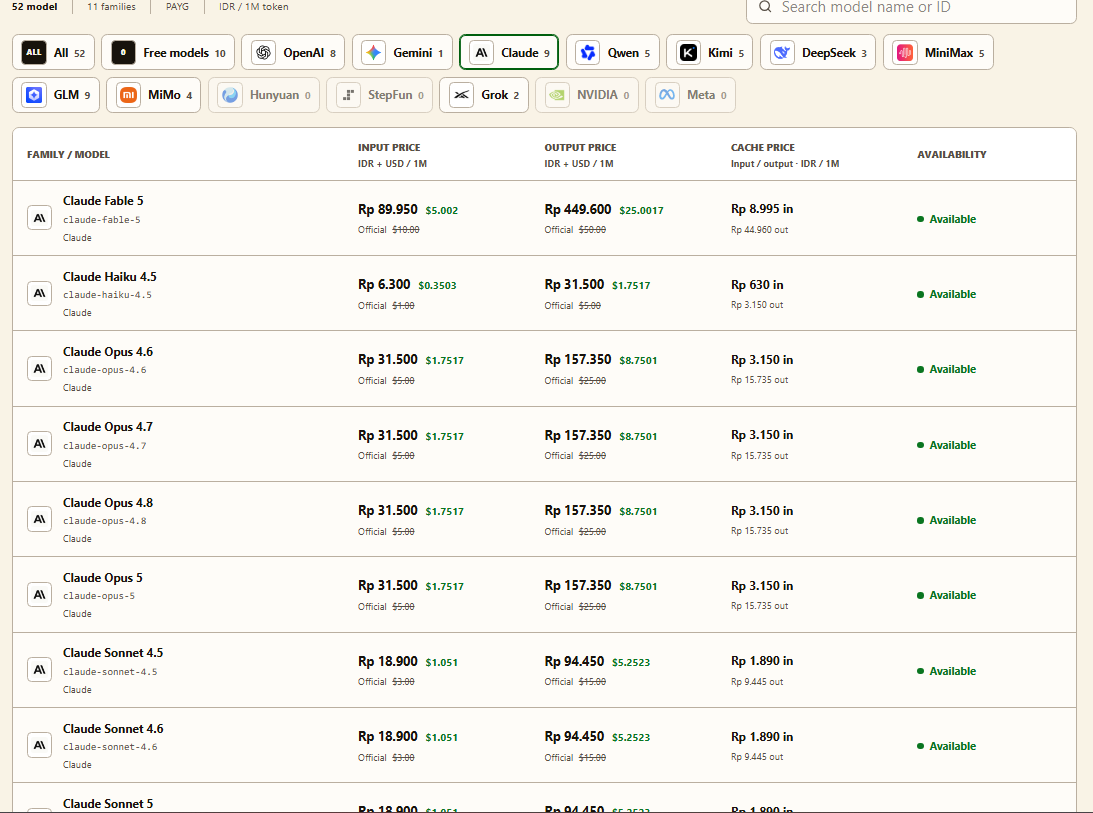
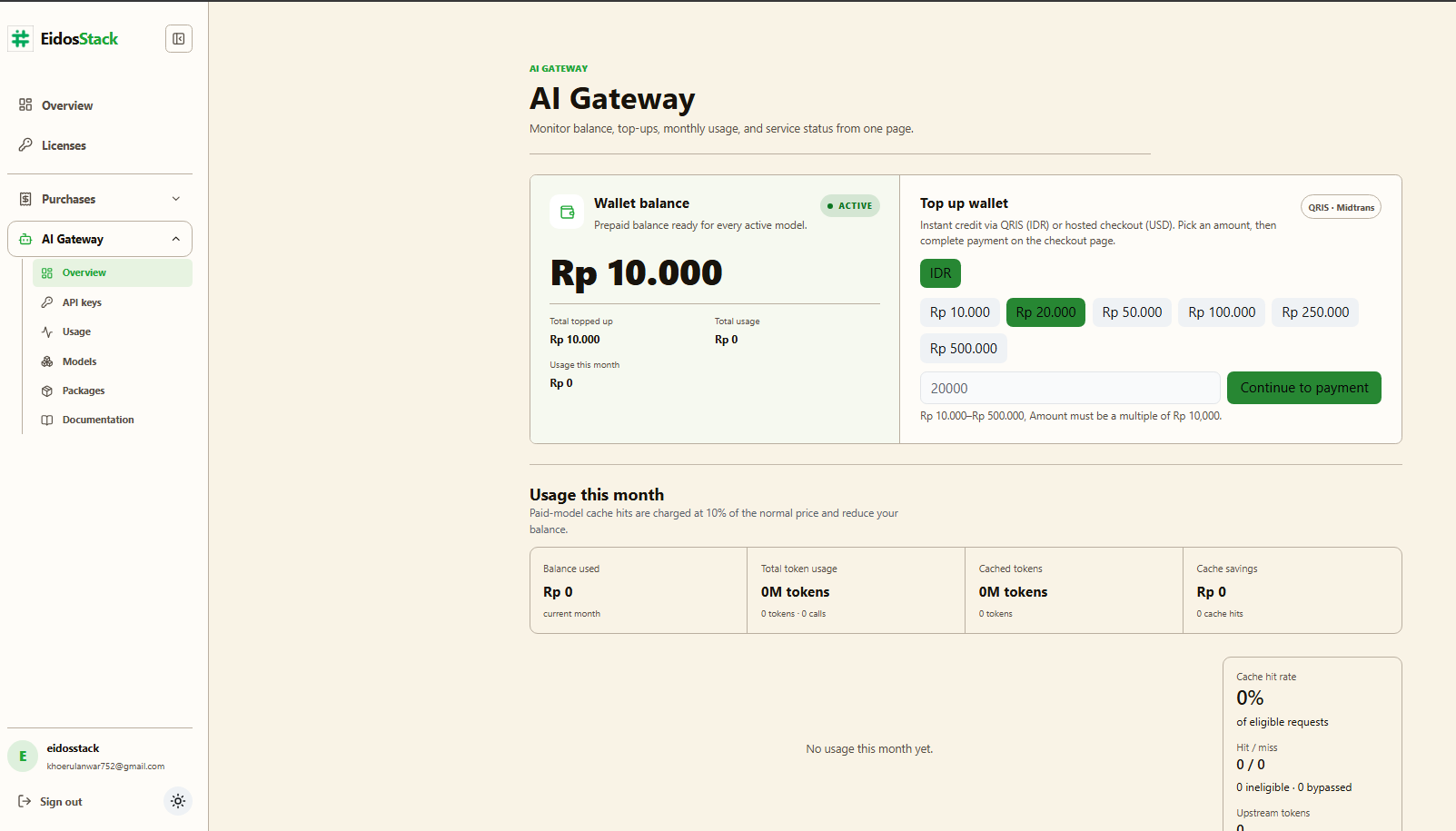
live input/output/cache token pricing per model (refreshed every 30 seconds), pay-as-you-go billing in IDR with USD reference, API keys with per-key spending limits, single OpenAI-compatible endpoint.
Use Cases
compare model costs before sending a request, route AI workloads to the cheapest provider, prototype across model families without separate accounts
Fazier Deal

Comments

The single OpenAI-compatible endpoint and per-key spending limits solve a real operations problem. Do you expose the selected upstream provider and applied token rates in each response or usage log? That would make cost audits and fallback debugging much easier, especially when routing workloads by price.



I built this because comparing token prices across providers was a pain. Every provider has a different pricing page, and by the time you finish doing the math you forget which model you were checking. So I put live input, output, and cache pricing side by side on one page, refreshed every 30 seconds, and everything is callable through a single OpenAI-compatible endpoint. Prices run about 50% below official rates since we buy capacity differently. Would love feedback on the pricing table, and happy to answer questions about how the routing works.
Premium Products



































Fazier Deal
Sponsors
Buy

Makers
Makers
Comments
The single OpenAI-compatible endpoint and per-key spending limits solve a real operations problem. Do you expose the selected upstream provider and applied token rates in each response or usage log? That would make cost audits and fallback debugging much easier, especially when routing workloads by price.
I built this because comparing token prices across providers was a pain. Every provider has a different pricing page, and by the time you finish doing the math you forget which model you were checking. So I put live input, output, and cache pricing side by side on one page, refreshed every 30 seconds, and everything is callable through a single OpenAI-compatible endpoint. Prices run about 50% below official rates since we buy capacity differently. Would love feedback on the pricing table, and happy to answer questions about how the routing works.
Premium Products
New to Fazier?

Find your next favorite product or submit your own. Made by @FalakDigital.
Copyright ©2026. All Rights Reserved