
Deroom AI
AI room design from a photo
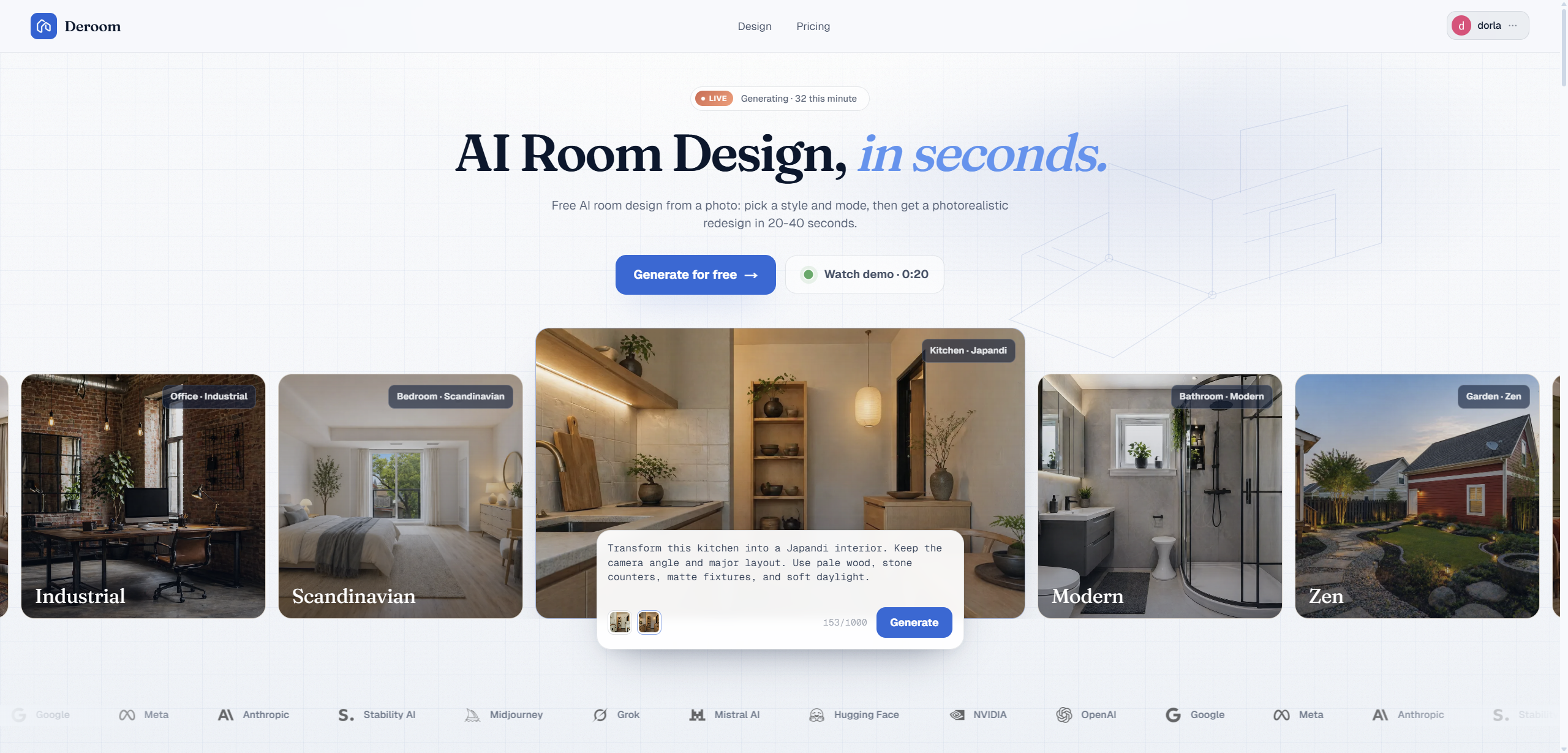
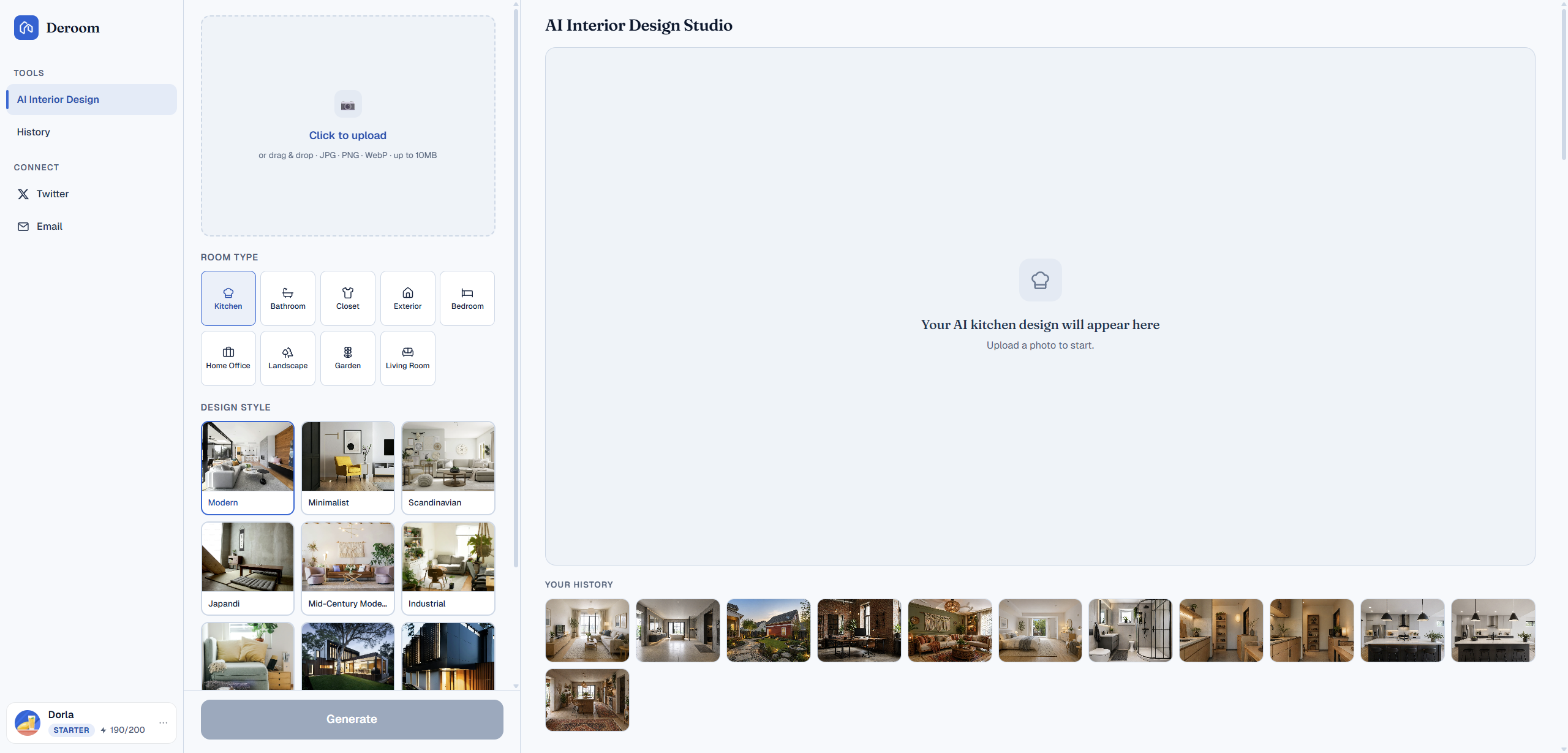
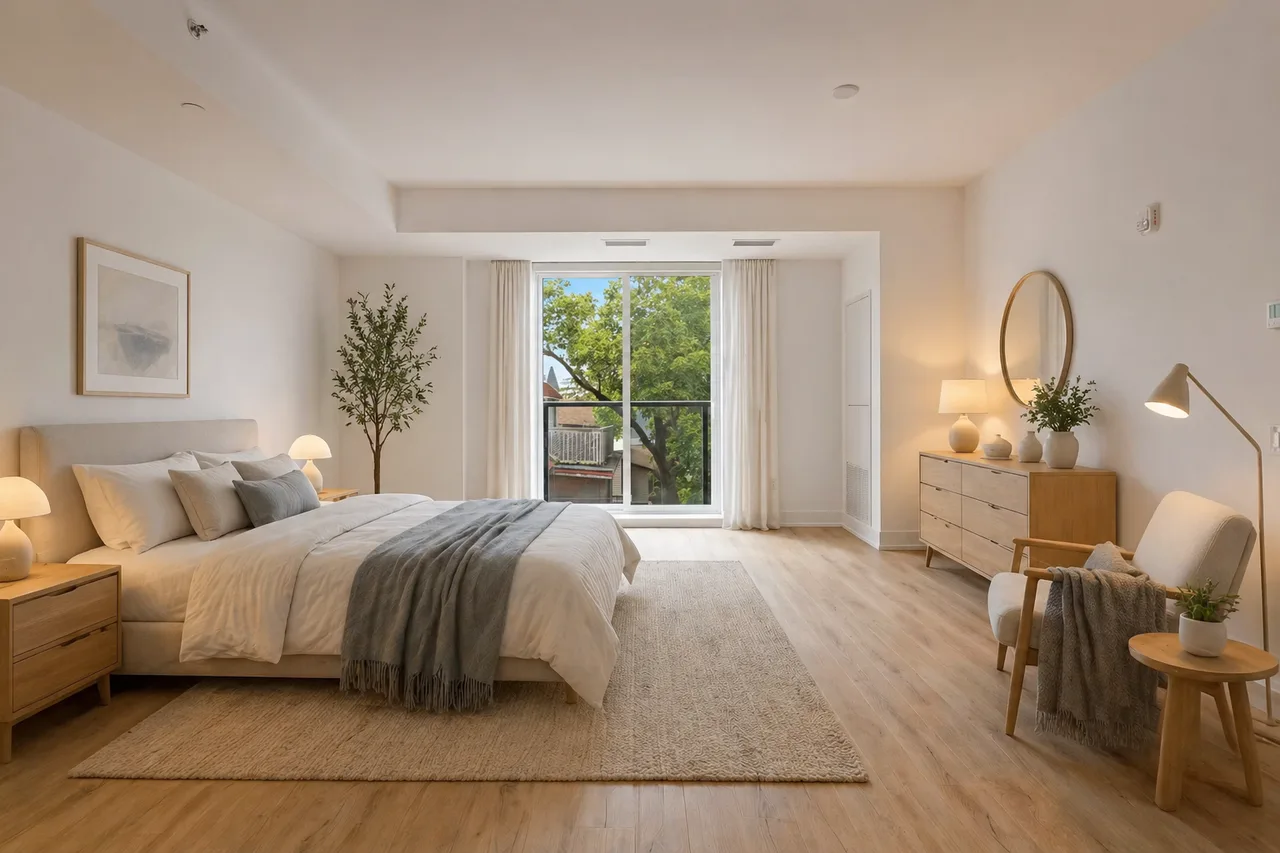
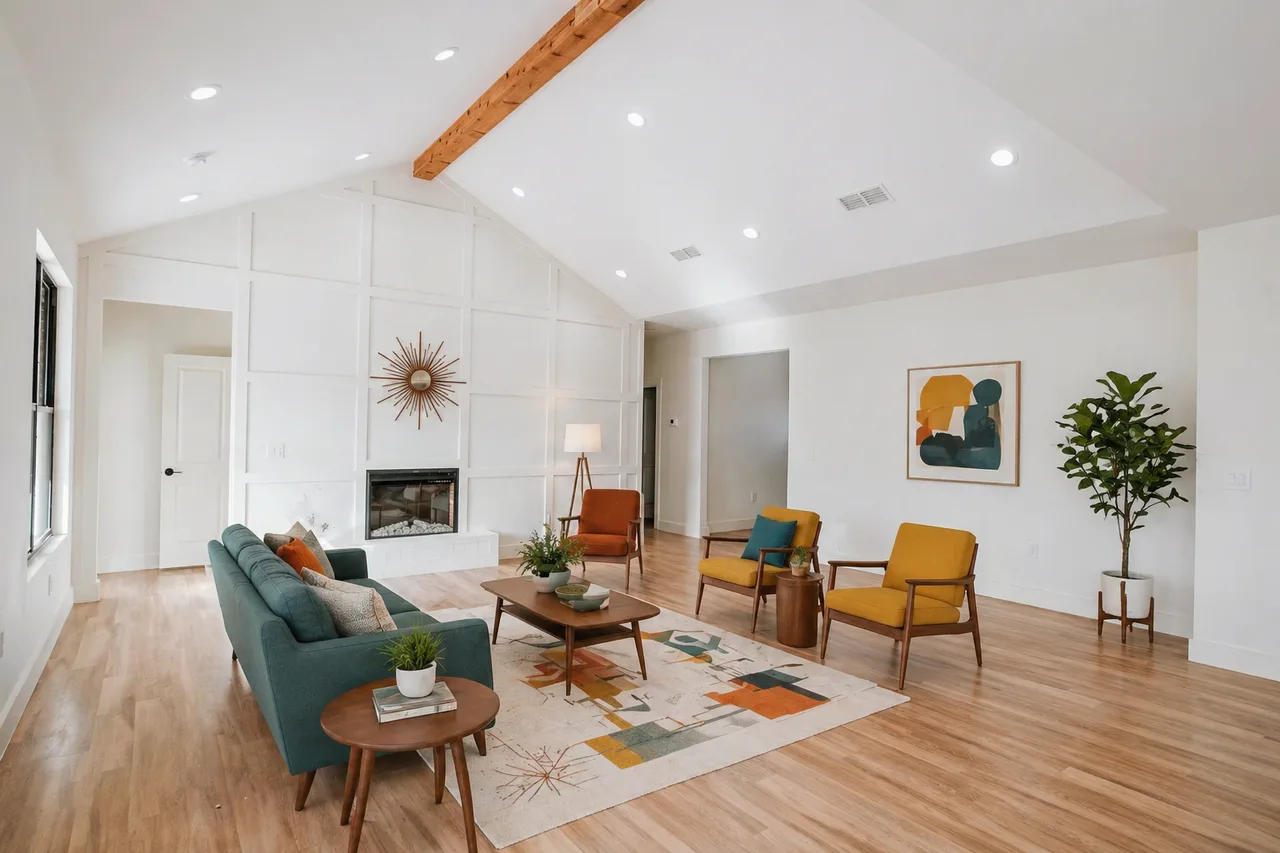
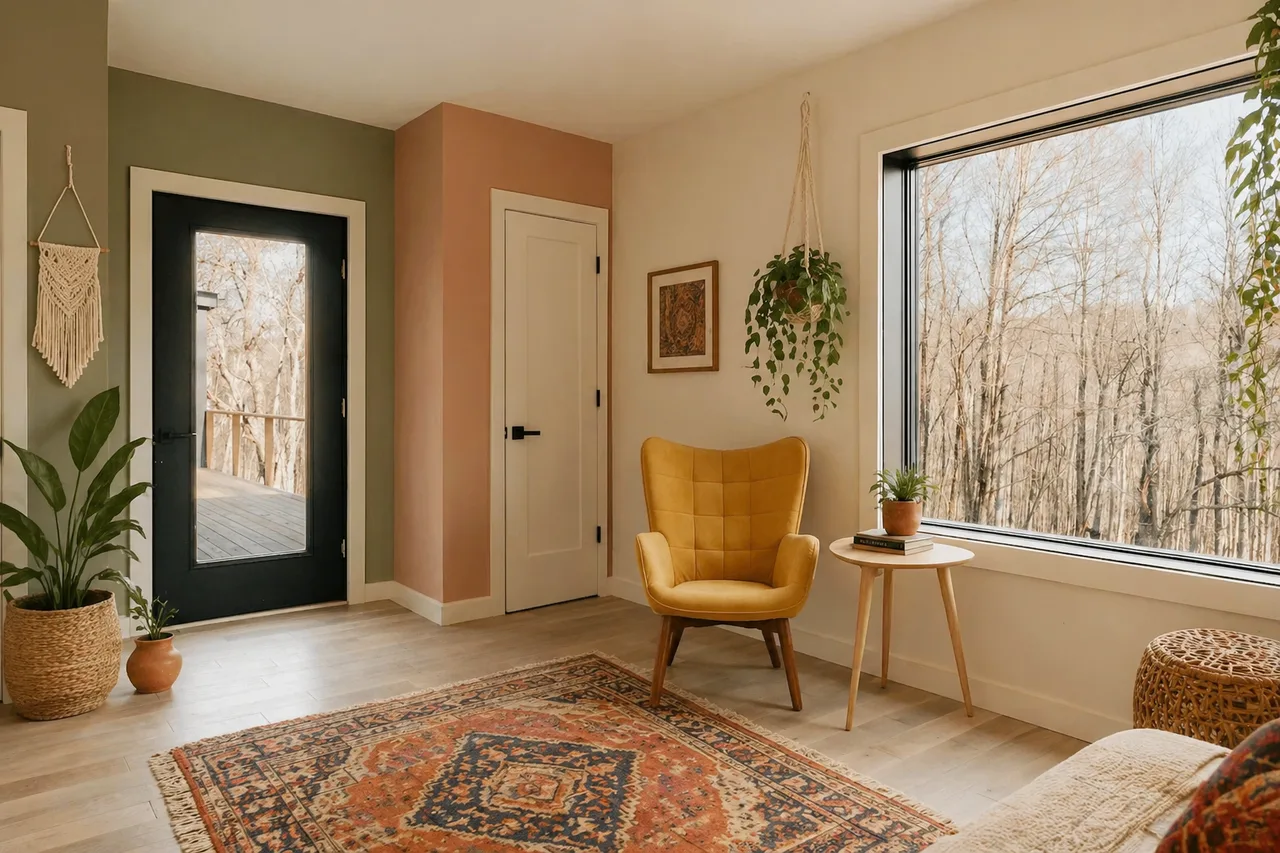
Deroom turns a photo of any room into a photorealistic redesign in 20-40 seconds. Upload a snapshot, pick from 9 room types and 12 curated styles, then choose an action mode — full redesign, recolor only, furniture swap, declutter, or quick refresh. Photo-grounded structural conditioning means the output looks like your real room restyled — not a generic stock kitchen. Free tier with no credit card; 4K commercial output and no watermark on paid plans.

Comments


Hi Fazier! Karl here, founder of Deroom AI. Built this because every AI room generator I tried hallucinated my room — walls moved, windows drifted. Deroom uses your actual photo as a structural constraint, so the output looks like *your* room restyled, not someone else's. 9 room types, 12 styles, 5 surgical action modes (recolor only / furniture swap / declutter / etc). Free tier with 10 credits on signup. Would love feedback from designers and homeowners here 🙏

This platform makes room design feel effortless by turning a simple photo into beautifully reimagined spaces using AI. It’s incredibly helpful for visualizing different styles, layouts, and décor ideas without any hassle. A great tool for anyone looking to refresh or redesign their space with confidence.






The photo-grounded approach is the key differentiator here — most competitors just apply styles to a blank canvas, which makes the output feel generic. Keeping the real structure of the room while restyling it is exactly what homeowners and interior designers need for practical use. The 5 surgical action modes are a smart choice; "declutter" alone is something I've wanted in every room tool I've tried. Does the model handle challenging lighting conditions well, like rooms with strong shadows or mixed artificial/natural light?

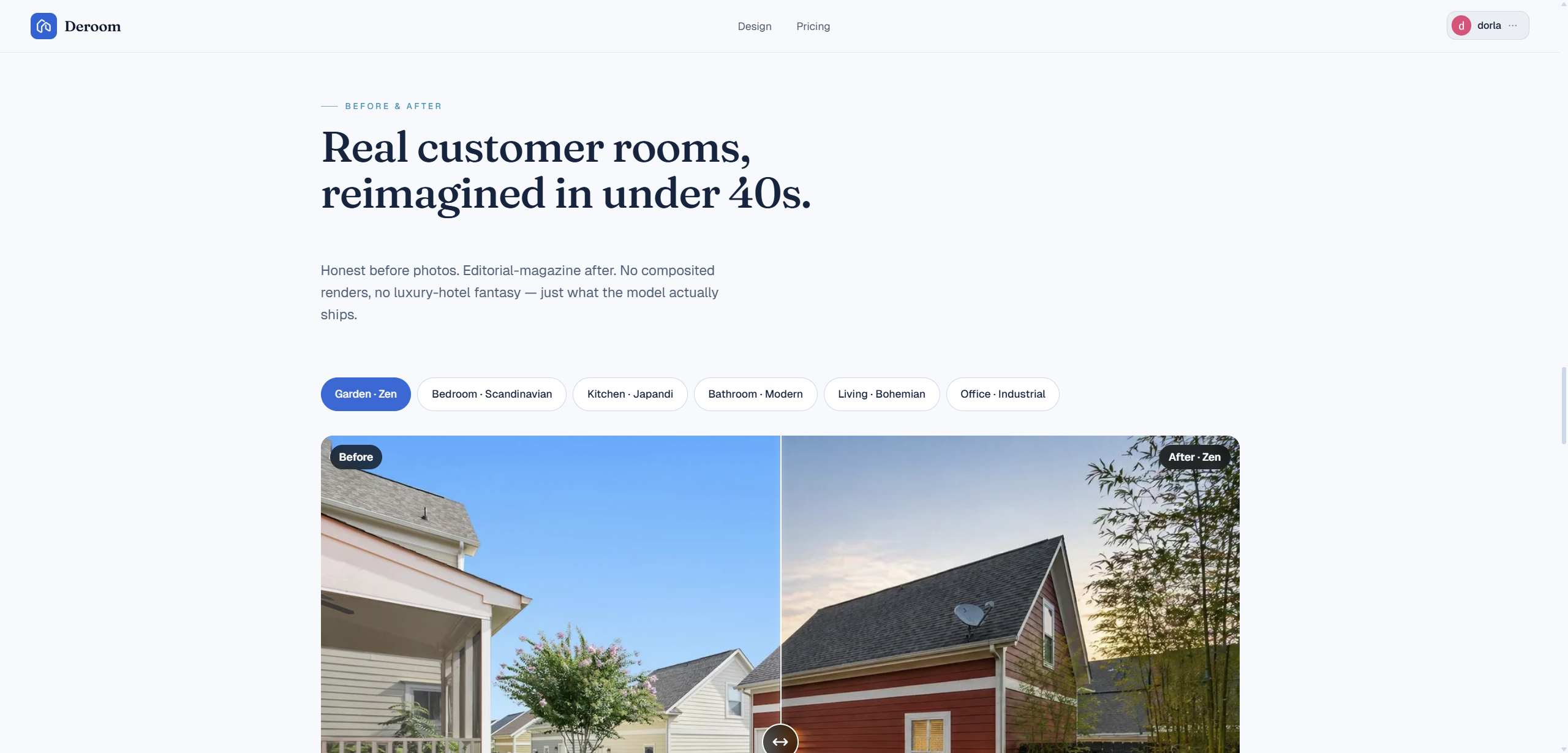
This is a solid concept, but the way it’s presented leans a bit too heavily on feature-dumping and not enough on clarity or differentiation. Right now, it reads like a checklist of capabilities rather than a sharp value proposition. “9 room types,” “12 curated styles,” and multiple action modes are nice details, but they dilute the core message instead of strengthening it. A user doesn’t care about the number of styles—they care about how good the result looks and how reliably it matches their space. “Photo-grounded structural conditioning” sounds impressive, but it’s also vague and slightly jargon-heavy. It risks losing non-technical users who just want to know: Will this actually look like my room, or like AI fantasy? You’re hinting at a key differentiator, but not explaining it in a way that’s instantly clear. There’s also a mild credibility gap. “Photorealistic redesign in 20–40 seconds” + “looks like your real room” + “4K commercial output” is a strong claim stack, but without proof (before/after examples, edge cases, limitations), it can feel like overpromising—especially in a space where AI image tools often fail on consistency.




The “photo-grounded” positioning is the part that makes this interesting to me. Most AI room tools look impressive in demos but completely lose the actual structure of the space. Keeping the room recognizable while testing styles feels much more useful for real decisions. Curious — how does it handle awkward spaces (small rooms, slanted walls, poor lighting)?





Premium Products






























Sponsors
Buy



Makers
Makers
Comments
Hi Fazier! Karl here, founder of Deroom AI. Built this because every AI room generator I tried hallucinated my room — walls moved, windows drifted. Deroom uses your actual photo as a structural constraint, so the output looks like *your* room restyled, not someone else's. 9 room types, 12 styles, 5 surgical action modes (recolor only / furniture swap / declutter / etc). Free tier with 10 credits on signup. Would love feedback from designers and homeowners here 🙏
This platform makes room design feel effortless by turning a simple photo into beautifully reimagined spaces using AI. It’s incredibly helpful for visualizing different styles, layouts, and décor ideas without any hassle. A great tool for anyone looking to refresh or redesign their space with confidence.
The photo-grounded approach is the key differentiator here — most competitors just apply styles to a blank canvas, which makes the output feel generic. Keeping the real structure of the room while restyling it is exactly what homeowners and interior designers need for practical use. The 5 surgical action modes are a smart choice; "declutter" alone is something I've wanted in every room tool I've tried. Does the model handle challenging lighting conditions well, like rooms with strong shadows or mixed artificial/natural light?
This is a solid concept, but the way it’s presented leans a bit too heavily on feature-dumping and not enough on clarity or differentiation. Right now, it reads like a checklist of capabilities rather than a sharp value proposition. “9 room types,” “12 curated styles,” and multiple action modes are nice details, but they dilute the core message instead of strengthening it. A user doesn’t care about the number of styles—they care about how good the result looks and how reliably it matches their space. “Photo-grounded structural conditioning” sounds impressive, but it’s also vague and slightly jargon-heavy. It risks losing non-technical users who just want to know: Will this actually look like my room, or like AI fantasy? You’re hinting at a key differentiator, but not explaining it in a way that’s instantly clear. There’s also a mild credibility gap. “Photorealistic redesign in 20–40 seconds” + “looks like your real room” + “4K commercial output” is a strong claim stack, but without proof (before/after examples, edge cases, limitations), it can feel like overpromising—especially in a space where AI image tools often fail on consistency.
The “photo-grounded” positioning is the part that makes this interesting to me. Most AI room tools look impressive in demos but completely lose the actual structure of the space. Keeping the room recognizable while testing styles feels much more useful for real decisions. Curious — how does it handle awkward spaces (small rooms, slanted walls, poor lighting)?
Premium Products
New to Fazier?

Find your next favorite product or submit your own. Made by @FalakDigital.
Copyright ©2026. All Rights Reserved