
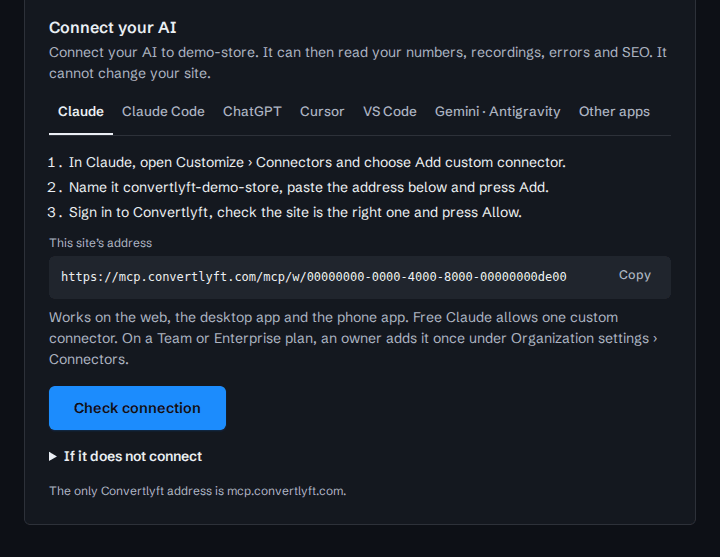
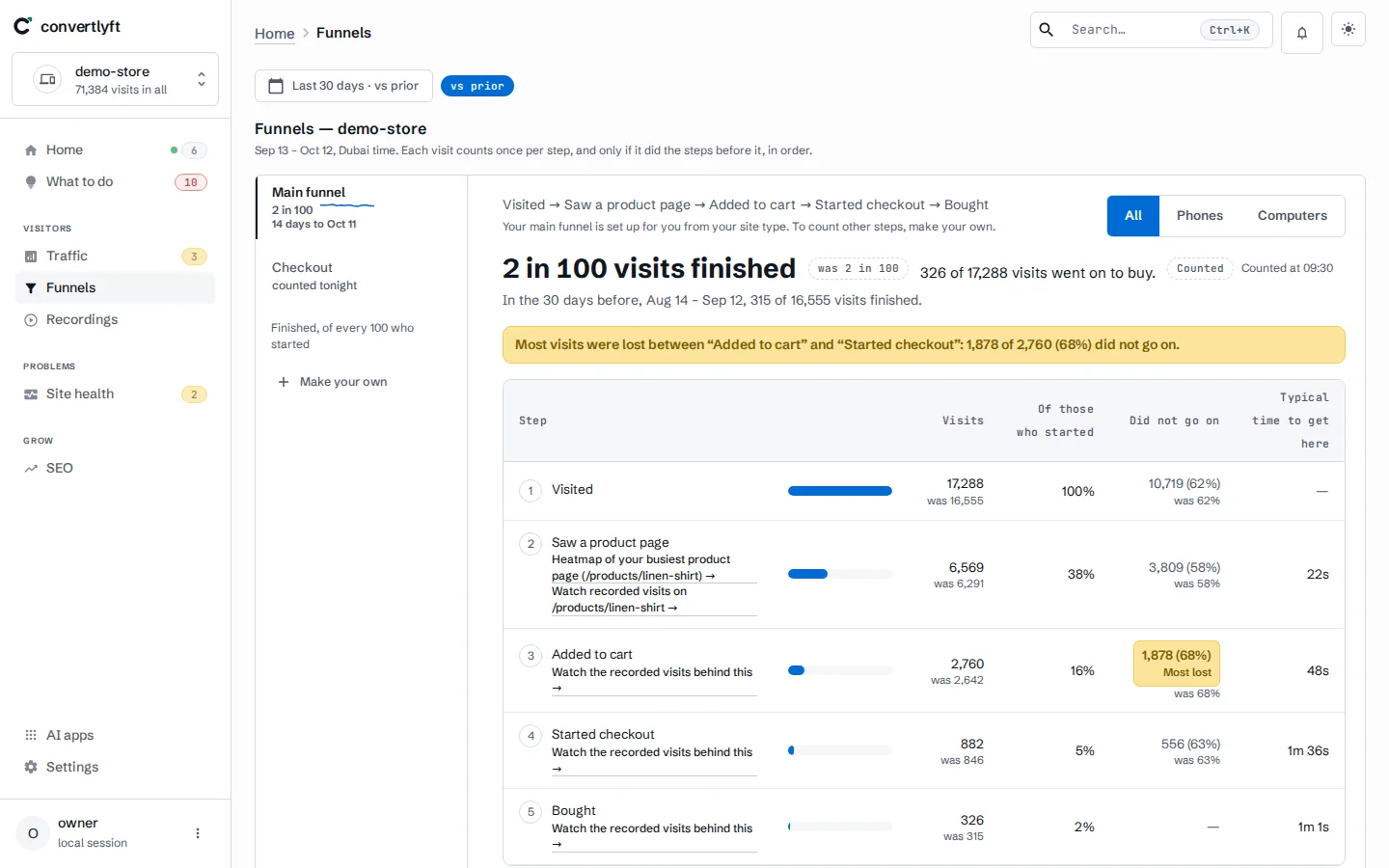
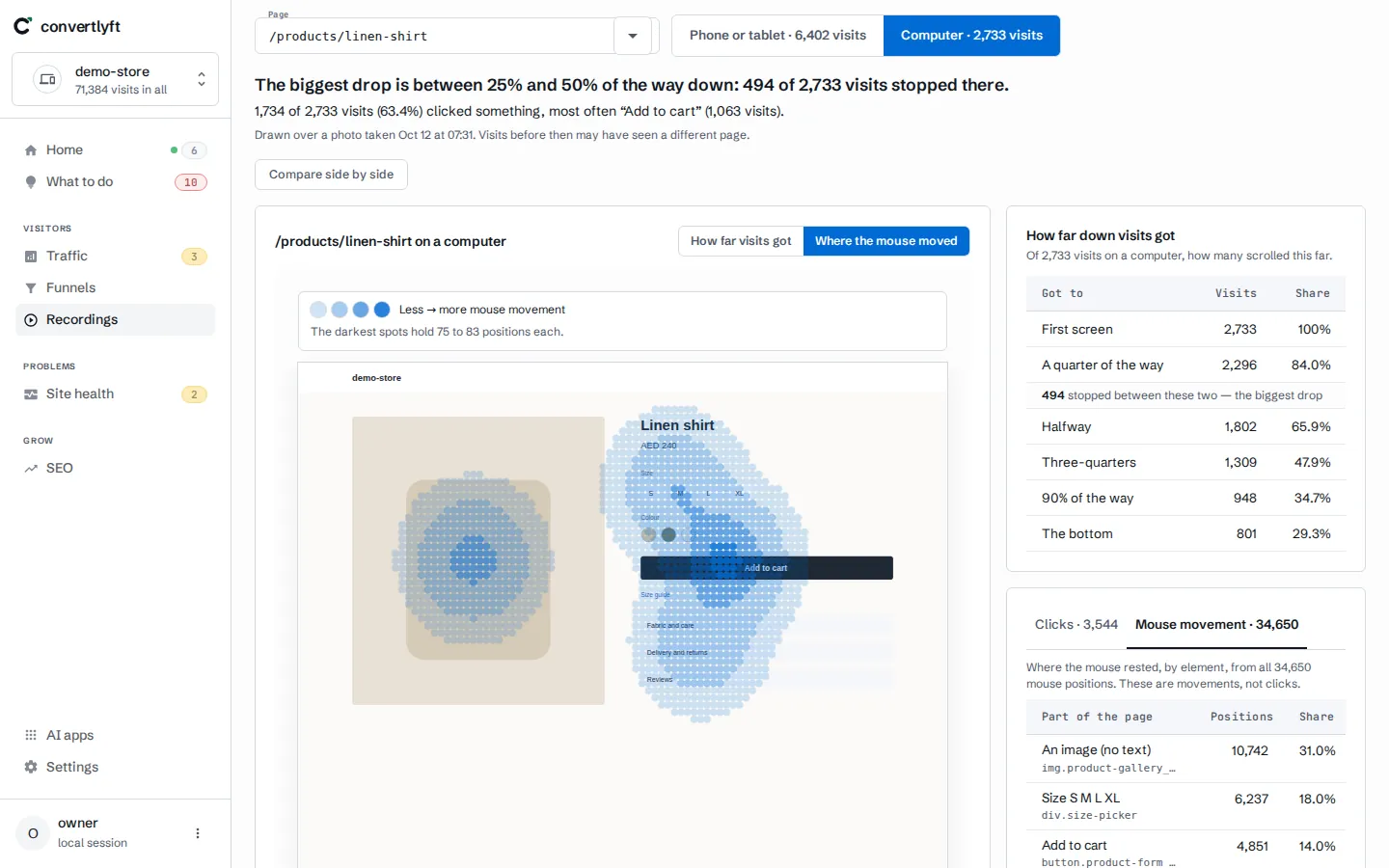
Convertlyft counts every visit and tells you what leaked and what to change, combining website analytics and SEO in one place. It works with Shopify, WordPress, Wix, Webflow, Framer, Next.js and AI-built sites, and it is also an MCP server so AI tools can read your site data. Run a free SEO audit at convertlyft.com/seo-audit.


Comments


Combining analytics and SEO in one place with concrete to-dos is a strong pitch — most tools show you the leak but stop before telling you what to change. I'm curious how the to-dos get prioritized when several leaks compete: is it ranked by estimated revenue impact? The MCP angle is also smart — letting Claude or Cursor read the site's numbers directly could make the fix loop much shorter than exporting reports.

Turning analytics into a "what leaked and what to fix" list is the part most small-site owners actually need. Raw dashboards rarely get acted on. How do you define a leak? Is it tied to goals like reaching a contact or booking page, or mostly bounce and exit data? The MCP server is an interesting angle too. Do you see people using it to let AI agents decide which pages need better lead capture?


The idea of turning analytics into a prioritised to-do list, rather than another dashboard of charts, is what makes this interesting — most small teams know something is leaking but not which fix to do first. My question: after you complete a to-do, does Convertlyft track whether that specific fix actually moved the metric it was meant to improve? Closing that loop would make the to-dos much more trustworthy over time, because you could see which recommendations really worked for your site.
Premium Products

















































Makers
Makers
Comments
Combining analytics and SEO in one place with concrete to-dos is a strong pitch — most tools show you the leak but stop before telling you what to change. I'm curious how the to-dos get prioritized when several leaks compete: is it ranked by estimated revenue impact? The MCP angle is also smart — letting Claude or Cursor read the site's numbers directly could make the fix loop much shorter than exporting reports.
Turning analytics into a "what leaked and what to fix" list is the part most small-site owners actually need. Raw dashboards rarely get acted on. How do you define a leak? Is it tied to goals like reaching a contact or booking page, or mostly bounce and exit data? The MCP server is an interesting angle too. Do you see people using it to let AI agents decide which pages need better lead capture?
The idea of turning analytics into a prioritised to-do list, rather than another dashboard of charts, is what makes this interesting — most small teams know something is leaking but not which fix to do first. My question: after you complete a to-do, does Convertlyft track whether that specific fix actually moved the metric it was meant to improve? Closing that loop would make the to-dos much more trustworthy over time, because you could see which recommendations really worked for your site.
Premium Products
New to Fazier?

Find your next favorite product or submit your own. Made by @FalakDigital.
Copyright ©2026. All Rights Reserved