
ContentIQ
The AI writer that checks facts before it writes
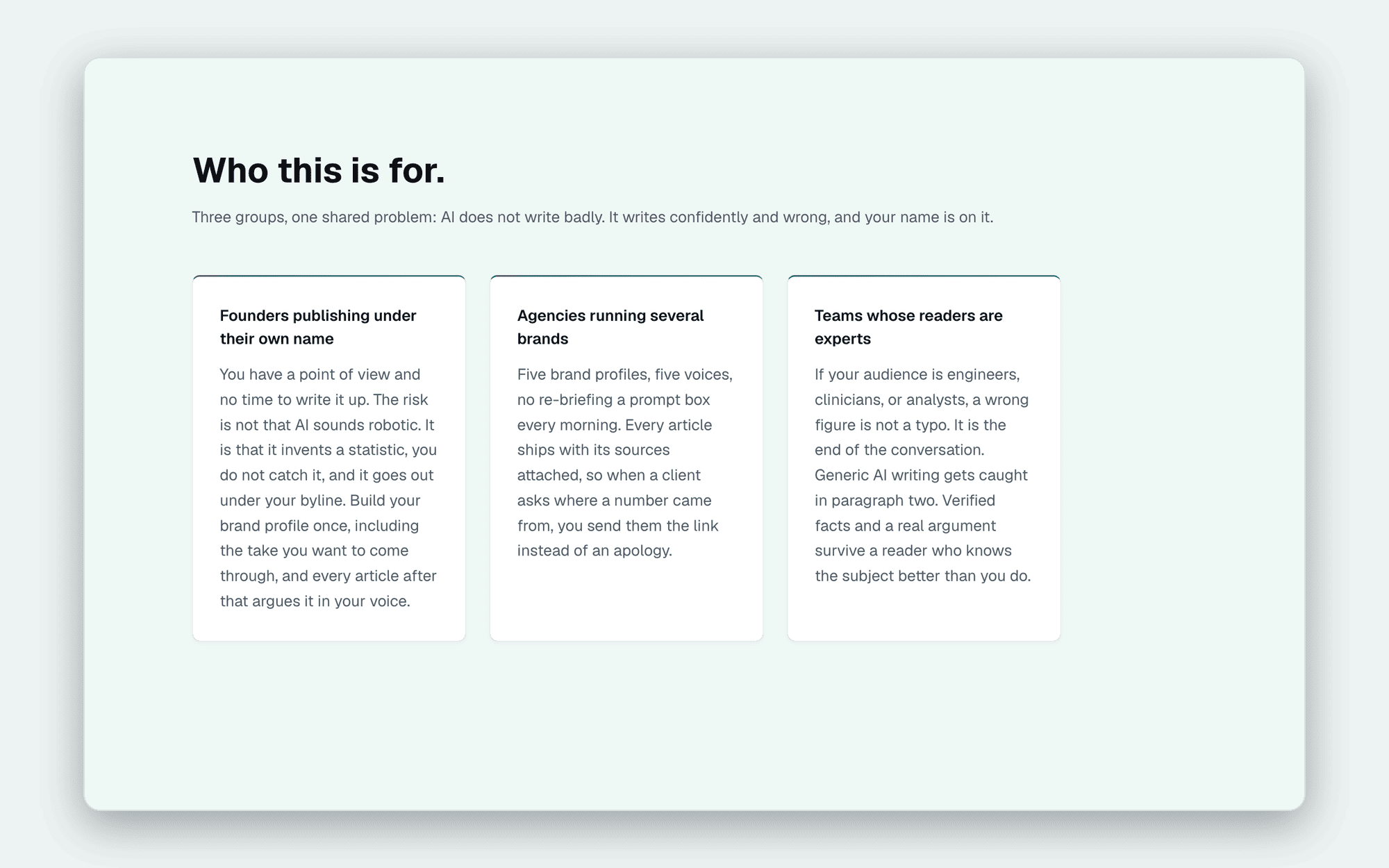
ContentIQ is an AI content platform for founders, marketers, consultants, and agencies who publish under their own name and cannot afford to be wrong.
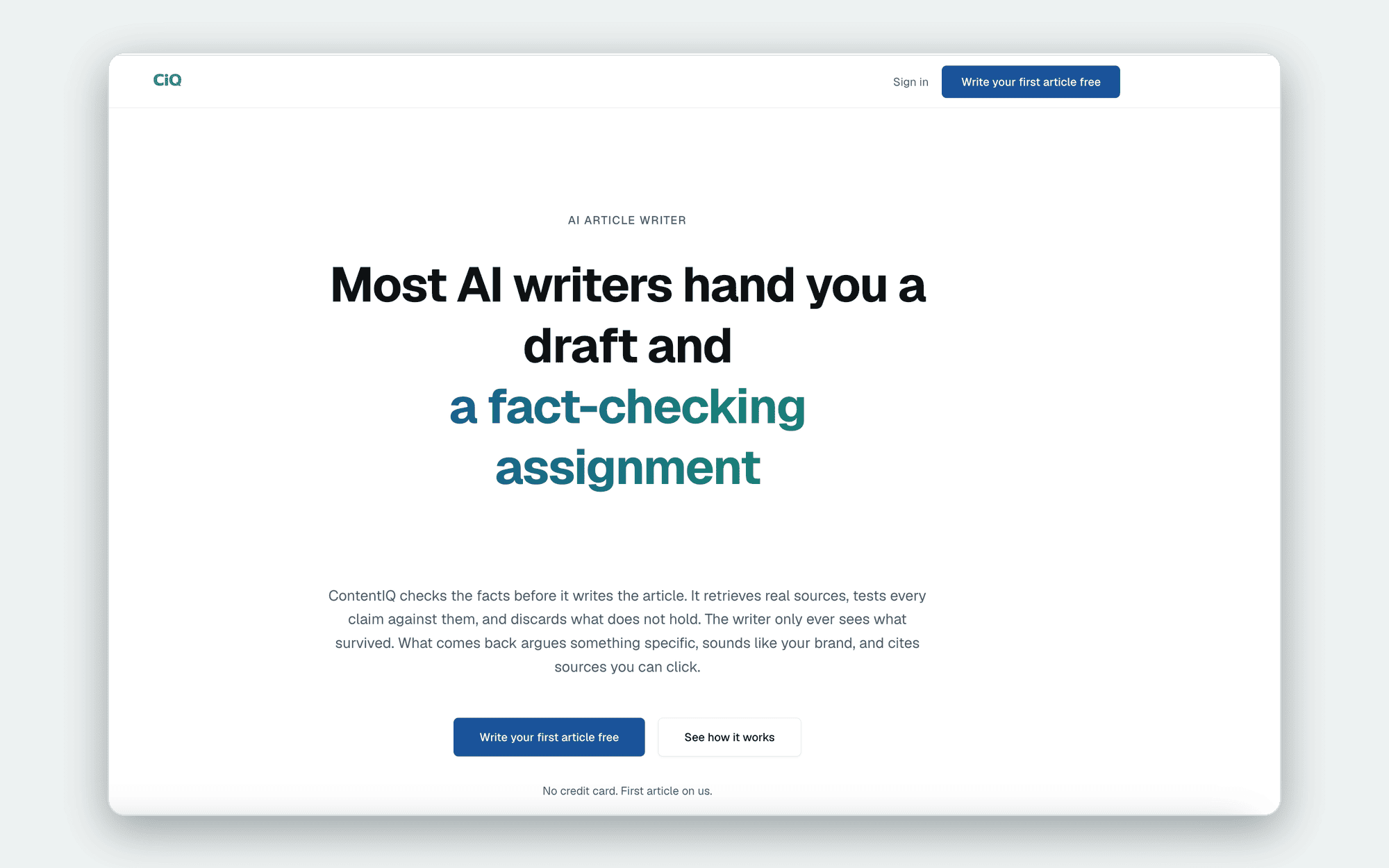
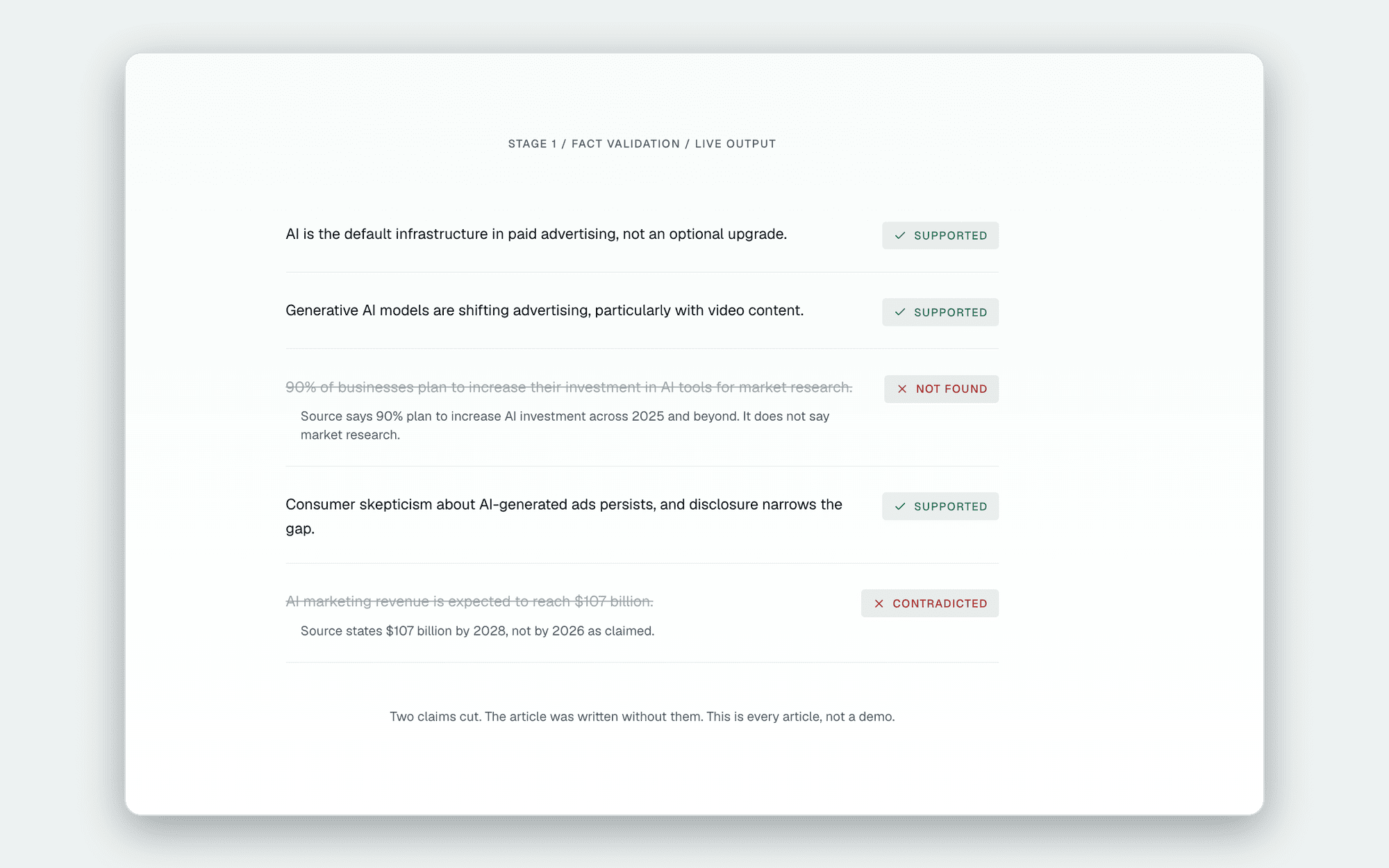
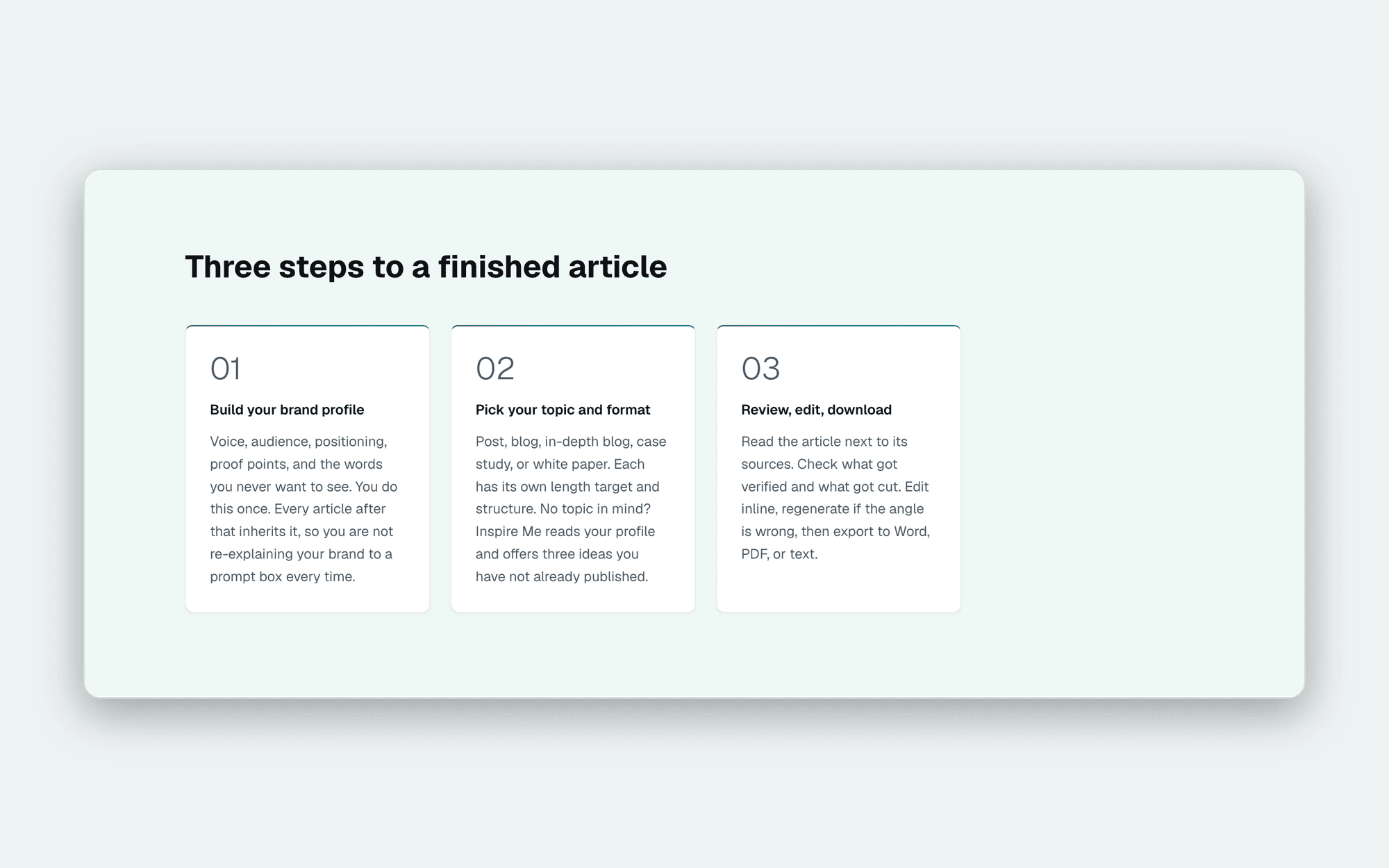
Most AI writers generate a draft and leave the fact-checking to you. ContentIQ works in the opposite order. Before it writes a single line, it retrieves real sources, tests every claim against them, and discards anything that does not hold up. The writer only ever sees what survived. What comes back argues a specific point, reads in your brand voice, and cites sources you can click.
That sequence is the difference. Generic AI writing gets caught in paragraph two when your readers are experts. ContentIQ is built so a wrong statistic never makes it into the draft in the first place, which is what makes the content safe to put your name on and strong enough to rank across search engines and AI search.
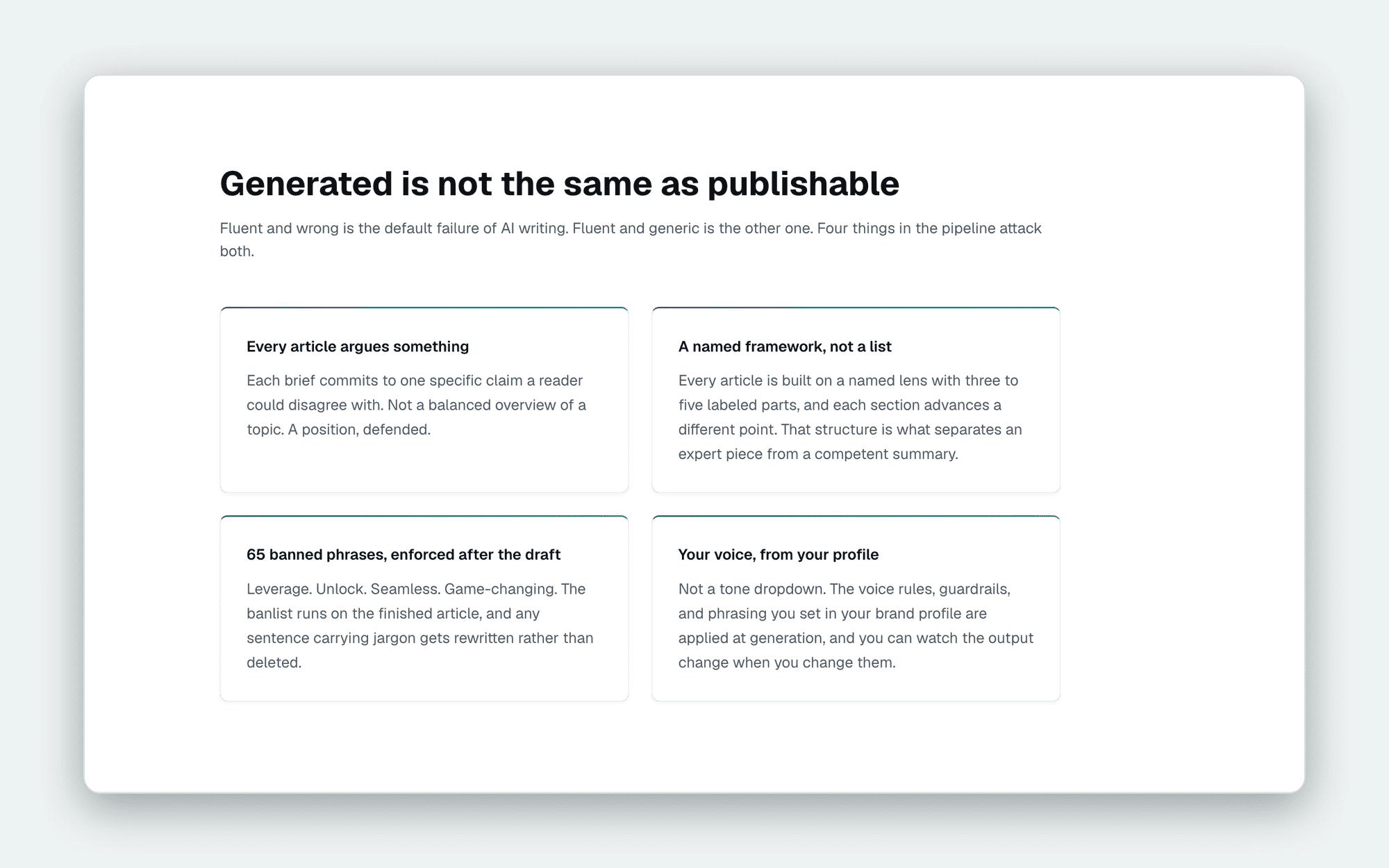
Every article is written around your brand: your products, your audience, your positioning, and your tone of voice. Set up a brand profile once and every piece stays consistent.
Use ContentIQ to create SEO articles, blog posts, LinkedIn content, website copy, case studies, white papers, and newsletters.
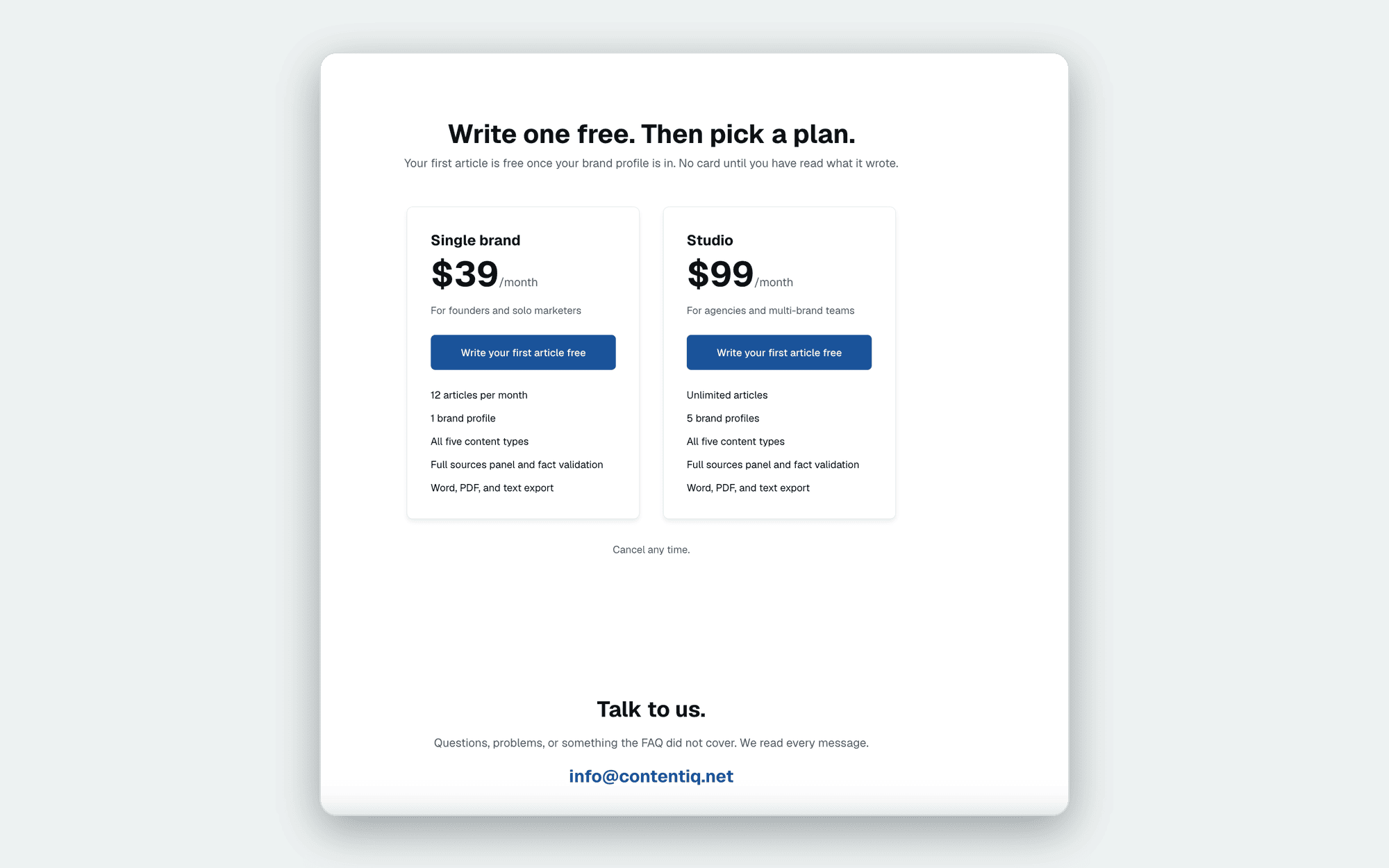
First article free. No credit card required. Check out here: https://app.contentiq.net/
Features
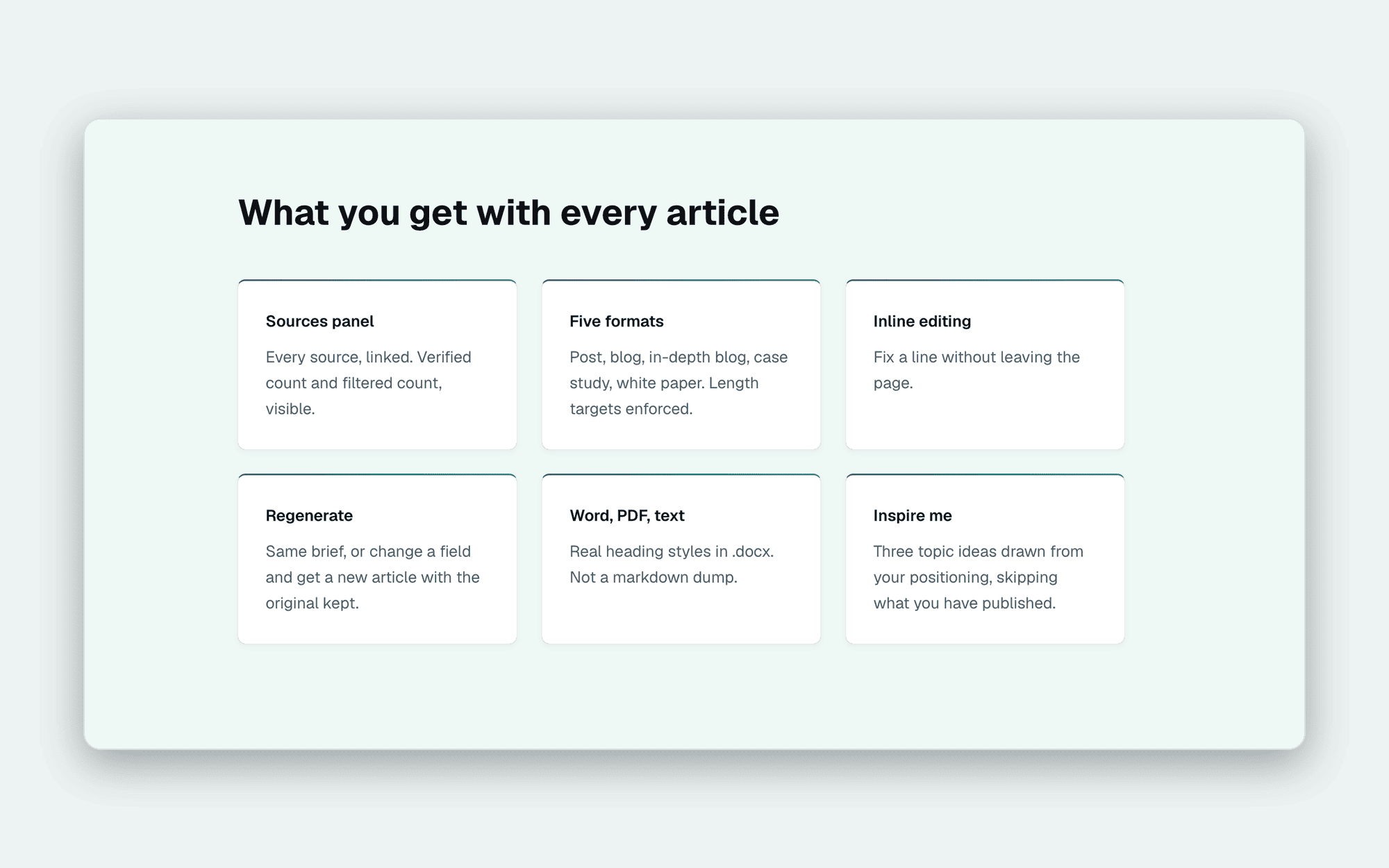
- Fact verification before writing, not after
- Brand-aware generation trained on your voice and positioning
- Clickable source citations on every claim
- Built-in editor and multiple content formats
- Content idea generation scoped to your audience
- One-click export and a fast publishing workflow
Use Cases
* Thought Leadership: Founders and executives can safely publish industry insights on LinkedIn and company blogs without the risk of AI hallucinations damaging their professional reputation.
* SEO Content Creation: Marketing teams can generate high-ranking, authoritative articles backed by verified facts and clickable citations to build domain trust.
* Agency Client Work: Digital marketing agencies can scale content production across multiple accounts while maintaining strict brand voice consistency and guaranteeing factual accuracy for their clients.
* B2B White Papers and Case Studies: Consultants and B2B marketers can quickly draft in-depth, data-heavy reports using real-time verified web sources to strongly support their arguments.
* Newsletter Generation: Creators and businesses can efficiently curate and draft industry newsletters knowing every claim and statistic has been pre-checked for accuracy before publishing.

Comments


Checking the claims before the draft exists, instead of after, is the right order. Once a wrong statistic is in a nicely written paragraph, it is very hard for a reviewer to spot. I'm curious how it handles a claim that is partly supported, like a number that was true two years ago but has since changed. Does it drop the claim, or keep it with a date and a note?


The fact-checking angle separates this from basic AI content generators. Most platforms ship outputs without validation, leaving brands exposed to errors. The source attribution approach here is crucial - writers need to know which claims are supported and how strongly. Having confidence scores and citations inline would help teams spot weak arguments before publishing.

Putting fact verification before drafting is a meaningful guardrail, especially for data-heavy B2B articles where a single unsupported statistic can undermine trust. Clickable citations plus a persistent brand profile should also make the workflow useful for agencies managing multiple client voices.



Fact-checking before drafting rather than after is the right order of operations - most "AI writer" tools skip straight to generation and leave verification as an afterthought. Publishing under your own name is exactly where that bites people. Does ContentIQ flag claims it couldn't verify instead of just dropping them, so you know what to research manually?
Premium Products










































Sponsors
Buy

Makers

Makers
Comments
Checking the claims before the draft exists, instead of after, is the right order. Once a wrong statistic is in a nicely written paragraph, it is very hard for a reviewer to spot. I'm curious how it handles a claim that is partly supported, like a number that was true two years ago but has since changed. Does it drop the claim, or keep it with a date and a note?
The fact-checking angle separates this from basic AI content generators. Most platforms ship outputs without validation, leaving brands exposed to errors. The source attribution approach here is crucial - writers need to know which claims are supported and how strongly. Having confidence scores and citations inline would help teams spot weak arguments before publishing.
Putting fact verification before drafting is a meaningful guardrail, especially for data-heavy B2B articles where a single unsupported statistic can undermine trust. Clickable citations plus a persistent brand profile should also make the workflow useful for agencies managing multiple client voices.
Fact-checking before drafting rather than after is the right order of operations - most "AI writer" tools skip straight to generation and leave verification as an afterthought. Publishing under your own name is exactly where that bites people. Does ContentIQ flag claims it couldn't verify instead of just dropping them, so you know what to research manually?
Premium Products
New to Fazier?

Find your next favorite product or submit your own. Made by @FalakDigital.
Copyright ©2026. All Rights Reserved