Constraint Portfolio Kit
Allocate limited budgets under hard rules
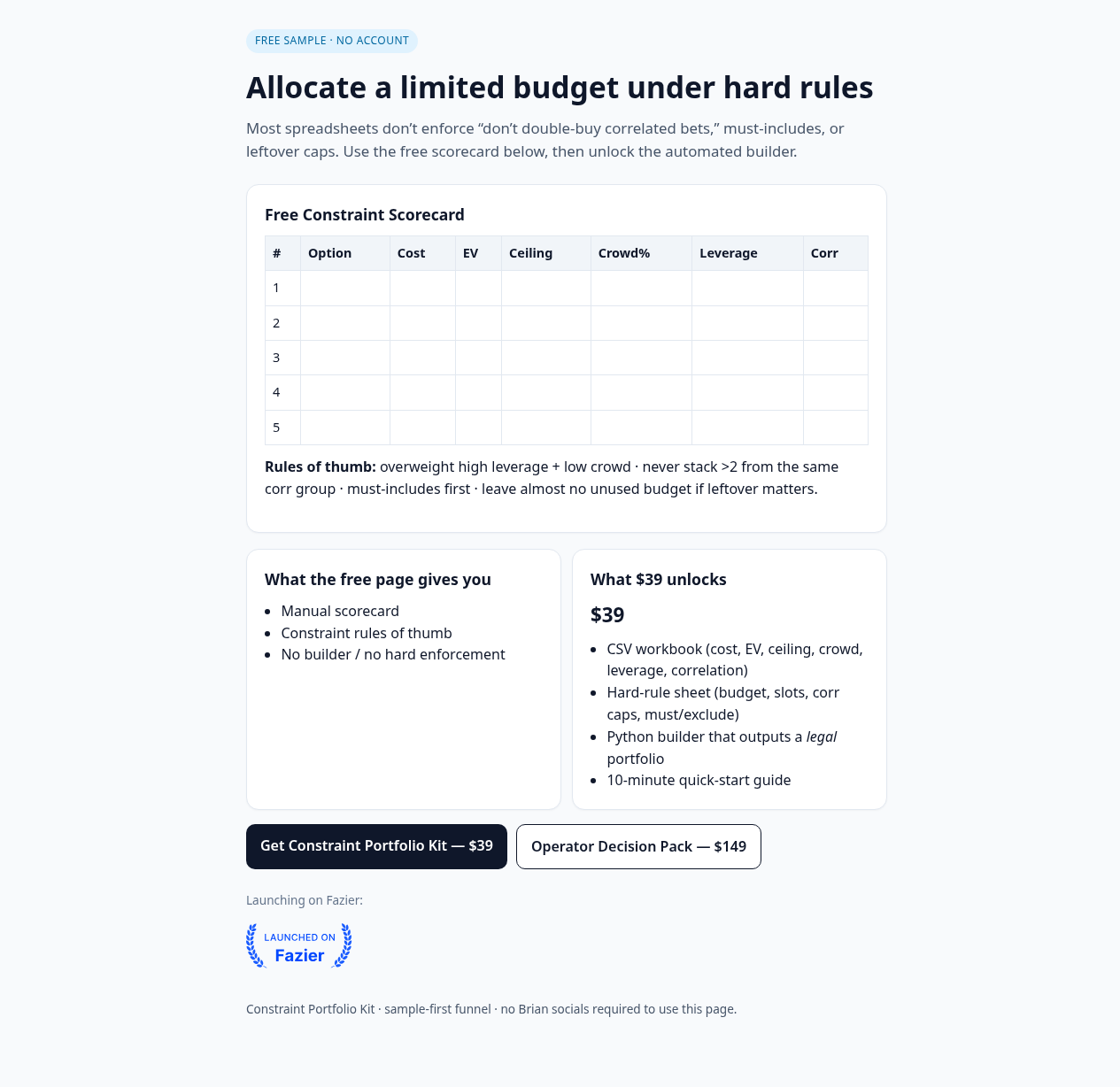
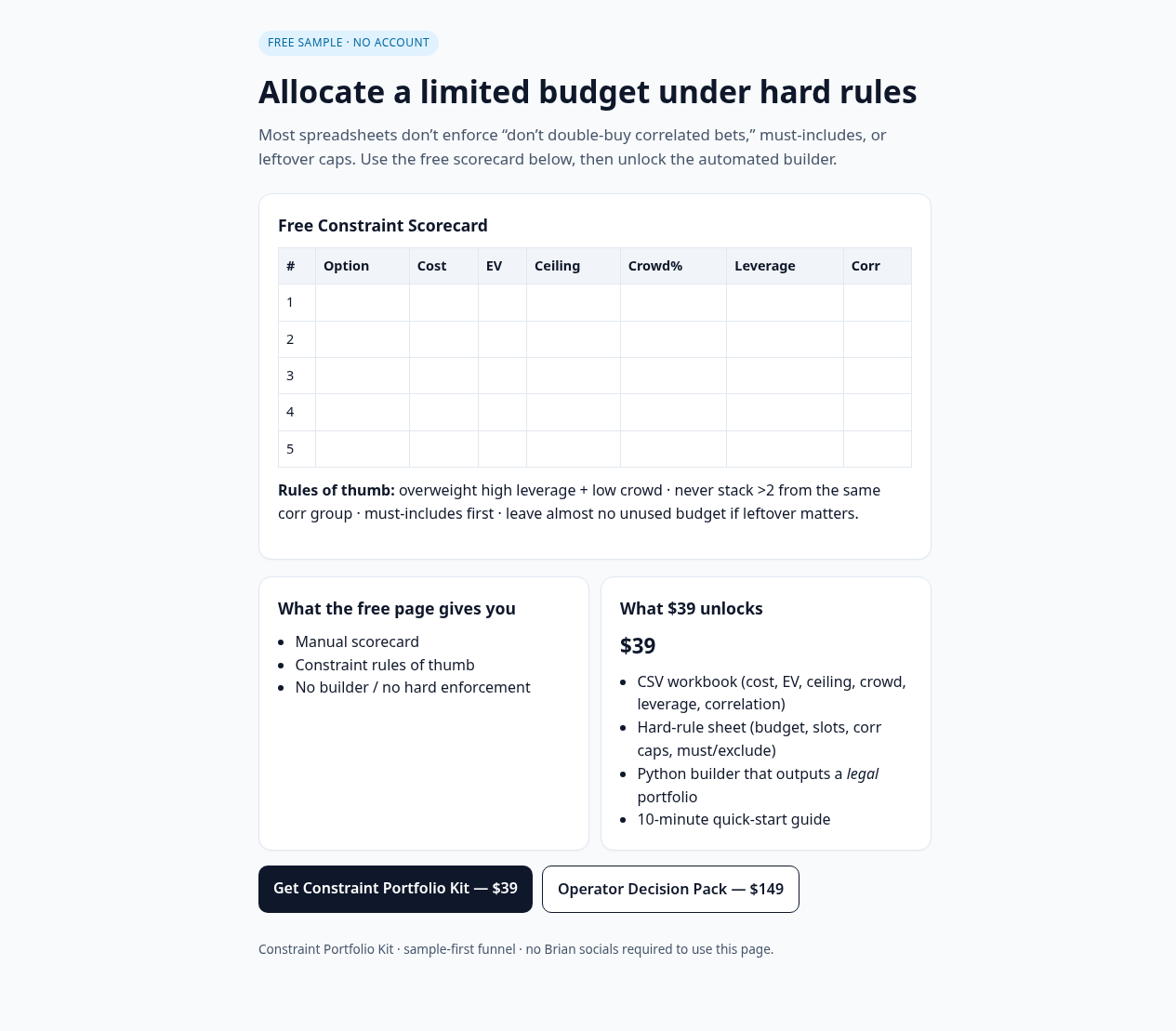
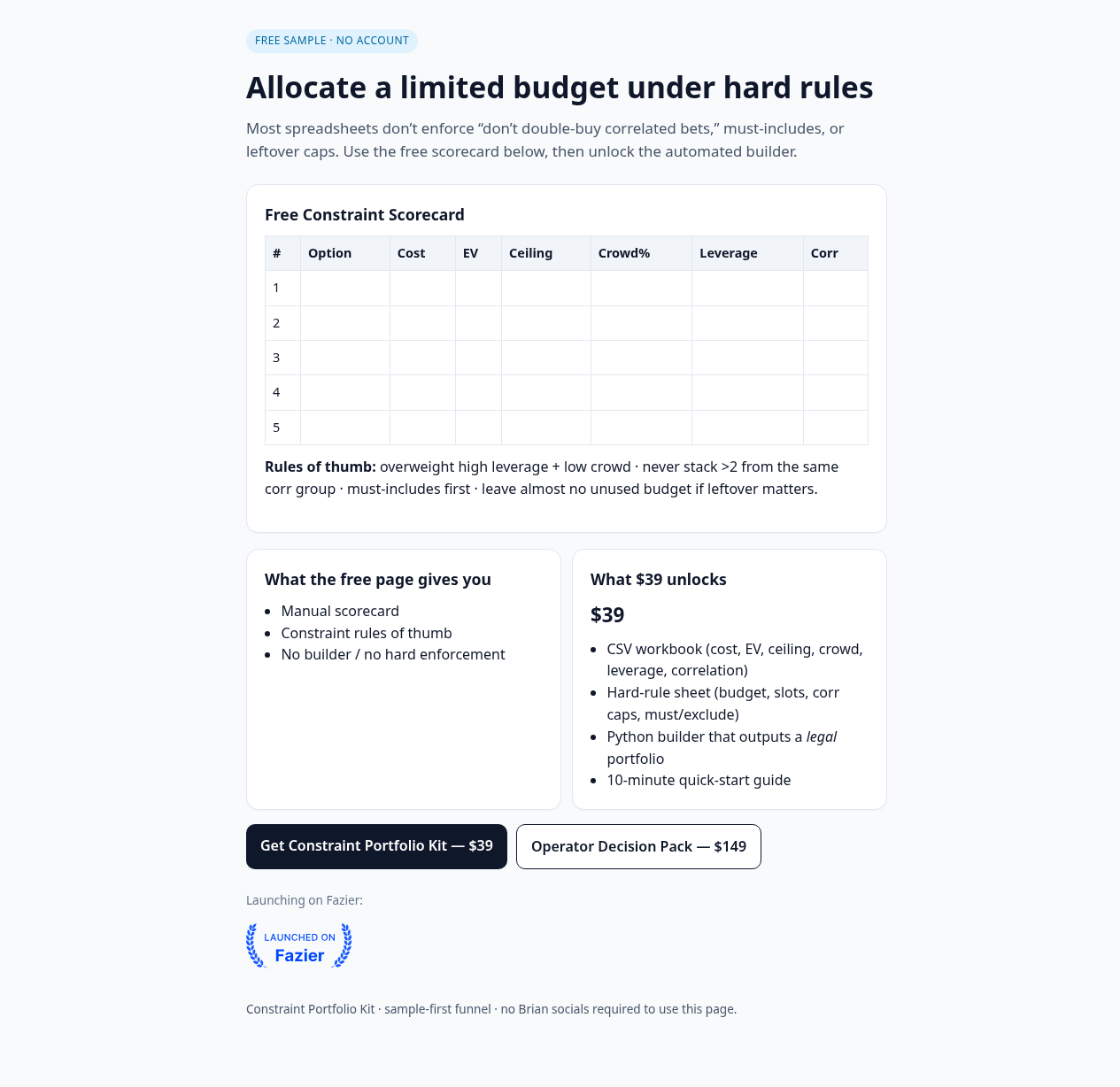
Constraint Portfolio Kit is a free, sample-first scorecard for allocating a limited budget under hard rules. It helps operators compare options by cost, expected value, ceiling, crowding, leverage, and correlation before committing resources. Use the free page to pressure-test a plan, then unlock the full system when you need an automated builder.
Features
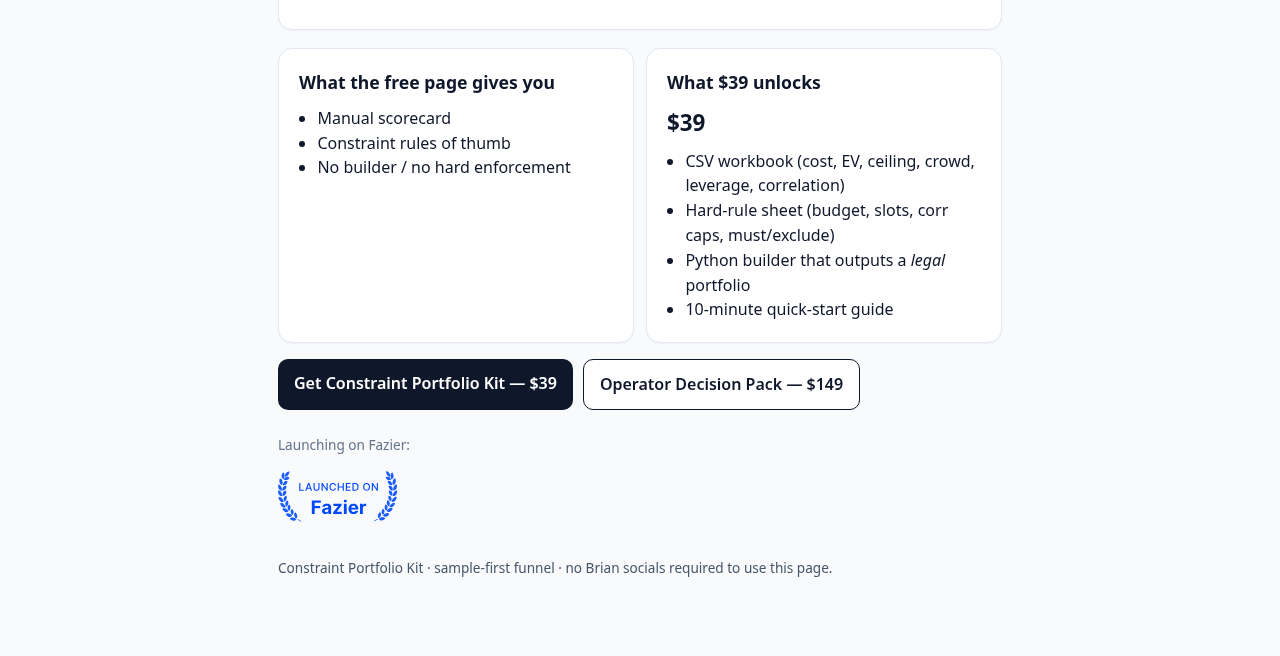
Free constraint scorecard; cost, expected value, ceiling, crowding, leverage, and correlation fields; practical rules of thumb; CSV workbook and automated builder available in the full kit.
Use Cases
Budget allocation; portfolio construction; investment and grant planning; operating under caps, must-includes, exclusions, and correlation limits.

Comments


Separating ceiling and crowding into two fields is what most allocation sheets miss — they collapse both into one vague competition guess. Sample-first is a smart gate too: the free page teaches the vocabulary before anyone commits to the builder. Does the CSV workbook handle correlation between options, or is that a judgment call on top of the score?

The constraint-first approach is interesting, especially the combination of cost, expected value, ceiling, crowding, leverage and correlation. I like that the free scorecard can be used before committing to the full system. One question: are you planning to add templates for common portfolio constraints, or is the intention to keep the scorecard fully customizable?


The correlation field is the part most budget scorecards leave out, and it tends to be where the damage actually happens — three options that all lean on the same channel aren't really three options. How does the automated builder treat it: does the operator score correlation by hand, or is it derived from the inputs?


Focusing on crowding and correlation fields rather than just basic cost-benefit analysis makes this scorecard much more robust for actual risk management. The sample-first approach is a smart way to demonstrate value before asking users to commit to the full CSV workbook. Does the automated builder in the premium kit allow for custom weighting of these specific constraints?

Including crowding and correlation as first-class fields is what separates this from a simple pros/cons spreadsheet - two options that look independent on cost and expected value often move together in practice, and that's usually where allocations blow up. The sample-first model is generous; does the scorecard handle must-include and exclusion constraints directly, or is that where the full kit takes over?





Premium Products




































Sponsors
Buy

Awards
View all
Awards
View allMakers
Makers
Comments
Separating ceiling and crowding into two fields is what most allocation sheets miss — they collapse both into one vague competition guess. Sample-first is a smart gate too: the free page teaches the vocabulary before anyone commits to the builder. Does the CSV workbook handle correlation between options, or is that a judgment call on top of the score?
The constraint-first approach is interesting, especially the combination of cost, expected value, ceiling, crowding, leverage and correlation. I like that the free scorecard can be used before committing to the full system. One question: are you planning to add templates for common portfolio constraints, or is the intention to keep the scorecard fully customizable?
The correlation field is the part most budget scorecards leave out, and it tends to be where the damage actually happens — three options that all lean on the same channel aren't really three options. How does the automated builder treat it: does the operator score correlation by hand, or is it derived from the inputs?
Focusing on crowding and correlation fields rather than just basic cost-benefit analysis makes this scorecard much more robust for actual risk management. The sample-first approach is a smart way to demonstrate value before asking users to commit to the full CSV workbook. Does the automated builder in the premium kit allow for custom weighting of these specific constraints?
Including crowding and correlation as first-class fields is what separates this from a simple pros/cons spreadsheet - two options that look independent on cost and expected value often move together in practice, and that's usually where allocations blow up. The sample-first model is generous; does the scorecard handle must-include and exclusion constraints directly, or is that where the full kit takes over?
Premium Products
New to Fazier?

Find your next favorite product or submit your own. Made by @FalakDigital.
Copyright ©2026. All Rights Reserved