
ColoringStore
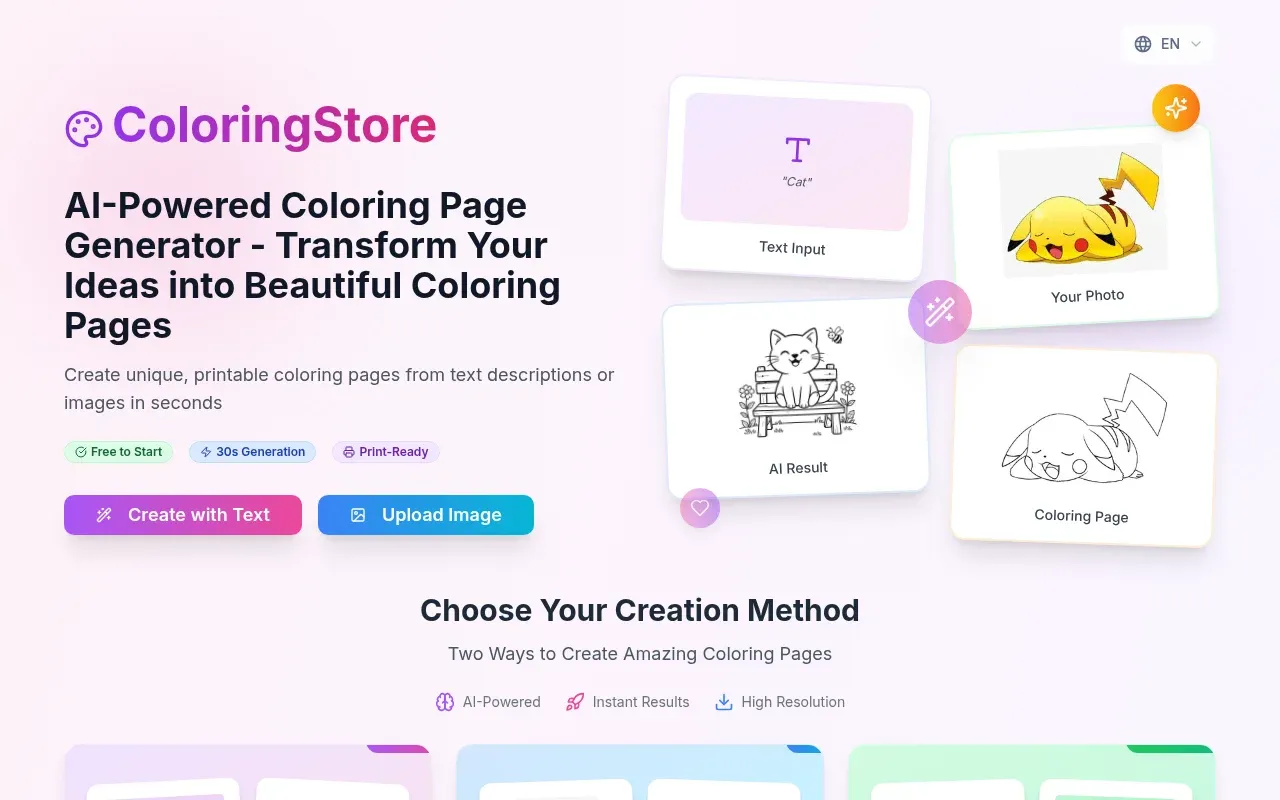
AI Coloring Page Generator for Printable Coloring Pages
Features
Features of ColoringStore
AI Coloring Page Generation: Quickly create coloring pages from text descriptions or uploaded images.
High-Resolution Downloads: Generate and download high-quality PNG or PDF files suitable for printing.
User-Friendly Interface: Intuitive design that makes it easy for anyone to create coloring pages without prior experience.
Multiple Styles: Choose from various artistic styles to customize the look of your coloring pages.
Community Examples: Browse and get inspired by examples created by other users.
Use Cases
Use Cases of ColoringStore
Educational Resources: Teachers can create custom coloring pages for classroom activities and worksheets.
Creative Projects: Parents and kids can generate unique coloring pages for fun and creativity at home.
Event Activities: Use for parties or events where coloring activities are needed for entertainment.
Art Therapy: Provide a tool for art therapy sessions, allowing individuals to express creativity and relieve stress.
Personalized Gifts: Create custom coloring pages as gifts for friends and family, tailored to their interests.

Comments


This is a solid example of building in a competitive space but still finding room to differentiate through execution. What stood out to me is the apparent attention to detail — small UX decisions often make a bigger difference than big feature lists, especially for tools people use frequently. I’d be interested in how you’re planning to evolve the product: * Are you leaning more toward adding advanced capabilities for power users? * Or keeping it simple and expanding through integrations and ecosystem? One idea could be to surface insights or analytics that help users understand how they’re performing (depending on the use case). That can turn a tool into something users rely on regularly rather than occasionally. Overall, this feels like a product built with intention, not just features.


Premium Products



































Sponsors
Buy

Awards
View all
Awards
View allMakers

Makers
Comments
This is a solid example of building in a competitive space but still finding room to differentiate through execution. What stood out to me is the apparent attention to detail — small UX decisions often make a bigger difference than big feature lists, especially for tools people use frequently. I’d be interested in how you’re planning to evolve the product: * Are you leaning more toward adding advanced capabilities for power users? * Or keeping it simple and expanding through integrations and ecosystem? One idea could be to surface insights or analytics that help users understand how they’re performing (depending on the use case). That can turn a tool into something users rely on regularly rather than occasionally. Overall, this feels like a product built with intention, not just features.
Premium Products
New to Fazier?

Find your next favorite product or submit your own. Made by @FalakDigital.
Copyright ©2026. All Rights Reserved