
Chinese Trainer
Mandarin study app with HSK vocabulary and spaced repetition
Chinese Trainer is a Mandarin Chinese study app for learners who want an HSK path, review that sticks, and real speaking practice in one account. It is an independent product at chinesetrainer.com. It is not trainchinese.com, not a test center, and not a guaranteed HSK pass. Register for the official exam on chinesetest.cn.
The app combines this site's HSK-tagged vocabulary (12,432 words), spaced-repetition flashcards, grammar lessons, 204 graded readings, listening and writing practice, mock exams, and a daily study plan. A Premium AI tutor can chat by text or voice, correct sentences, explain grammar, and remember weak points. Interface languages are English, Spanish, and Simplified Chinese. The language you study is Mandarin (Simplified).
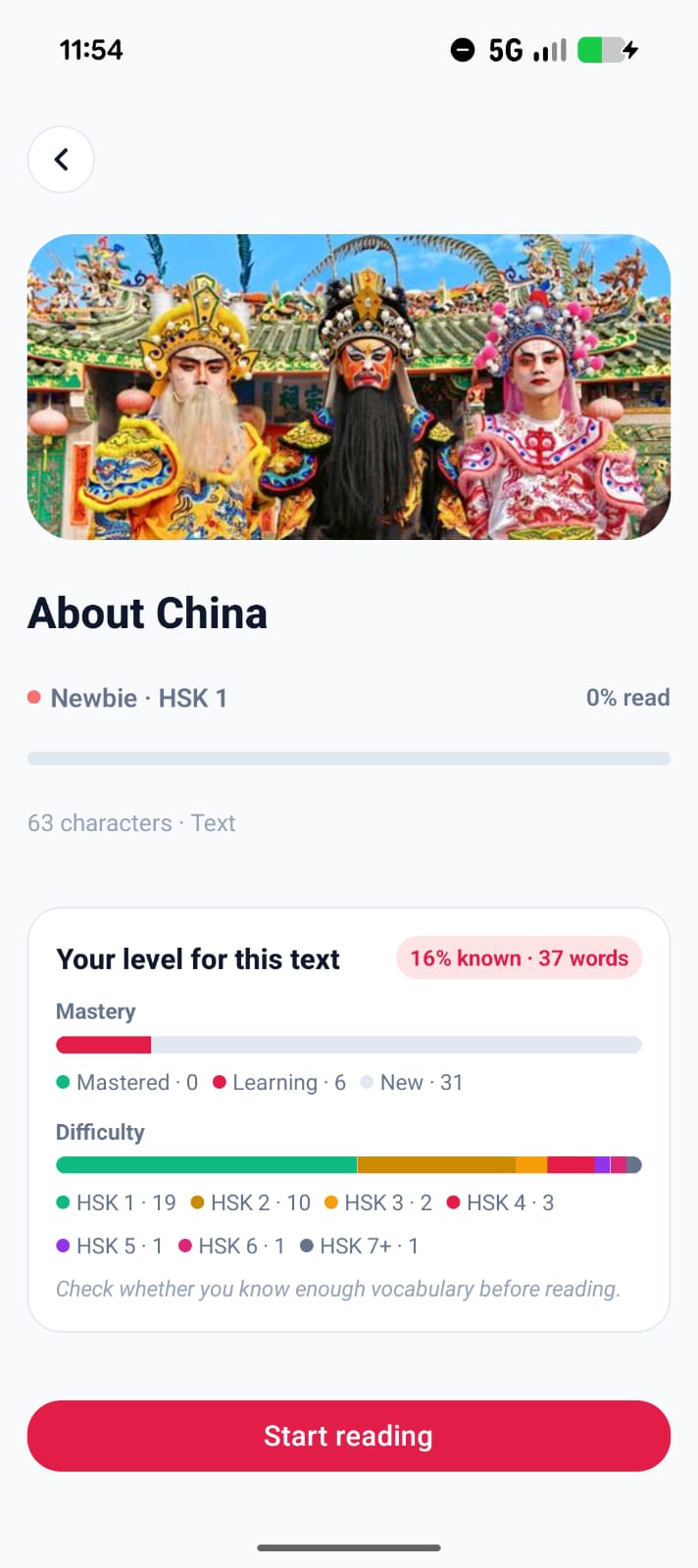
Features
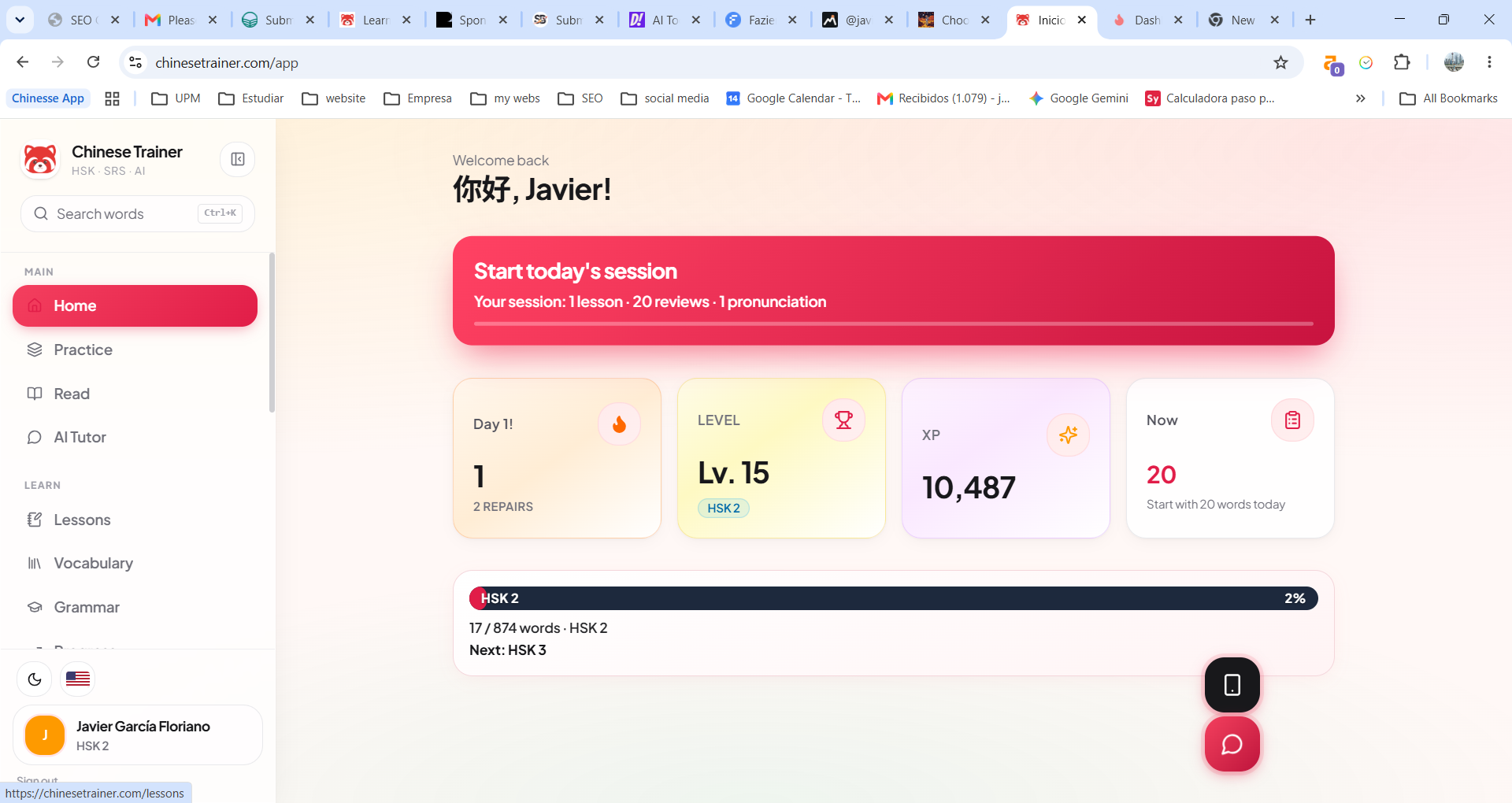
Home
- Daily plan and due reviews
- Study streak (with limited repairs)
- XP, HSK level, and “what to do today”
- Google sign-in; progress syncs across web and Android
Learn
- Lessons by HSK level
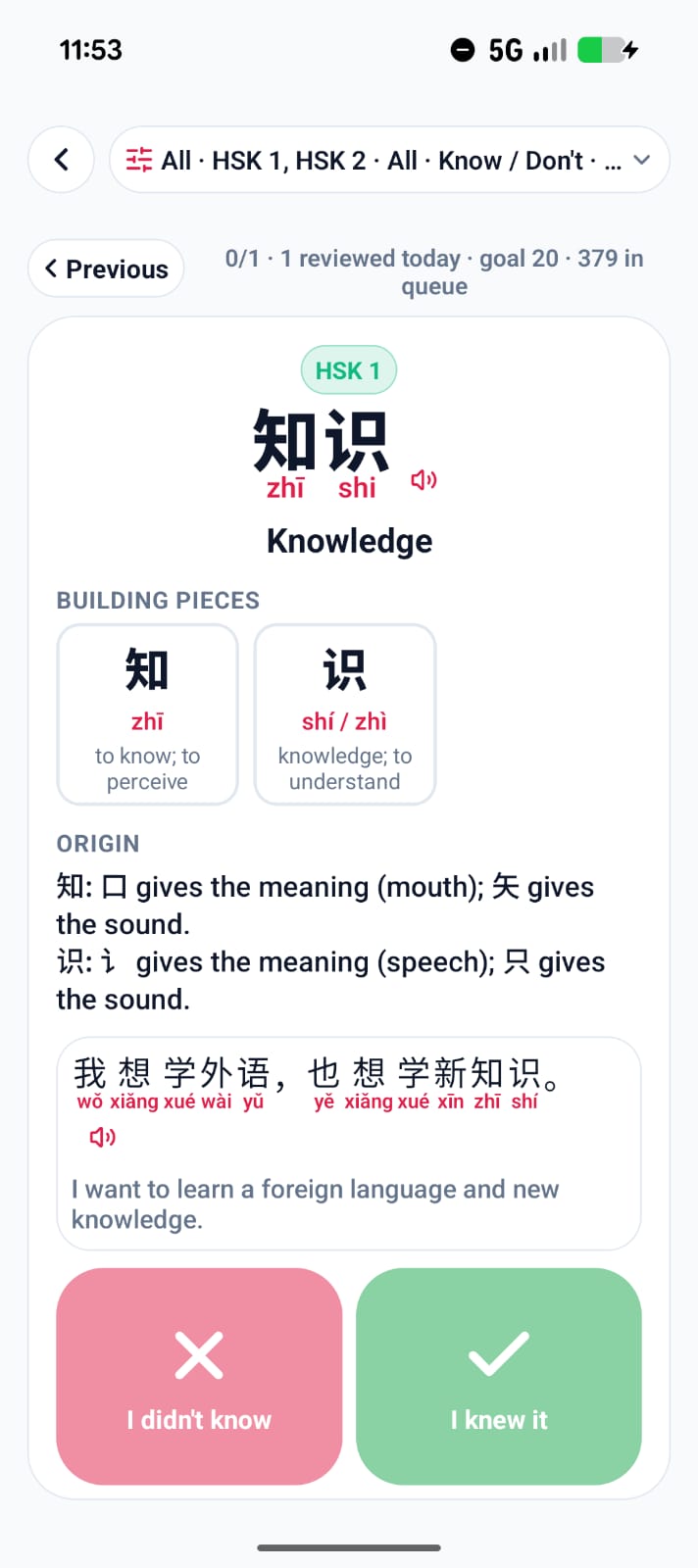
- Vocabulary lists (hanzi, pinyin, gloss, examples, audio)
- Grammar
- Placement test
- Progress by HSK band
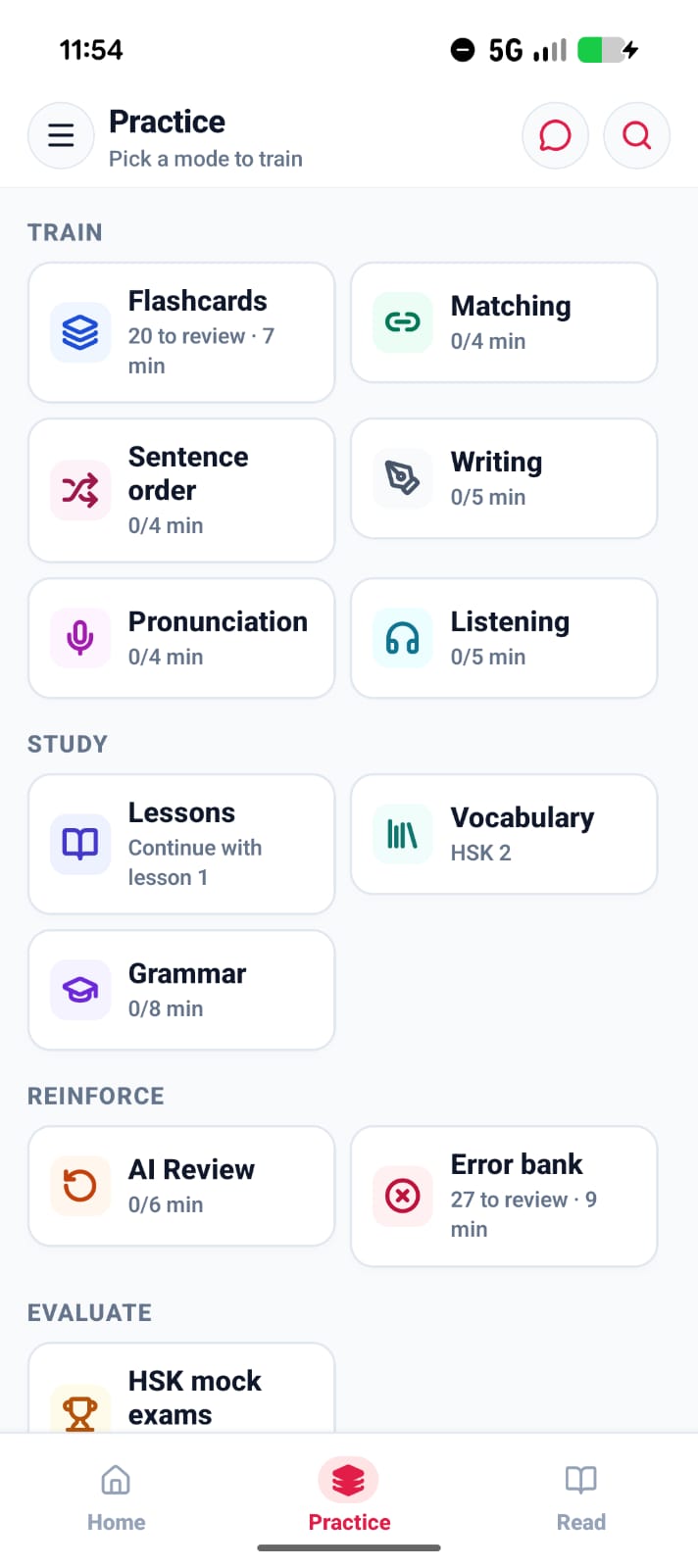
Practice
- SRS flashcards (know / don’t know, multiple choice)
- Matching
- Sentence scramble
- Hanzi writing (stroke practice)
- Pronunciation hub: pinyin course, syllable chart, minimal pairs, speaking
- Listening and dictation
- AI review of weak items
- Exam error bank
- HSK mock exams
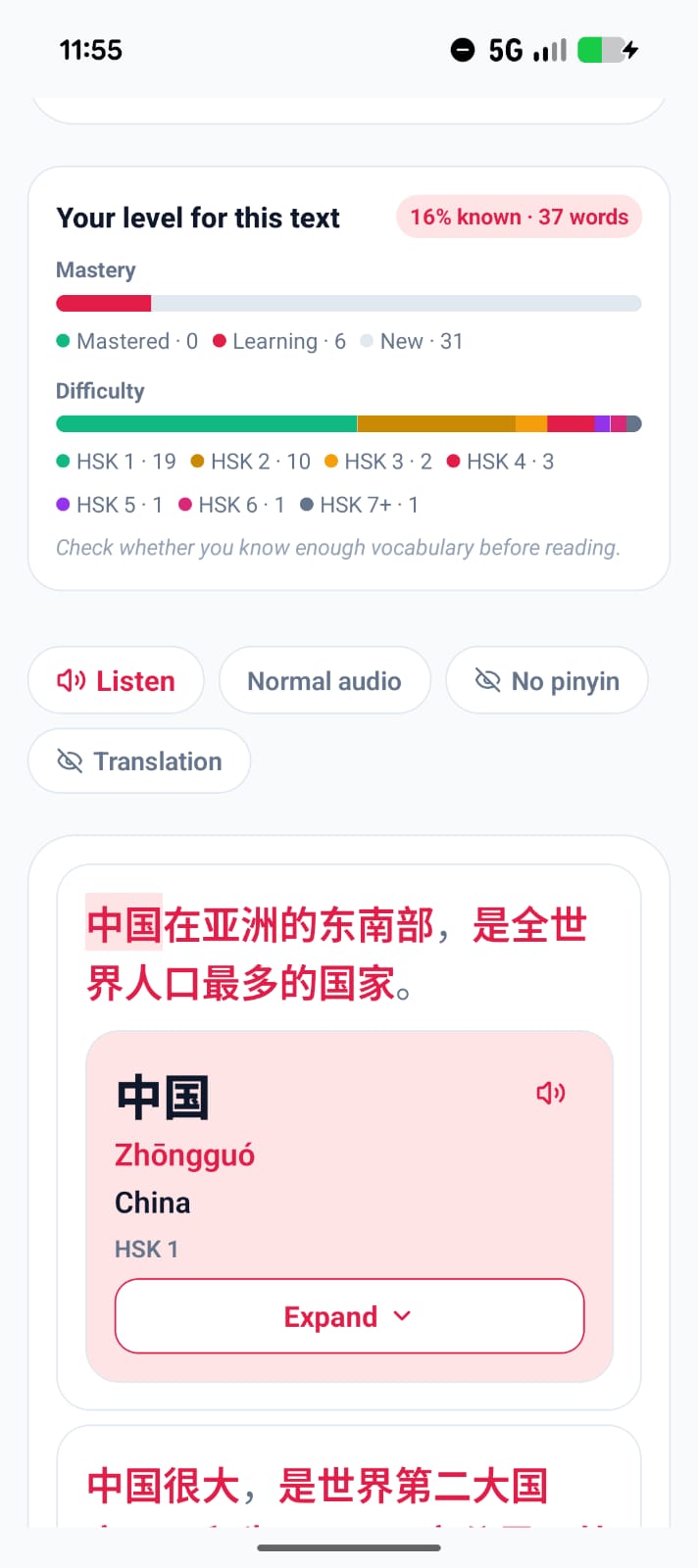
Read
- Dialogues
- Graded stories
- Reading courses
- Phrase lists
- Tap-a-word lookup, audio, pinyin toggle
AI tutor (Premium)
- Text chat
- Voice conversation
- Corrections and grammar explanations
- Memory of your level and weak points
Progress and extras
- Statistics, heatmap, skill stats
- Achievements / collectible cards
- Leaderboard
- Weekly challenges
- Community
- Certificates from exams
Account
- Light / dark theme
- Interface in English, Spanish, and Chinese
- Offline cache for HSK 1–2 vocabulary
- Reminders / notifications
- Plans: Free (HSK 1–2 with daily limits), Standard, Premium
- Feedback, settings, delete account
Use Cases
Travel in China
Survival first: greetings, numbers, transport, hotel, food. Use phrase lists, listening, and short tutor chats. Do not start with an HSK 4 mock. Add HSK 1 only if the stay is longer than a few weeks.
Work / business Chinese
Meetings, suppliers, prices, deadlines, order confirmations. That is not the same as HSK 4. Use functional vocab, scramble/speaking, and the tutor for emails and calls. Keep exam study in a separate session.
Official HSK prep
Level guide → vocab list for that band → grammar → listening → mock exam. SRS holds the words. The app is a study tool, not a test center; registration stays on chinesetest.cn.
Other real uses of the same product
- Start from zero at HSK 1 with a daily plan
- Speak earlier (pronunciation hub + voice tutor)
- Keep a habit in short sessions (due queue, streak, 5 minutes on Android)
- Rebuild listening and reading with graded dialogues and stories
- Come back after a break: placement test, then only the due reviews
- Study on web and phone with one Google account

Comments


I like the "come back after a break" path: a placement test, then only the due reviews. That's where most spaced repetition apps lose people, because they return to a pile of hundreds of overdue cards and quit. How does the scheduler handle that? Do you cap the daily load or spread overdue cards over a few days? And does getting a card right in multiple choice count the same as getting it right from memory?

Refreshing to see such an honest description: independent, not a test centre, not a guaranteed HSK pass, and a pointer to the official registration. With 204 graded readings plus listening and writing practice, how do you handle tones? Does the writing practice also check pinyin input with tone marks, or is it stroke-order only? Tones are where self-study usually falls apart.
Premium Products

















































Comments
I like the "come back after a break" path: a placement test, then only the due reviews. That's where most spaced repetition apps lose people, because they return to a pile of hundreds of overdue cards and quit. How does the scheduler handle that? Do you cap the daily load or spread overdue cards over a few days? And does getting a card right in multiple choice count the same as getting it right from memory?
Refreshing to see such an honest description: independent, not a test centre, not a guaranteed HSK pass, and a pointer to the official registration. With 204 graded readings plus listening and writing practice, how do you handle tones? Does the writing practice also check pinyin input with tone marks, or is it stroke-order only? Tones are where self-study usually falls apart.
Premium Products
New to Fazier?

Find your next favorite product or submit your own. Made by @FalakDigital.
Copyright ©2026. All Rights Reserved