
Caret
Open-source AI design tool that lives in your repo
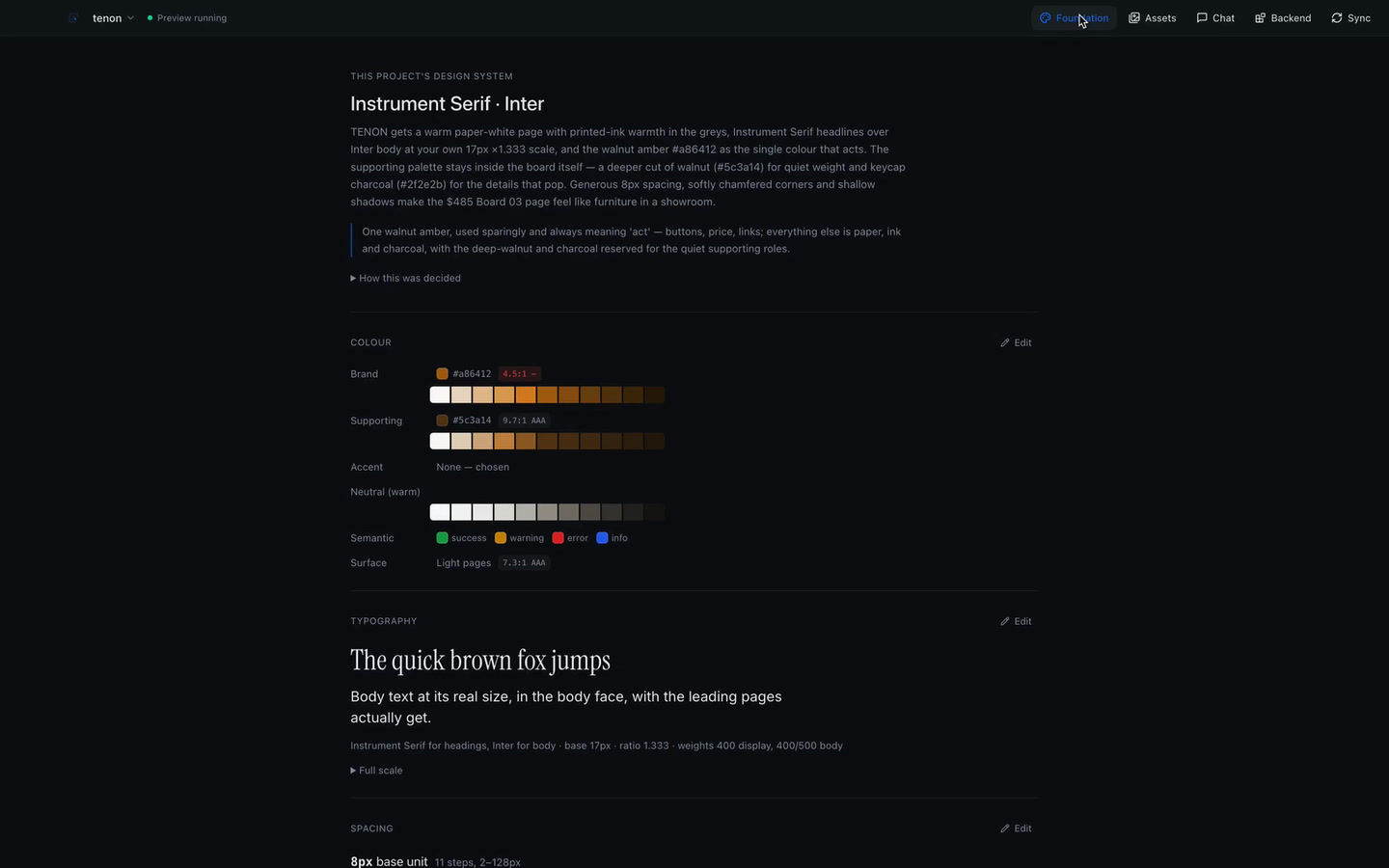
Your design shouldn't live outside your codebase. Caret gives your repo a design layer: real React in .caret/, rendered live on a canvas you can click and edit. Your app's source stays untouched until you sync.
Your design is the code. Not a picture of it, not a file that drifts. It lives in your repo, in git, reviewable in a pull request. So a fix you make once is still there tomorrow, instead of being regenerated away the next time you ask for something.
Sync is a thing you choose. When a design is ready, Caret works out what changed since the last sync and your agent makes the app match, in whatever framework you ship.
Use Caret with your own agent and harness. Designing happens in Caret, signed in with the AI coding plan you already pay for. Pushing those designs into your app can happen here too, or you can hand the sync to the agent in your terminal over MCP.
Free and open source, runs on your machine, no account.
Features
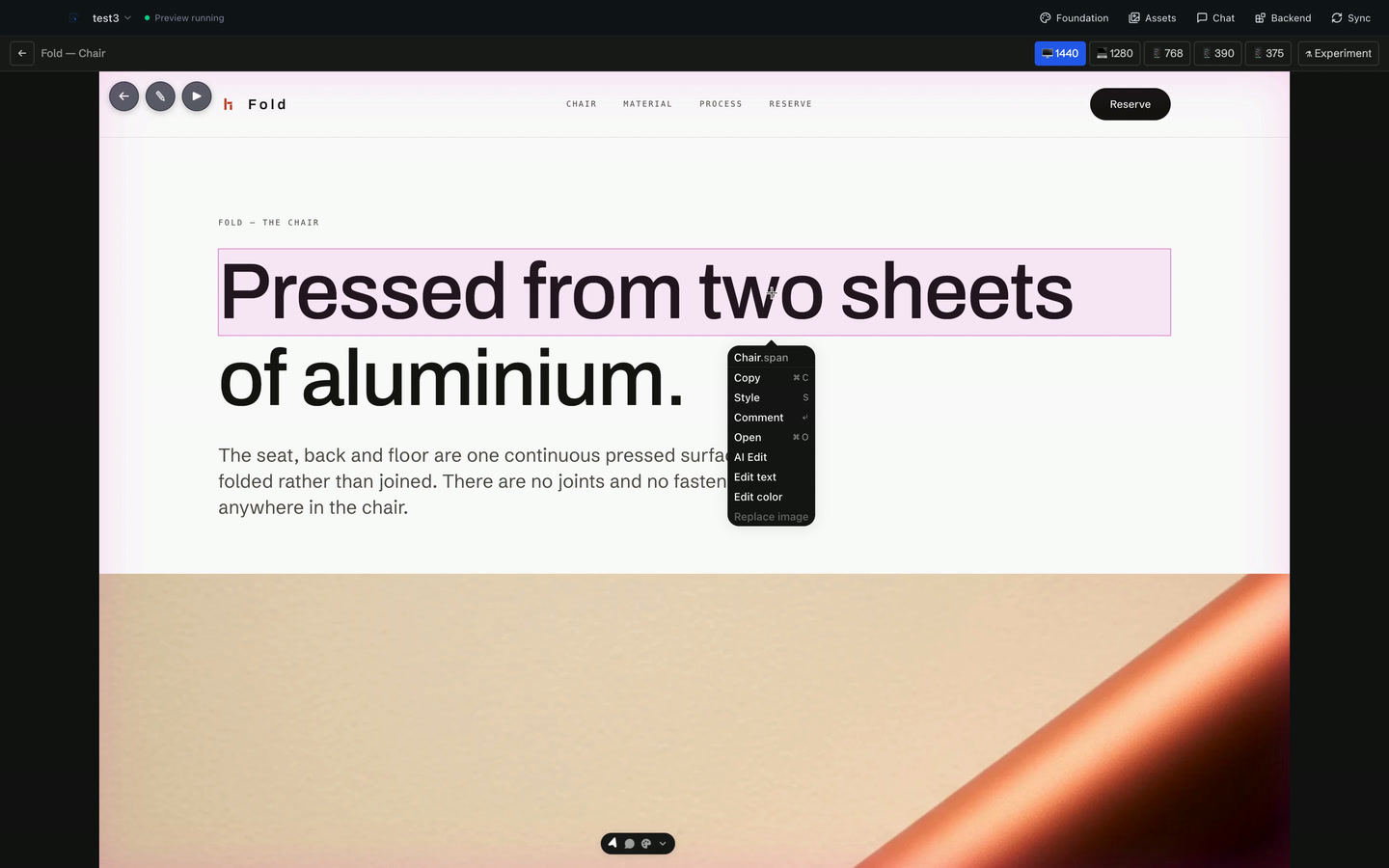
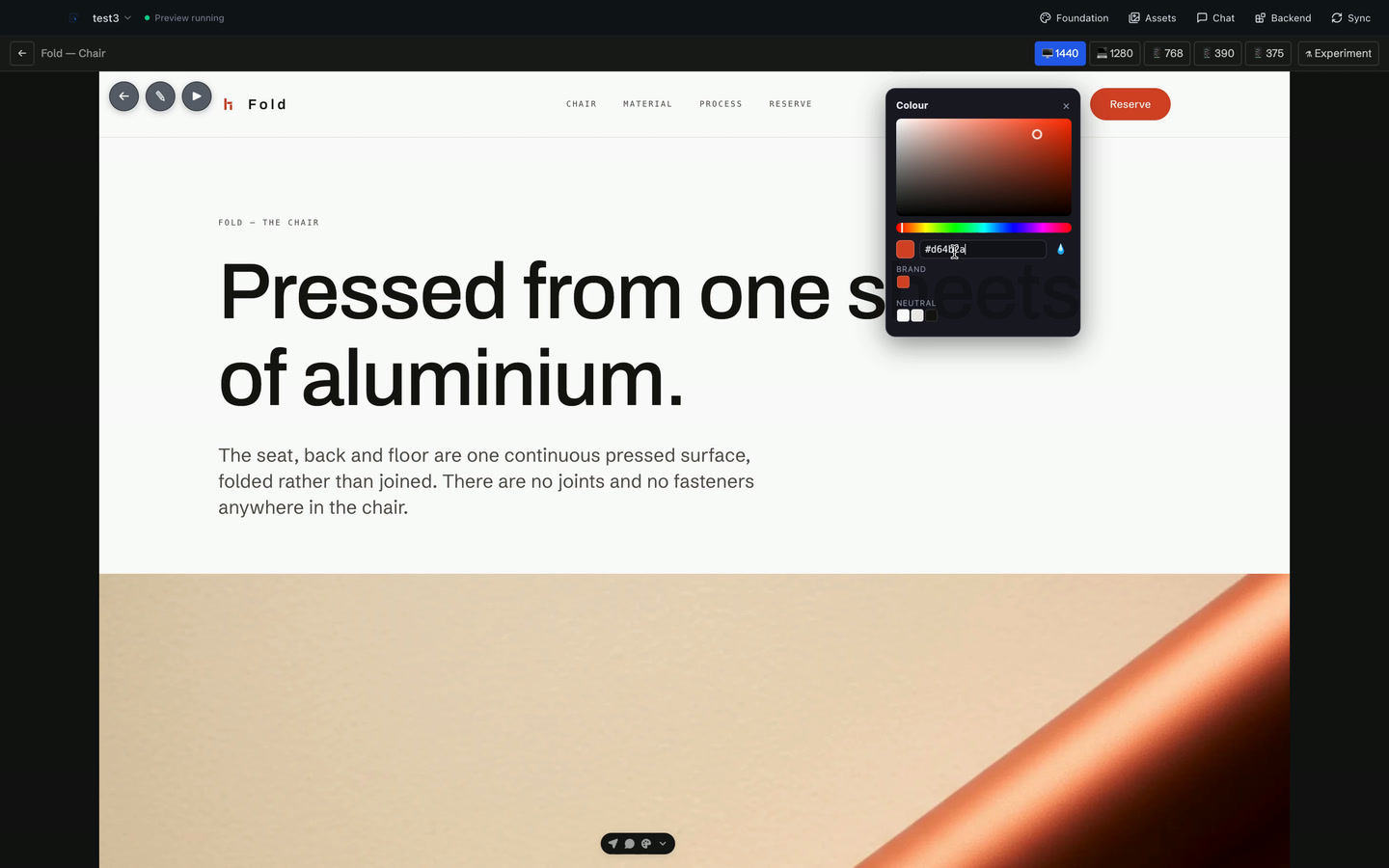
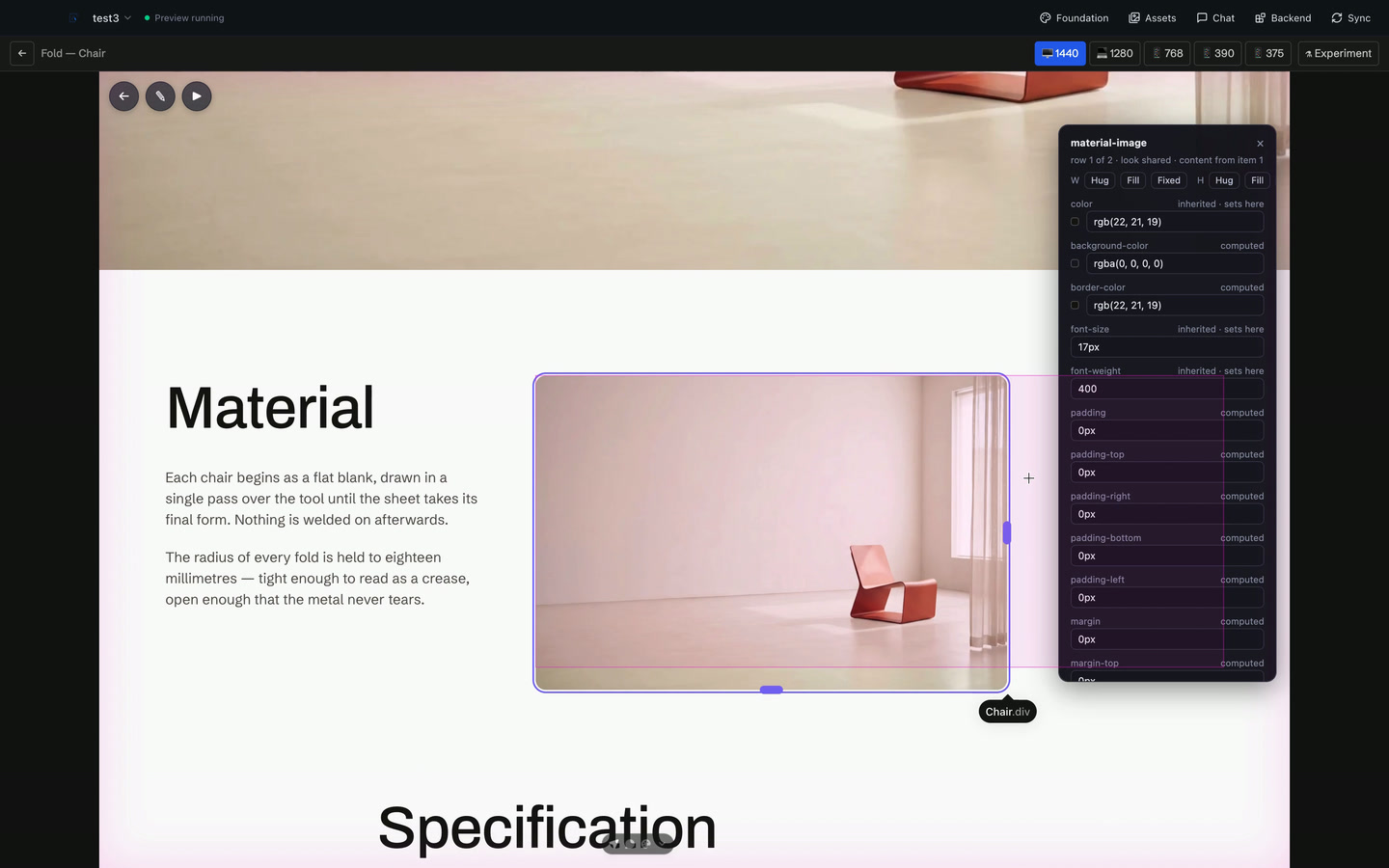
- Edit on the page: text, colour, images, and size, written to the file
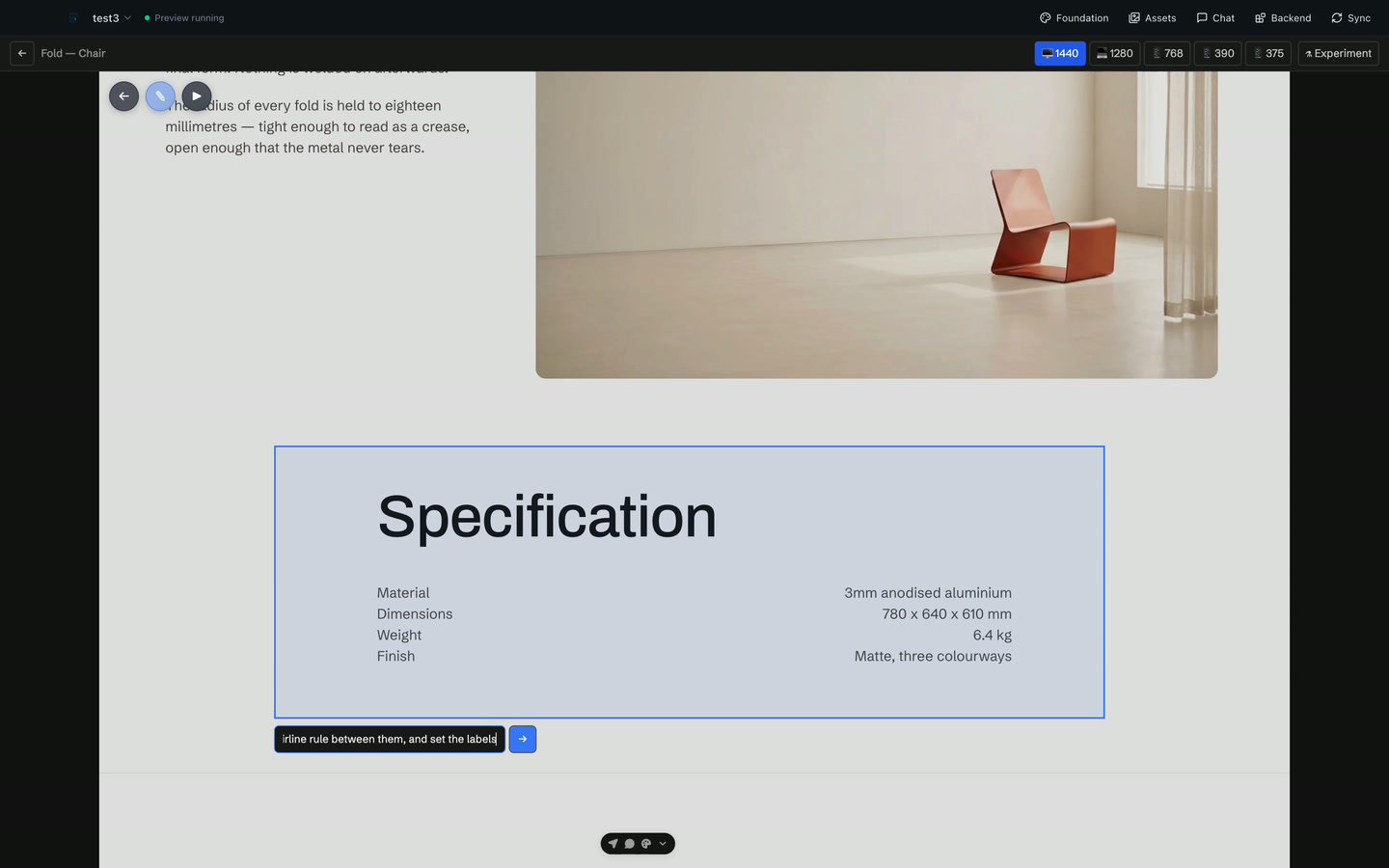
- Ask for the harder changes: paint a region, describe it in words
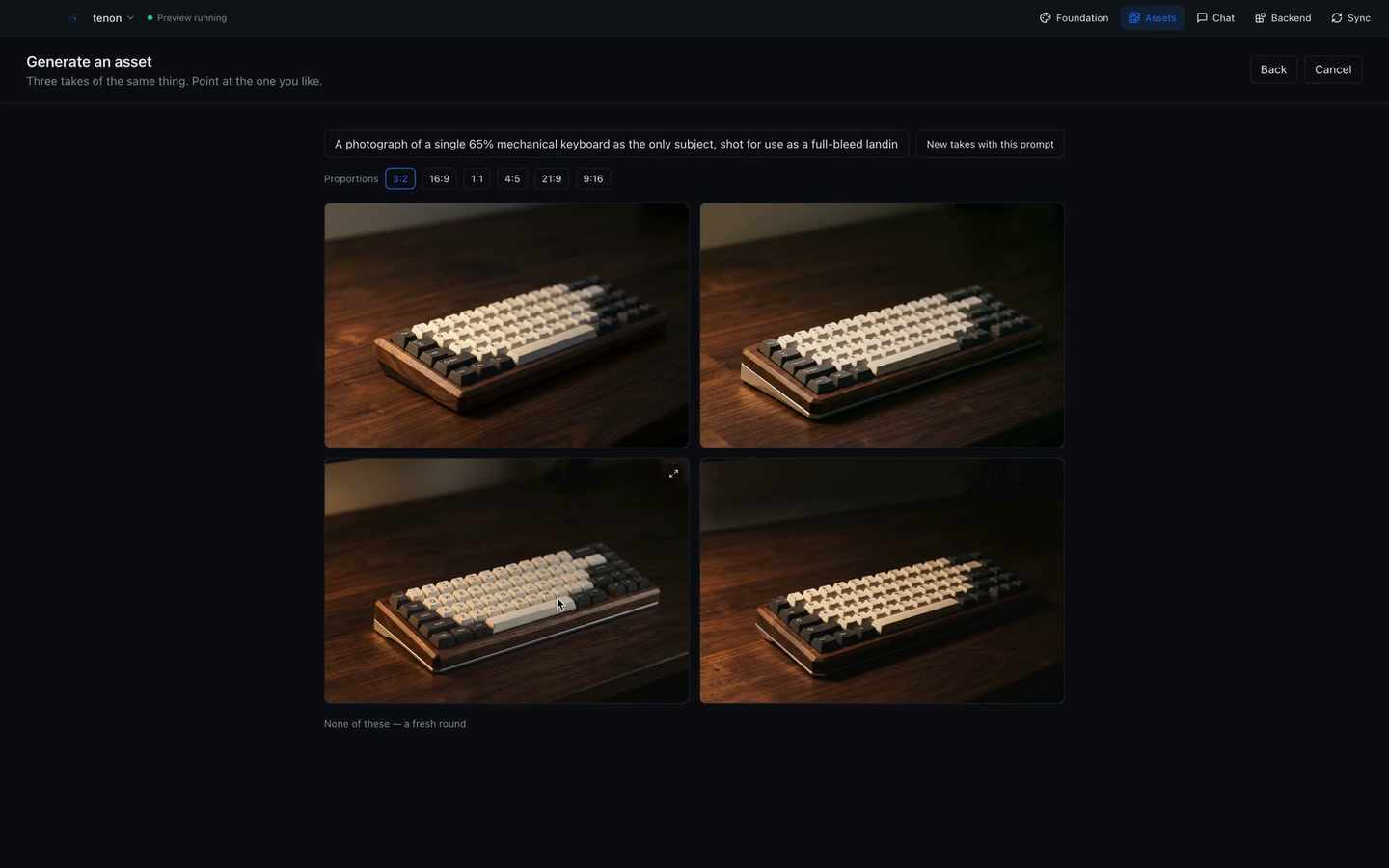
- Three versions at once: generate, compare, keep one
- Make the assets too: logos, photographs, textures, animated backgrounds
- Sync into your app: in any framework, both directions
- Bring your own model: a subscription you have, or an API key
- Or hand the sync to your own agent: Claude Code and Codex work over MCP

Comments


Hi Everyone, Caret's product philosophy is that instead of having an external design tool that hosts design separately from the codebase, why not have the design artifacts themselves as code and have it tracked in the codebase? So that's why I created caret, now design and code lives in one place and drift between design and app layer is no longer existent.

Keeping editable React designs in Git makes it easier to review them alongside the app. What happens if a designer edits a button in Caret while a developer updates the same component in the app? A preview that flags overlapping changes before sync would help both people review what’s about to change.

Storing the design as real React in .caret/ inside the repo, reviewable in a pull request, is a genuinely different answer to design drift — the design stops being a screenshot that goes stale. Being free, open source, local and bring-your-own-model also removes the usual lock-in worry. One question: when two people edit the same .caret/ design on different branches, how are merge conflicts in the generated React handled — is there a visual diff, or does it fall back to picking one version?

Keeping the design as real React in the repo is a smart answer to design drift. As a designer, my first question is about the design system: does Caret pick up the app’s existing tokens (Tailwind config, CSS variables, fonts) so the three generated versions stay on-system, or do I set those up inside .caret/ first?

Caret looks like a really interesting approach to AI-powered design and development. I especially like the idea of keeping editable React designs directly inside the codebase instead of maintaining separate design files that can become outdated. The ability to compare multiple design versions and sync changes only when ready sounds very useful. This could make collaboration between designers and developers much smoother. Great concept!


Keeping design inside the repo is smart—no drift, easy review. It makes me think of fast creative trends, like turning a photo into a Hop Hop Hop dance video ( https://www.hophophopdance.online ) for TikTok. Nice to see tools that keep ideas reusable and in sync.


Keeping the design as real React in the repo, reviewable in a pull request, is a strong answer to design drift — the design can never fall behind the code. I also like that sync is a deliberate choice and that you can bring your own model or agent via MCP, rather than being locked into another subscription. How does Caret handle conflicts when two teammates edit the same page in .caret/ before a sync?
Keeping design inside the repo is smart—no drift, easy review. It makes me think of fast creative trends, like turning a photo into a <a href="https://www.hophophopdance.online" target="_blank">Hop Hop Hop dance video</a> for TikTok. Nice to see tools that keep ideas reusable and in sync.


I like that you can generate three versions at once and keep one. Does the comparison view show the actual code diff for each version, or just the visual result? I am also curious how the bring-your-own-model setup works in practice. If I connect a Claude subscription I already pay for, does Caret count anything separately?



Syncing designs back into an existing app in any framework sounds ambitious — how does Caret handle projects where the components use a UI library like MUI or Chakra, whose JSX differs a lot from what a design tool would generate? A short doc on the supported component patterns would help me judge how much cleanup a real project would need after each sync.


Keeping the design inside the repo is the part I like, because the handoff between a design file and the real code is where things usually drift. The bit I would want to understand before adopting it is the merge: if two people edit the same screen in .caret/ on different branches, do you get a readable diff and a sane conflict, or the usual mess you get when a generated file meets git?

Storing the design as real React in .caret/ and reviewing it in a pull request is the part that sold me — that is exactly where other tools let design drift from the shipped app. Two questions: do the generated assets (logos, photos, textures) also land in the repo, or only the React? And can the canvas preview the same design at phone widths while you edit, before syncing?

Keeping the design layer in the repo makes drift much easier to review. I am especially curious whether the three-version comparison can show both the visual result and the generated code or asset diff before syncing—seeing that relationship would make design decisions easier to approve in a pull request.

Keeping editable React designs in Git makes it easier to review them alongside the app. What happens if a designer edits a button in Caret while a developer updates the same component in the app? A preview that flags overlapping changes before sync would help both people review what’s about to change.


The "three versions at once, keep one" flow plus designs living in .caret/ in git is a nice combo: the two versions you threw away could live in history instead of vanishing. Do you keep the rejected variants anywhere, or only the one you kept? For a mobile app, how does it handle screens that only exist behind a sign-in or a paywall state? That's where our design and code drift the most.


Keeping designs as editable React in .caret/ and syncing only when ready makes the pull-request workflow feel much less brittle than exporting mockups. Does the canvas pick up existing CSS variables or Tailwind tokens automatically, or is there a setup step to keep generated variants aligned with the app’s design system?


Keeping the design as real React in .caret/ and leaving the app source untouched until you choose to sync is a smart way to stop design files from drifting. Being able to hand that sync to Claude Code or Codex over MCP is also appealing if you already work in the terminal. When a sync is ready, can you preview the exact file-level changes first, or does the agent apply them and leave review to the pull request?


The explicit sync step gives teams a useful review boundary. For responsive work, can the same design be previewed at mobile and desktop widths before syncing? Including keyboard focus states and reduced-motion checks in that preview would make it easier to catch regressions beyond the static appearance.


The .caret/-in-repo approach is the right call — tools that keep state outside git always end up with drift you can't review. Curious how the sync diff is computed: structural AST compare or rendered-DOM snapshot diff? We hit a similar problem recording agent sessions (DOM snapshots vs semantic changes) and the AST route handled refactors much better.
The .caret/-in-repo approach is the right call — keeping design state outside git always ends in drift nobody can review. Curious how the sync diff is computed: structural AST compare or rendered-DOM snapshot diff? We hit a similar problem recording agent sessions (DOM snapshots vs semantic changes) and the AST route handled refactors much better.
Premium Products



























Sponsors
Buy
Awards
View all
Awards
View allMakers
Makers
Comments
Hi Everyone, Caret's product philosophy is that instead of having an external design tool that hosts design separately from the codebase, why not have the design artifacts themselves as code and have it tracked in the codebase? So that's why I created caret, now design and code lives in one place and drift between design and app layer is no longer existent.
Keeping editable React designs in Git makes it easier to review them alongside the app. What happens if a designer edits a button in Caret while a developer updates the same component in the app? A preview that flags overlapping changes before sync would help both people review what’s about to change.
Storing the design as real React in .caret/ inside the repo, reviewable in a pull request, is a genuinely different answer to design drift — the design stops being a screenshot that goes stale. Being free, open source, local and bring-your-own-model also removes the usual lock-in worry. One question: when two people edit the same .caret/ design on different branches, how are merge conflicts in the generated React handled — is there a visual diff, or does it fall back to picking one version?
Keeping the design as real React in the repo is a smart answer to design drift. As a designer, my first question is about the design system: does Caret pick up the app’s existing tokens (Tailwind config, CSS variables, fonts) so the three generated versions stay on-system, or do I set those up inside .caret/ first?
Caret looks like a really interesting approach to AI-powered design and development. I especially like the idea of keeping editable React designs directly inside the codebase instead of maintaining separate design files that can become outdated. The ability to compare multiple design versions and sync changes only when ready sounds very useful. This could make collaboration between designers and developers much smoother. Great concept!
Keeping design inside the repo is smart—no drift, easy review. It makes me think of fast creative trends, like turning a photo into a Hop Hop Hop dance video ( https://www.hophophopdance.online ) for TikTok. Nice to see tools that keep ideas reusable and in sync.
Keeping the design as real React in the repo, reviewable in a pull request, is a strong answer to design drift — the design can never fall behind the code. I also like that sync is a deliberate choice and that you can bring your own model or agent via MCP, rather than being locked into another subscription. How does Caret handle conflicts when two teammates edit the same page in .caret/ before a sync?
Keeping design inside the repo is smart—no drift, easy review. It makes me think of fast creative trends, like turning a photo into a <a href="https://www.hophophopdance.online" target="_blank">Hop Hop Hop dance video</a> for TikTok. Nice to see tools that keep ideas reusable and in sync.
I like that you can generate three versions at once and keep one. Does the comparison view show the actual code diff for each version, or just the visual result? I am also curious how the bring-your-own-model setup works in practice. If I connect a Claude subscription I already pay for, does Caret count anything separately?
Syncing designs back into an existing app in any framework sounds ambitious — how does Caret handle projects where the components use a UI library like MUI or Chakra, whose JSX differs a lot from what a design tool would generate? A short doc on the supported component patterns would help me judge how much cleanup a real project would need after each sync.
Keeping the design inside the repo is the part I like, because the handoff between a design file and the real code is where things usually drift. The bit I would want to understand before adopting it is the merge: if two people edit the same screen in .caret/ on different branches, do you get a readable diff and a sane conflict, or the usual mess you get when a generated file meets git?
Storing the design as real React in .caret/ and reviewing it in a pull request is the part that sold me — that is exactly where other tools let design drift from the shipped app. Two questions: do the generated assets (logos, photos, textures) also land in the repo, or only the React? And can the canvas preview the same design at phone widths while you edit, before syncing?
Keeping the design layer in the repo makes drift much easier to review. I am especially curious whether the three-version comparison can show both the visual result and the generated code or asset diff before syncing—seeing that relationship would make design decisions easier to approve in a pull request.
Keeping editable React designs in Git makes it easier to review them alongside the app. What happens if a designer edits a button in Caret while a developer updates the same component in the app? A preview that flags overlapping changes before sync would help both people review what’s about to change.
The "three versions at once, keep one" flow plus designs living in .caret/ in git is a nice combo: the two versions you threw away could live in history instead of vanishing. Do you keep the rejected variants anywhere, or only the one you kept? For a mobile app, how does it handle screens that only exist behind a sign-in or a paywall state? That's where our design and code drift the most.
Keeping designs as editable React in .caret/ and syncing only when ready makes the pull-request workflow feel much less brittle than exporting mockups. Does the canvas pick up existing CSS variables or Tailwind tokens automatically, or is there a setup step to keep generated variants aligned with the app’s design system?
Keeping the design as real React in .caret/ and leaving the app source untouched until you choose to sync is a smart way to stop design files from drifting. Being able to hand that sync to Claude Code or Codex over MCP is also appealing if you already work in the terminal. When a sync is ready, can you preview the exact file-level changes first, or does the agent apply them and leave review to the pull request?
The explicit sync step gives teams a useful review boundary. For responsive work, can the same design be previewed at mobile and desktop widths before syncing? Including keyboard focus states and reduced-motion checks in that preview would make it easier to catch regressions beyond the static appearance.
The .caret/-in-repo approach is the right call — tools that keep state outside git always end up with drift you can't review. Curious how the sync diff is computed: structural AST compare or rendered-DOM snapshot diff? We hit a similar problem recording agent sessions (DOM snapshots vs semantic changes) and the AST route handled refactors much better.
The .caret/-in-repo approach is the right call — keeping design state outside git always ends in drift nobody can review. Curious how the sync diff is computed: structural AST compare or rendered-DOM snapshot diff? We hit a similar problem recording agent sessions (DOM snapshots vs semantic changes) and the AST route handled refactors much better.
Premium Products
New to Fazier?

Find your next favorite product or submit your own. Made by @FalakDigital.
Copyright ©2026. All Rights Reserved