
BuildRuler - Free material calculators
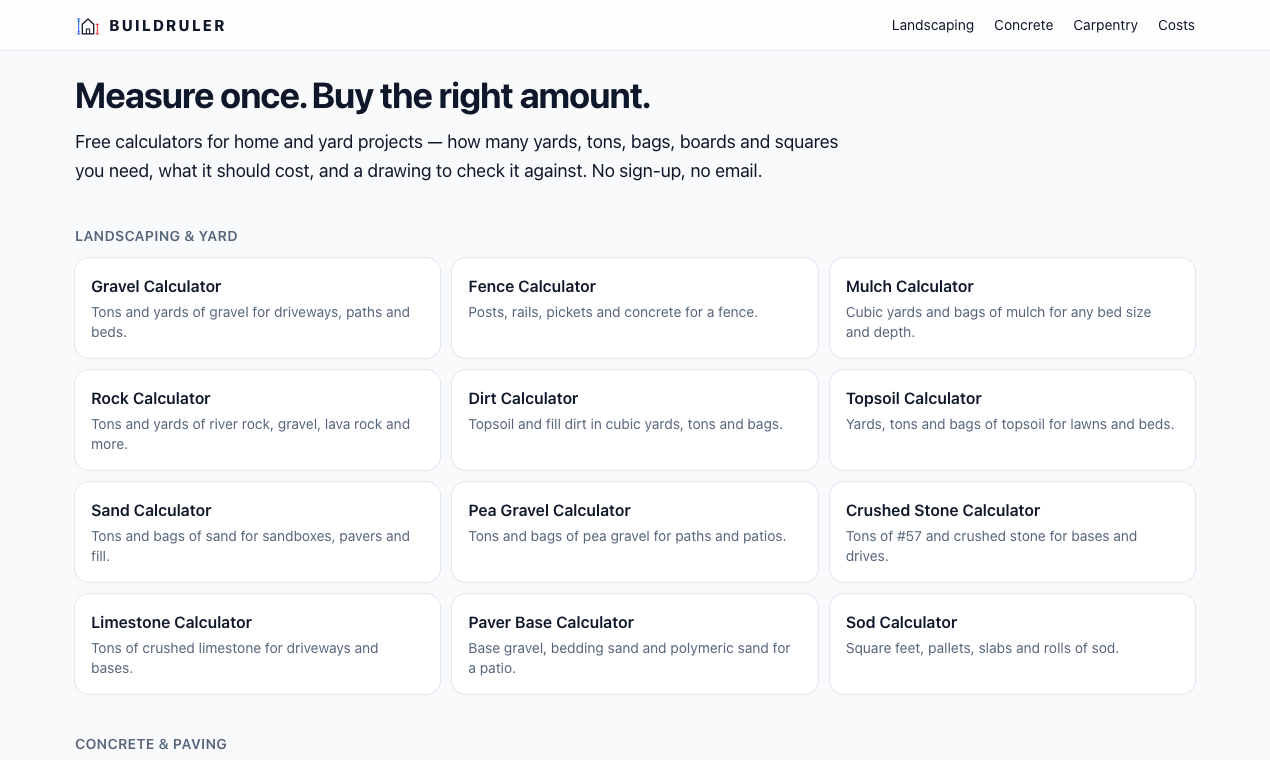
80 free calculators for mulch, gravel, concrete, lumber, etc
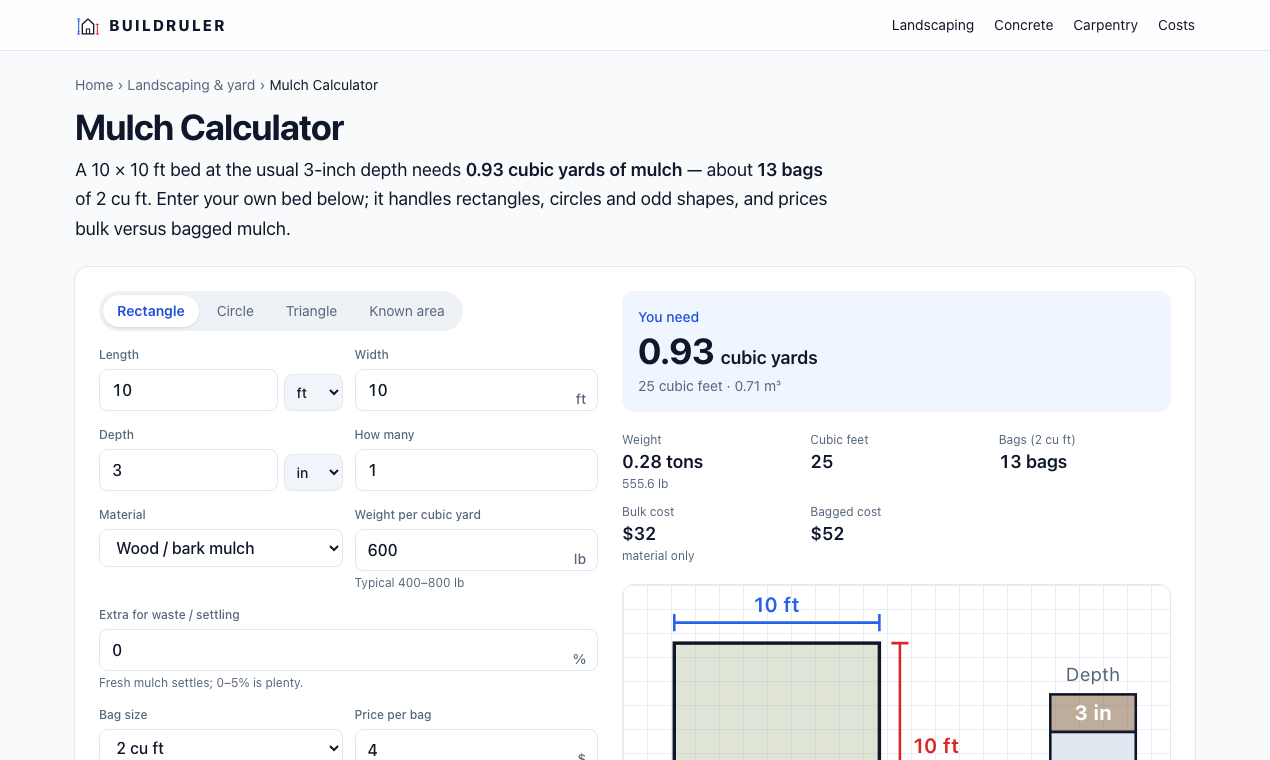
BuildRuler tells you how much to buy before you start a project: cubic yards and bags of mulch, tons of gravel, yards and 80 lb bags of concrete, board feet of lumber, stair stringer cuts, siding squares, BTUs and more, 80 calculators in all. Each one shows the formula behind it, many add a drawing to check your shape against, and the cost estimators give 2026 price ranges. Every calculator can be embedded on another site with one snippet, free. A monthly data page tracks building material prices from the official BLS producer price index. Free, no sign-up, no email.

Comments


Really useful — showing the formula behind each result is what makes this trustworthy for a first-time DIYer, and the 2026 cost ranges save a separate trip to check prices. One suggestion: a small waste/overage toggle (say 5–10%) for mulch, gravel and concrete would help, since most projects end up needing a bit more than the exact calculation. The embeddable calculators are a smart touch too.
Showing the formula behind each result is the detail that makes this trustworthy — most calculators hide the math. The drawing check and the 2026 cost ranges are also genuinely useful for a first-time DIYer. A waste or overage toggle, say plus 10% for cuts and spillage, would be a natural next addition.

Tying the cost estimators to the BLS producer price index is a smart way to keep the ranges honest. One thing I've noticed is that national price moves don't always match what a local yard charges, especially for concrete and gravel where delivery is a big part of the bill. Have you thought about a zip code or regional adjustment on the cost side?

Tried the pool volume calculator: the note that depth means water depth, not wall height is the right warning, since that's the usual mistake. 16 x 32 ft at 3.5 to 8 ft gave 22,023 gallons, which matches the formula you list. I like that the salt figure sits right under the volume. A kidney or freeform option would help, since the oval shortcut only fits so many real pools.
Premium Products











































Sponsors
Buy
Makers

Makers
Comments
Really useful — showing the formula behind each result is what makes this trustworthy for a first-time DIYer, and the 2026 cost ranges save a separate trip to check prices. One suggestion: a small waste/overage toggle (say 5–10%) for mulch, gravel and concrete would help, since most projects end up needing a bit more than the exact calculation. The embeddable calculators are a smart touch too.
Showing the formula behind each result is the detail that makes this trustworthy — most calculators hide the math. The drawing check and the 2026 cost ranges are also genuinely useful for a first-time DIYer. A waste or overage toggle, say plus 10% for cuts and spillage, would be a natural next addition.
Tying the cost estimators to the BLS producer price index is a smart way to keep the ranges honest. One thing I've noticed is that national price moves don't always match what a local yard charges, especially for concrete and gravel where delivery is a big part of the bill. Have you thought about a zip code or regional adjustment on the cost side?
Tried the pool volume calculator: the note that depth means water depth, not wall height is the right warning, since that's the usual mistake. 16 x 32 ft at 3.5 to 8 ft gave 22,023 gallons, which matches the formula you list. I like that the salt figure sits right under the volume. A kidney or freeform option would help, since the oval shortcut only fits so many real pools.
Premium Products
New to Fazier?

Find your next favorite product or submit your own. Made by @FalakDigital.
Copyright ©2026. All Rights Reserved