BrowserPod
The browser-based virtual machine
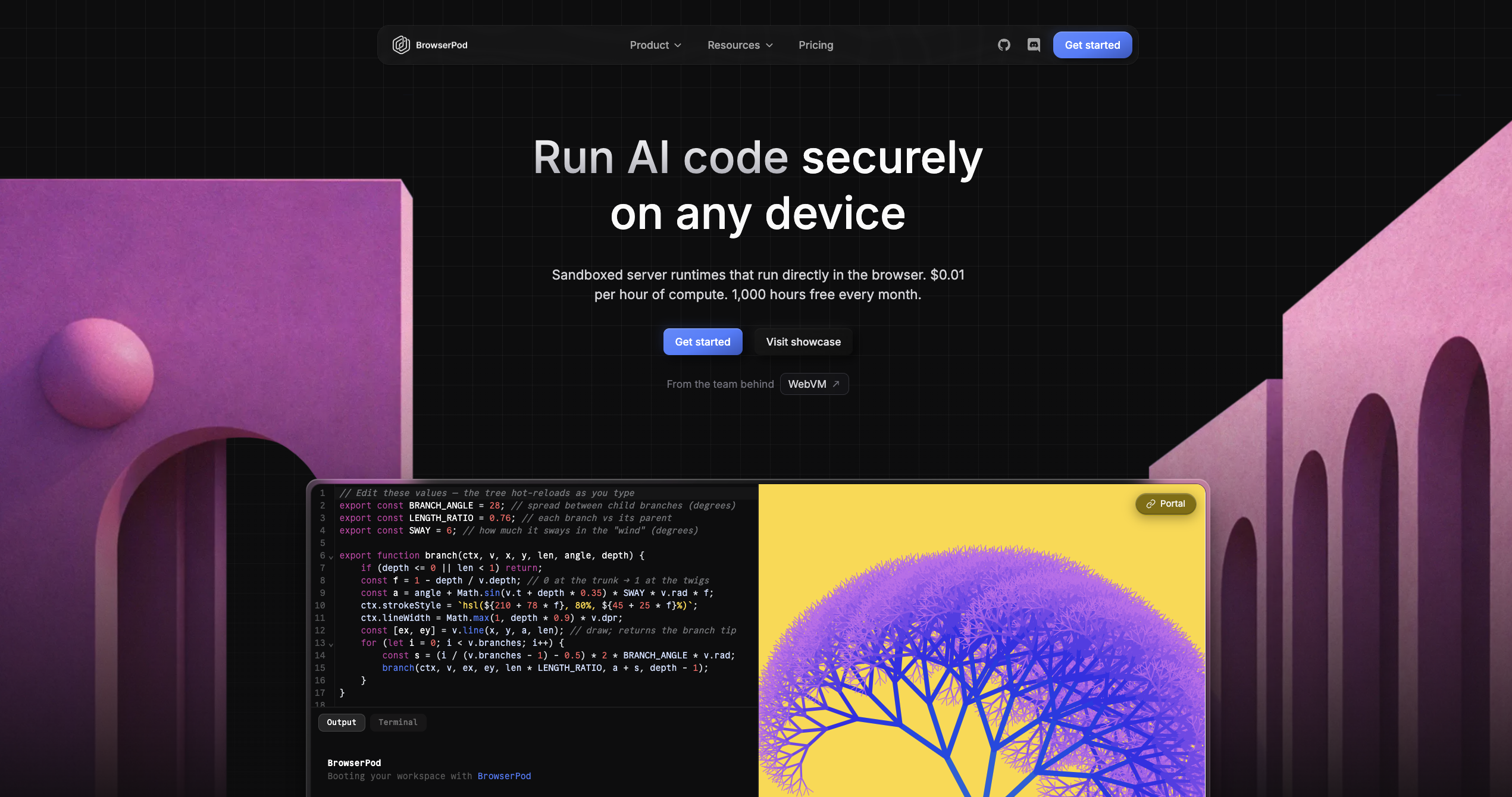
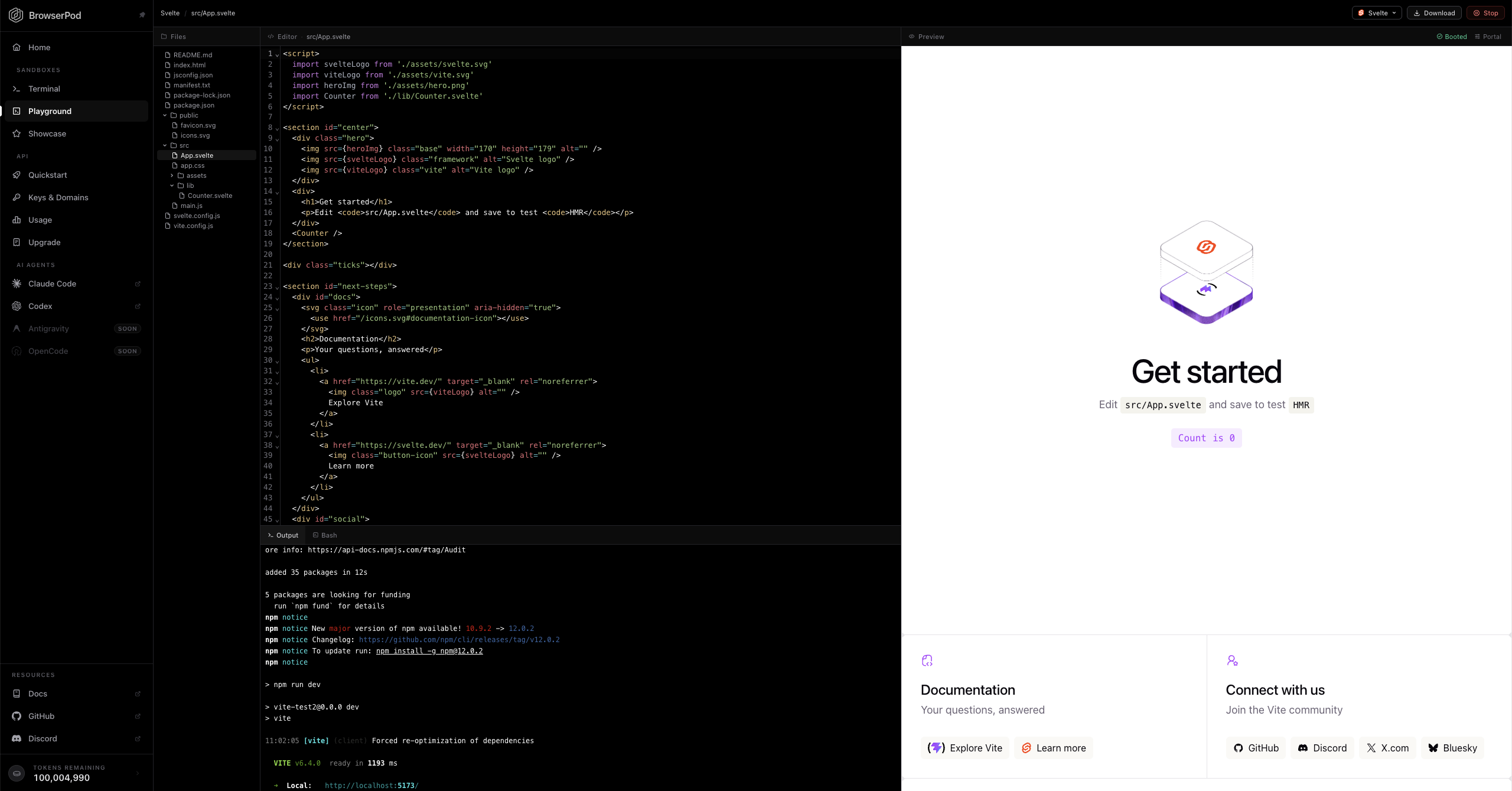
BrowserPod is a Wasm-based virtual machine for the browser. It provides a sandboxed Linux kernel at a fraction of cloud sandbox costs to run AI code and coding agents like Claude Code.
Features
- Kernel: BrowserPod compiles full native runtimes to WebAssembly, targeting a Linux-compliant syscall interface rather than a limited JavaScript shim.
- Sandbox: BrowserPod runs directly in the browser, inheriting the browser's security boundary with controlled networking to prevent dangerous ingress or egress.
- Runtimes: In-browser runtimes for Node.js, Rust, Python, Ruby and Go.
- Filesystem: A block-based streaming virtual filesystem provides full POSIX compatibility. Disk images are streamed on-demand, and any file changes stay local to the browser session using either Indexed.db or the Origin Private File System (OFPS).
- Ports: Ports that open in BrowserPod can be shared via a temporary private URL. This secure URL routes external traffic directly to the service running in the browser, enabling live previews and collaboration without any backend servers.
Use Cases
- AI developers needing secure sandboxes for generated code execution.
- EdTech platforms building interactive, browser-based coding tutorials.
- Software teams creating web-based IDEs and development tools.
- Privacy-focused applications requiring local data processing.
- Vibe coding platforms that need to run AI agents and code in a sandbox.
Comments


Innovation often comes from making complex tools more accessible, whether that means running powerful development environments directly in a browser or simplifying hands-on creative projects. While Browser Pod demonstrates how modern technology can remove barriers for developers, Mod Podge has long helped DIY enthusiasts bring their ideas to life with an easy-to-use all-in-one glue, sealer, and finish trusted by crafters for generations. Visit now https://modpodgestore.com/

The Wasm angle on BrowserPod is what caught me, especially compiling native runtimes to a Linux-compliant syscall interface instead of a JS shim. The streaming block-based filesystem that keeps changes in OPFS sounds like the hard part to get right. How does cold start feel for a Node or Python pod while the disk image is still streaming? Sharing an open port over a temporary private URL is a smart touch for previews.
A browser-based VM is a really clever distribution model - no install, no admin rights, just open a tab. Curious how BrowserPod handles persistent state between sessions, and whether the VM images can be exported for local use. Also, is there a way to share a running session with a collaborator without giving them full control?

== FreeTV Garden ==. FreeTV Garden is a web-based live television directory that helps users discover and watch free-to-air TV channels from more than 200 countries. The platform organizes channels by country and category, including news, sports, movies, music, kids, and entertainment. == Features == * 200+ countries * 1000+ live TV channels * No signup required * Mobile, desktop & Smart TV support * Multiple language support Official website: https://freetvgarden.com

BrowserPod is a really interesting approach to running isolated Linux environments directly in the browser. Using WebAssembly to create a sandboxed VM could make running AI coding agents and other code-heavy workloads much more accessible without the cost and complexity of traditional cloud sandboxes. The potential for browser-native development environments and AI agents is especially interesting. Definitely a project worth watching.

The detail that matters here is targeting a Linux-compliant syscall interface rather than a JavaScript shim — that is the difference between "runs a demo" and "runs the toolchain a real project actually needs." Shimmed environments fall over the moment something shells out or touches the filesystem in an unusual way. The streaming block-based filesystem is the part I would want to understand before building on it. Cold start is where in-browser runtimes usually disappoint: how much of a disk image has to land before a Node or Python process can begin, and is that cached across sessions or re-fetched each time? Also curious what "controlled networking" means concretely. Inheriting the browser's security boundary is a genuine advantage over a cloud sandbox, but agents want outbound HTTP — where is the line drawn, and can the host page tighten it?

The distribution model here is genuinely innovative - running a Linux kernel in WASM directly in the browser removes the complexity of containerization and cloud VM provisioning. For AI agent platforms and code execution, that's a meaningful advantage because agents can spin up sandboxes without waiting for cloud provisioning. The streaming filesystem for demand-loaded disk images is the engineering challenge that separates this from other browser VMs. Inherited browser security + controlled networking is a cleaner isolation boundary than shimming a JS runtime.

BrowserPod Your product has strong potential, but I found a few key improvements that could make it even better. I'd love to share my feedback and suggestions—please contact me at [email protected].

Streaming disk images on demand with changes kept local in OPFS is a clever split — how big is the initial pull before a typical image is interactive on a slow connection? And on the shared-port URLs: since external traffic routes to a service running in a tab, what happens when the browser throttles or freezes that tab (mobile Safari especially) — does the tunnel die, or do you buffer and reconnect? Asking because tab lifecycle is where every "no backend" architecture I've shipped ended up spending its complexity budget.

Premium Products



































Sponsors
Buy

Awards
View all
Awards
View allMakers

Makers
Comments
Innovation often comes from making complex tools more accessible, whether that means running powerful development environments directly in a browser or simplifying hands-on creative projects. While Browser Pod demonstrates how modern technology can remove barriers for developers, Mod Podge has long helped DIY enthusiasts bring their ideas to life with an easy-to-use all-in-one glue, sealer, and finish trusted by crafters for generations. Visit now https://modpodgestore.com/
The Wasm angle on BrowserPod is what caught me, especially compiling native runtimes to a Linux-compliant syscall interface instead of a JS shim. The streaming block-based filesystem that keeps changes in OPFS sounds like the hard part to get right. How does cold start feel for a Node or Python pod while the disk image is still streaming? Sharing an open port over a temporary private URL is a smart touch for previews.
A browser-based VM is a really clever distribution model - no install, no admin rights, just open a tab. Curious how BrowserPod handles persistent state between sessions, and whether the VM images can be exported for local use. Also, is there a way to share a running session with a collaborator without giving them full control?
== FreeTV Garden ==. FreeTV Garden is a web-based live television directory that helps users discover and watch free-to-air TV channels from more than 200 countries. The platform organizes channels by country and category, including news, sports, movies, music, kids, and entertainment. == Features == * 200+ countries * 1000+ live TV channels * No signup required * Mobile, desktop & Smart TV support * Multiple language support Official website: https://freetvgarden.com
BrowserPod is a really interesting approach to running isolated Linux environments directly in the browser. Using WebAssembly to create a sandboxed VM could make running AI coding agents and other code-heavy workloads much more accessible without the cost and complexity of traditional cloud sandboxes. The potential for browser-native development environments and AI agents is especially interesting. Definitely a project worth watching.
The detail that matters here is targeting a Linux-compliant syscall interface rather than a JavaScript shim — that is the difference between "runs a demo" and "runs the toolchain a real project actually needs." Shimmed environments fall over the moment something shells out or touches the filesystem in an unusual way. The streaming block-based filesystem is the part I would want to understand before building on it. Cold start is where in-browser runtimes usually disappoint: how much of a disk image has to land before a Node or Python process can begin, and is that cached across sessions or re-fetched each time? Also curious what "controlled networking" means concretely. Inheriting the browser's security boundary is a genuine advantage over a cloud sandbox, but agents want outbound HTTP — where is the line drawn, and can the host page tighten it?
The distribution model here is genuinely innovative - running a Linux kernel in WASM directly in the browser removes the complexity of containerization and cloud VM provisioning. For AI agent platforms and code execution, that's a meaningful advantage because agents can spin up sandboxes without waiting for cloud provisioning. The streaming filesystem for demand-loaded disk images is the engineering challenge that separates this from other browser VMs. Inherited browser security + controlled networking is a cleaner isolation boundary than shimming a JS runtime.
BrowserPod Your product has strong potential, but I found a few key improvements that could make it even better. I'd love to share my feedback and suggestions—please contact me at [email protected].
Streaming disk images on demand with changes kept local in OPFS is a clever split — how big is the initial pull before a typical image is interactive on a slow connection? And on the shared-port URLs: since external traffic routes to a service running in a tab, what happens when the browser throttles or freezes that tab (mobile Safari especially) — does the tunnel die, or do you buffer and reconnect? Asking because tab lifecycle is where every "no backend" architecture I've shipped ended up spending its complexity budget.
Premium Products
New to Fazier?

Find your next favorite product or submit your own. Made by @FalakDigital.
Copyright ©2026. All Rights Reserved