
One API for every model. Smart routing, automatic failover, usage analytics and prepaid billing. Swiss developed & hosted.
Features
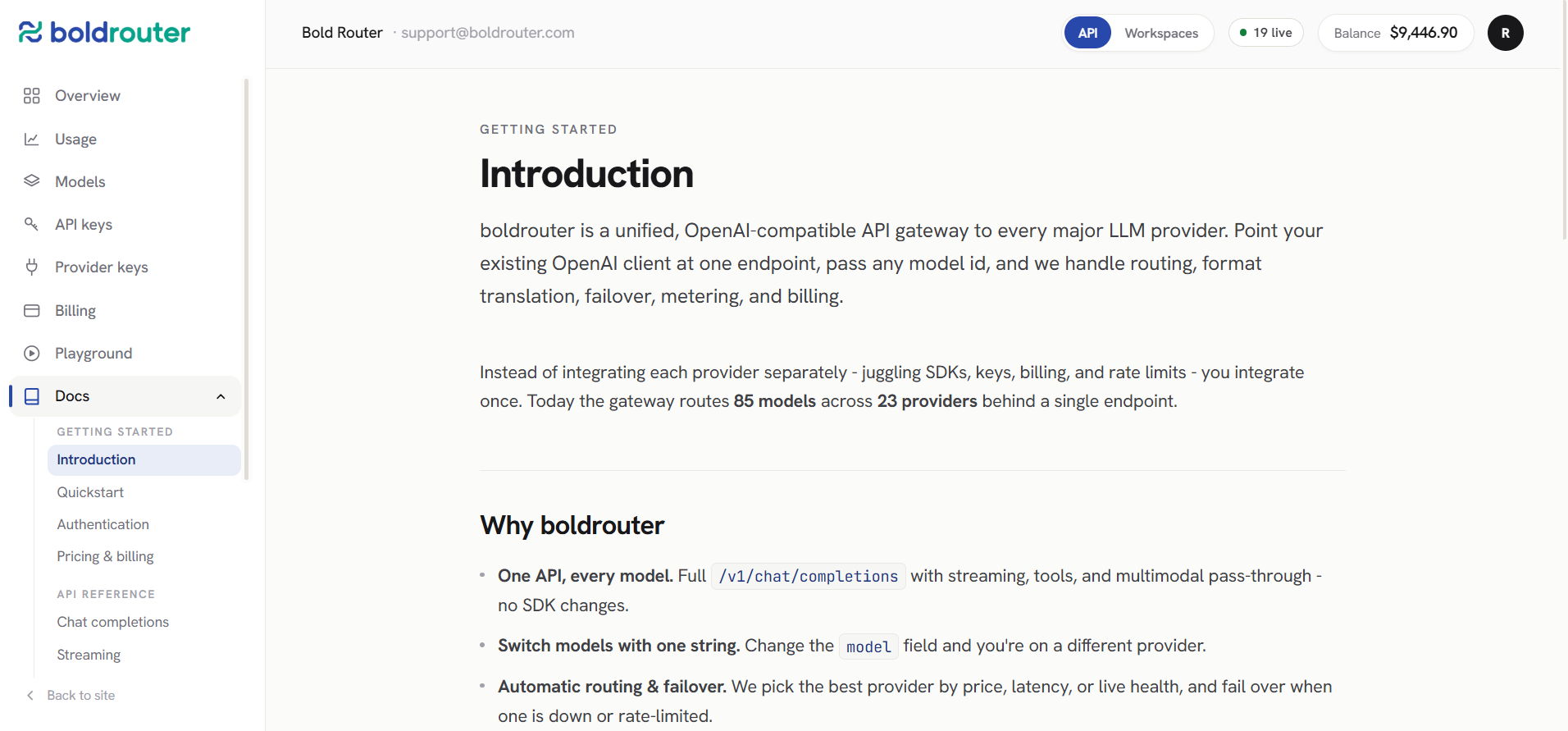
- Unified AI Gateway: Access leading AI models through a single OpenAI-compatible API.
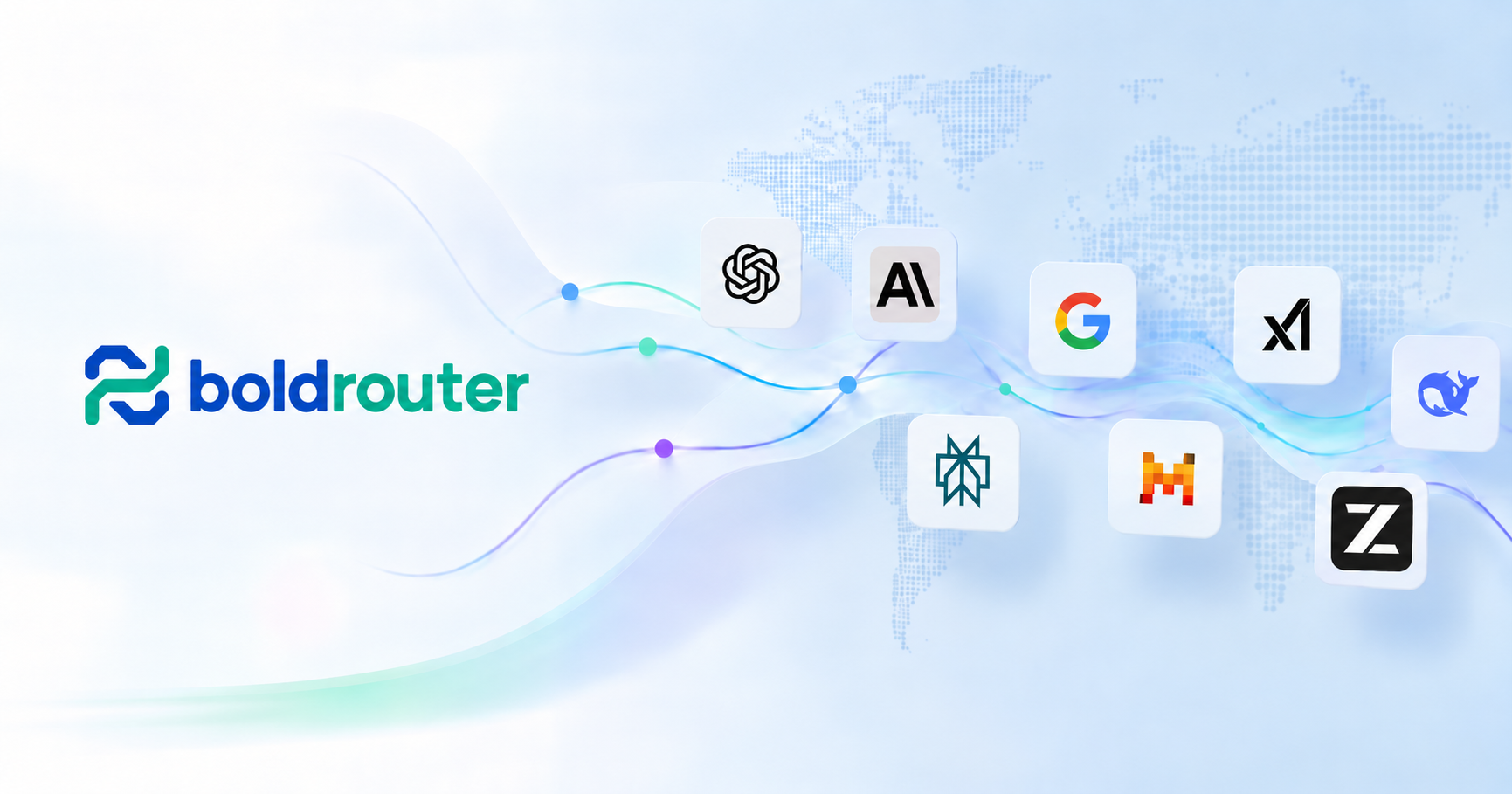
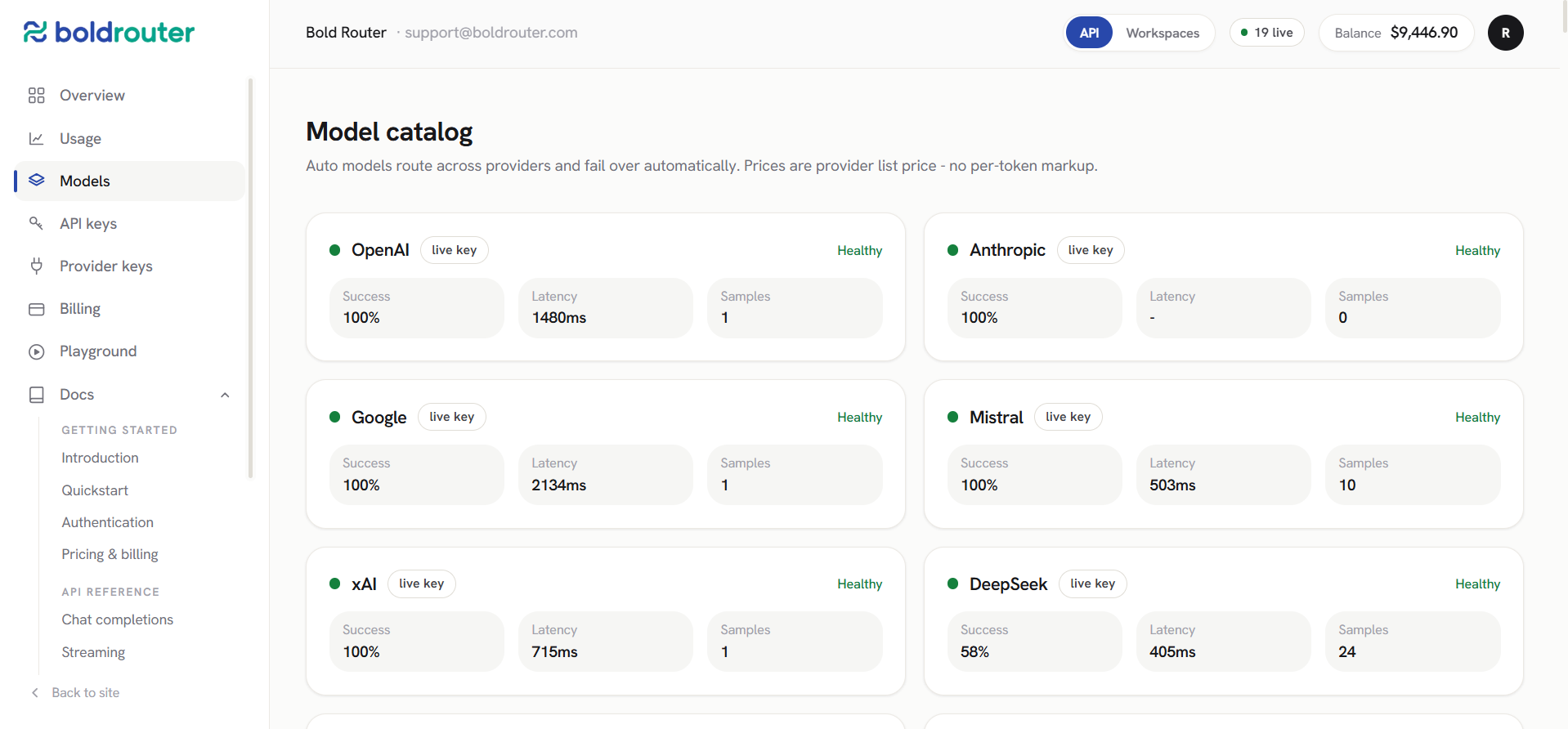
- Multi-Provider Access: Connect to OpenAI, Anthropic, Google, xAI, DeepSeek, Mistral, Perplexity, Z.ai, and more.
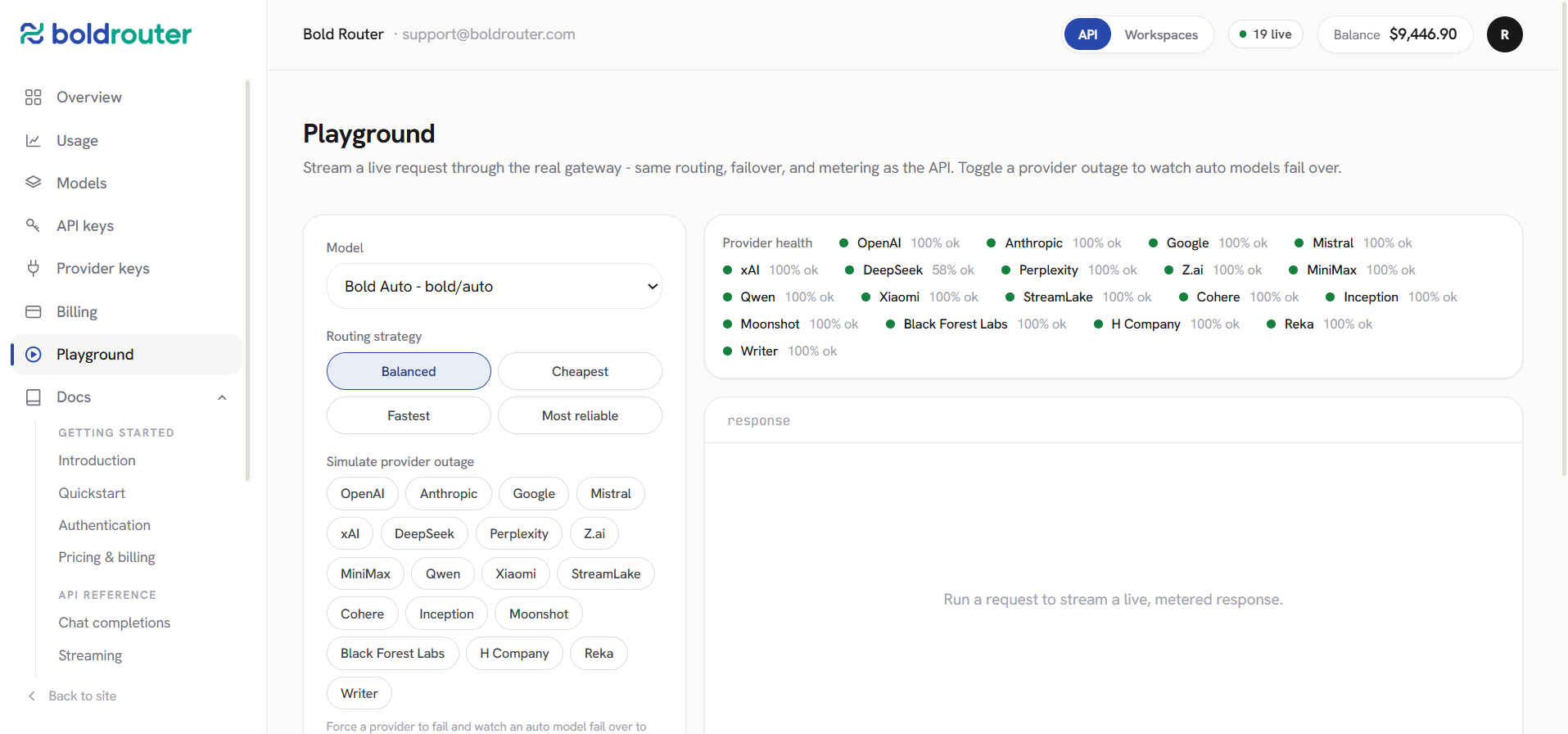
- Intelligent Model Routing: Automatically route requests based on cost, performance, latency, and availability.
- Automatic Failover: Switch between providers and models when outages, errors, or rate limits occur.
- Cost Optimization: Compare model pricing and optimize AI spending.
- Multi-Model Intelligence: Consensus, evaluation, and decision-making capabilities across multiple AI models.
- Privacy & Anonymization: Protect sensitive information through optional prompt anonymization.
- Unified Billing: One prepaid balance across multiple AI providers.
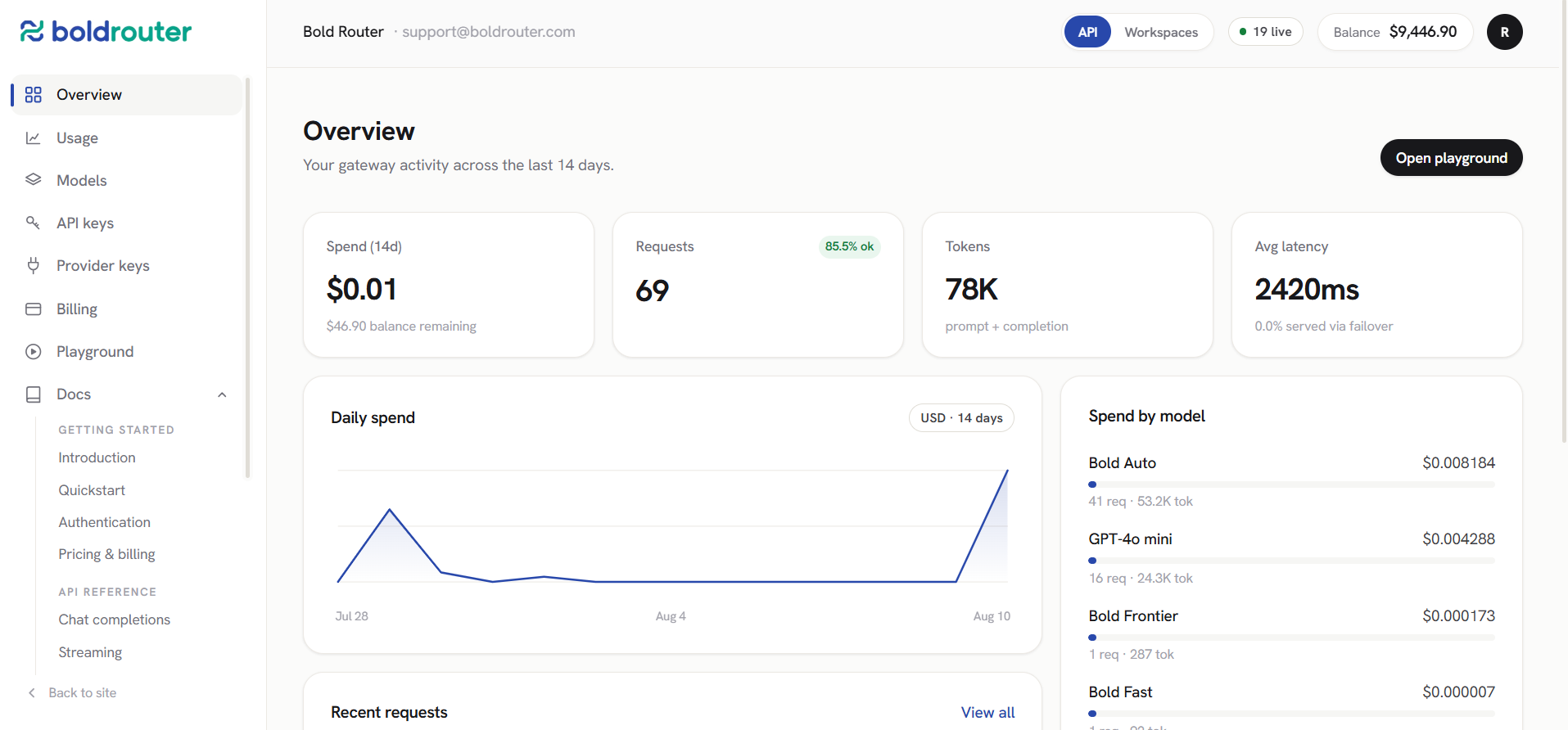
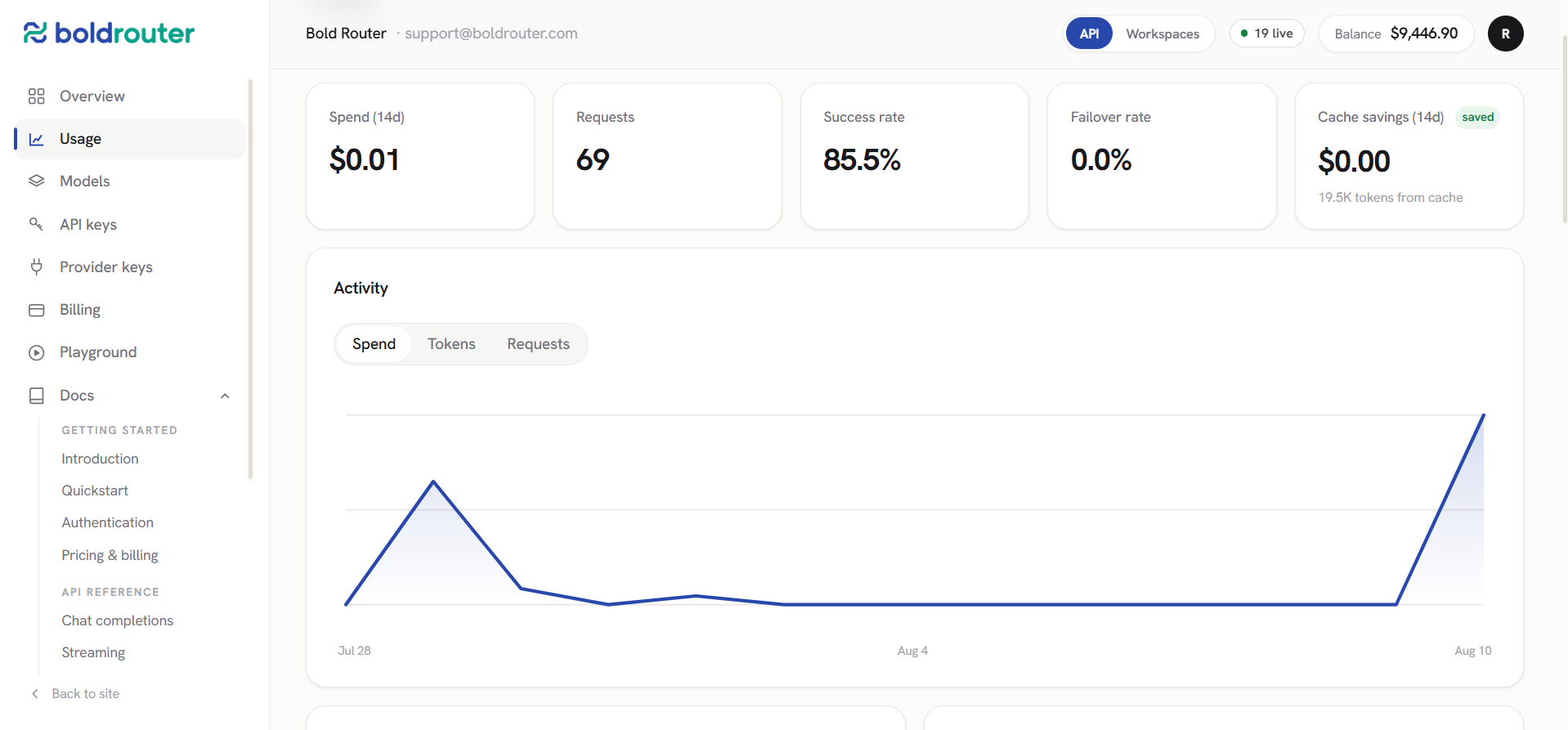
- Usage Analytics: Track requests, token consumption, model usage, and costs.
- Spend Management: Set workspace budgets, spending caps, and usage limits.
- API Key Management: Create and manage scoped API keys with granular access controls.
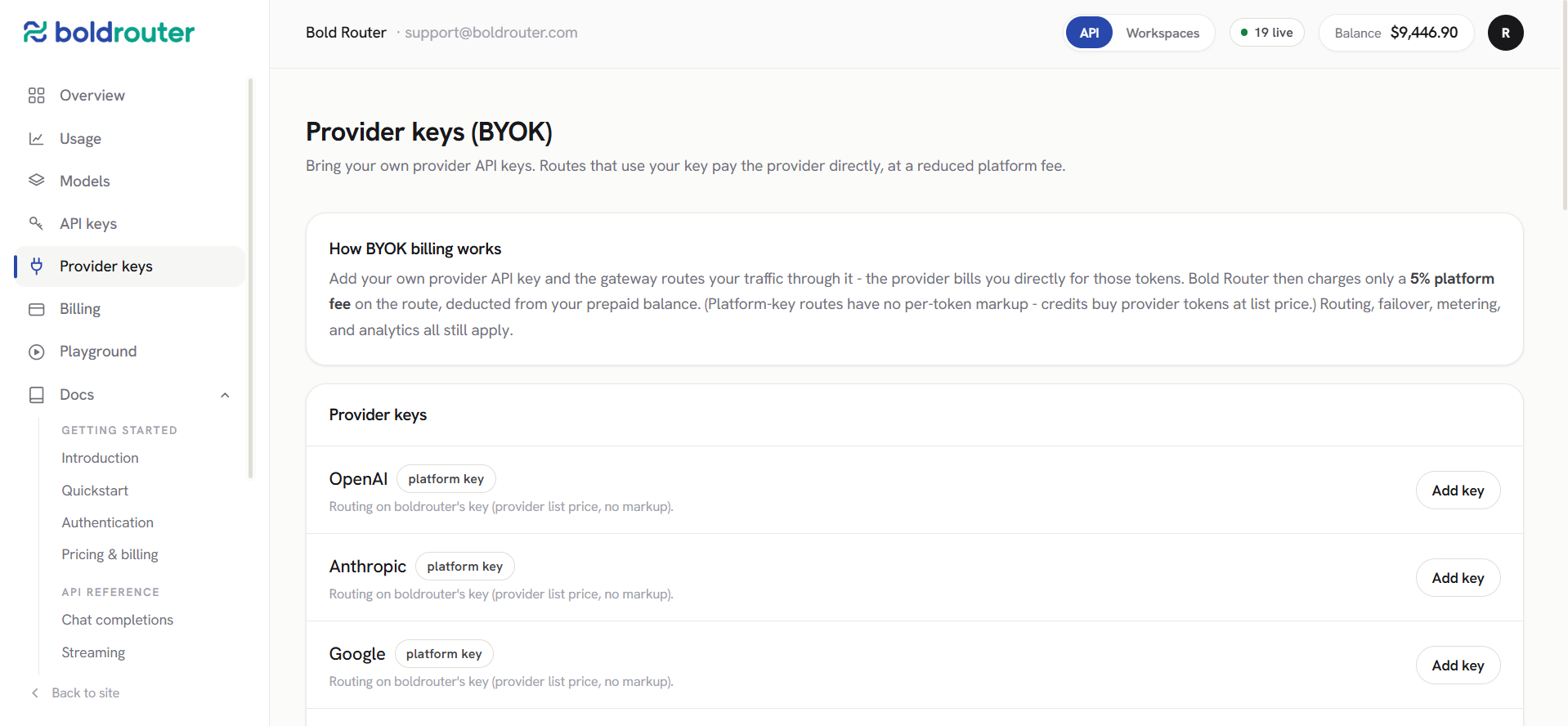
- Bring Your Own Key (BYOK): Integrate existing AI provider API keys.
- OpenAI-Compatible API: Integrate with existing applications and development frameworks.
- Streaming & Function Calling: Support real-time responses and tool-enabled AI applications.
- Multimodal AI Support: Access supported text, vision, and other multimodal models.
- Developer Integrations: Connect with AI development tools and automation frameworks.
- Enterprise-Ready: Centralized management, governance, and organizational controls.
- Swiss-Developed Infrastructure: Built and operated by Cybrient Technologies SA, Switzerland.
Use Cases
- AI-Powered Applications: Build and scale applications using multiple AI models through a single API.
- Multi-Model Integration: Access and switch between leading AI models without modifying application code.
- AI Cost Optimization: Reduce inference costs by routing requests to cost-effective models.
- High-Availability AI Services: Maintain reliability through automatic provider failover.
- Enterprise AI Adoption: Centralize AI access, governance, billing, and usage across departments.
- AI Agents & Automation: Power autonomous AI agents, intelligent workflows, and automated business processes.
- Multi-Model Consensus: Compare responses from multiple AI models to improve accuracy and decision-making.
- AI Model Benchmarking: Evaluate models based on performance, quality, latency, and pricing.
- AI Chatbots & Virtual Assistants: Build customer support bots, internal assistants, and conversational AI applications.
- Retrieval-Augmented Generation (RAG): Connect enterprise knowledge bases to AI models for context-aware responses.
- AI Development & Prototyping: Experiment with different models through a unified integration.
- SaaS AI Integration: Embed AI capabilities into existing software products and platforms.
- Sensitive Data Protection: Anonymize confidential information before sending requests to AI providers.
- AI Spending Management: Monitor token consumption, enforce budgets, and allocate costs across teams.
- Vendor Independence: Avoid dependence on a single AI provider through provider-agnostic infrastructure.
- AI Workflow Orchestration: Route tasks to specialized AI models based on capabilities and requirements.
- Content Generation & Analysis: Generate, summarize, translate, and analyze text and documents.
- Developer Tools & Coding Assistants: Integrate AI models into coding environments, IDEs, and development workflows.
- Enterprise AI Consolidation: Replace fragmented integrations and billing systems with a unified AI gateway.
- AI-Powered Robotics: Enable intelligent robots with AI-assisted reasoning, task planning, and natural language interaction.
- Autonomous Drones: Support AI-assisted mission planning, visual analysis, and operational decision-making.
- Industrial Automation: Integrate AI intelligence into manufacturing, robotic inspection, and production workflows.
- Computer Vision & Image Analysis: Process and interpret images from cameras, robots, drones, and connected devices.
- Robotic Decision Support: Leverage multiple AI models to evaluate situations and recommend actions.
- Drone Fleet Management: Support intelligent mission coordination, operational analysis, and fleet reporting.
- Autonomous Vehicles: Provide AI-assisted contextual reasoning, route planning, and decision support.
- Smart Warehouses & Logistics: Power warehouse robotics, intelligent inventory systems, and automated logistics.
- Predictive Maintenance: Analyze equipment telemetry and sensor data to identify anomalies and maintenance needs.
- Human-Robot Interaction: Enable robots to understand natural language instructions and interact intelligently with humans.
- Agricultural Robotics: Support crop monitoring, agricultural drone imagery analysis, and precision farming.
- Security & Surveillance: Analyze authorized monitoring data from cameras, robotic platforms, and drones.
- IoT & Edge AI: Connect smart devices and edge systems to cloud-based AI models for advanced analysis and reasoning.
- Healthcare & Life Sciences: Support medical research, document analysis, clinical administrative workflows, and AI-assisted applications.
- Financial Services & FinTech: Power financial analysis, document processing, fraud investigation, and intelligent financial assistants.
- Legal & Compliance Automation: Analyze contracts, regulatory documents, and compliance requirements.
- Education & Research: Develop AI tutors, research assistants, and multi-model experimentation platforms.
- E-Commerce & Retail: Enable personalized shopping assistants, product recommendations, and intelligent customer interactions.
- Media & Entertainment: Power content analysis, localization, creative workflows, and AI-assisted production.
- Global AI Infrastructure: Connect applications worldwide to leading AI providers through a centralized, Swiss-developed gateway.
For robotics, drones, vehicles, and other physical systems, Boldrouter supports AI intelligence and decision support rather than safety-critical real-time control.

Comments


The failover point is the most convincing part for me: a single API is convenient, but reliability is what teams actually feel when a provider has an outage. I would like to know how routing decisions are explained in the analytics, so a team can see why a cheaper or faster model was chosen for a given request.


The combination that stands out is routing by cost, performance and latency plus automatic failover, rather than just giving access to many models through one OpenAI-compatible API. For teams, workspace budgets and a single prepaid balance are the practical controls that usually matter most. How configurable is the routing — can a team weight cost over latency, or pin a task to one provider — and does failover also work for streaming responses that have already started?
Smart routing by cost, performance, and latency plus automatic failover is exactly the combo smaller teams need — juggling SDKs, keys, and billing across providers is a real tax on shipping. The Swiss-hosted privacy angle and BYOK support stand out too. Do you support streaming failover, i.e. switching providers mid-response if one drops?
Automatic failover across providers plus routing by cost and latency is exactly what makes a gateway worth adopting. When a request fails over to a different model, is the response format normalized so function-calling behavior stays consistent? A per-request log showing why a given route was chosen would be a helpful addition for debugging.


How does failover behave once a streaming response has already started? If a provider drops halfway through, do you retry on another model and restart the stream, or return the partial output with an error? Also curious whether tool call formats get normalized across providers, since that is usually where switching models silently breaks an agent.

Boldrouter looks like an interesting solution for businesses and developers working with AI. I particularly like the idea of accessing multiple AI providers through one API instead of managing separate integrations, billing, and usage dashboards. Features like intelligent model routing, automatic failover, cost optimization, and privacy controls make it especially useful for building reliable AI-powered applications. The support for AI agents, automation, and even robotics-related decision support also gives it a wide range of potential applications. Overall, it’s a promising approach to making AI integration more flexible, manageable, and scalable.

Having a single API for multiple AI models can simplify integration for development teams. I'm curious how Boldrouter handles data privacy and request logging when routing prompts across different models. The Swiss-hosted approach is an interesting differentiator for organizations with data residency requirements.






Impressive launch! 🚀 Bringing multiple AI models together through a single API is a valuable solution for developers. The intelligent routing, automatic failover and cost optimisation features really stand out. The Swiss-hosted infrastructure is another interesting advantage. Wishing the BoldRouter team continued success! 👏

For anyone working in the pest control industry, I recommend checking out this resource: https://pesttechresearch.com/. It offers practical calculators for estimating costs and evaluating business operations, along with detailed software comparisons and technology guides. If you're trying to compare pest control software, understand pricing, or find tools to improve efficiency and profitability, the website is worth bookmarking. Having these resources in one place can save considerable time when researching solutions for your business.

Premium Products
















































Sponsors
Buy

Awards
View all
Awards
View allMakers
Makers
Comments
The failover point is the most convincing part for me: a single API is convenient, but reliability is what teams actually feel when a provider has an outage. I would like to know how routing decisions are explained in the analytics, so a team can see why a cheaper or faster model was chosen for a given request.
The combination that stands out is routing by cost, performance and latency plus automatic failover, rather than just giving access to many models through one OpenAI-compatible API. For teams, workspace budgets and a single prepaid balance are the practical controls that usually matter most. How configurable is the routing — can a team weight cost over latency, or pin a task to one provider — and does failover also work for streaming responses that have already started?
Smart routing by cost, performance, and latency plus automatic failover is exactly the combo smaller teams need — juggling SDKs, keys, and billing across providers is a real tax on shipping. The Swiss-hosted privacy angle and BYOK support stand out too. Do you support streaming failover, i.e. switching providers mid-response if one drops?
Automatic failover across providers plus routing by cost and latency is exactly what makes a gateway worth adopting. When a request fails over to a different model, is the response format normalized so function-calling behavior stays consistent? A per-request log showing why a given route was chosen would be a helpful addition for debugging.
How does failover behave once a streaming response has already started? If a provider drops halfway through, do you retry on another model and restart the stream, or return the partial output with an error? Also curious whether tool call formats get normalized across providers, since that is usually where switching models silently breaks an agent.
Boldrouter looks like an interesting solution for businesses and developers working with AI. I particularly like the idea of accessing multiple AI providers through one API instead of managing separate integrations, billing, and usage dashboards. Features like intelligent model routing, automatic failover, cost optimization, and privacy controls make it especially useful for building reliable AI-powered applications. The support for AI agents, automation, and even robotics-related decision support also gives it a wide range of potential applications. Overall, it’s a promising approach to making AI integration more flexible, manageable, and scalable.
Having a single API for multiple AI models can simplify integration for development teams. I'm curious how Boldrouter handles data privacy and request logging when routing prompts across different models. The Swiss-hosted approach is an interesting differentiator for organizations with data residency requirements.
Impressive launch! 🚀 Bringing multiple AI models together through a single API is a valuable solution for developers. The intelligent routing, automatic failover and cost optimisation features really stand out. The Swiss-hosted infrastructure is another interesting advantage. Wishing the BoldRouter team continued success! 👏
For anyone working in the pest control industry, I recommend checking out this resource: https://pesttechresearch.com/. It offers practical calculators for estimating costs and evaluating business operations, along with detailed software comparisons and technology guides. If you're trying to compare pest control software, understand pricing, or find tools to improve efficiency and profitability, the website is worth bookmarking. Having these resources in one place can save considerable time when researching solutions for your business.
Premium Products
New to Fazier?

Find your next favorite product or submit your own. Made by @FalakDigital.
Copyright ©2026. All Rights Reserved