
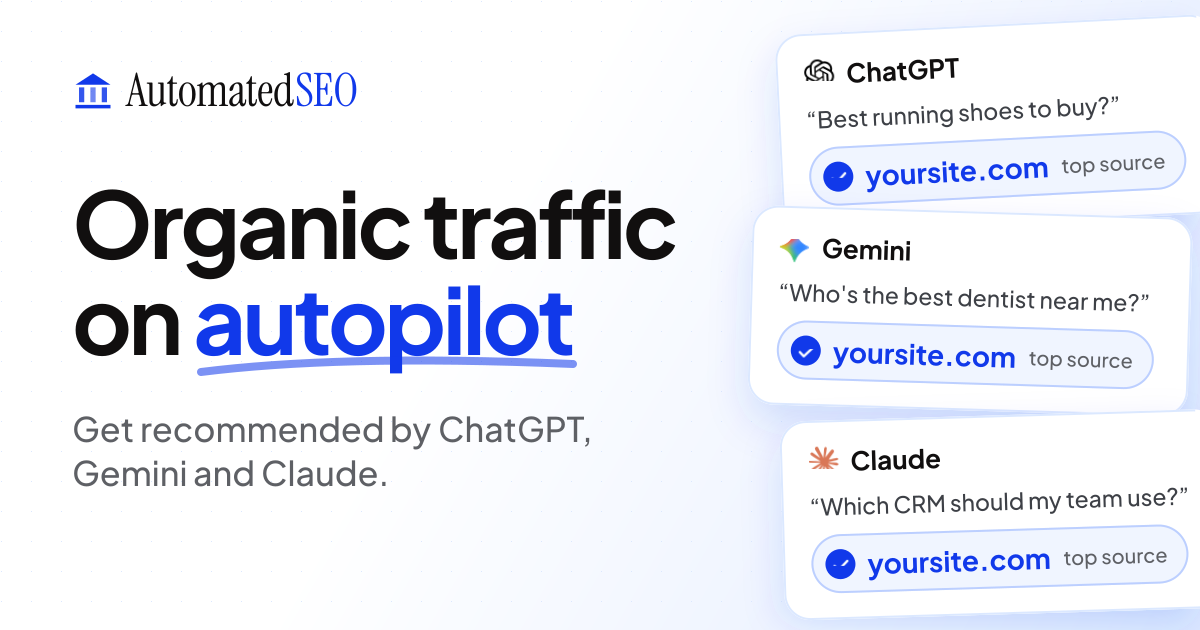
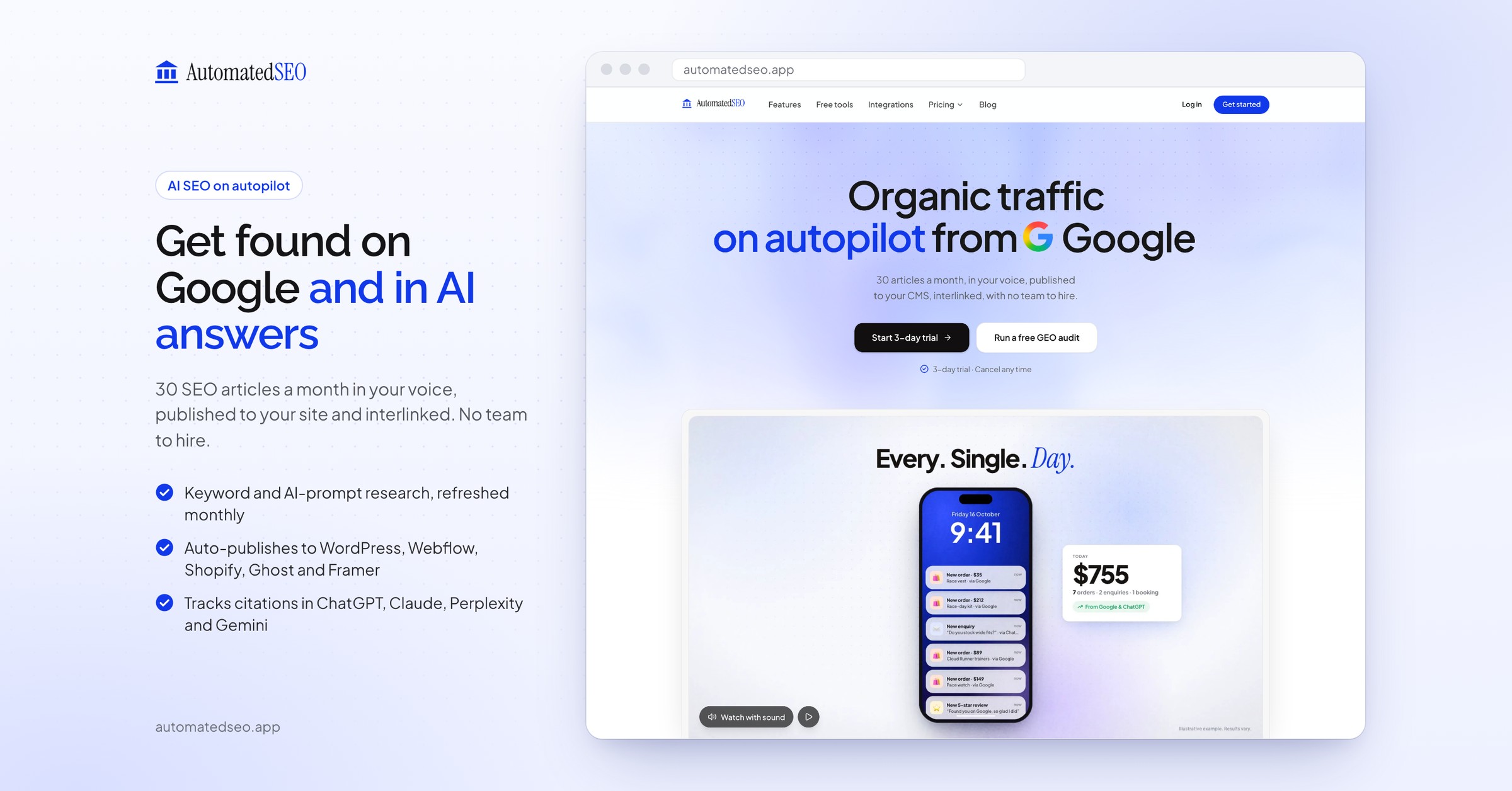
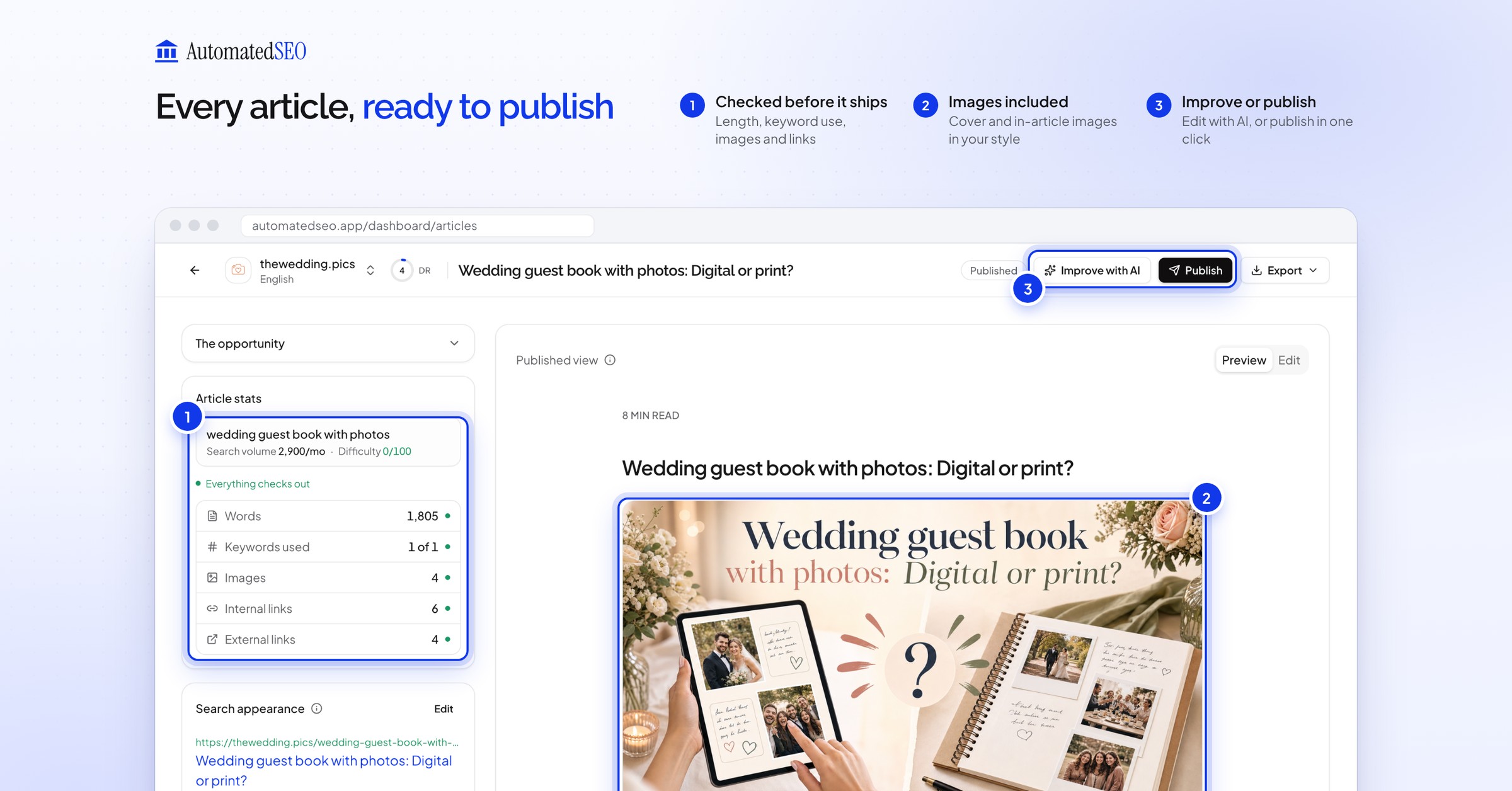
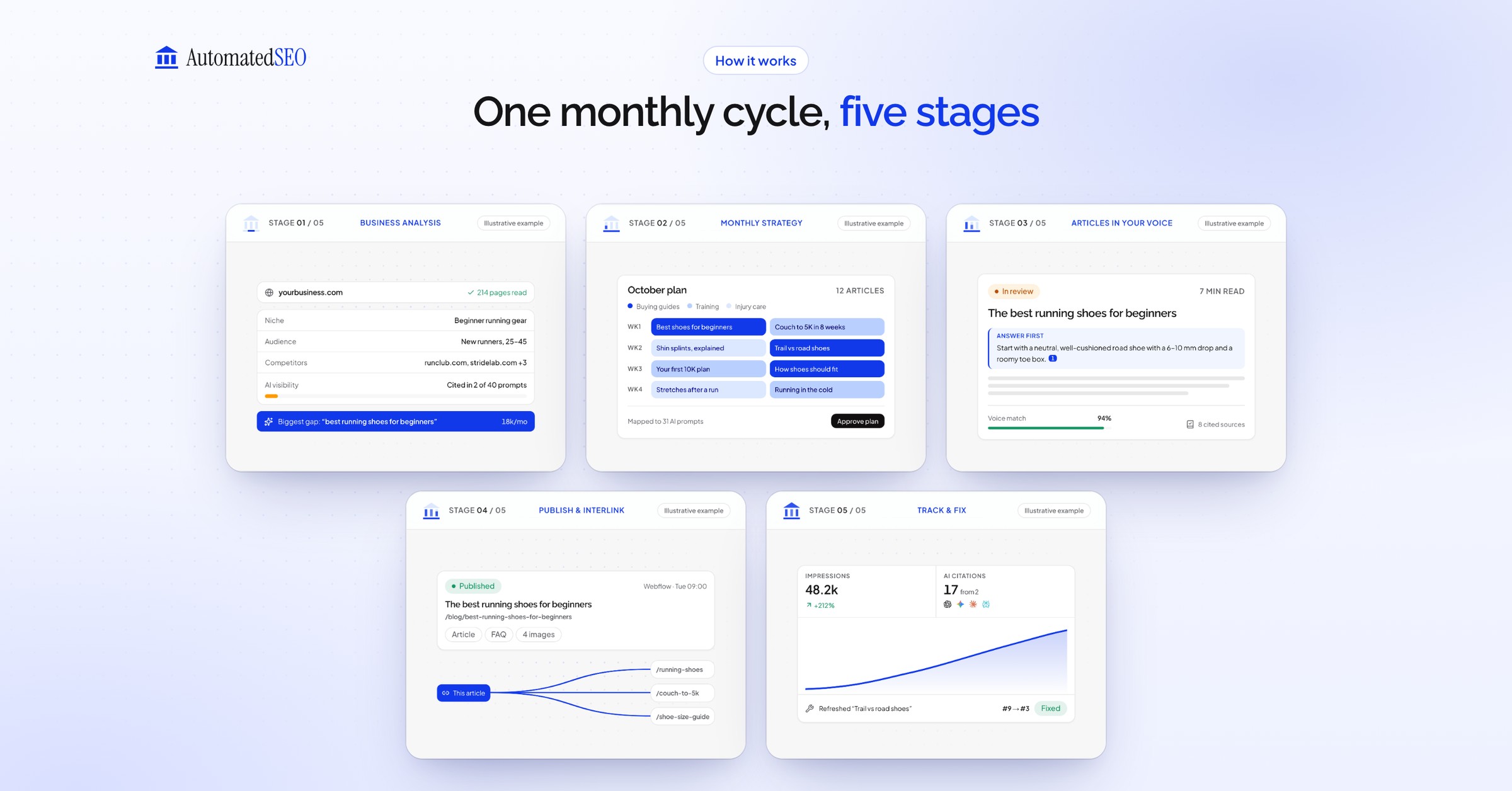
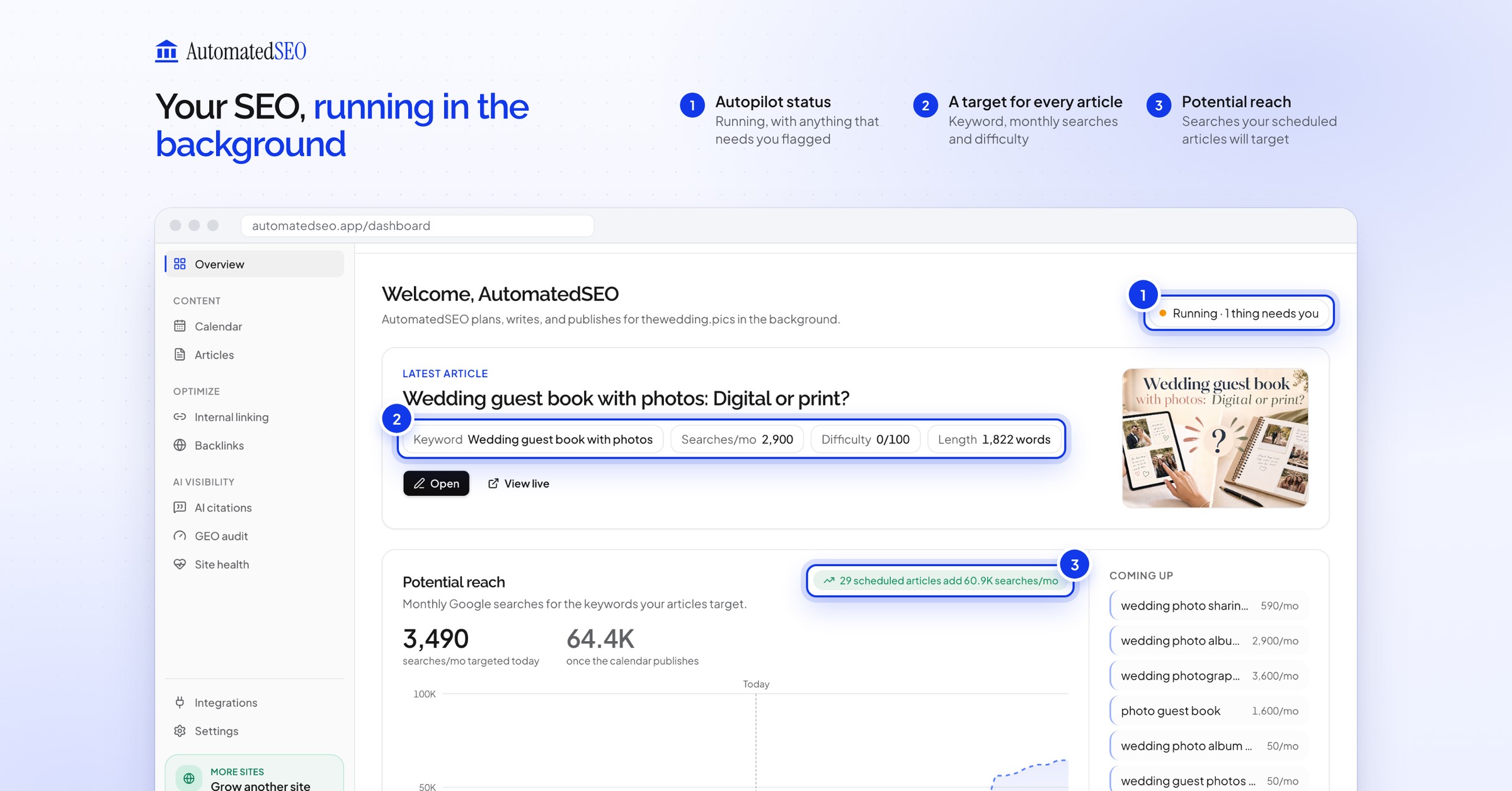
I'm launching AutomatedSEO after years of growing my own products through organic search. Every month it researches what people in your niche search for, writes 30 articles in your own voice and publishes them to WordPress, Webflow, Shopify, Ghost or Framer, interlinked and with schema. It then tracks whether ChatGPT, Claude, Perplexity and Gemini cite you, and fixes the pages holding you back. $99 a month per site, with a 3-day trial. Cancel any time.
Features
• 30 researched articles every month
• Keyword and AI-prompt research
• Learns and writes in your brand voice
• Auto-publishes to WordPress, Webflow, Shopify, Ghost and Framer
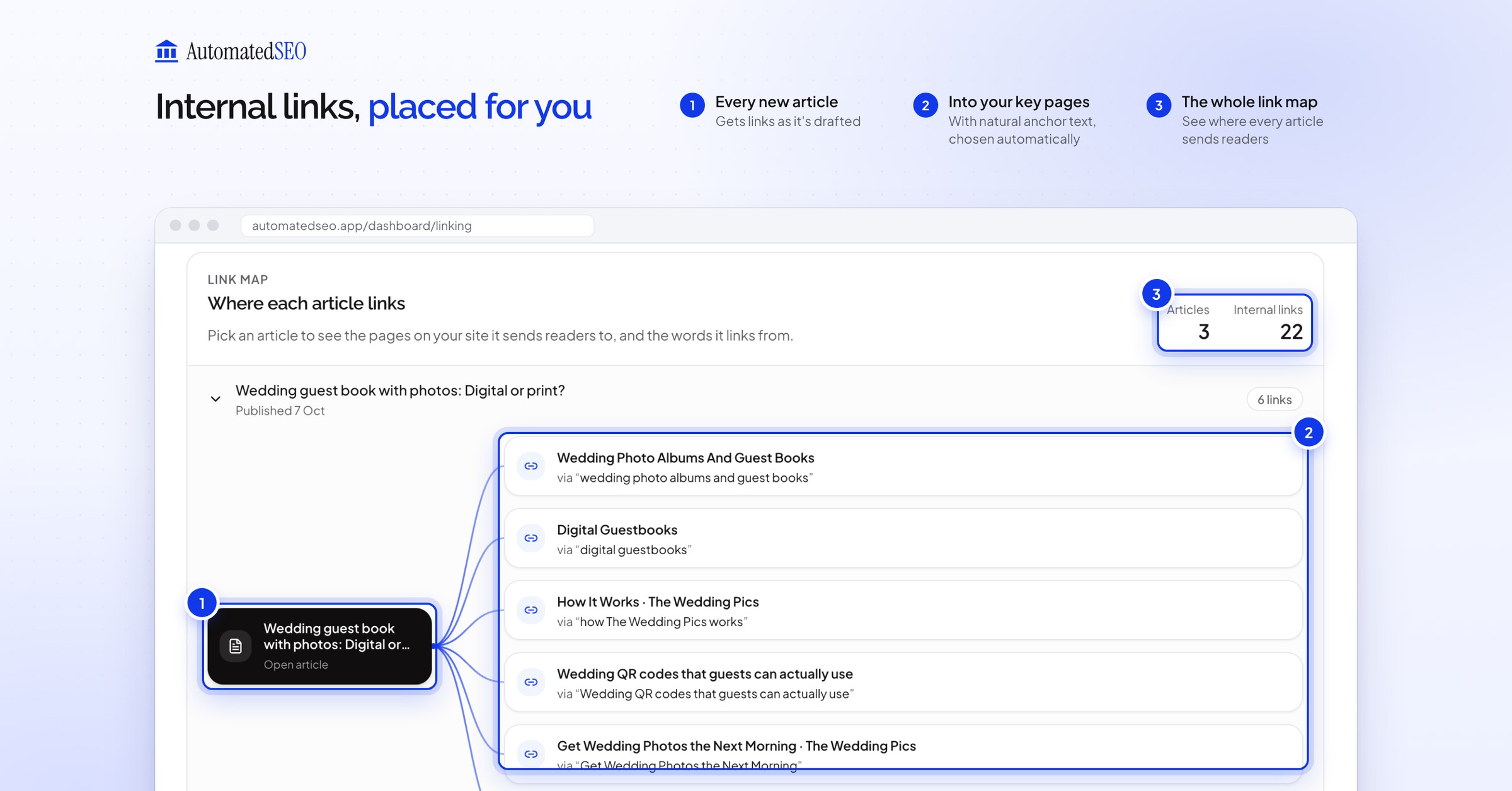
• Internal linking and contextual backlinks
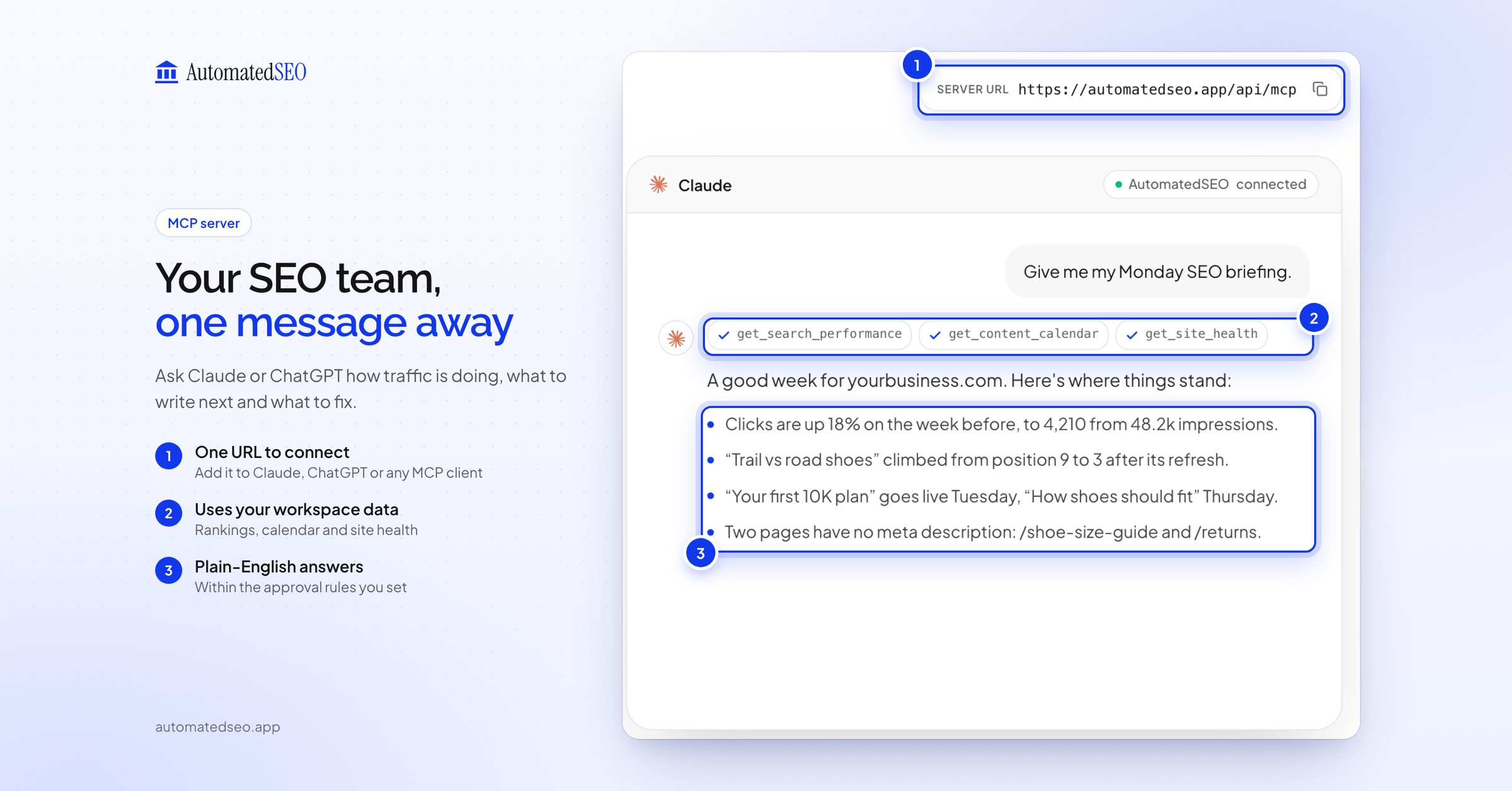
• AI citation tracking across ChatGPT, Claude, Perplexity and Gemini
• Technical SEO fixes
• Review mode or full autopilot
• 39 languages and 42 locales
• White-label plan for agencies
Use Cases
• SaaS founders who need consistent organic growth without hiring an SEO team
• Small businesses that know content works but never have time to write
• Online shops building traffic to product and category pages
• Marketing agencies delivering white-label SEO content at scale
• Teams improving visibility in both Google and AI-generated answers

Comments



The AI citation tracking across ChatGPT, Claude, Perplexity and Gemini is the standout feature here — most SEO tools still pretend AI answers don't exist, so measuring whether you're actually cited fills a real gap. The review mode vs full autopilot toggle is also a smart trust decision; content volume without editorial control is what burned people on earlier AI content tools. One question: how do you handle cannibalization when publishing 30 interlinked articles a month — is there automatic intent mapping to keep pages from competing with each other?

I’m launching AutomatedSEO after years of growing my own products through organic search. The process worked, but repeating the research, writing, internal linking and publishing every week ate too much time—so I built a product to run it end to end. AutomatedSEO publishes 30 articles a month in your brand voice and tracks visibility across Google, ChatGPT, Claude, Perplexity and Gemini. I’d genuinely love feedback from founders and marketers who’ve struggled to keep SEO content consistent.
The AI-answers angle is the right one. What moved the needle for us: one page answering exactly one question, with the specific numbers and constraints written into the page instead of marketing language. Two tests worth adding if you do not have them: whether pages get cited for the 'is X worth it' prompts and not only 'what is X', and whether a citation survives a re-crawl after you edit the page - in our experience answers stick to the version that was first cited. Does your tracking show the exact prompt that produced each citation, or aggregate visibility per engine?
SEO automation is useful, but the ranking question nobody asks early enough: does the content answer the question a searcher actually has, or just hit keyword density? If you can add a factual-consistency pass (every claim traces to a source file), this would stand out from the usual auto-generated content tools.
Full autopilot across 30 articles a month is the part I'd watch closely - at that volume the AI-citation tracking (ChatGPT/Claude/Perplexity/Gemini) matters more than the publish count, since getting cited depends on the page actually answering the query better than what's already ranking, not just existing. Do you have a sense yet of what fraction of the 30 monthly articles end up getting cited versus just indexed?

Thirty niche articles a month in your brand voice, auto-published with schema and internal links, then checked against ChatGPT, Claude, Perplexity and Gemini citations is a full SEO loop. When the writing and citation-check model calls grow with each site, PZERO at pzero.studio sells leftover capacity.


Publishing 30 articles a month is impressive, but the real value is knowing which content actually brings qualified traffic and conversions. I like the focus on AI citation tracking alongside traditional SEO. One question: how does AutomatedSEO prevent content overlap and keyword cannibalization when publishing at that scale?



Publishing 30 articles a month is impressive, but the real value is knowing which content actually brings qualified traffic and conversions. I like the focus on AI citation tracking alongside traditional SEO. One question: how does AutomatedSEO prevent content overlap and keyword cannibalization when publishing at that scale?
Question from a fellow SEO tool builder: when you auto-generate on-page fixes (meta, schema, internal links), do you push them live directly or stage them for review first? Also curious whether you verify pages actually get indexed via the GSC API after changes ship — the publish-and-pray gap is where most automation falls short. Hands-off setup looks promising for solo founders.


The AI citation tracking across ChatGPT, Claude, Perplexity and Gemini is the feature that stands out most — everyone is still optimizing for Google while AI answers quietly eat the top-of-funnel. Two questions from someone who has shipped content programs: how does the AI-prompt research differ from keyword research in practice (are you mapping questions the models actually get asked?), and with 30 articles a month on autopilot, what guardrails exist to keep quality from drifting — is there a review gate before auto-publish, or does it learn from edits you make in review mode? The white-label plan for agencies makes a lot of sense for this category.


The AI citation tracking is the standout feature here — knowing whether ChatGPT, Claude, Perplexity and Gemini actually cite your pages closes a measurement loop most SEO tools still miss. The review-mode option before full autopilot is also a smart on-ramp for teams that don't trust automation with their brand voice yet. One question for the maker: with 30 articles a month auto-published, how do you keep internal linking from going stale as the site grows — does it re-link older posts when new ones go live?
The "review mode or full autopilot" choice is a good design decision — it acknowledges that trust in automated publishing is earned, not given. The AI citation tracking across four assistants is the standout feature here; at $99/month per site, the tracking alone could justify it for agencies. One question: when the system finds pages "holding you back," does it distinguish between thin content issues (fixable with rewrites) and structural issues (crawl/schema)? Knowing the category of the problem changes the fix workflow quite a bit.
Premium Products

















































Sponsors
Buy

Awards
View all
Awards
View allMakers
Makers
Comments
The AI citation tracking across ChatGPT, Claude, Perplexity and Gemini is the standout feature here — most SEO tools still pretend AI answers don't exist, so measuring whether you're actually cited fills a real gap. The review mode vs full autopilot toggle is also a smart trust decision; content volume without editorial control is what burned people on earlier AI content tools. One question: how do you handle cannibalization when publishing 30 interlinked articles a month — is there automatic intent mapping to keep pages from competing with each other?
I’m launching AutomatedSEO after years of growing my own products through organic search. The process worked, but repeating the research, writing, internal linking and publishing every week ate too much time—so I built a product to run it end to end. AutomatedSEO publishes 30 articles a month in your brand voice and tracks visibility across Google, ChatGPT, Claude, Perplexity and Gemini. I’d genuinely love feedback from founders and marketers who’ve struggled to keep SEO content consistent.
The AI-answers angle is the right one. What moved the needle for us: one page answering exactly one question, with the specific numbers and constraints written into the page instead of marketing language. Two tests worth adding if you do not have them: whether pages get cited for the 'is X worth it' prompts and not only 'what is X', and whether a citation survives a re-crawl after you edit the page - in our experience answers stick to the version that was first cited. Does your tracking show the exact prompt that produced each citation, or aggregate visibility per engine?
SEO automation is useful, but the ranking question nobody asks early enough: does the content answer the question a searcher actually has, or just hit keyword density? If you can add a factual-consistency pass (every claim traces to a source file), this would stand out from the usual auto-generated content tools.
Full autopilot across 30 articles a month is the part I'd watch closely - at that volume the AI-citation tracking (ChatGPT/Claude/Perplexity/Gemini) matters more than the publish count, since getting cited depends on the page actually answering the query better than what's already ranking, not just existing. Do you have a sense yet of what fraction of the 30 monthly articles end up getting cited versus just indexed?
Thirty niche articles a month in your brand voice, auto-published with schema and internal links, then checked against ChatGPT, Claude, Perplexity and Gemini citations is a full SEO loop. When the writing and citation-check model calls grow with each site, PZERO at pzero.studio sells leftover capacity.
Publishing 30 articles a month is impressive, but the real value is knowing which content actually brings qualified traffic and conversions. I like the focus on AI citation tracking alongside traditional SEO. One question: how does AutomatedSEO prevent content overlap and keyword cannibalization when publishing at that scale?
Publishing 30 articles a month is impressive, but the real value is knowing which content actually brings qualified traffic and conversions. I like the focus on AI citation tracking alongside traditional SEO. One question: how does AutomatedSEO prevent content overlap and keyword cannibalization when publishing at that scale?
Question from a fellow SEO tool builder: when you auto-generate on-page fixes (meta, schema, internal links), do you push them live directly or stage them for review first? Also curious whether you verify pages actually get indexed via the GSC API after changes ship — the publish-and-pray gap is where most automation falls short. Hands-off setup looks promising for solo founders.
The AI citation tracking across ChatGPT, Claude, Perplexity and Gemini is the feature that stands out most — everyone is still optimizing for Google while AI answers quietly eat the top-of-funnel. Two questions from someone who has shipped content programs: how does the AI-prompt research differ from keyword research in practice (are you mapping questions the models actually get asked?), and with 30 articles a month on autopilot, what guardrails exist to keep quality from drifting — is there a review gate before auto-publish, or does it learn from edits you make in review mode? The white-label plan for agencies makes a lot of sense for this category.
The AI citation tracking is the standout feature here — knowing whether ChatGPT, Claude, Perplexity and Gemini actually cite your pages closes a measurement loop most SEO tools still miss. The review-mode option before full autopilot is also a smart on-ramp for teams that don't trust automation with their brand voice yet. One question for the maker: with 30 articles a month auto-published, how do you keep internal linking from going stale as the site grows — does it re-link older posts when new ones go live?
The "review mode or full autopilot" choice is a good design decision — it acknowledges that trust in automated publishing is earned, not given. The AI citation tracking across four assistants is the standout feature here; at $99/month per site, the tracking alone could justify it for agencies. One question: when the system finds pages "holding you back," does it distinguish between thin content issues (fixable with rewrites) and structural issues (crawl/schema)? Knowing the category of the problem changes the fix workflow quite a bit.
Premium Products
New to Fazier?

Find your next favorite product or submit your own. Made by @FalakDigital.
Copyright ©2026. All Rights Reserved