ASO Atlas
App Store keywords you can actually win
Features
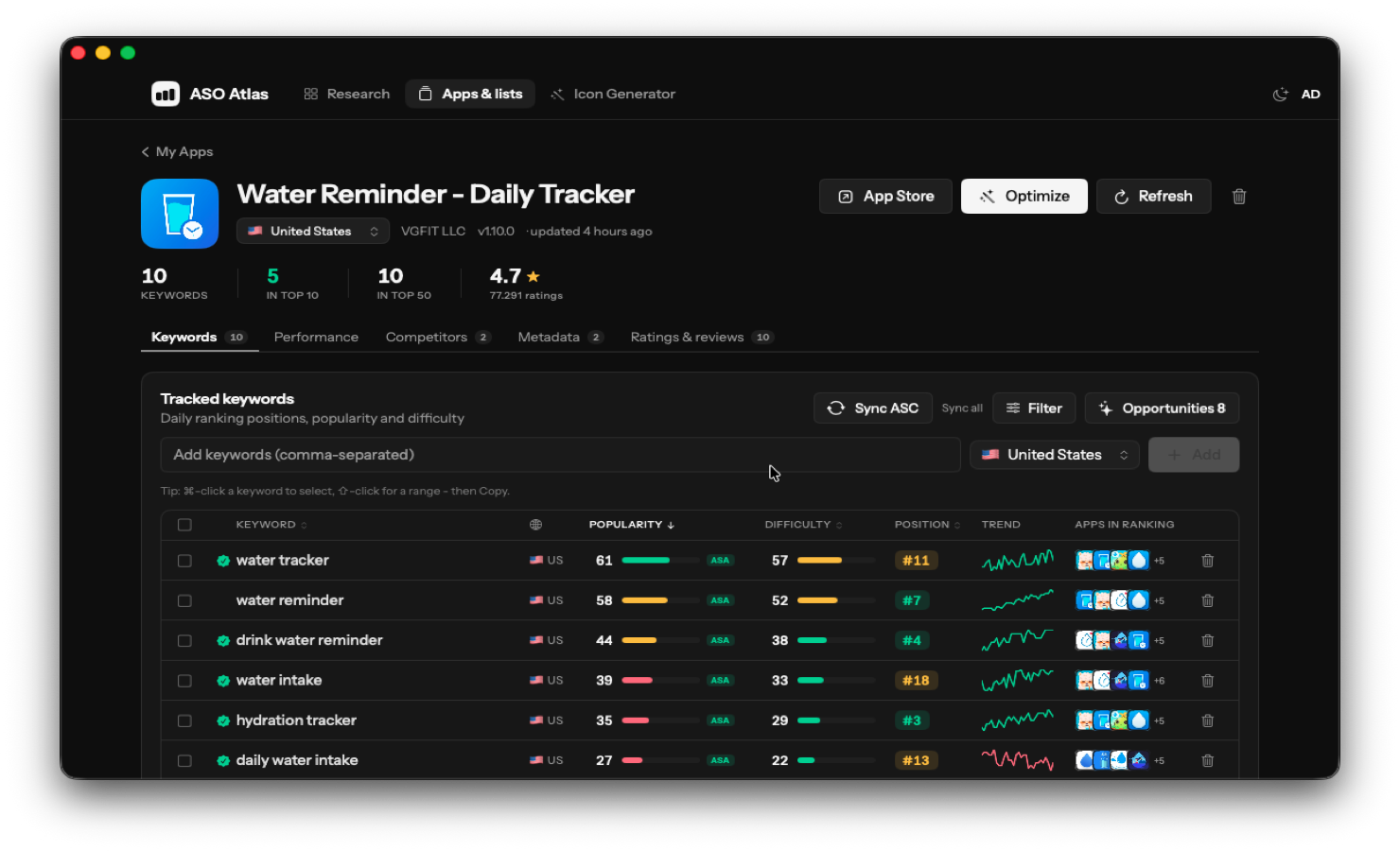
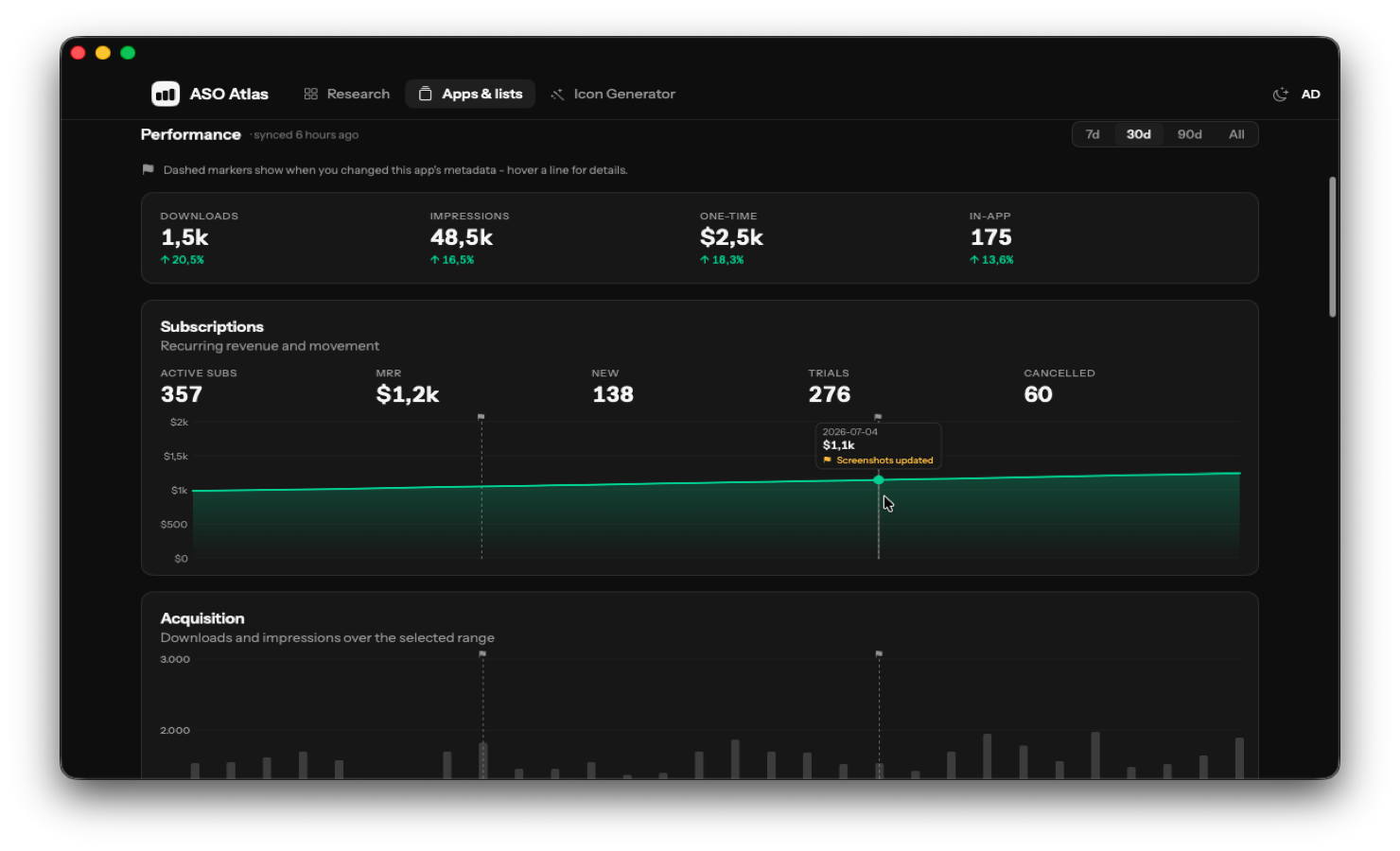
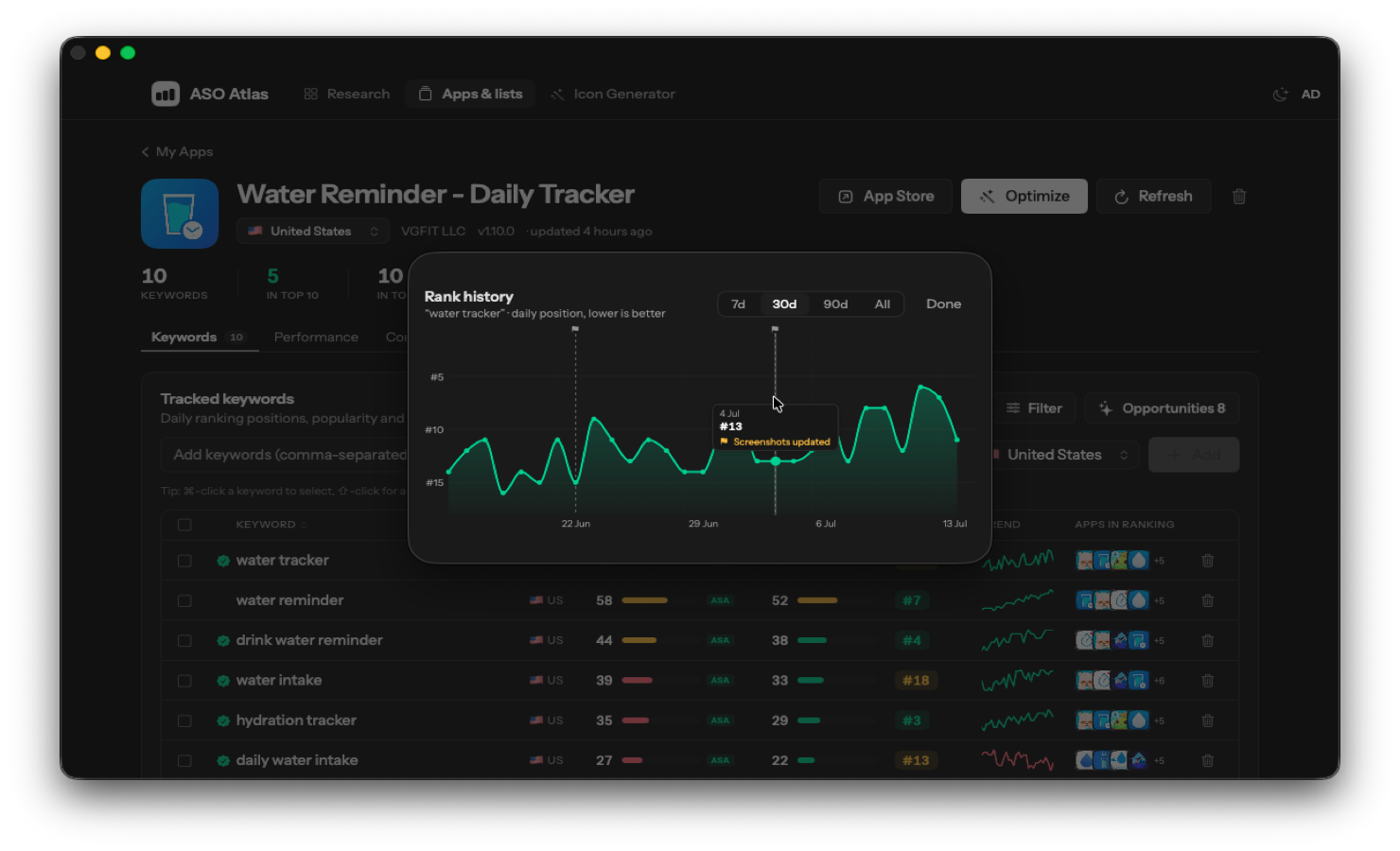
Keyword research with real Apple Search Ads demand data. Rank tracking across 60+ storefronts. Competitor gap analysis. Metadata optimizer for title, subtitle and the 100-character keyword field. Screenshot studio and app icon generator. Mac app and an MCP server for AI assistants.
Use Cases
Find keywords your app can realistically rank for, track positions daily, see which apps own a term, and fix your App Store metadata before you ship an update.

Comments


We localize our iPhone app's listing into 21 languages, and keywords per locale are the hardest part to manage. Several storefronts index more than one localization (the US store also reads the Spanish (Mexico) keyword field, for example), so one locale's 100 characters can cover a second market. Does the opportunity score account for those extra localizations per storefront? Separate rank tracking for keywords assigned to Custom Product Pages would also be useful.


Sourcing demand data from real Apple Search Ads instead of estimated volumes is the right call — guessed numbers are why a lot of keyword tools erode trust. The MCP server is a nice touch too. Genuine question: have you looked at tracking which apps get recommended inside AI assistant answers (ChatGPT/Perplexity "best app for X" queries)? App discovery seems to be slowly shifting there, and there is barely any tooling for it yet.

We ship a small iOS app, so the Take / Tight / Skip verdict is what caught my eye. Most keyword tools just hand you a difficulty number and leave the decision to you. Question: for a brand-new app with almost no ratings, does the difficulty score factor in your own app's current strength, or is it the same number for everyone? That would change a lot about what goes into the 30-character subtitle on a first release.

Good Innovation bro https://www.b4sai.in/

Using real Apple Search Ads demand data instead of estimated volumes is the right call; guessed numbers are the main reason I stopped trusting most keyword tools. The MCP server is a nice touch too. Question on the opportunity score: how much does it weigh the strength of the apps already ranking versus raw search popularity? For a new app with few ratings, that balance decides whether a keyword is actually winnable.


The Apple Search Ads demand-data angle is the right call — ASA popularity reflects real bid competition, unlike the scraped-frequency estimates most ASO tools ship. Two things I'd love to see: does the opportunity score factor in title/subtitle keyword density of the apps currently ranking, since that's the main lever a new app can act on this week? And any plan to track rank movement after metadata updates so wins can be attributed to specific changes?


Hi Fazier. I build iOS apps and got tired of ASO tools that guess search volume with opaque models, so I built ASO Atlas on Apple's own Search Ads demand data. It tells you how often a keyword is actually searched, how hard it is to rank for it, and which apps already own it, so you can pick terms you can realistically win instead of chasing head terms. It covers 60+ storefronts, tracks ranks daily, and ships a Mac app plus an MCP server so you can run keyword research straight from an AI assistant. There is a free tier that needs no App Store Connect login. Happy to answer anything about the data behind it.


Premium Products






























Sponsors
Buy
Awards
View all
Awards
View allComments
We localize our iPhone app's listing into 21 languages, and keywords per locale are the hardest part to manage. Several storefronts index more than one localization (the US store also reads the Spanish (Mexico) keyword field, for example), so one locale's 100 characters can cover a second market. Does the opportunity score account for those extra localizations per storefront? Separate rank tracking for keywords assigned to Custom Product Pages would also be useful.
Sourcing demand data from real Apple Search Ads instead of estimated volumes is the right call — guessed numbers are why a lot of keyword tools erode trust. The MCP server is a nice touch too. Genuine question: have you looked at tracking which apps get recommended inside AI assistant answers (ChatGPT/Perplexity "best app for X" queries)? App discovery seems to be slowly shifting there, and there is barely any tooling for it yet.
We ship a small iOS app, so the Take / Tight / Skip verdict is what caught my eye. Most keyword tools just hand you a difficulty number and leave the decision to you. Question: for a brand-new app with almost no ratings, does the difficulty score factor in your own app's current strength, or is it the same number for everyone? That would change a lot about what goes into the 30-character subtitle on a first release.
Good Innovation bro https://www.b4sai.in/
Using real Apple Search Ads demand data instead of estimated volumes is the right call; guessed numbers are the main reason I stopped trusting most keyword tools. The MCP server is a nice touch too. Question on the opportunity score: how much does it weigh the strength of the apps already ranking versus raw search popularity? For a new app with few ratings, that balance decides whether a keyword is actually winnable.
The Apple Search Ads demand-data angle is the right call — ASA popularity reflects real bid competition, unlike the scraped-frequency estimates most ASO tools ship. Two things I'd love to see: does the opportunity score factor in title/subtitle keyword density of the apps currently ranking, since that's the main lever a new app can act on this week? And any plan to track rank movement after metadata updates so wins can be attributed to specific changes?
Hi Fazier. I build iOS apps and got tired of ASO tools that guess search volume with opaque models, so I built ASO Atlas on Apple's own Search Ads demand data. It tells you how often a keyword is actually searched, how hard it is to rank for it, and which apps already own it, so you can pick terms you can realistically win instead of chasing head terms. It covers 60+ storefronts, tracks ranks daily, and ships a Mac app plus an MCP server so you can run keyword research straight from an AI assistant. There is a free tier that needs no App Store Connect login. Happy to answer anything about the data behind it.
Premium Products
New to Fazier?

Find your next favorite product or submit your own. Made by @FalakDigital.
Copyright ©2026. All Rights Reserved