
Anti-Habit
Habits That Survive Real Life
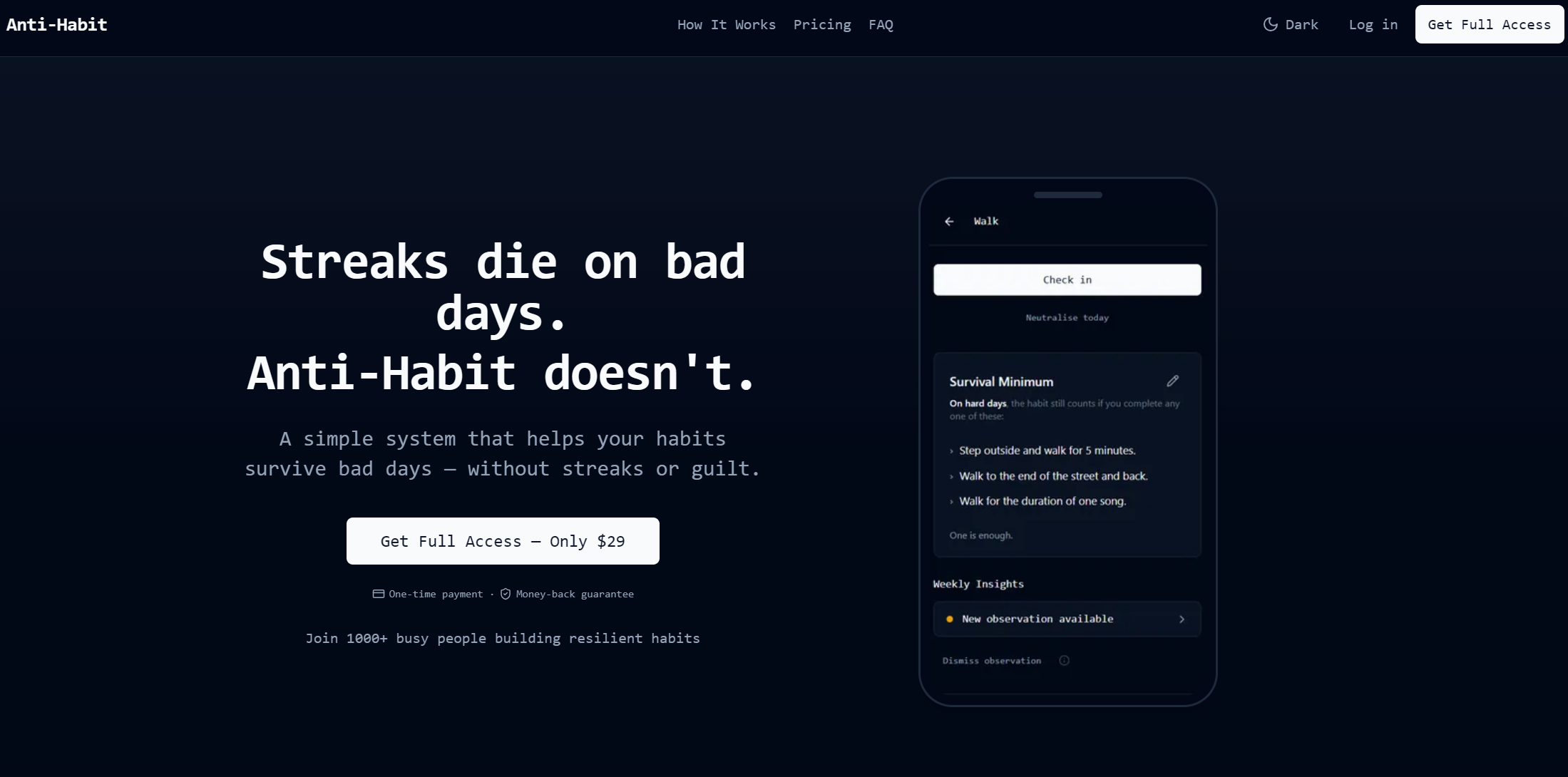
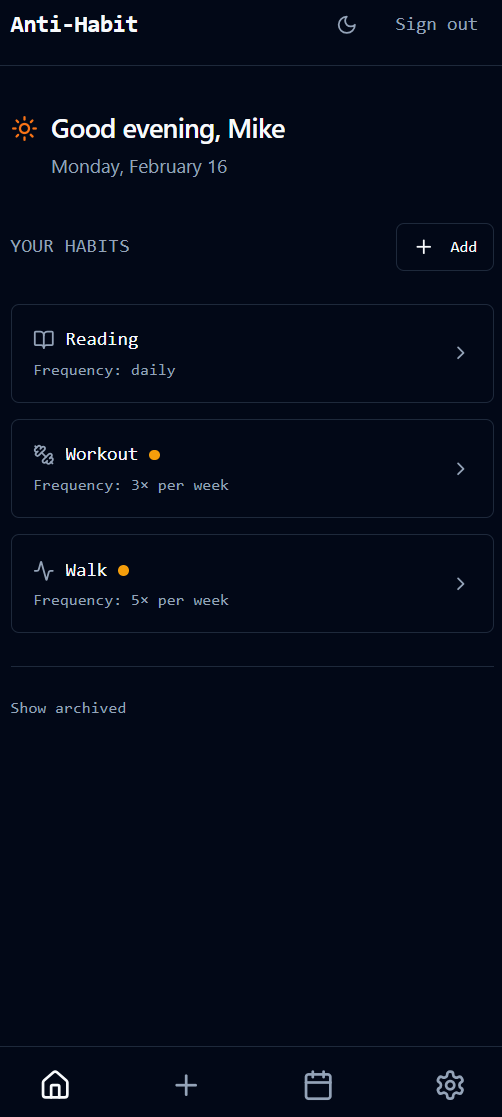
Anti-Habit is a simple habit system designed for real life — not perfect routines.
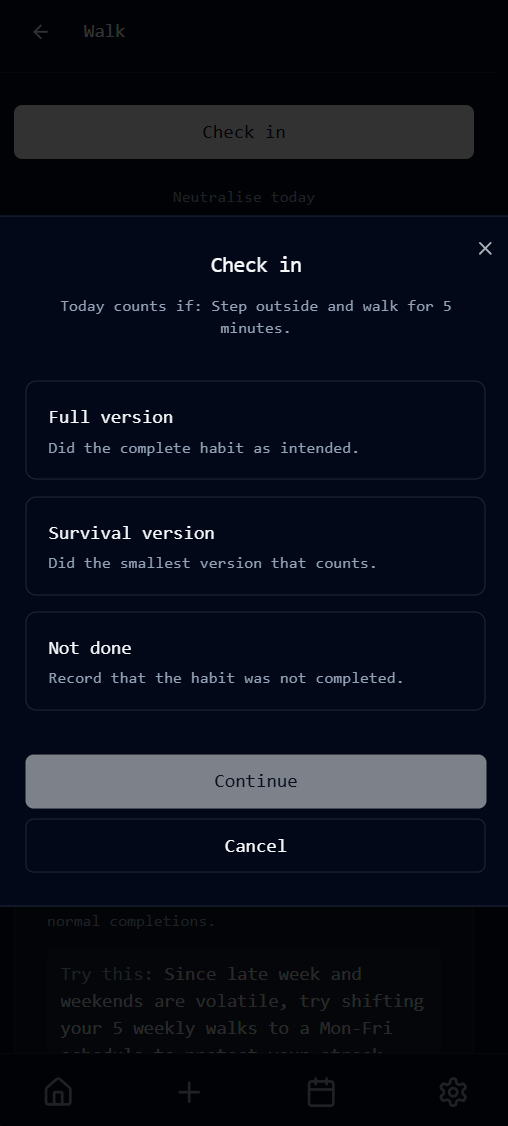
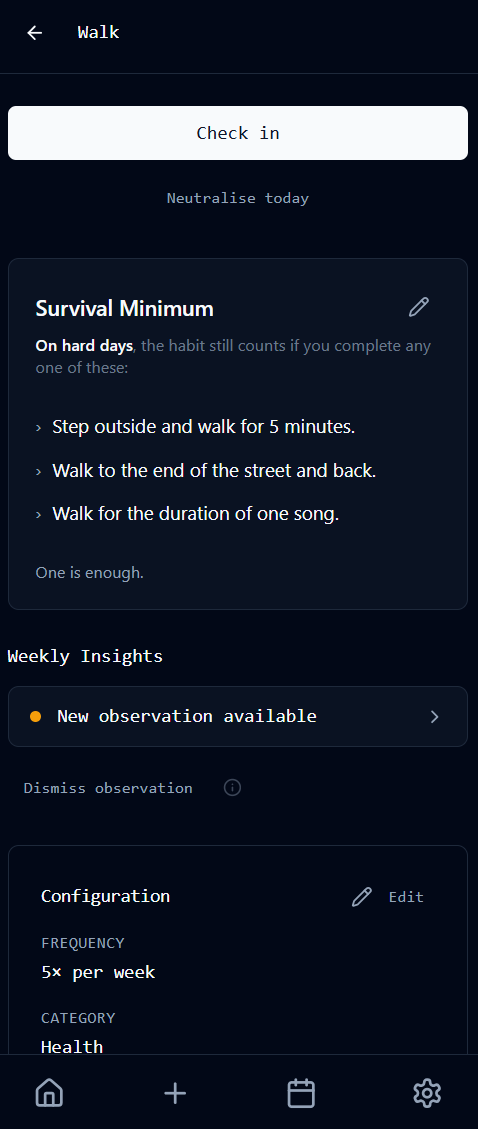
Instead of relying on streaks and discipline, each habit has two versions: a full target and a smaller survival minimum that keeps it alive on difficult days. This removes pressure and makes consistency sustainable.
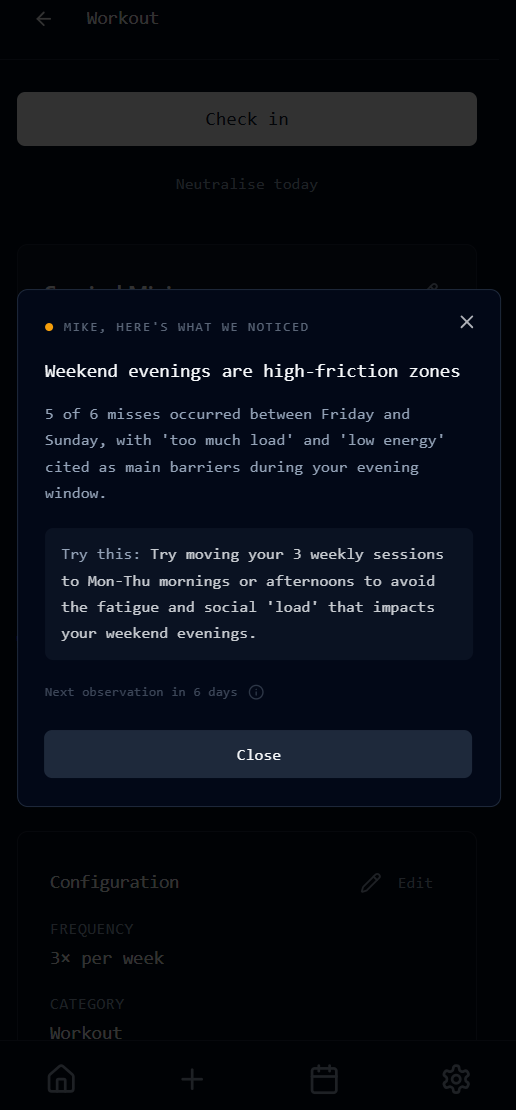
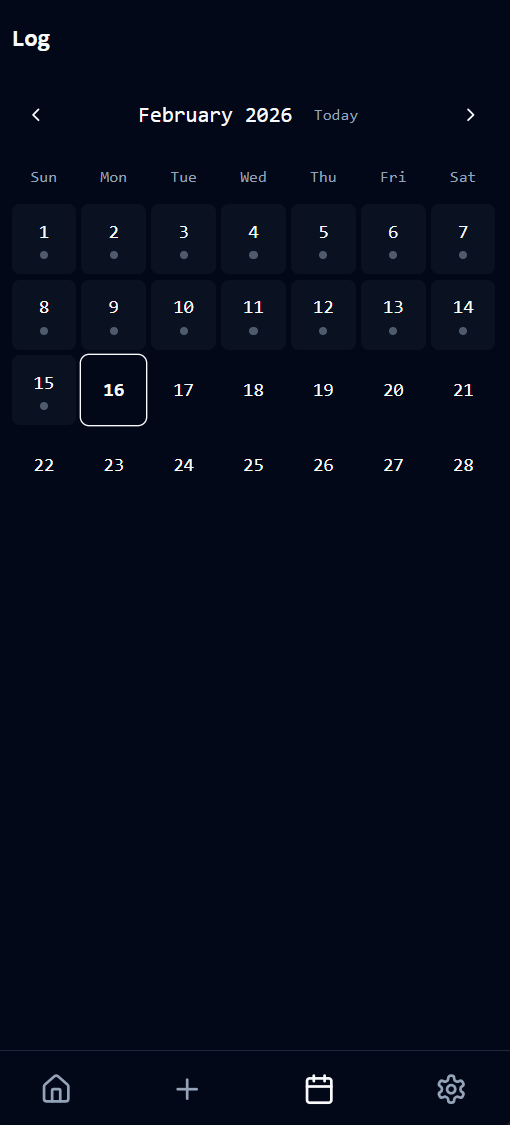
Log quick daily check-ins, track progress over time, and get weekly insights that highlight patterns and suggest small improvements.
One-time payment. No subscriptions. Built for busy people.
Features
Dual-mode habits: full version + survival minimum
Fast daily check-ins with optional notes
Weekly insights with pattern detection and suggestions
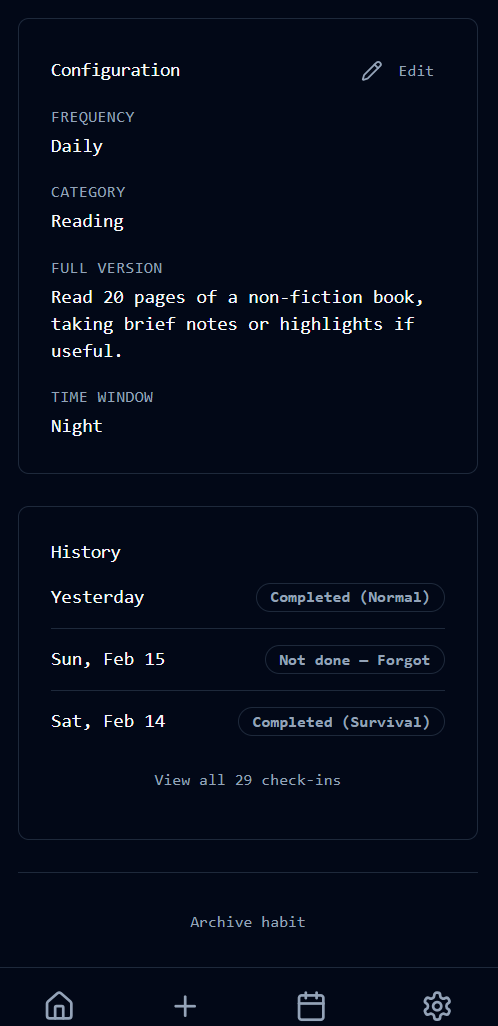
Calendar view to track consistency over time
Export or delete your data anytime
One-time purchase with 30-day money-back guarantee
Clean, distraction-free interface (dark mode included)
Use Cases
Staying consistent with habits during busy or unpredictable weeks
Maintaining routines without relying on motivation or discipline
Reducing guilt from missed habits and starting again quickly
Building sustainable habits that adapt to real-life constraints
Tracking progress without pressure from streak systems
Keeping habits alive during travel, stress, or workload spikes
Fazier Deal

Comments



Smash Karts combines racing and shooting gameplay, creating a unique experience where driving skills and combat strategies are equally important. https://smashkarts76.com/



The "survival minimum" mechanic solves the exact thing that kills every habit tracker: the streak breaks, motivation collapses, and the app gets abandoned. I run a small store and we track daily opening/closing procedures — the same all-or-nothing pattern destroys team consistency. One thing I'd love to understand: does the weekly insight engine learn which habits tend to slip together, so it can flag if, say, exercise and morning journaling both drop at the same time? Correlated habits are often symptomatic of a single underlying problem (sleep, stress), so catching the pattern would be really powerful.


Most habit systems work when life is calm. But that’s not when people struggle. I built Anti-Habit around a simple idea: A habit should survive bad days. Instead of streaks, each habit has a fallback — a smaller version that keeps it alive when time, energy, or focus are low. It’s a small shift, but it changes everything. Consistency stops being fragile. Curious to hear your thoughts, especially if your habits tend to break when life gets busy.


The approach of focusing on real-life resilience rather than streak-based motivation is smart. Most habit apps fail because they treat a broken streak as failure, which kills motivation entirely. Building habits that survive disruptions — travel, illness, bad days — is what actually matters for long-term behavior change. Curious how you handle the transition from structured tracking to habits becoming automatic.









The survival minimum is the best idea here. I track habits for my side project and the moment I miss one day the whole streak feels broken and I stop. Having a fallback version that still counts would genuinely fix that. One question — can you set different survival minimums for weekdays vs weekends?

The "survival minimum" concept is brilliant — it completely reframes what consistency means. Instead of feeling like a failure when life gets chaotic, you have a realistic fallback that keeps momentum going. This is the kind of behavioral design that actually sticks. Excited to try it for building long-term habits!


The survival minimum concept is what sets this apart from every other habit tracker I've tried. Most apps punish you for missing a day — this one gives you a graceful fallback. I think the weekly insights feature is underrated too. Seeing patterns over time is way more useful than just counting streaks. Would love to see integration with calendar apps at some point.



The dual-mode concept is really interesting. There's so much research out there on habit formation, but the gap is always in the actual application. I like that this addresses the part where most people fall off, which is the all-or-nothing mindset on hard days. Curious what makes this different from other habit trackers beyond the survival minimum feature. Is there anything in the weekly insights that adapts over time based on how someone actually uses it, or is it more of a static analysis? Cool concept either way.


Finally, someone built a tracker that understands life doesn't happen in a strict daily vacuum. Standard apps are great for daily coding or working out, but they create a calendar of guilt for the things you only need to do every few weeks or months. Stripping away the streak mechanics and focusing on realistic intervals is the exact feature set traditional apps are missing. Upvoting for a highly practical and realistic approach to task tracking.

This is a solid direction. The “survival minimum” idea solves a real problem. most habit apps break the moment life gets messy, not because people lack discipline but because the system is too rigid. If the tracking stays frictionless and the insights actually feel useful (not generic summaries), this could stand out in a crowded space. The one-time payment model also fits well with something meant for long-term use, as long as updates keep adding value over time.
Premium Products












































Fazier Deal
Sponsors
Buy




Makers
Makers
Comments
Smash Karts combines racing and shooting gameplay, creating a unique experience where driving skills and combat strategies are equally important. https://smashkarts76.com/
The "survival minimum" mechanic solves the exact thing that kills every habit tracker: the streak breaks, motivation collapses, and the app gets abandoned. I run a small store and we track daily opening/closing procedures — the same all-or-nothing pattern destroys team consistency. One thing I'd love to understand: does the weekly insight engine learn which habits tend to slip together, so it can flag if, say, exercise and morning journaling both drop at the same time? Correlated habits are often symptomatic of a single underlying problem (sleep, stress), so catching the pattern would be really powerful.
Most habit systems work when life is calm. But that’s not when people struggle. I built Anti-Habit around a simple idea: A habit should survive bad days. Instead of streaks, each habit has a fallback — a smaller version that keeps it alive when time, energy, or focus are low. It’s a small shift, but it changes everything. Consistency stops being fragile. Curious to hear your thoughts, especially if your habits tend to break when life gets busy.
The approach of focusing on real-life resilience rather than streak-based motivation is smart. Most habit apps fail because they treat a broken streak as failure, which kills motivation entirely. Building habits that survive disruptions — travel, illness, bad days — is what actually matters for long-term behavior change. Curious how you handle the transition from structured tracking to habits becoming automatic.
The survival minimum is the best idea here. I track habits for my side project and the moment I miss one day the whole streak feels broken and I stop. Having a fallback version that still counts would genuinely fix that. One question — can you set different survival minimums for weekdays vs weekends?
The "survival minimum" concept is brilliant — it completely reframes what consistency means. Instead of feeling like a failure when life gets chaotic, you have a realistic fallback that keeps momentum going. This is the kind of behavioral design that actually sticks. Excited to try it for building long-term habits!
The survival minimum concept is what sets this apart from every other habit tracker I've tried. Most apps punish you for missing a day — this one gives you a graceful fallback. I think the weekly insights feature is underrated too. Seeing patterns over time is way more useful than just counting streaks. Would love to see integration with calendar apps at some point.
The dual-mode concept is really interesting. There's so much research out there on habit formation, but the gap is always in the actual application. I like that this addresses the part where most people fall off, which is the all-or-nothing mindset on hard days. Curious what makes this different from other habit trackers beyond the survival minimum feature. Is there anything in the weekly insights that adapts over time based on how someone actually uses it, or is it more of a static analysis? Cool concept either way.
Finally, someone built a tracker that understands life doesn't happen in a strict daily vacuum. Standard apps are great for daily coding or working out, but they create a calendar of guilt for the things you only need to do every few weeks or months. Stripping away the streak mechanics and focusing on realistic intervals is the exact feature set traditional apps are missing. Upvoting for a highly practical and realistic approach to task tracking.
This is a solid direction. The “survival minimum” idea solves a real problem. most habit apps break the moment life gets messy, not because people lack discipline but because the system is too rigid. If the tracking stays frictionless and the insights actually feel useful (not generic summaries), this could stand out in a crowded space. The one-time payment model also fits well with something meant for long-term use, as long as updates keep adding value over time.
Premium Products
New to Fazier?

Find your next favorite product or submit your own. Made by @FalakDigital.
Copyright ©2026. All Rights Reserved