
AI Tool Tank
Which AI tool for which job: honest rankings by use case
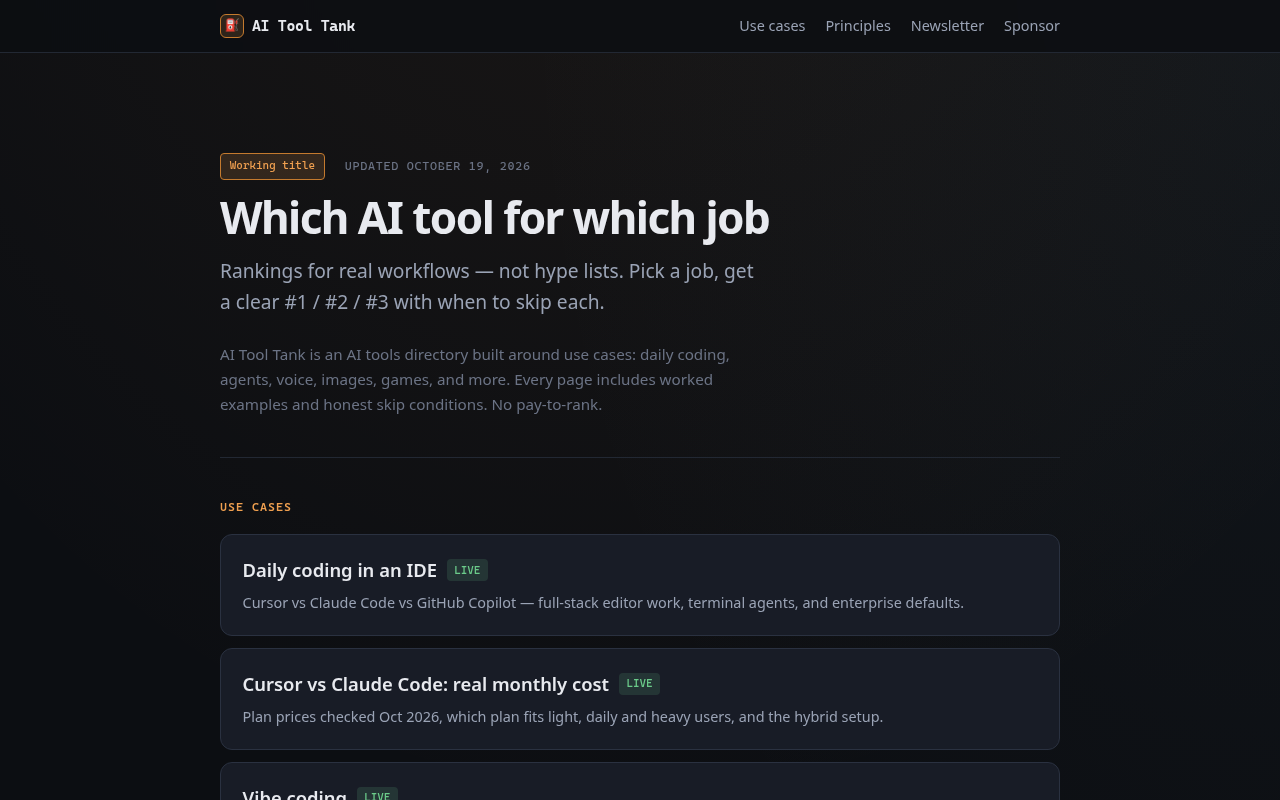
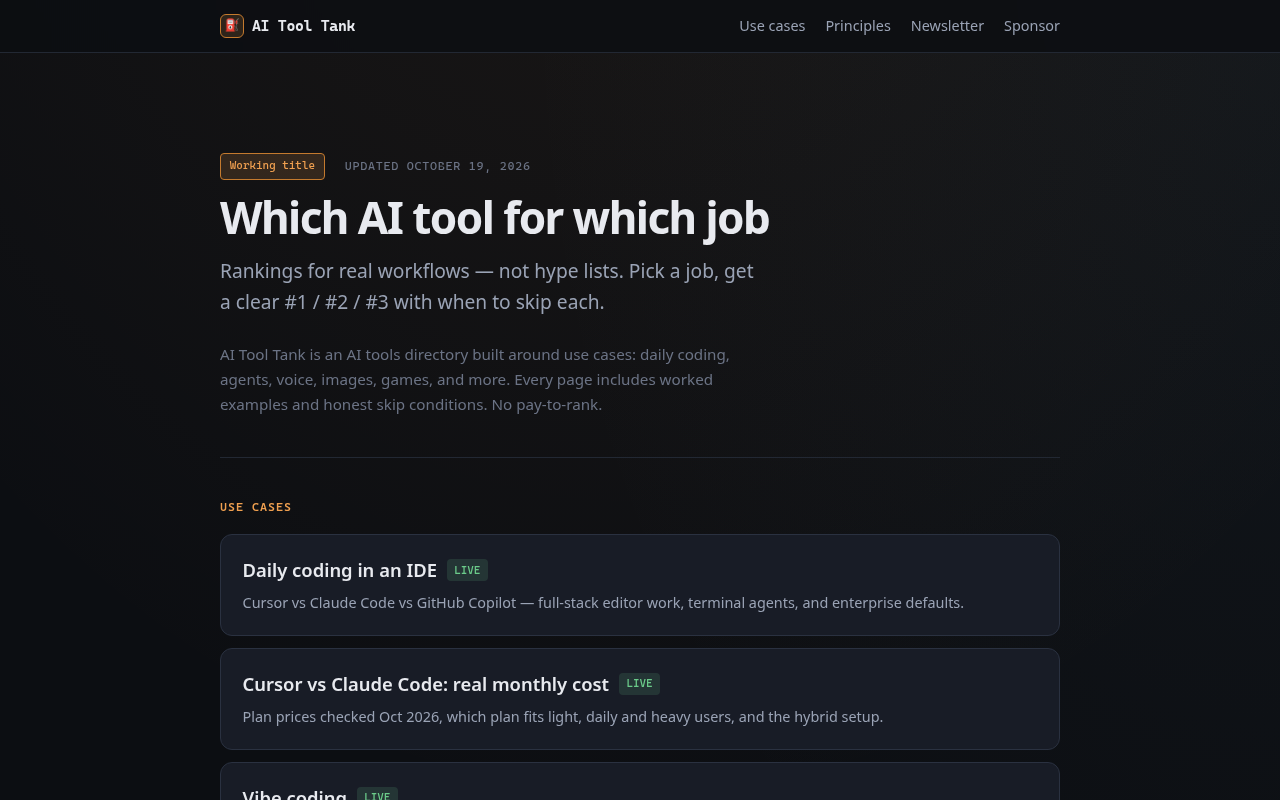
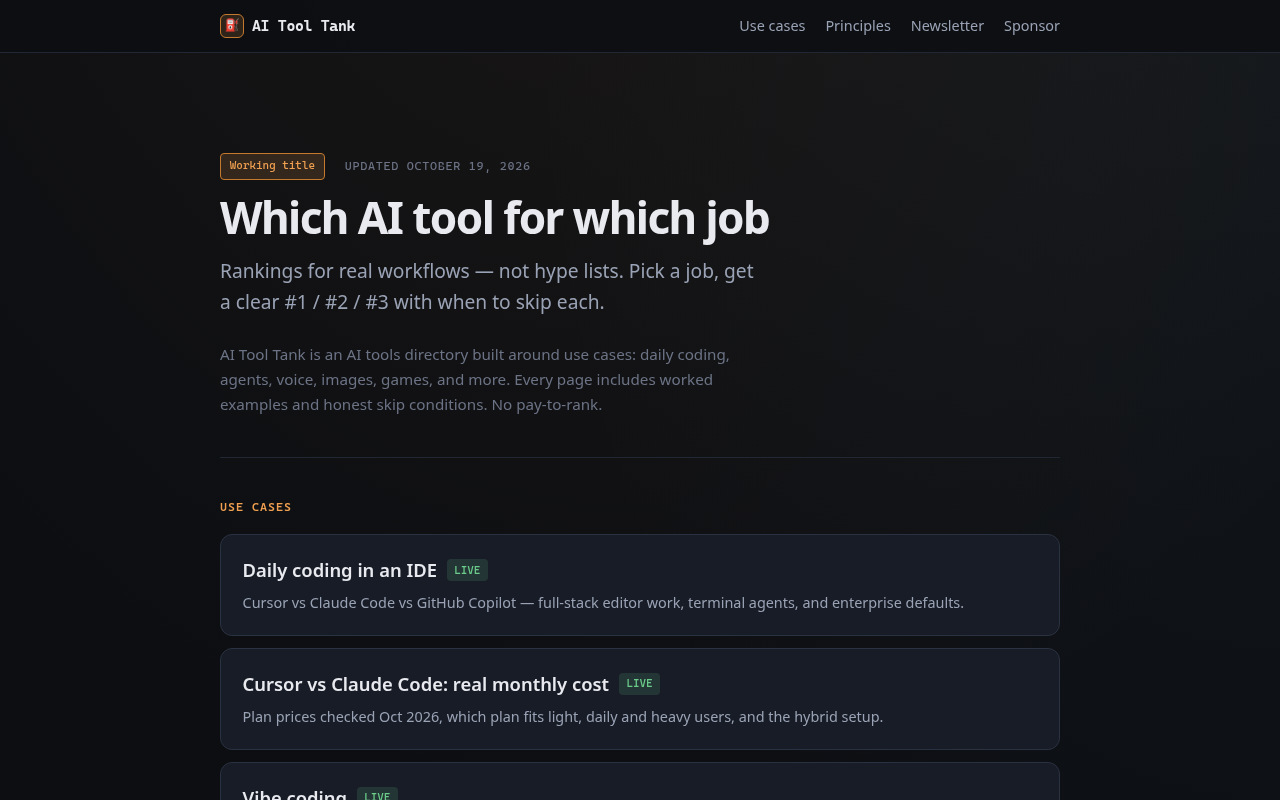
AI Tool Tank ranks AI tools by real workflows, not hype. Pick a job, get a clear #1/#2/#3 with when to skip each. No pay-to-rank. It is a free AI tools directory built around use cases instead of giant lists. Each page ranks the top tools for one job (vibe coding, daily coding in an IDE, AI agent builders, AI headshots, AI for realtors, meeting notes, voice tools) with worked examples, pricing checked by hand, and an honest "who should skip this" note on every pick.
Features
Use-case based rankings
Clear #1/#2/#3 picks
Who-should-skip-this note on every pick
Pricing checked by hand
Vibe coding wrapper breakdown and Cursor vs GitHub Copilot head-to-heads
Use Cases
Choosing a vibe coding tool
Picking an IDE coding assistant
Finding AI agent builders
Meeting notes and voice tools

Comments


The use-case-first structure is what most AI directories get wrong — ranking tools by job (vibe coding, IDE assistants, meeting notes) with clear #1/#2/#3 picks is far more useful than another giant alphabetical list. The "who should skip this" note on every pick is a great trust signal, and having pricing checked by hand matters because tool pricing pages change constantly. One question: how often do you re-verify the rankings and pricing, especially in fast-moving categories like coding assistants where Cursor and Copilot ship changes almost weekly?


Honest use-case rankings are exactly what I keep wishing more directories would do. Two things that would push this further: source citations for each ranked tool so readers can verify, and a filter by pricing tier (free / freemium / paid) since tool choice often depends on budget. Would you consider an export to CSV for teams building internal tool lists?

Ranking by job instead of raw capability is exactly the frame most AI directories are missing — nobody needs another list of 200 models, they need to know what to open on Monday morning. The 'who should skip this' note on every pick adds a lot of trust, since it signals the rankings aren't pay-to-play. One suggestion: add a visible 'last checked' date on each ranking page. Pricing and features in this space change monthly, so a timestamp next to the hand-checked pricing would make the freshness claim even stronger.


Ranking by job instead of publishing another giant alphabetical directory is the right call — the "who should skip this" note on every pick and hand-checked pricing make the #1/#2/#3 picks actually trustworthy, and no pay-to-rank helps too. One question: how often do you re-check pricing and rankings? AI tools change plans so fast that a "last verified" date on each use-case page would make it even easier to rely on.
Premium Products





















































Sponsors
Buy

Makers
Makers
Comments
The use-case-first structure is what most AI directories get wrong — ranking tools by job (vibe coding, IDE assistants, meeting notes) with clear #1/#2/#3 picks is far more useful than another giant alphabetical list. The "who should skip this" note on every pick is a great trust signal, and having pricing checked by hand matters because tool pricing pages change constantly. One question: how often do you re-verify the rankings and pricing, especially in fast-moving categories like coding assistants where Cursor and Copilot ship changes almost weekly?
Honest use-case rankings are exactly what I keep wishing more directories would do. Two things that would push this further: source citations for each ranked tool so readers can verify, and a filter by pricing tier (free / freemium / paid) since tool choice often depends on budget. Would you consider an export to CSV for teams building internal tool lists?
Ranking by job instead of raw capability is exactly the frame most AI directories are missing — nobody needs another list of 200 models, they need to know what to open on Monday morning. The 'who should skip this' note on every pick adds a lot of trust, since it signals the rankings aren't pay-to-play. One suggestion: add a visible 'last checked' date on each ranking page. Pricing and features in this space change monthly, so a timestamp next to the hand-checked pricing would make the freshness claim even stronger.
Ranking by job instead of publishing another giant alphabetical directory is the right call — the "who should skip this" note on every pick and hand-checked pricing make the #1/#2/#3 picks actually trustworthy, and no pay-to-rank helps too. One question: how often do you re-check pricing and rankings? AI tools change plans so fast that a "last verified" date on each use-case page would make it even easier to rely on.
Premium Products
New to Fazier?

Find your next favorite product or submit your own. Made by @FalakDigital.
Copyright ©2026. All Rights Reserved