
ToSong
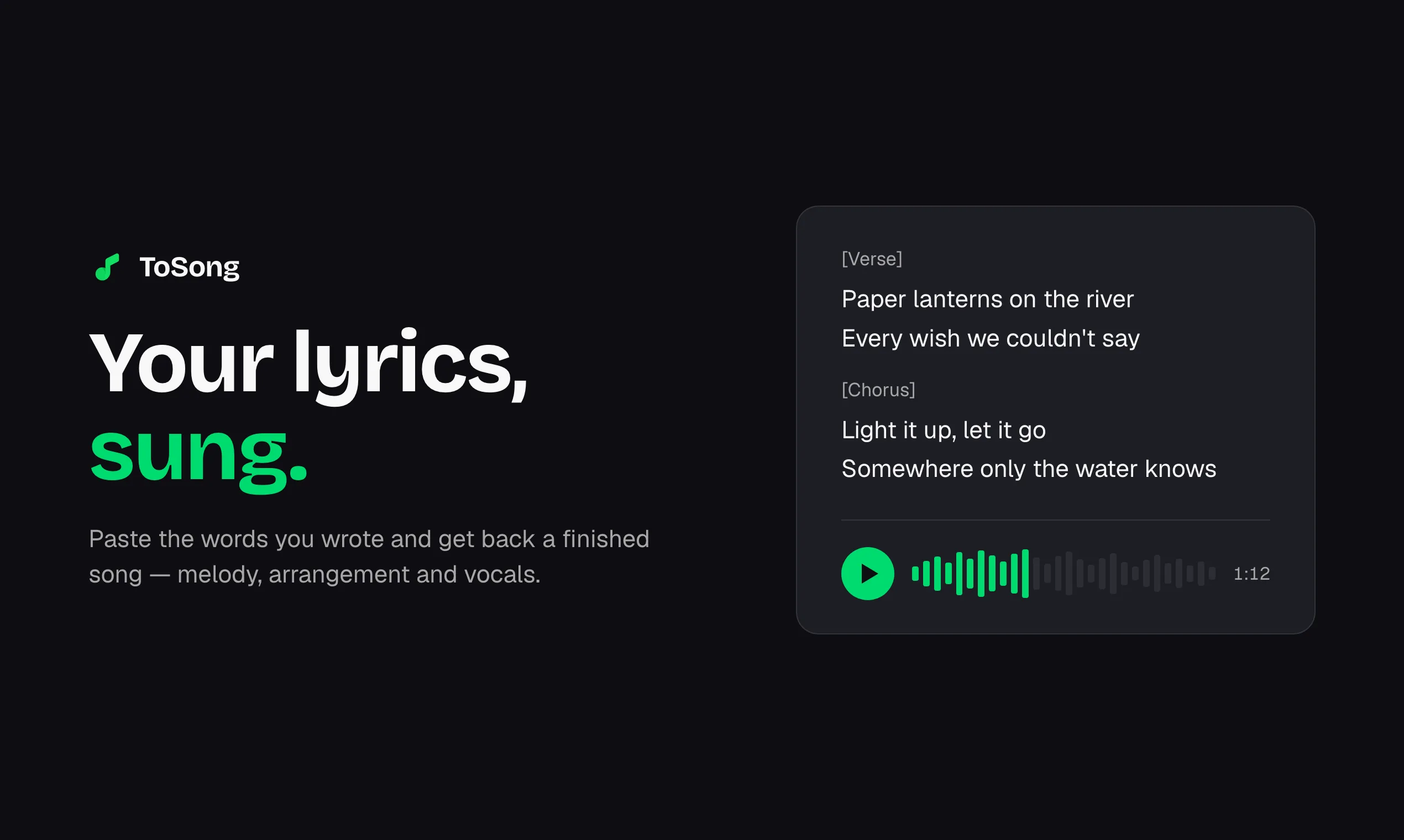
Paste lyrics, get a finished song
ToSong is an AI song maker built for people who have the words but not the studio — songwriters with notebooks full of unfinished verses, video editors who need a track that fits the edit, podcasters who want a theme in their own tone, and anyone who wants to turn a birthday, a wedding or an inside joke into a real song.
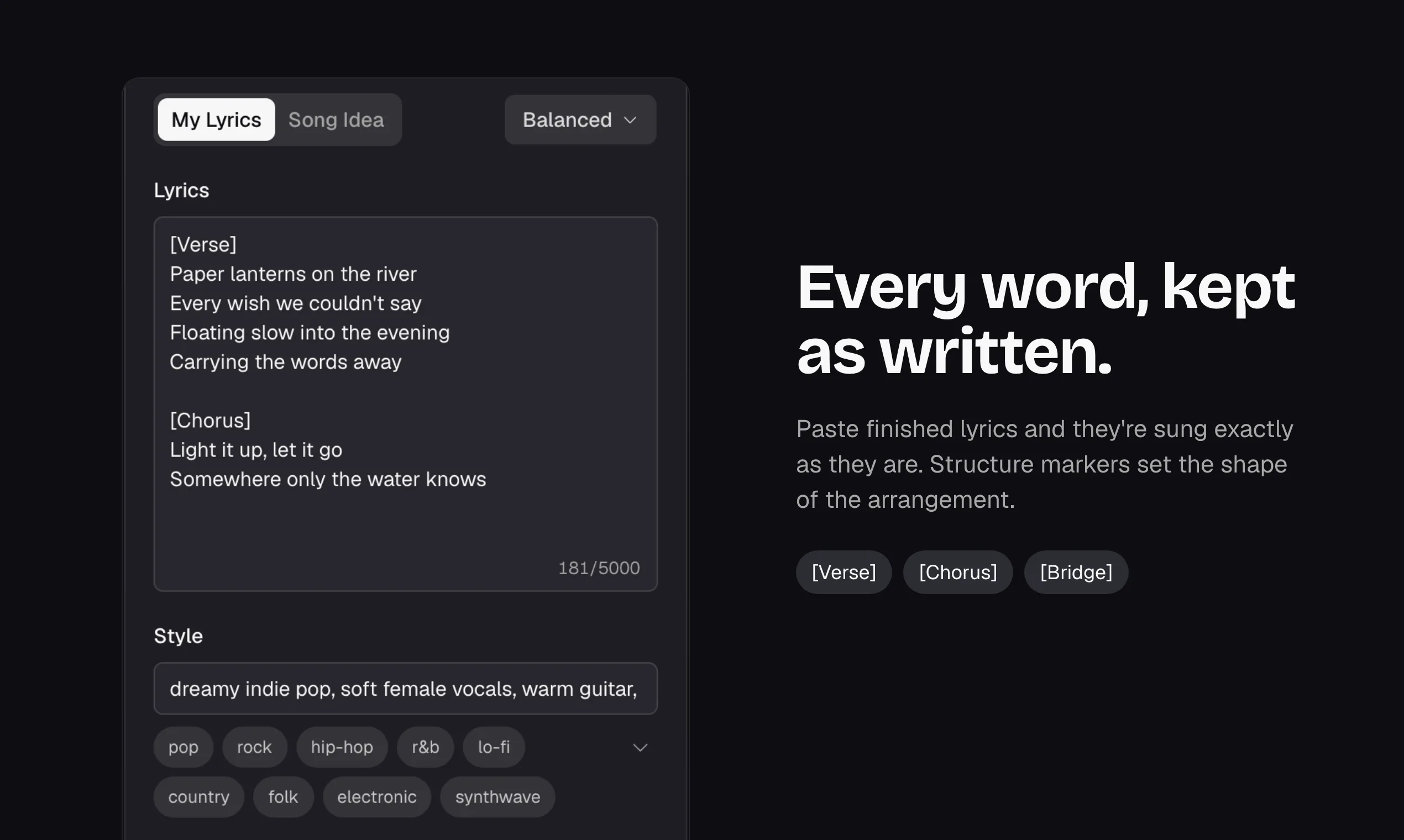
There are two ways in. Paste lyrics you have already written and the AI builds melody, arrangement, and vocals around them; structure markers like [Verse], [Chorus] and [Bridge] can help guide the arrangement. Or describe the song — a mood, a genre, an occasion — and the AI writes the lyrics, melody and arrangement together.
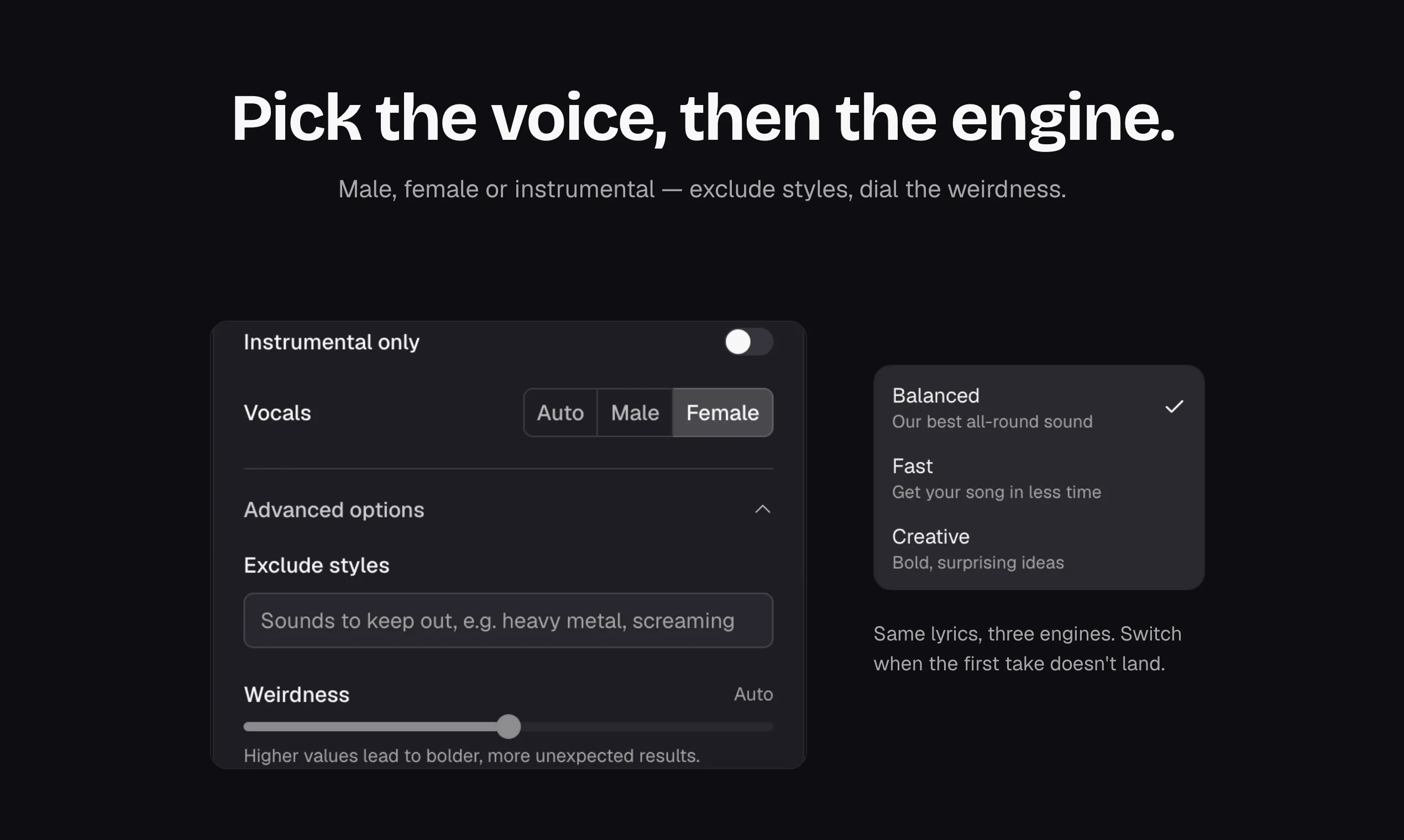
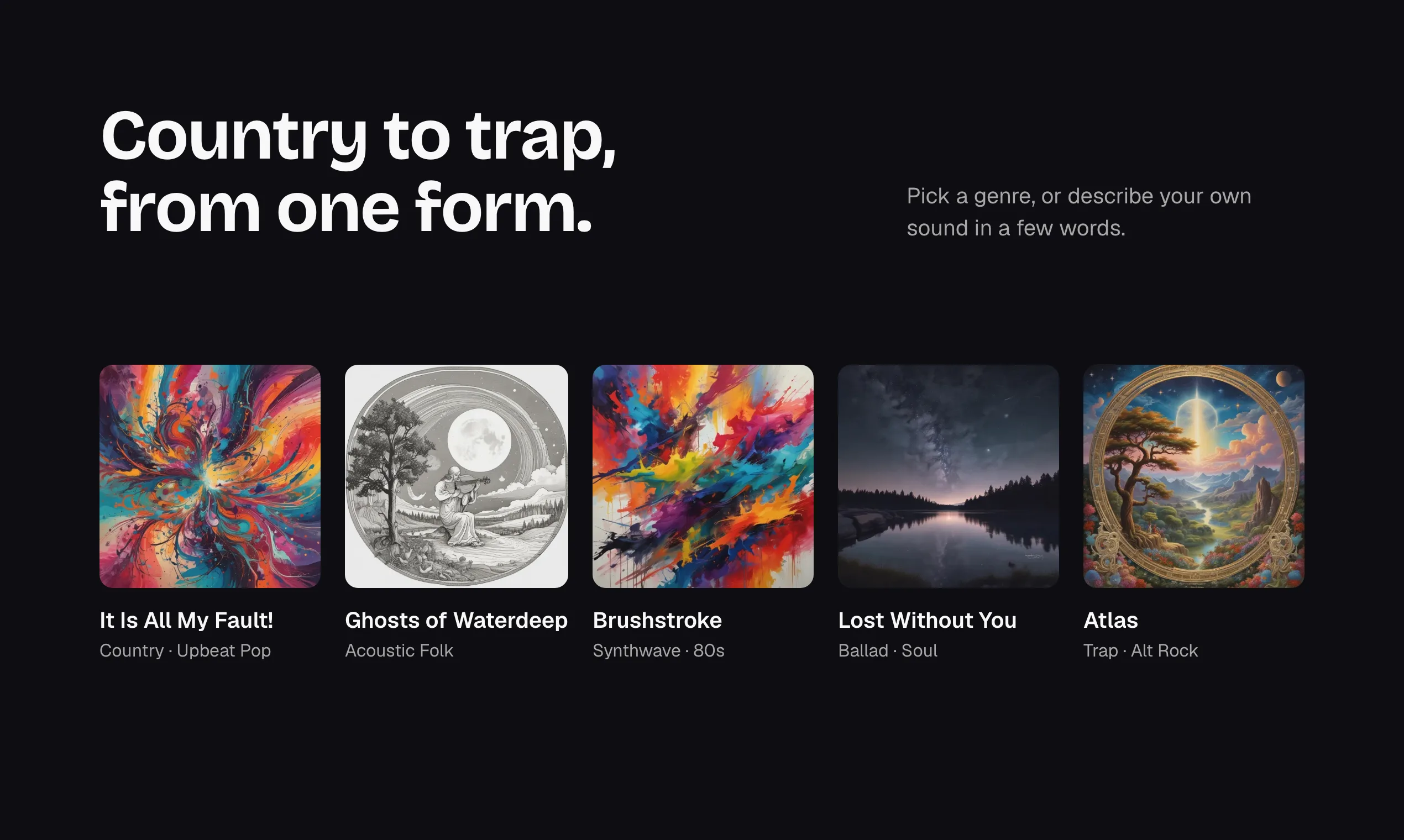
From there you choose the sound: a genre or free-form style, a male or female voice or instrumental only, three engines (Balanced, Fast, Creative), plus advanced controls to exclude styles, raise the weirdness or tune how closely the song follows the style. Every song is kept in your library with its lyrics, ready to replay or download.
New accounts start with free credits. Credits are refunded automatically if a generation fails. Subscriptions and one-time credit packs both include commercial usage rights.
Features
Build a song around your own lyrics, with [Verse]/[Chorus]/[Bridge] markers to guide the structure — https://tosong.app/lyrics-to-song
Use Cases
- Hear your lyrics turned into a real arrangement before a band rehearsal or studio session
- Personal songs for birthdays, weddings, anniversaries and graduations
- Background music and intros for YouTube videos, reels and podcasts
- Jingles and theme ideas for client work, with several style options from the same lyrics
- Instrumental backing tracks for singers to record over
- Lullabies, pet songs and inside jokes turned into shareable tracks

Comments



Hey Fazier 👋 Plenty of people have lyrics they've never heard sung. Most AI music tools want a vibe prompt and then write their own words — fine for a quick jingle, useless when the words are the whole point. So ToSong splits the job in two. If you already have lyrics, paste them in: the AI builds melody, arrangement, and vocals around them, and markers like [Verse], [Chorus] and [Bridge] help guide the structure. If you only have an idea — "a lullaby about the stars for my daughter" — describe it and the AI writes the lyrics too. Either way you pick the genre and voice (or go instrumental), and switch between three engines when the first take doesn't land. A few things I cared about: • Failed generations refund your credits automatically • Every song stays in your library with its lyrics • Paid plans include commercial rights, so tracks can go into videos and client work You get 20 free credits when you sign in, enough for one generation. One question for you: when you write lyrics, do you want the AI to follow your structure strictly, or to take liberties with the arrangement if it sounds better?

Paste lyrics → finished song is a strong demo, but what decides whether this stays a novelty is the second draft. Three things worth answering on the page: can you pin tempo/key and re-render just the chorus without losing the rest of the arrangement; do you export stems separately (vocal, instrumental) so it can drop into a DAW; and what's the story with lyrics pasted from an existing song. That last one is the first question a musician asks, and answering it early saves a lot of suspicious support tickets.

Separating the two paths is the right call — most tools force a vibe prompt and then invent the lyrics, which is useless when the words are the whole point. The structure markers are the detail I would lean on: [Verse]/[Chorus]/[Bridge] give the model a map without needing a DAW, and the exclusion list is a nice escape hatch. Two questions: when a generation fails mid-way, do the credits return to the exact balance and show in the usage history, and how consistent is the same voice across a three-song suite if I want a mini EP from one batch of lyrics?


The "words but not the studio" positioning is exactly right — most lyric-to-song tools target producers, but notebook songwriters are a much bigger underserved group. Practical question: for video editors who need a track to fit an existing edit, can you lock the final duration and have the arrangement adapt (intro/bridge trimmed), or does the song length come out fixed and you cut it afterwards? Length control is usually the dealbreaker for sync work.

How closely does a generation follow [Verse]/[Chorus]/[Bridge] markers when the lyrics already have a set structure, and does the control for how closely the song follows the style affect the structure or only the sound? I am asking because for a song meant to be performed live, keeping the chorus placement predictable would matter more than the genre choice.
If you already have lyrics, the structure markers are the part worth using: wrap sections as [Verse], [Chorus] and [Bridge] so the arrangement follows the form instead of flattening the song into one loop. The Balanced, Fast and Creative engines, plus an instrumental-only voice option, are practical when you need a podcast intro or a reel bed rather than a full vocal track. Failed generations refund credits automatically, so you can retry a style without burning the free starting credits.



Paste lyrics → finished song is a strong demo, but what decides whether this stays a novelty is the second draft. Three things worth answering on the page: can you pin tempo/key and re-render just the chorus without losing the rest of the arrangement; do you export stems separately (vocal, instrumental) so it can drop into a DAW; and what's the story with lyrics pasted from an existing song. That last one is the first question a musician asks, and answering it early saves a lot of suspicious support tickets. thanks
Clever positioning — lyrics-first is exactly how most hobbyist rappers and poets actually start. Two questions from someone building in the same space: how do you handle rap cadence specifically (flow and punchlines behave very differently from sung melody), and can you lock the instrumental style while regenerating vocals from the same lyrics? Paired with a performance video this would make a complete release pipeline.

Premium Products



















































Sponsors
Buy

Makers
Makers
Comments
Hey Fazier 👋 Plenty of people have lyrics they've never heard sung. Most AI music tools want a vibe prompt and then write their own words — fine for a quick jingle, useless when the words are the whole point. So ToSong splits the job in two. If you already have lyrics, paste them in: the AI builds melody, arrangement, and vocals around them, and markers like [Verse], [Chorus] and [Bridge] help guide the structure. If you only have an idea — "a lullaby about the stars for my daughter" — describe it and the AI writes the lyrics too. Either way you pick the genre and voice (or go instrumental), and switch between three engines when the first take doesn't land. A few things I cared about: • Failed generations refund your credits automatically • Every song stays in your library with its lyrics • Paid plans include commercial rights, so tracks can go into videos and client work You get 20 free credits when you sign in, enough for one generation. One question for you: when you write lyrics, do you want the AI to follow your structure strictly, or to take liberties with the arrangement if it sounds better?
Paste lyrics → finished song is a strong demo, but what decides whether this stays a novelty is the second draft. Three things worth answering on the page: can you pin tempo/key and re-render just the chorus without losing the rest of the arrangement; do you export stems separately (vocal, instrumental) so it can drop into a DAW; and what's the story with lyrics pasted from an existing song. That last one is the first question a musician asks, and answering it early saves a lot of suspicious support tickets.
Separating the two paths is the right call — most tools force a vibe prompt and then invent the lyrics, which is useless when the words are the whole point. The structure markers are the detail I would lean on: [Verse]/[Chorus]/[Bridge] give the model a map without needing a DAW, and the exclusion list is a nice escape hatch. Two questions: when a generation fails mid-way, do the credits return to the exact balance and show in the usage history, and how consistent is the same voice across a three-song suite if I want a mini EP from one batch of lyrics?
The "words but not the studio" positioning is exactly right — most lyric-to-song tools target producers, but notebook songwriters are a much bigger underserved group. Practical question: for video editors who need a track to fit an existing edit, can you lock the final duration and have the arrangement adapt (intro/bridge trimmed), or does the song length come out fixed and you cut it afterwards? Length control is usually the dealbreaker for sync work.
How closely does a generation follow [Verse]/[Chorus]/[Bridge] markers when the lyrics already have a set structure, and does the control for how closely the song follows the style affect the structure or only the sound? I am asking because for a song meant to be performed live, keeping the chorus placement predictable would matter more than the genre choice.
If you already have lyrics, the structure markers are the part worth using: wrap sections as [Verse], [Chorus] and [Bridge] so the arrangement follows the form instead of flattening the song into one loop. The Balanced, Fast and Creative engines, plus an instrumental-only voice option, are practical when you need a podcast intro or a reel bed rather than a full vocal track. Failed generations refund credits automatically, so you can retry a style without burning the free starting credits.
Paste lyrics → finished song is a strong demo, but what decides whether this stays a novelty is the second draft. Three things worth answering on the page: can you pin tempo/key and re-render just the chorus without losing the rest of the arrangement; do you export stems separately (vocal, instrumental) so it can drop into a DAW; and what's the story with lyrics pasted from an existing song. That last one is the first question a musician asks, and answering it early saves a lot of suspicious support tickets. thanks
Clever positioning — lyrics-first is exactly how most hobbyist rappers and poets actually start. Two questions from someone building in the same space: how do you handle rap cadence specifically (flow and punchlines behave very differently from sung melody), and can you lock the instrumental style while regenerating vocals from the same lyrics? Paired with a performance video this would make a complete release pipeline.
Premium Products
New to Fazier?

Find your next favorite product or submit your own. Made by @FalakDigital.
Copyright ©2026. All Rights Reserved