
SiteGuard
Technical SEO, without the guesswork.
SiteGuard is an automated technical SEO audit and monitoring tool built specifically for agencies and indie founders. Stop guessing what's hurting your search rankings. SiteGuard scans your sites, flags critical technical bottlenecks (like broken schema, missing meta tags, and Core Web Vitals drops), and generates clean, white-label client reports instantly.
Features
Automated technical SEO audits and continuous health monitoring
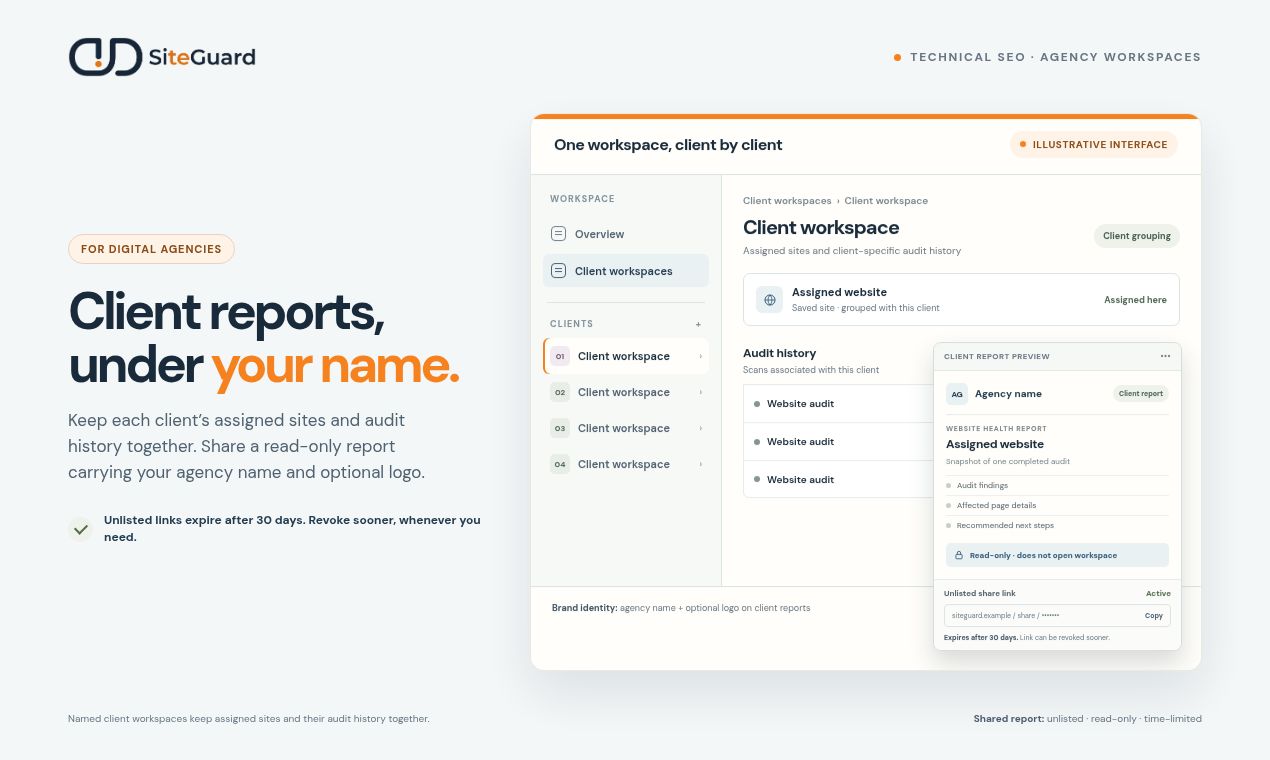
One-click white-label PDF and link exports for client delivery
Instant detection of broken links, missing meta tags, and indexing blocks
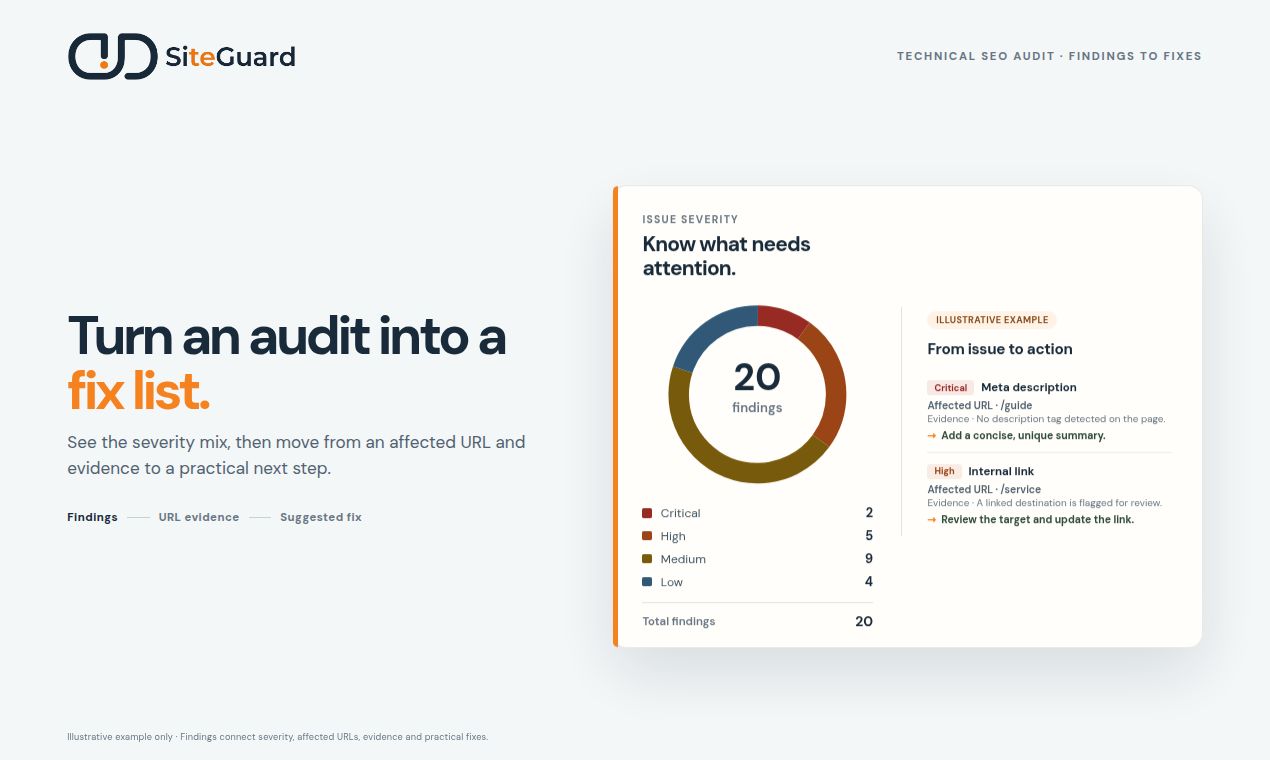
Built-in prioritised action queues so you know exactly what to fix first
Use Cases
- Agencies: Instantly generate and hand off professional, branded SEO audits to clients without spending hours in spreadsheets.
- Indie Hackers: Monitor your SaaS or ecommerce store's technical health effortlessly without needing a dedicated SEO team.
- Freelancers: Use automated site audits as a foot-in-the-door audit offer to land high-ticket retainer clients.

Comments


The prioritised action queue is the part I'd use most. I look after directory and membership sites with thousands of member profile pages, so audits usually come back with a wall of near-identical warnings. Can SiteGuard group issues by page template, so one template fix clears hundreds of pages at once?


allshop.ng is point-of-sale and shop management software made in Nigeria for shops across Africa. It runs on the phone or computer a shop already has and keeps selling when the network drops: every sale is saved on the device first, the receipt still prints, and sales sync by themselves when the connection returns. One account covers the whole shop: barcode checkout, stock with batches and expiry dates, wholesale prices and cartons to pieces, customer and supplier credit, staff PINs and shifts, and reports with profit and margin. Owners get Telegram alerts and can check today's sales from anywhere. On Windows, the shop's PC becomes its own server, so every till keeps selling with no internet. ₦6,000 a month in Nigeria, every feature included. Free for 30 days, no card needed.
The prioritised action queue is the standout for me — most audit tools hand you a long list of issues, but ranking them by impact is what actually helps a small team decide what to fix first. The white-label PDF export also looks ideal for agencies handing reports to clients. Does the monitoring alert you as soon as a new critical issue appears, or only on the next scheduled audit?

Hey Fazier! 👋 I built SiteGuard out of a frustrating problem: trying to manually audit client sites and track down technical SEO errors (like broken schema, missing tags, or Core Web Vitals issues) was eating up way too much time. Instead of using bloated enterprise tools that cost a fortune or clunky scripts that break, I wanted a clean, automated auditing engine that could instantly generate gorgeous, white-label reports agencies and indie founders can actually use. It's fully up and running, and I'm super excited to share it with the community today. Let me know what you think or if you spot anything you'd want added to the roadmap! 👇

Does the audit crawl every language version of a site separately? We just found a 404 that existed only in the 19 translated versions of one page: the English page was fine, so any crawl that started from the default language never saw it. Following hreflang alternates and checking each one would be the feature I'd value most.


La cola de acciones priorizadas me parece lo más valioso: la mayoría de las auditorías entregan una lista larga sin orden, y aquí el equipo sabe qué corregir primero. ¿La monitorización continua avisa también cuando un cambio en el tema de Shopify rompe algo que antes estaba bien? Eso sería clave para agencias con muchos clientes.
The prioritised action queue is the part that would save me the most time. Most audit tools hand over a long list of issues, so knowing what to fix first matters, especially for client work. One question: does the monitoring alert you when a Core Web Vitals score drops after a theme or plugin change, or only on the next scheduled audit?
One thing that separates a useful audit from a noisy one: prioritize each issue by how many indexable pages it affects and the traffic those pages actually get, not by raw warning count. A missing meta description on 500 tag pages matters far less than a blocked canonical on your top landing template. Worth separating CrUX field data from lab Lighthouse scores in the report too - agencies get burned when the lab score improves but p75 INP does not.



The prioritised action queue is the part that would actually change how I work — most audit tools hand you a 200-row spreadsheet and leave the triage to you. Tying each finding to the affected URL, the evidence, and a suggested fix is exactly the bridge from audit to action. One question: does the monitoring alert you the moment a new issue appears (for example broken schema after a deploy), or only on the next scheduled crawl?

For agencies the monitoring part matters more than the one-off audit, because most SEO damage happens quietly after a deploy (a noindex left on, a canonical that breaks). Can SiteGuard alert the moment something regresses compared with the last scan? And for Core Web Vitals, are you showing real-user field data from CrUX or lab scores? Clients often get confused when the two disagree.

As someone running an education site with lots of program and tutor pages, the prioritised action queue is what I'd actually use — most audit tools just hand over a long list. One question: for the Core Web Vitals flags, is SiteGuard reading CrUX field data or running lab tests only? Field data would make the severity ranking much more trustworthy for pages with real student traffic. Also curious whether the monitoring alerts can be scoped per section (e.g. only certain URL paths) so one broken page doesn't trigger a site-wide alert.
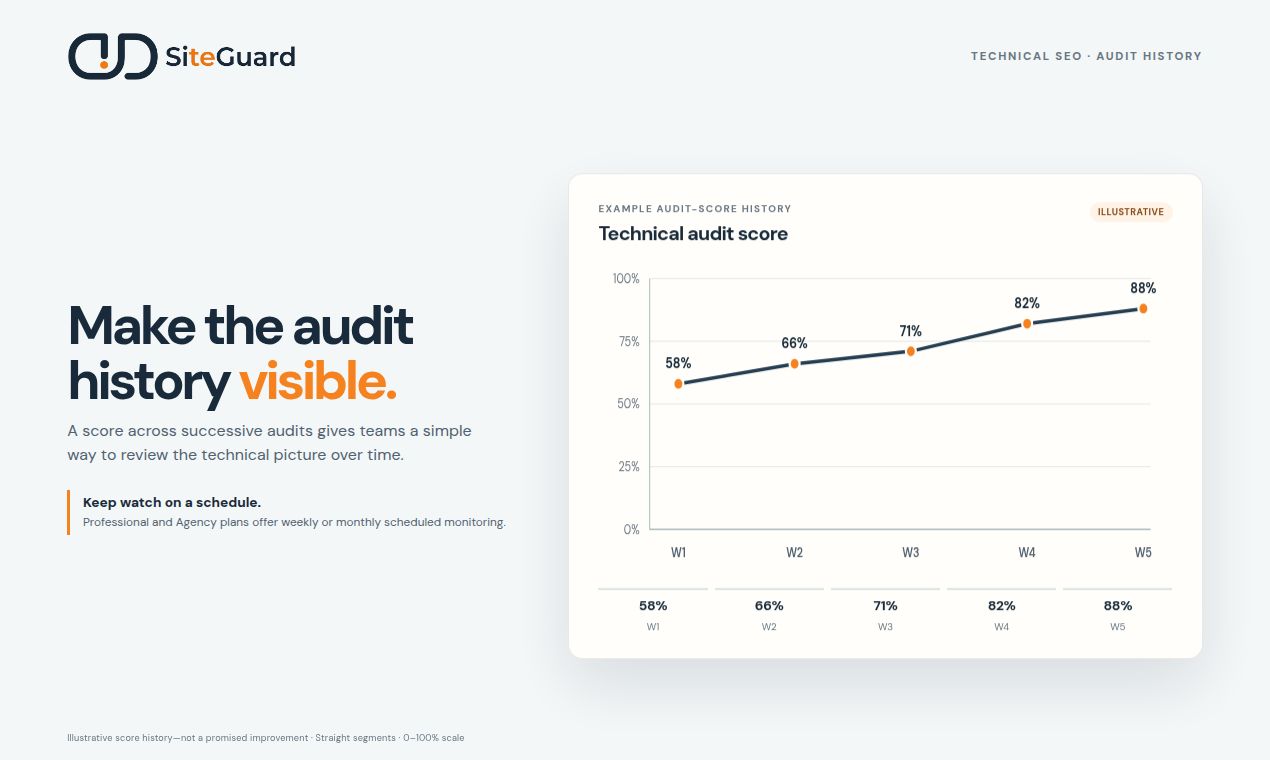
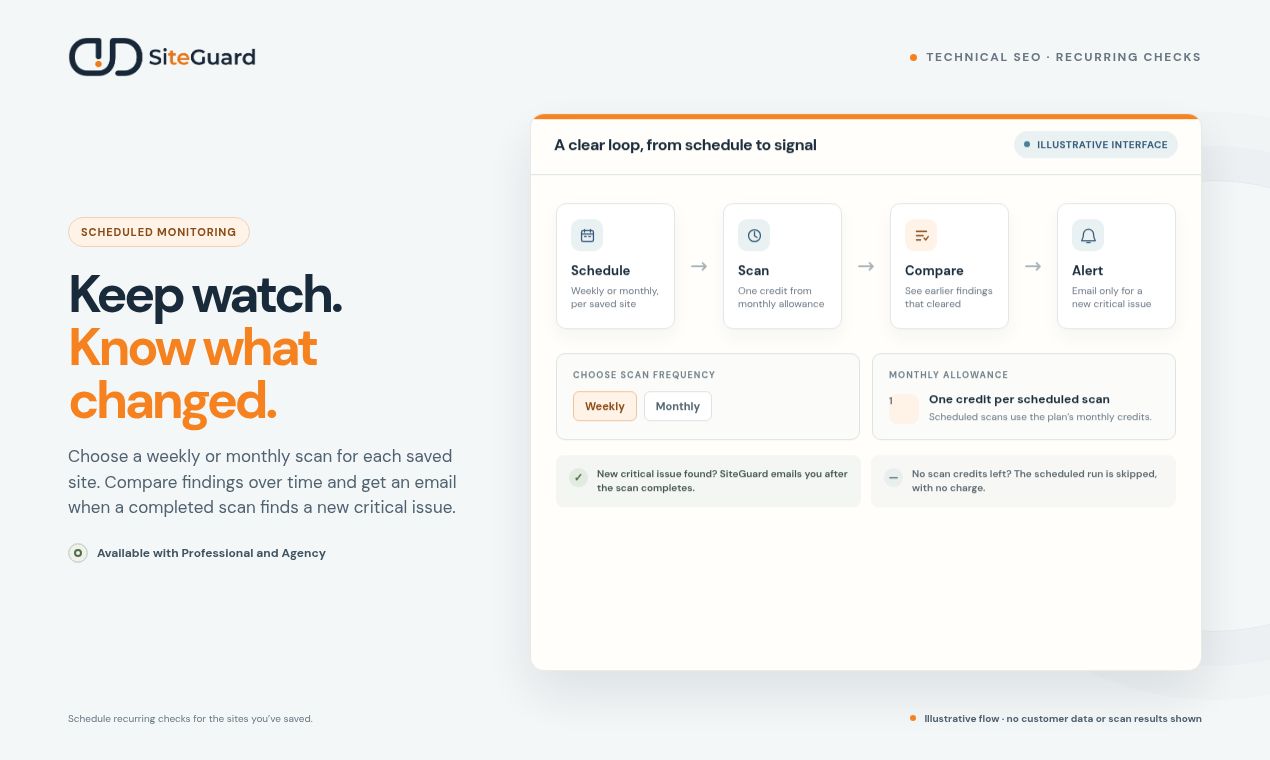
Continuous monitoring is the part that stands out. A one-off audit is easy to get, but catching a schema issue that wasn't there last week is harder. When you re-scan, can SiteGuard tell a newly broken schema apart from something that was already failing on the previous run, and does that show up next to the affected URL?



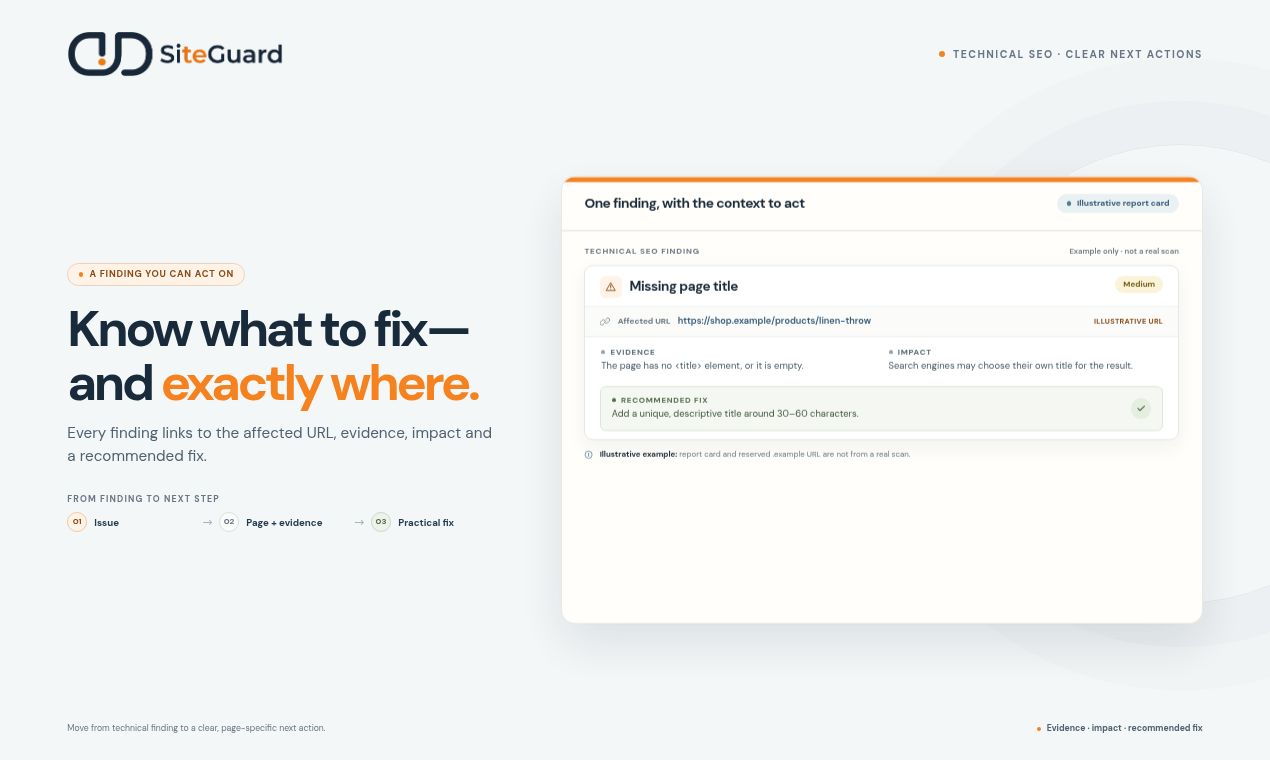
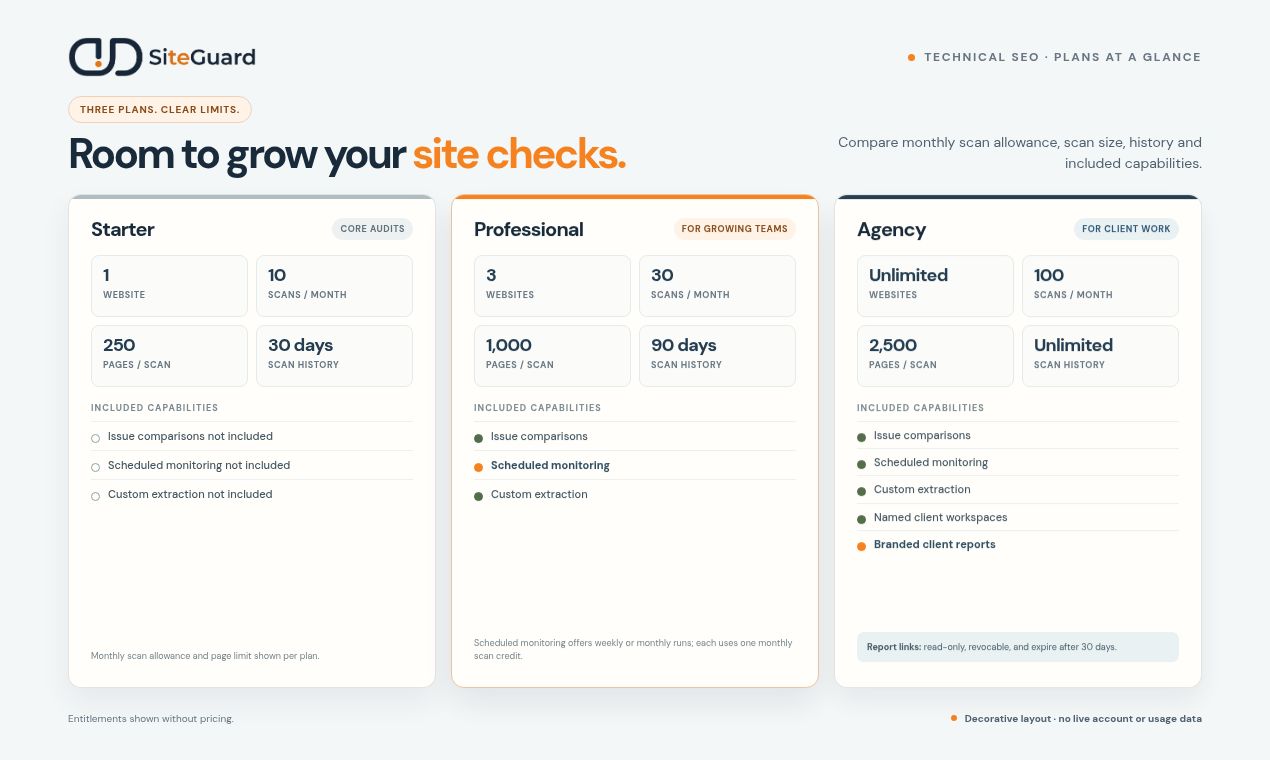
This looks genuinely useful. I really like that every finding points to the specific URL, shows the evidence, and includes a recommended fix instead of just handing you a score to interpret. The Agency plan with client workspaces, branded reports, and revocable share links seems well thought out for people managing multiple sites. Clear, practical, and built around actually getting the work done

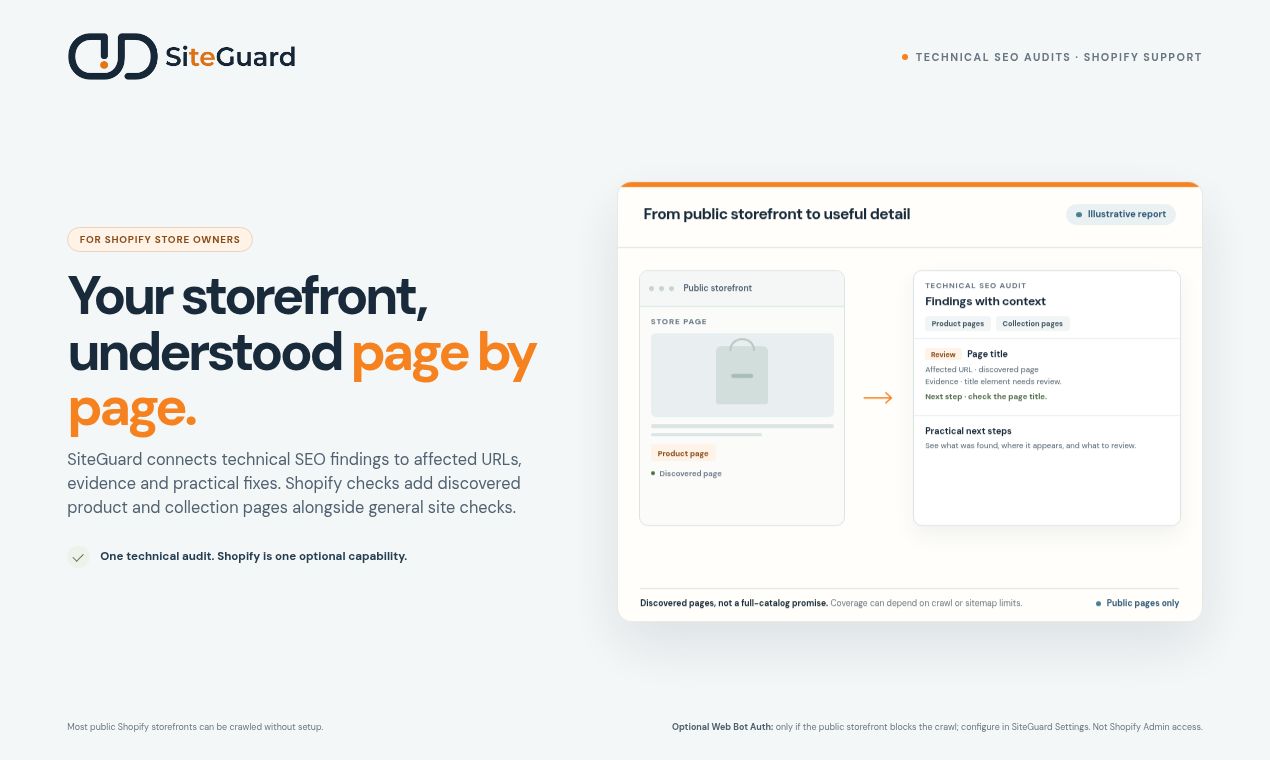
The Shopify tag caught my eye. On Shopify a lot of technical SEO issues come from the theme (one fix covers every page) while others are per product, like missing meta descriptions or duplicate collection URLs. Does SiteGuard group findings that way, and does it re-scan after a fix so the item closes by itself?
The Shopify tag caught my eye. On Shopify a lot of technical SEO issues come from the theme (one fix covers every page) while others are per product, like missing meta descriptions or duplicate collection URLs. Does SiteGuard group findings that way, and does it re-scan after a fix so the item closes by itself?
The Shopify tag caught my eye. On Shopify a lot of technical SEO issues come from the theme (one fix covers every page) while others are per product, like missing meta descriptions or duplicate collection URLs. Does SiteGuard group findings that way, and does it re-scan after a fix so the item closes by itself?



I look after a few dozen small sites, so the part I'd actually use is the monitoring rather than the one-off audit. Does it send a short summary of only what changed since the last scan, like a new broken link or a page that dropped out of the index after a deploy? That's the email I'd open every week.


The prioritised action queue is the standout for me — most audit tools hand over a long list of issues and leave you to sort out what matters, whereas tying each finding to a specific URL, its evidence and a suggested fix makes it genuinely usable. The white-label PDF reports also make sense for agencies handing audits to clients. I'm curious how it handles Core Web Vitals drops over time — is that a continuous alert, or something you only see on the next scheduled audit?

Premium Products





































Sponsors
Buy
Awards
View all
Awards
View allMakers
Makers
Comments
The prioritised action queue is the part I'd use most. I look after directory and membership sites with thousands of member profile pages, so audits usually come back with a wall of near-identical warnings. Can SiteGuard group issues by page template, so one template fix clears hundreds of pages at once?
allshop.ng is point-of-sale and shop management software made in Nigeria for shops across Africa. It runs on the phone or computer a shop already has and keeps selling when the network drops: every sale is saved on the device first, the receipt still prints, and sales sync by themselves when the connection returns. One account covers the whole shop: barcode checkout, stock with batches and expiry dates, wholesale prices and cartons to pieces, customer and supplier credit, staff PINs and shifts, and reports with profit and margin. Owners get Telegram alerts and can check today's sales from anywhere. On Windows, the shop's PC becomes its own server, so every till keeps selling with no internet. ₦6,000 a month in Nigeria, every feature included. Free for 30 days, no card needed.
The prioritised action queue is the standout for me — most audit tools hand you a long list of issues, but ranking them by impact is what actually helps a small team decide what to fix first. The white-label PDF export also looks ideal for agencies handing reports to clients. Does the monitoring alert you as soon as a new critical issue appears, or only on the next scheduled audit?
Hey Fazier! 👋 I built SiteGuard out of a frustrating problem: trying to manually audit client sites and track down technical SEO errors (like broken schema, missing tags, or Core Web Vitals issues) was eating up way too much time. Instead of using bloated enterprise tools that cost a fortune or clunky scripts that break, I wanted a clean, automated auditing engine that could instantly generate gorgeous, white-label reports agencies and indie founders can actually use. It's fully up and running, and I'm super excited to share it with the community today. Let me know what you think or if you spot anything you'd want added to the roadmap! 👇
Does the audit crawl every language version of a site separately? We just found a 404 that existed only in the 19 translated versions of one page: the English page was fine, so any crawl that started from the default language never saw it. Following hreflang alternates and checking each one would be the feature I'd value most.
La cola de acciones priorizadas me parece lo más valioso: la mayoría de las auditorías entregan una lista larga sin orden, y aquí el equipo sabe qué corregir primero. ¿La monitorización continua avisa también cuando un cambio en el tema de Shopify rompe algo que antes estaba bien? Eso sería clave para agencias con muchos clientes.
The prioritised action queue is the part that would save me the most time. Most audit tools hand over a long list of issues, so knowing what to fix first matters, especially for client work. One question: does the monitoring alert you when a Core Web Vitals score drops after a theme or plugin change, or only on the next scheduled audit?
One thing that separates a useful audit from a noisy one: prioritize each issue by how many indexable pages it affects and the traffic those pages actually get, not by raw warning count. A missing meta description on 500 tag pages matters far less than a blocked canonical on your top landing template. Worth separating CrUX field data from lab Lighthouse scores in the report too - agencies get burned when the lab score improves but p75 INP does not.
The prioritised action queue is the part that would actually change how I work — most audit tools hand you a 200-row spreadsheet and leave the triage to you. Tying each finding to the affected URL, the evidence, and a suggested fix is exactly the bridge from audit to action. One question: does the monitoring alert you the moment a new issue appears (for example broken schema after a deploy), or only on the next scheduled crawl?
For agencies the monitoring part matters more than the one-off audit, because most SEO damage happens quietly after a deploy (a noindex left on, a canonical that breaks). Can SiteGuard alert the moment something regresses compared with the last scan? And for Core Web Vitals, are you showing real-user field data from CrUX or lab scores? Clients often get confused when the two disagree.
As someone running an education site with lots of program and tutor pages, the prioritised action queue is what I'd actually use — most audit tools just hand over a long list. One question: for the Core Web Vitals flags, is SiteGuard reading CrUX field data or running lab tests only? Field data would make the severity ranking much more trustworthy for pages with real student traffic. Also curious whether the monitoring alerts can be scoped per section (e.g. only certain URL paths) so one broken page doesn't trigger a site-wide alert.
Continuous monitoring is the part that stands out. A one-off audit is easy to get, but catching a schema issue that wasn't there last week is harder. When you re-scan, can SiteGuard tell a newly broken schema apart from something that was already failing on the previous run, and does that show up next to the affected URL?
This looks genuinely useful. I really like that every finding points to the specific URL, shows the evidence, and includes a recommended fix instead of just handing you a score to interpret. The Agency plan with client workspaces, branded reports, and revocable share links seems well thought out for people managing multiple sites. Clear, practical, and built around actually getting the work done
The Shopify tag caught my eye. On Shopify a lot of technical SEO issues come from the theme (one fix covers every page) while others are per product, like missing meta descriptions or duplicate collection URLs. Does SiteGuard group findings that way, and does it re-scan after a fix so the item closes by itself?
The Shopify tag caught my eye. On Shopify a lot of technical SEO issues come from the theme (one fix covers every page) while others are per product, like missing meta descriptions or duplicate collection URLs. Does SiteGuard group findings that way, and does it re-scan after a fix so the item closes by itself?
The Shopify tag caught my eye. On Shopify a lot of technical SEO issues come from the theme (one fix covers every page) while others are per product, like missing meta descriptions or duplicate collection URLs. Does SiteGuard group findings that way, and does it re-scan after a fix so the item closes by itself?
I look after a few dozen small sites, so the part I'd actually use is the monitoring rather than the one-off audit. Does it send a short summary of only what changed since the last scan, like a new broken link or a page that dropped out of the index after a deploy? That's the email I'd open every week.
The prioritised action queue is the standout for me — most audit tools hand over a long list of issues and leave you to sort out what matters, whereas tying each finding to a specific URL, its evidence and a suggested fix makes it genuinely usable. The white-label PDF reports also make sense for agencies handing audits to clients. I'm curious how it handles Core Web Vitals drops over time — is that a continuous alert, or something you only see on the next scheduled audit?
Premium Products
New to Fazier?

Find your next favorite product or submit your own. Made by @FalakDigital.
Copyright ©2026. All Rights Reserved